How Profitable Are Indoor Children’s Playgrounds?
We spoke with dozens of indoor playground owners to ask: How profitable are indoor playgrounds in 2026? How do they make money? And what are the highest costs? After our interviews and reviewing real business data, we’ve summarized the key points below.
- After running the playground for 6 to 12 months, the average profit margin can reach 20% to 30%. However, it usually takes 1.5 to 3 years to recoup your initial investment.
- The biggest source of income is birthday party packages on weekends, where kids celebrate together.
- The largest expenses are store rent and liability insurance.
In fact, the revenue model for indoor children’s playgrounds isn’t complicated. But many new owners don’t know how to manage their finances properly, which leads to big losses and eventually causes their businesses to close down.
For beginners, it’s crucial to design the space wisely, find reliable equipment suppliers, and build a clear revenue system. Only then can your playground operate sustainably and make money long-term.
What are the profit channels for an indoor children’s playground?
As a new operator, if you want your playground to survive long-term and generate consistent profits, you cannot rely solely on ticket sales. You must develop multiple indoor playground revenue streams to reduce risk. Only in this way can you run your playground successfully.
Birthday parties and private event bookings
It is your lifeline for making money. Through our market research on many long-running, highly profitable playgrounds, we found that income from birthday parties accounts for 20% to 30% of total revenue. This clearly shows that birthday parties are the core income source for indoor children’s playgrounds.
During our visits, we interviewed an operator in Ohio. He told us that party income alone covers three months of his rent. All other income is pure profit.
For new operators, the key to designing successful party and private-booking packages is to make them look high-end without needing extra staff. That is the most important first step.
Revenue Stream: Daily Admission (Walk-in Traffic)
On regular days, walk-in customers generate a steady daily income. Although their profit margin is lower than that from parties or members, a growing number of walk-ins makes the playground lively and attractive. When parents see many kids playing inside, they are more willing to bring their children and spend money. Over time, ticket sales on weekends and holidays account for 60% to 70% of your average daily revenue.
Profitable Add-Ons: Drinks, Snacks, and Small Merch
Many new owners overlook these small but profitable ideas — and even experienced playground bosses often miss them too.
You can easily set up a simple drink station offering coffee, pre-packaged cakes, and snacks. You can also make small branded items like custom plush toys or mini tote bags. These extras make parents more willing to visit your playground and can increase your total revenue by 15% to 20%.
These small projects seem unimportant, but they work really well — and they don’t require extra staff. One of our partners added just a small espresso machine and sold pre-packaged cookies and snacks. He made back all the money he spent on the machine in only eight weeks.
Repeat Customers: Memberships and Punch Cards
Memberships and punch cards are the most stable, essential source of ongoing income for any playground. For new indoor playground owners, offering these cards will completely change how your business makes money.
They help you bring customers back again and again, lower your marketing costs, and make parents more willing to bring their kids to play regularly. Over time, this builds strong customer loyalty.
Absolutely! For operators who are truly serious about running a successful indoor children’s playground and making it profitable, none of these points is optional. They are the key to keeping your business afloat during slow seasons and ensuring long-term, steady profits.
Operating Costs: The Hidden Expenses Eating Away Your Profits
As a real indoor children’s playground owner, how much money you actually make doesn’t depend on how high your total revenue is. Instead, it depends on how much money you have left after paying all your costs.
After working with many playground owners, we’ve summarized the areas where money is most easily spent without you noticing:
Shop Rent and Additional Rental Fees
For new owners, rent and related fees are your biggest upfront expense, usually accounting for 15%–25% of your monthly income—that’s a huge amount.
Therefore, you must choose a good location and a reasonable landlord. Negotiate with them to get a fair rental price. These two points are extremely important for your long-term operation and future profits.
Commercial Liability Insurance
Insurance is absolutely necessary, especially for beginners. It’s a major fixed cost that you can hardly avoid. However, insurance also protects you, covering equipment repairs and other issues.
Over the years, we’ve found that owners who invest in strong safety design and high-quality equipment from the beginning pay significantly lower insurance premiums than those who buy cheap, low-quality equipment.
One of our clients switched to equipment brands approved by his insurance company. The equipment was safe and reliable, and he saved nearly $4,000 per year on insurance. This is very important.
Staff Salaries, Scheduling, and Daily Operations
As you gain experience, labor costs will become your largest expense.
As a boss, you must schedule your staff wisely. If your employees are versatile, let them do multiple jobs to reduce labor costs and save money.
During slow periods, one employee can handle front-desk check-ins, supervise kids playing on the floor, and help sell coffee at the drink station.
However, even with multi-tasking employees, never overwork them. Avoid overtime at all costs, as it will only increase your labor expenses.
Equipment Maintenance, Cleaning, and Replacement
Cheap equipment seems to save money upfront, but actually costs more in the long run. We’ve learned this lesson from experience.
Always choose durable, easy-to-maintain equipment from professional manufacturers. Although the upfront cost is high, it will save you thousands in repair and replacement fees over time, helping your playground survive long-term.
One owner told us that because his climbing structure was high-quality and never broke down, he spent $12,000 less on equipment repairs in the second year compared to other owners who opened playgrounds the same year.
So, whether you’re a new or experienced owner, always choose high-quality equipment.
The 3-Year Financial Projection Data Table
| Metric | Year 1 | Year 2 | Year 3 |
| Total Revenue | $300,000–$500,000 | $500,000–$800,000 | $700,000–$1,200,000 |
| Net Profit Margin | 5–10% | 15–20% | 20–30% |
| ROI Timeline | 18–36 months | 12–24 months | 10–18 months |
| Key Revenue Driver | General Admission | Birthday Parties | Memberships+Events |
| Biggest Expense | Rent+Labor | Labor+Maintenance | Rent+Insurance |
This table shows how profitable indoor playgrounds are when you operate with professional management and reliable equipment.
3 Practical Tips to Help You Earn More
If you’re already an experienced indoor playground operator and want to boost your profits, focus on these 3 proven, practical strategies.
1. Upgrade your layout to a parent-friendly “Play Café” model
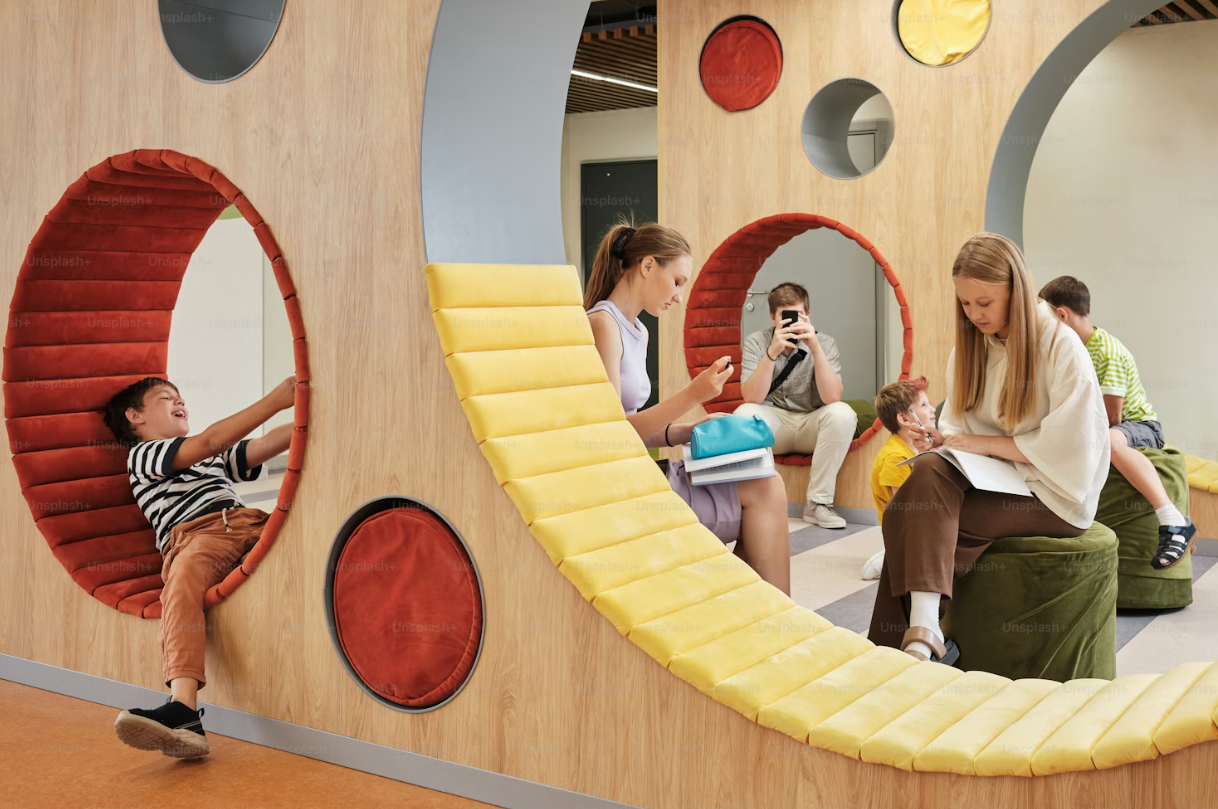
Your playground isn’t just for kids — parents are the ones who bring them and pay the bills.
Set aside a dedicated area with comfortable seating, stable Wi-Fi, and a small drink station. When parents are relaxed, they stay longer. Longer stays mean more spending on snacks and drinks, which greatly increases your profit.
2. Cut upfront equipment costs by buying directly from manufacturers
To lower initial costs while keeping quality high, buy directly from professional playground manufacturers. This is 20–30% cheaper than buying from local dealers. You also get better quality control and faster delivery, which speeds up how quickly you get your investment back.
3. Use tiered pricing and off-peak promotions
Don’t charge the same price every day. Offer weekday discounts, parent-child specials, or early-bird memberships. This balances attendance across the week, reduces weekend crowds, and fills empty space on slow days.
These methods seem simple, but very few people get them right the first time — especially important for new operators.
FAQs
Q: What is the average profit margin for a Family Entertainment Center?
A: Most FECs reach 15–25% net margin after stabilization. Indoor playgrounds often perform at 20–30% because of strong indoor playground revenue streams and family-focused demand.
Q: Are indoor playgrounds a good investment during an economic downturn?
A: Yes.I saw this play out in 2008 and again after 2020. Families trade down from expensive trips to affordable local entertainment. A $15 play session feels much better than a $200 theme park ticket.
Q: How much do indoor playground owners actually make per year?
A: It depends on size, location, and management. Well-run venues typically generate $50,000 to $500,000 net profit per year. That wide range shows how much do indoor playground owners make varies dramatically based on execution.
Q: How long does it take to break even on an indoor playground?
A: Most venues break even within 12–36 months. With efficient cost control and strong revenue management, many achieve break-even within 10–18 months, improving overall indoor playground return on investment.
Conclusion
So, can indoor playgrounds still be profitable in 2026? Is it still viable to enter the market now?
The answer is yes. As long as you use reliable equipment, develop multiple indoor playground revenue streams, and strictly control your costs, your playground will be highly profitable — whether you are a new operator or an experienced one.
It is crucial to focus your business on birthday parties, membership programs, and those small but profitable add-on projects. Most importantly, invest in safe and durable play structures and hardware equipment.
I believe that by following these key points, you will soon build a profitable and sustainable indoor playground.
Additionally, our kanbeiplay provides a complete guide to opening an indoor playground and detailed information about hardware equipment.