
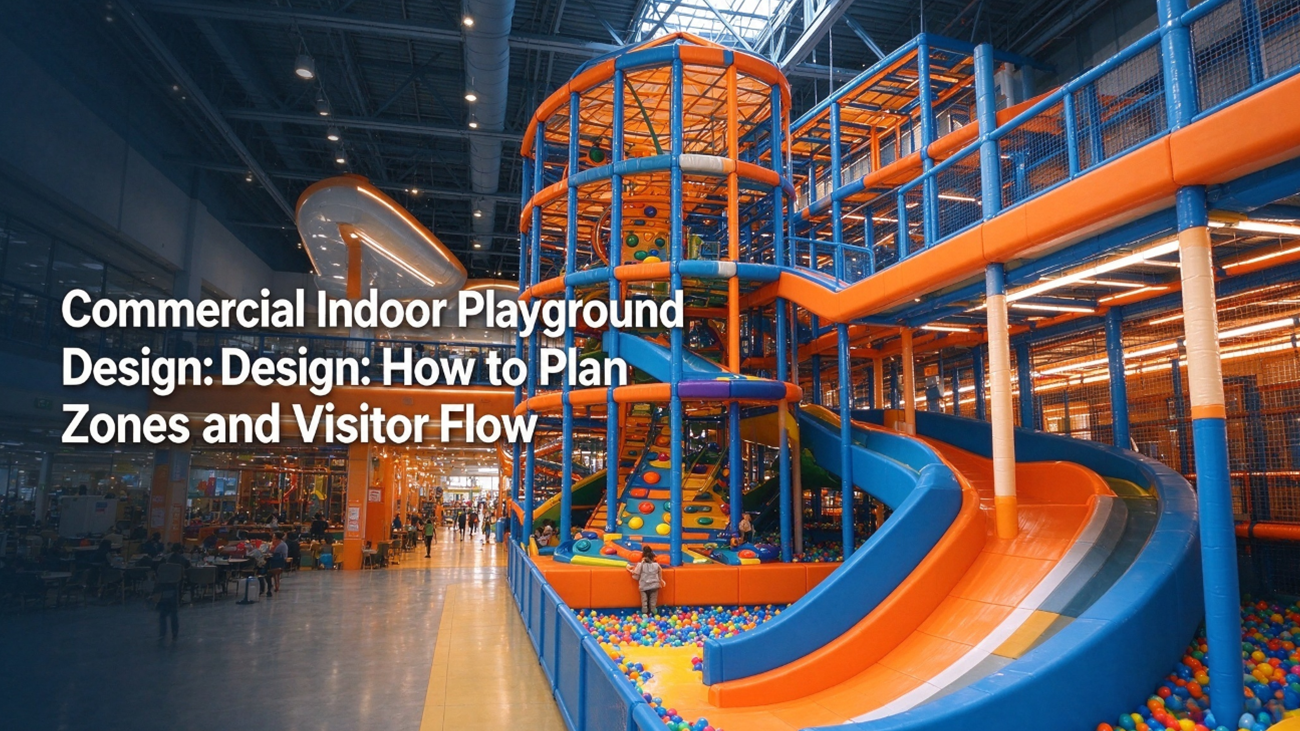
Commercial Indoor Playground Design: How to Plan Zones and Visitor Flow
Quick Answer Getting the layout right is one of the most important steps before opening a Commercial Indoor Playground.

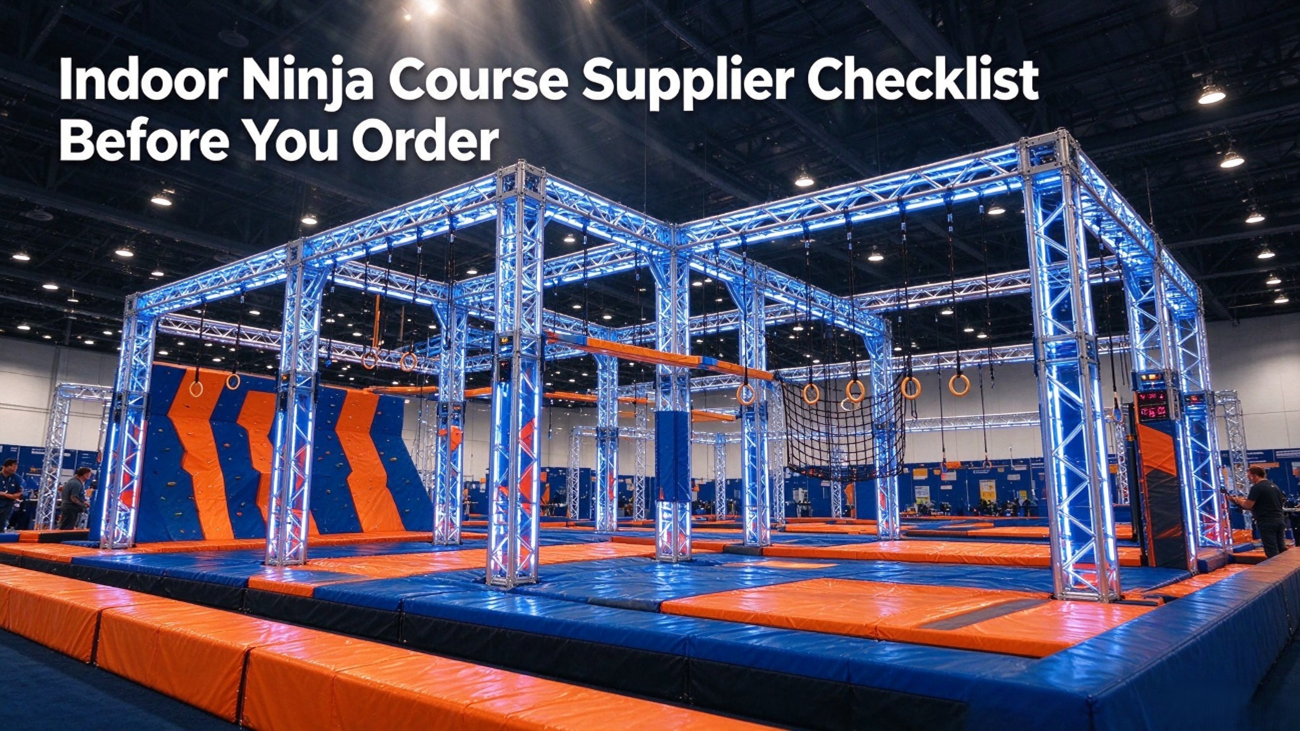
Choosing the right Indoor Ninja Course supplier comes down to four things: proof of real factory capability, a design process that fits your venue, documented quality and safety control, and a written quote that states exactly what is included. Before you place an order for an Indoor Ninja Course, ask for factory evidence, sample drawings, certification reports, an itemized quotation, and clear warranty terms. The checklist below shows what to verify at each step so you can compare suppliers on equal ground.
Ninja courses have become one of the fastest-growing attractions in family entertainment centers and commercial gyms. They suit teenagers and adults, run with modest staffing, and add a competitive, sporty draw that soft play alone cannot match. But a badly sourced Indoor Ninja Course brings constant repair bills, safety complaints, and spare-part headaches. The supplier you choose decides how smooth the next five years will be, so it is worth checking the details before you sign.

Most suppliers describe themselves in the same way: experienced, certified, factory direct. The difference shows up in what they can actually prove. Focus on four areas.
A real manufacturer owns the production line. That means steel cutting, welding, powder coating, padding production, assembly, and in-house inspection under one roof. Ask for a workshop video walkthrough, production capacity per month, and the number of staff on the line. If a supplier cannot show where the frames are welded, you are probably dealing with a reseller.
Your ceiling, columns, and floor shape rarely match a catalogue layout. A capable Ninja Course supplier provides 2D layout drawings and 3D renders, adjusts obstacle spacing to your site, and offers difficulty levels for different age groups. Ask how many revision rounds are included and whether drawings come before or after deposit.
Ask for a reference list of completed ninja projects, ideally overseas. Site photos with real visitors, installed obstacle counts, and client contacts are far more convincing than a brochure. Experience with venues similar in size to yours matters more than total project count.
Quality should be documented, not promised. A serious factory runs incoming material checks, in-process welding inspection, and a full pre-shipment check with photos. Ask to see a sample QC report and load-test record before you order.
The table below turns these four areas into a working checklist you can send to any supplier.
| Check Area | What to Verify | Evidence to Request |
| Factory capability | Own production lines for steel, coating, padding, and assembly | Workshop walkthrough video, capacity figures, staff count |
| Custom design | 2D layout and 3D render that respect columns and ceiling limits | Sample drawings, revision policy, delivery timing |
| Project experience | Completed ninja projects, ideally overseas and similar in size | Reference list, installation photos, client contacts |
| Quality control | Incoming, in-process, and pre-shipment inspection | Sample QC report with photos, load test records |
| Documentation | Certification and test reports for your market | CE, EN1176, ASTM, TÜV, or SGS report copies |
| Quote scope | Itemized by equipment, freight, installation, and spares | Detailed quotation sheet with unit prices |
| Warranty and parts | Written warranty periods and spare parts availability | Warranty terms, spare parts price list |
A complete Indoor Ninja Course is built from modular obstacles rather than one giant frame. A capable supplier should be able to quote most of the following:
Ask whether obstacles are detachable and reconfigurable. Modular designs let you refresh the course in later years without buying a whole new set, which protects your investment as visitor interest shifts.

Material quality decides how the course holds up after a year of daily use. When reviewing Commercial Playground Equipment, ask for the specification sheet and, where possible, physical samples.
Thin steel, low-density foam and glossy but brittle PVC are the usual shortcuts behind early failures. A supplier that can name its material grades is usually the one that will still answer the phone in year three.

Safety paperwork protects you with insurers, landlords, and local inspectors. At minimum, expect the following:
Read the reports rather than the cover page. Check that the product category, model, and test standard match what you are buying, and that the report is still current.
Both can send you a quotation. Only one can control what happens after the deposit clears.
A trading company buys finished goods and resells them. Design changes are slow because they travel through a third party, spare parts depend on someone else’s stock, and quality control is often a phone call rather than a factory process. A manufacturer holds the production line, so it can adjust obstacle sizes, match your brand colors, ship replacement parts from its own warehouse, and give you honest lead times.
To tell them apart, ask three questions: where are the frames welded, who signs the pre-shipment inspection report, and how long does a replacement pad order take? Vague answers are your answer.
Quotes that look cheap often leave out half the project. Compare them line by line across four categories.
Count the obstacles, not the total price. Check whether safety mats, padded wraps, hardware, and a small spare-parts set are included. A quote with twenty obstacles and no padding is not cheaper than one with eighteen fully finished stations.
Compare steel wall thickness, foam density, and PVC thickness side by side. Ask each supplier for the same specification table so the numbers are comparable. Material differences explain most of the price gap between two similar-looking quotes.
Confirm the trade term: FOB, CIF, or DDP. Establish how many containers the order needs, which port it ships from, the estimated transit time, and who pays duties and port charges. A CIF price hides local costs that appear later.
Check whether installation is included, quoted separately, or left entirely to you. Establish crew size, expected days on site, and who supplies power, lifting equipment, and storage. Supervision-only options are common and usually cheaper, but they assume you have capable local labor.
Reasonable terms for a Commercial Indoor Playground ninja build look like this: steel structures covered for three to five years, padding and soft parts for one to two years, hardware and electronics for one year. Anything much shorter deserves a question.
Spare parts matter more than the warranty wording. Wear items fail from use, not from defects: landing mats, padding covers, bolts and net patches all need replacing long before the frame does. Ask for a spare-parts price list and a stated delivery time, and order roughly two to three percent extra wear items with the first shipment so a torn pad never closes a station.
A precise brief gets you a precise price. Send the following before you ask for numbers:
Technical drawings get you a price. Commercial detail gets you a plan. Prepare these as well:
The same problems appear in almost every badly sourced ninja project:
Each of these costs far more to fix later than to check now.
Verify factory capability, review sample 2D and 3D drawings, check overseas references, read the certification reports, and compare itemized quotes on the same specification. A supplier that answers all five without hesitation is usually a safe partner.
Cost depends on obstacle count, material grade, and customization. Small modular courses sit at the lower end, while full competition-length courses with padded finishes, timing systems, and custom theming climb well above that. Ask for a per-obstacle breakdown so you can scale the layout to your budget.
Yes. Reputable manufacturers provide 2D layouts and 3D renders tailored to your floor plan, ceiling, and columns. Confirm how many revision rounds are included and whether drawings are delivered before the deposit.
Many turnkey suppliers offer either a full installation crew or on-site supervision for local labor. Clarify which option is quoted, how long the team stays, and who covers travel and accommodation.
Ask for a workshop walkthrough video, production capacity figures, a sample pre-shipment QC report with photos, load-test records, and current certification reports. Evidence you can read beats claims you have to trust.

A good Indoor Ninja Course supplier is easy to identify once you know what to ask for. Factory evidence, real drawings, readable test reports, an itemized quote, and a spare-parts plan separate serious manufacturers from resellers. Take an extra week to verify these points, and you avoid months of repair delays later. The right Commercial Playground Equipment partner also understands how a ninja course fits into a Commercial Indoor Playground, so obstacles, safety mats, and visitor flow work together instead of fighting each other.
Ready to compare real numbers? Request a detailed equipment quote from Kanplay, a turnkey Indoor Ninja Course and Commercial Playground Equipment manufacturer with 14+ years of experience and 1,000+ global projects. Send your floor plan, ceiling height, and obstacle preferences, and our team will return an itemized quotation, 2D layout, and realistic delivery schedule for your Commercial Indoor Playground. Contact us today.
Quick Answer Getting the layout right is one of the most important steps before opening a Commercial Indoor Playground.
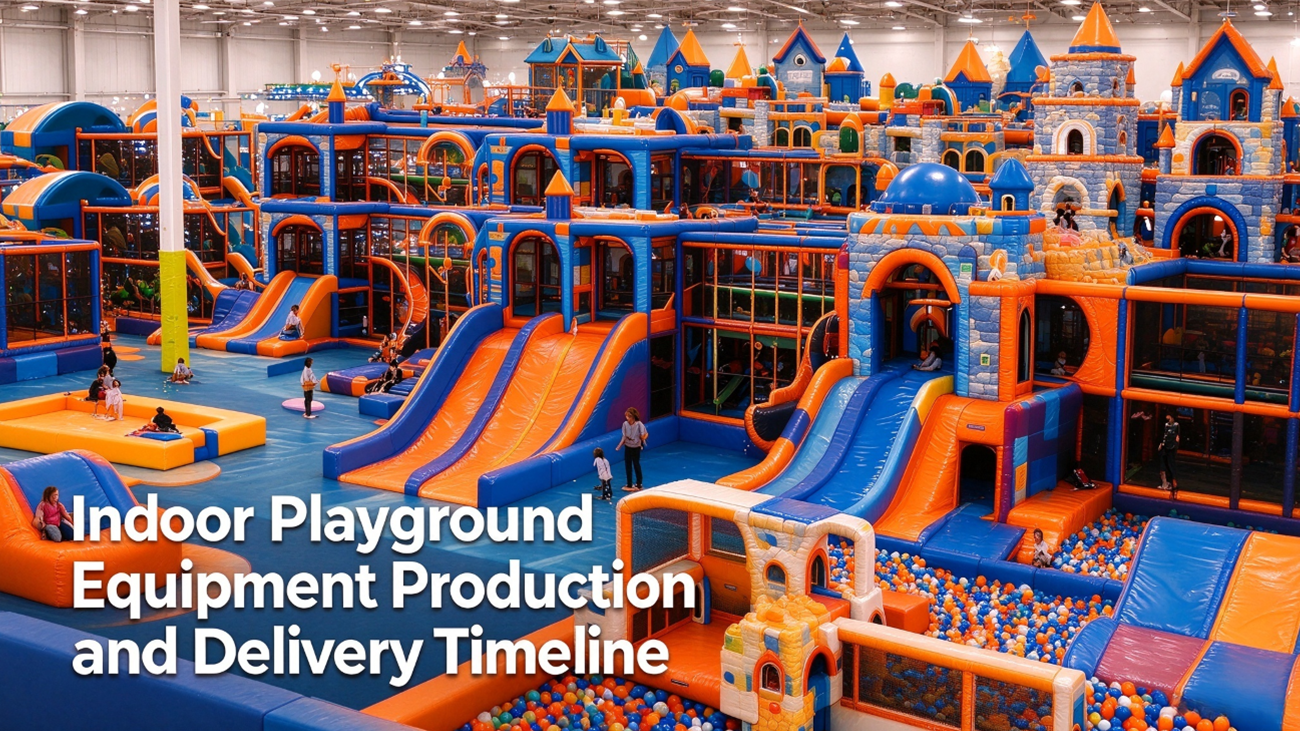
Quick Answer Most indoor playground projects take roughly 8 to 16 weeks from kickoff to handover. That window splits