
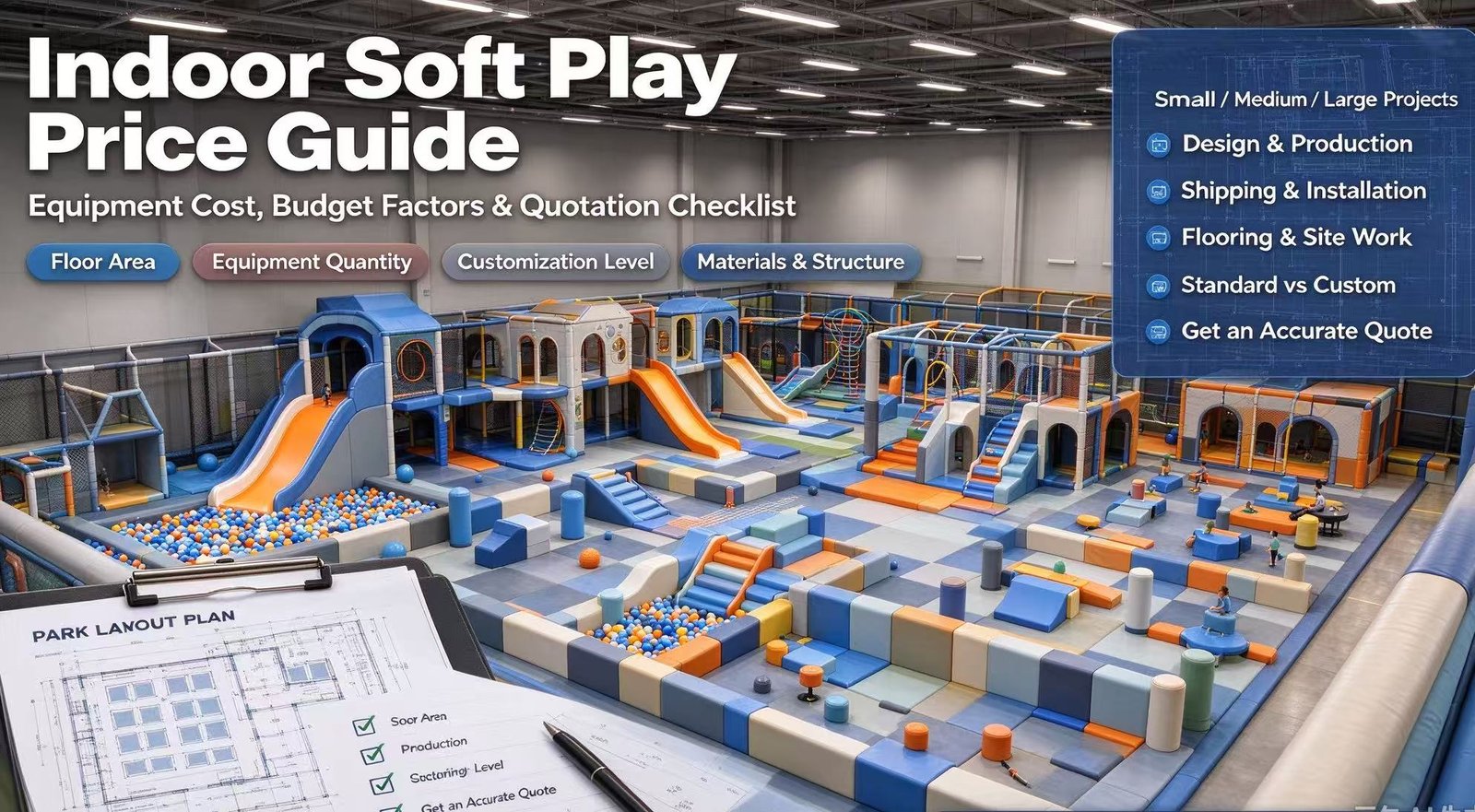
Indoor Soft Play Price Guide
This article is about the Indoor Soft Play Price Guide. How Much Does Indoor Soft Play Cost? Indoor Soft Play

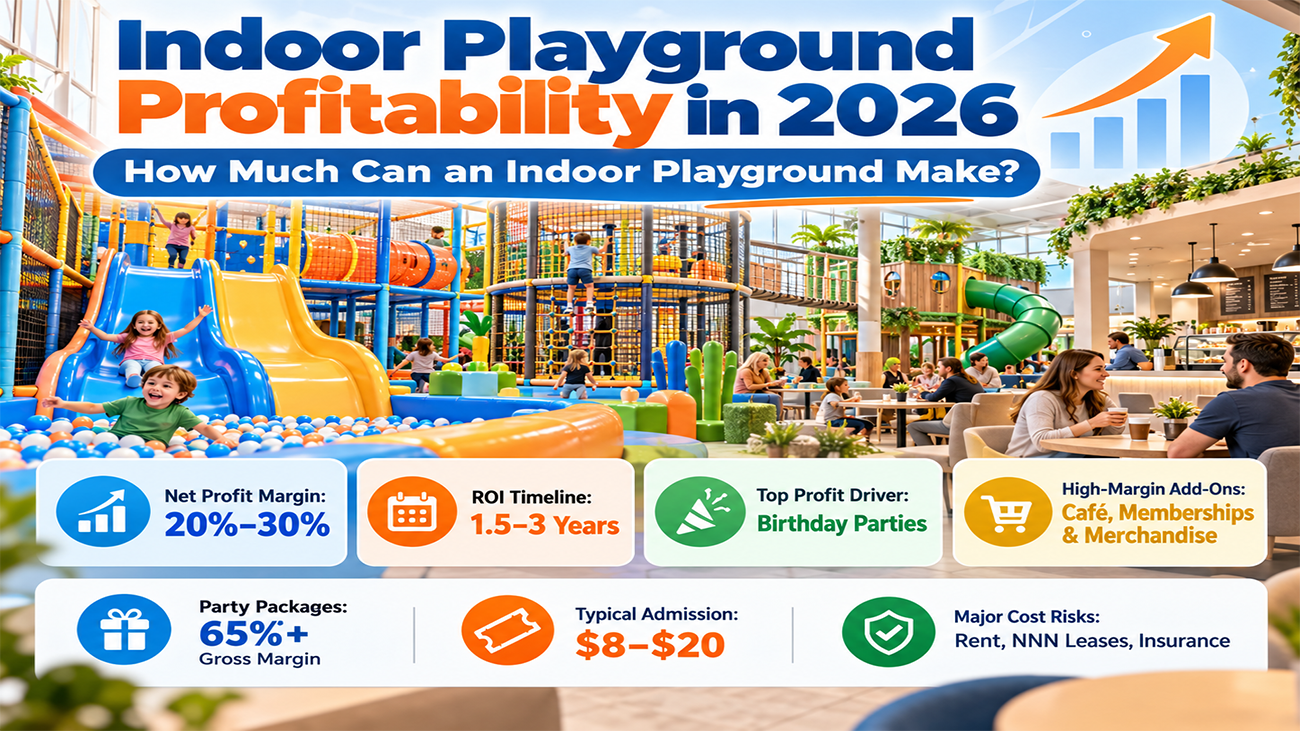
Table of Contents
TogglePublished by KanbeiPlay. Editorial clarification: October 13, 2026.
Model scope: The USD figures in this guide are hypothetical planning inputs using U.S.-style lease terminology. They are not verified customer results or market-wide benchmarks. Replace rent, payroll, insurance, attendance and pricing with local quotations and project assumptions. The table shows revenue minus the listed operating expenses; it excludes upfront investment, financing, tax and depreciation, so operating margin is not net profit. No return or insurance outcome is guaranteed.
Nowadays, people increasingly value the experience of playing when making purchases. Indoor children’s playgrounds are no longer just places for children to play; they have become legitimate businesses that can generate stable profits. Parents are also more willing to find indoor play areas for their children that are safe, have a comfortable and constant temperature, and are well-managed. Therefore, the market demand for such playgrounds has been steadily growing.
Many people are curious: how much money can opening an indoor playground actually make? To figure out whether this investment is worthwhile, you need to look at how it earns revenue, what daily expenses it incurs, and the key operational strategies that determine its success. This article, using an illustrative planning model, explores potential profitability of indoor children’s playgrounds in 2026.
Indoor playgrounds can be highly profitable when managed with diversified revenue and disciplined cost control. Use the following as planning considerations, not verified industry averages:
A well-run indoor playground relies on multiple ways to make money. If it only depends on a single source of income, it’s not only difficult to grow and become strong, but the business is also particularly vulnerable to seasonal fluctuations and very unstable.
Birthday party packages are universally recognized as the highest-margin revenue stream in the indoor playground industry. Parents are willing to pay a high price just for a carefree and unforgettable experience.
Why Parties Drive Profitability:
Corporate team-building and private venue all-inclusive services are mostly booked on weekdays when business is slow. This not only allows for earning high-value orders, but also keeps the shop’s annual income more stable.
Admission fees provide consistent baseline revenue and introduce new families to the facility. In 2026, typical pricing structures charge $8–$20 per child per entry, depending on local market conditions and facility quality.
Revenue Potential:
A mid-sized playground (3,000–5,000 sq ft) attracting 80–150 daily visitors can generate $25,000–$60,000 in monthly admission revenue, translating to $300,000–$720,000 annually. Weekend traffic often doubles weekday numbers, especially in shopping mall locations.
Food and beverage operations represent a significant opportunity for margin expansion. A well-designed café can contribute up to 30% of total revenue with relatively modest incremental investment.
A play café can add food and beverage revenue and adult seating. Its contribution depends on local demand, operating costs and actual customer spending.
Branded grip socks, required for safety and excellent for branding, provide additional high-margin income with minimal inventory risk.
Membership programs transform casual visitors into predictable, recurring revenue. This is particularly valuable for weekday traffic, which is typically lower than weekend volume.
Effective Membership Structures Include:
Membership prepayments may support cash flow, but future visits and service costs must be budgeted. No fixed share of equipment investment is assumed.

Just understanding income is not enough; this is only half of making money. Whether an indoor playground can be profitable or just barely break even depends on whether the owner can manage the following expenses well.
Rent is almost always the single largest recurring expense. For a 5,000 sq ft indoor playground in an urban area, typical fixed rent costs range from $8,000 to $15,000 per month.
NNN Lease Warning:
Many commercial leases—especially in shopping malls—are structured as Triple Net (NNN) leases. Under this arrangement, tenants pay base rent plus a proportionate share of property taxes, building insurance, and common area maintenance. NNN charges can add 30–50% or more to effective rent. A space advertised at $10,000/month may actually cost $14,000–$16,000/month.
Indoor playgrounds face inherent liability risks. General liability insurance typically costs between $1,500 and $5,000+ annually, with premiums scaling based on facility square footage, indoor playground equipment type, and location.
Insurance terms and premiums depend on the insurer, operations, location and policy. Obtain written confirmation of coverage and exclusions; equipment documentation does not by itself establish a premium reduction. See the NAIC small-business insurance overview for general guidance.
Staffing costs vary based on facility size and local labor markets. A typical small to mid-sized indoor playground can expect monthly staffing expenses of $3,000–$8,000, covering floor supervisors, front-desk staff, party hosts, and cleaning personnel.
To achieve ideal profitability, it is best to keep your labor costs at no more than 25% of revenue. Training employees to be versatile and proficient in multiple positions can reasonably save expenses during slow business periods.
Commercial indoor playground equipment represents a major capital investment requiring ongoing care. Most facilities should budget 5–10% of original equipment cost per year for maintenance and minor repairs.
Monthly maintenance tasks include:
Lower-quality equipment using thin PVC and lightweight steel may fail within 6–12 months under commercial use, leading to costly downtime. Higher-grade materials (industrial PVC, galvanized steel) deliver 5+ years of reliable service with minimal maintenance.
The following table presents a illustrative financial projection for a mid-sized indoor playground (approximately 3,000–5,000 sq ft) operating in a suburban market.
Financial Metric | Year 1 (Ramp-up) | Year 2 (Stabilized) | Year 3 (Optimized) |
Revenue | |||
General Admission | $220,000 | $275,000 | $300,000 |
Birthday Parties | $90,000 | $150,000 | $180,000 |
Café & Food Sales | $60,000 | $95,000 | $115,000 |
Memberships | $30,000 | $55,000 | $70,000 |
Merchandise & Other | $15,000 | $25,000 | $35,000 |
Total Revenue | $415,000 | $600,000 | $700,000 |
Operating Expenses | |||
Rent & NNN Charges | $144,000 | $148,000 | $152,000 |
Payroll | $120,000 | $140,000 | $150,000 |
Insurance | $4,000 | $4,500 | $5,000 |
Utilities | $18,000 | $20,000 | $22,000 |
Marketing | $25,000 | $30,000 | $35,000 |
Maintenance & Supplies | $12,000 | $15,000 | $18,000 |
Miscellaneous | $8,000 | $10,000 | $12,000 |
Total OpEx | $331,000 | $367,500 | $394,000 |
Net Operating Income | $84,000 | $232,500 | $306,000 |
Operating Margin | 20.2% | 38.8% | 43.7% |
Note: Figures are illustrative. Initial startup costs (equipment, build-out) are excluded from this operating P&L as they are capitalized and recovered through ROI over time.
Key Insights:
Profitability isn't just about revenue—it's about optimizing every aspect of the business model. Here are three proven strategies used by successful operators.
Optimize Your Floor Plan for Adult Comfort (The "Play Café" Model)
In traditional amusement parks, parents can only sit on hard benches and play with their phones out of boredom. This model has gradually been replaced by parent-child play cafés. By combining children's play areas with comfortable adult leisure spaces, the revenue per square meter of the store can increase by 35%.
Optimal Space Allocation:
The café area has an open and unobstructed view, allowing parents to watch their children anytime while drinking coffee or working remotely. With comfortable seating, stable WiFi, and phone charging stations, it can make customers stay longer, and the average spending per person will also increase.
Slash Initial CAPEX by Sourcing Direct from Manufacturers
Many people overlook that equipment procurement is actually an important breakthrough for increasing return on investment. Buying indoor playground equipment from local agents or intermediaries generally comes with a 20% to 40% price premium.
Directly sourcing from the original manufacturers, especially for brands produced by their own factories, can reduce upfront costs on equipment by 20% to 30%. This does not mean buying low-quality, cheap equipment; it simply eliminates the layers of markups from middlemen, while still strictly ensuring the quality of commercial amusement equipment.
When evaluating direct sourcing partners, prioritize:
Kanbei, as a direct manufacturer with a 20,000-square-meter production facility, provides factory-direct pricing without sacrificing quality or safety compliance.
Capacity utilization is a powerful profitability lever. Weekends may fill to capacity, but weekday mornings often see lower traffic. Strategic pricing smooths demand.
Tiered Membership Structures:
Offer multiple membership levels (Silver, Gold, Platinum) with escalating benefits. Position the highest tier as the obvious value choice to encourage upgrade behavior.
Off-Peak Promotion Strategies:
The goal is not indiscriminate discounting but strategic pricing—capturing maximum value during high-demand periods while monetizing idle capacity.
A: Family Entertainment Centers combining playgrounds with arcades, trampolines, or climbing walls achieve net profit margins in the 15–35% range. Well-managed FECs with diversified revenue and efficient operations trend toward the higher end.
A: Indoor playgrounds have demonstrated recession-resilient characteristics. Parents prioritize spending on children even when budgets tighten. The experiential nature of the offering cannot be replicated by e-commerce, providing a degree of insulation from economic volatility.
A: Owner-operator income typically ranges from $50,000 to $150,000 annually. Larger, well-established operations in strong markets can generate owner earnings of $200,000–$500,000+. The most common range for stabilized small-to-medium operations is $70,000–$120,000 per year.
A: Break-even timelines range from 12–36 months depending on location quality, initial CAPEX, and operational execution. Facilities with strong birthday party programs from day one routinely hit break-even 6–12 months faster than those relying primarily on walk-in admission.
A: Birthday party bookings are the single most important profitability driver. A robust party program generates premium revenue with low marginal cost and creates word-of-mouth marketing that drives new customer acquisition.
A: High-quality indoor playground equipment reduces maintenance costs, minimizes downtime, and lowers insurance premiums. Facilities using ASTM-certified commercial-grade equipment achieve faster ROI and higher long-term profitability than those cutting corners on materials.

Indoor playgrounds represent a mature and profitable business model driven by stable market demand, diversified revenue streams, and operational flexibility. Achieving 20–30% net profit margins is realistic with disciplined expense management and strategic revenue optimization.
The quality of your indoor playground equipment directly impacts safety compliance, maintenance costs, and customer satisfaction—all critical factors in long-term profitability. Partnering with an experienced manufacturer ensures your facility is built on a foundation of commercial-grade durability and international safety standards.
For more detailed guidance on commercial playground planning and profitability, explore our comprehensive indoor playground ROI guide. For industry safety benchmarks, refer to the ASTM F1918 specification.
Kanbei is dedicated to providing high-quality indoor playground equipment and customized design solutions that maximize operator profitability. If you're planning a project, contact Kanbei today for expert consultation and a factory-direct quotation tailored to your business goals.
This article is about the Indoor Soft Play Price Guide. How Much Does Indoor Soft Play Cost? Indoor Soft Play
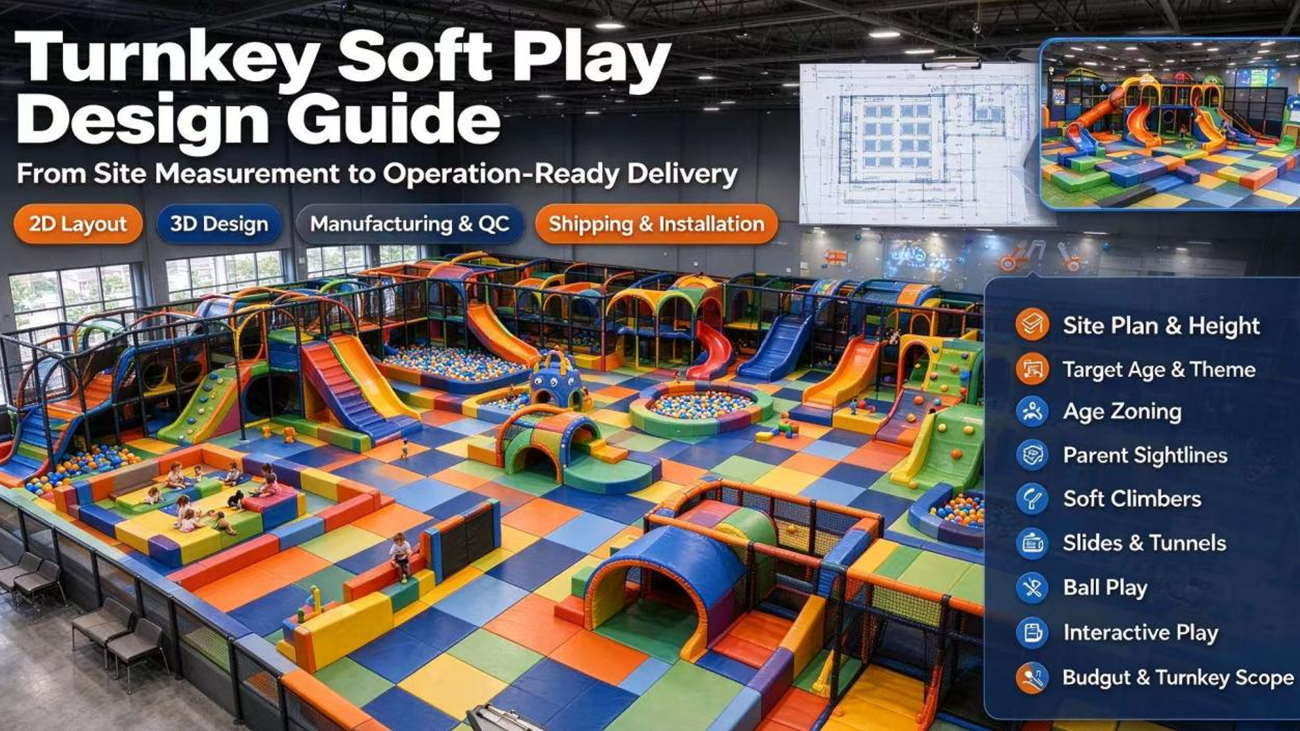
This Turnkey Soft Play Design Guide breaks down the design process, necessary materials, project content, and pitfall avoidance points in
Thank you very much for your inquiry! Your trust is our greatest motivation. We are committed to offering playgrounds that combine high quality with affordable pricing. Let us bring vitality to your venue!