
Working with an Indoor Playground Manufacturer: What Buyers Should Prepare and Verify
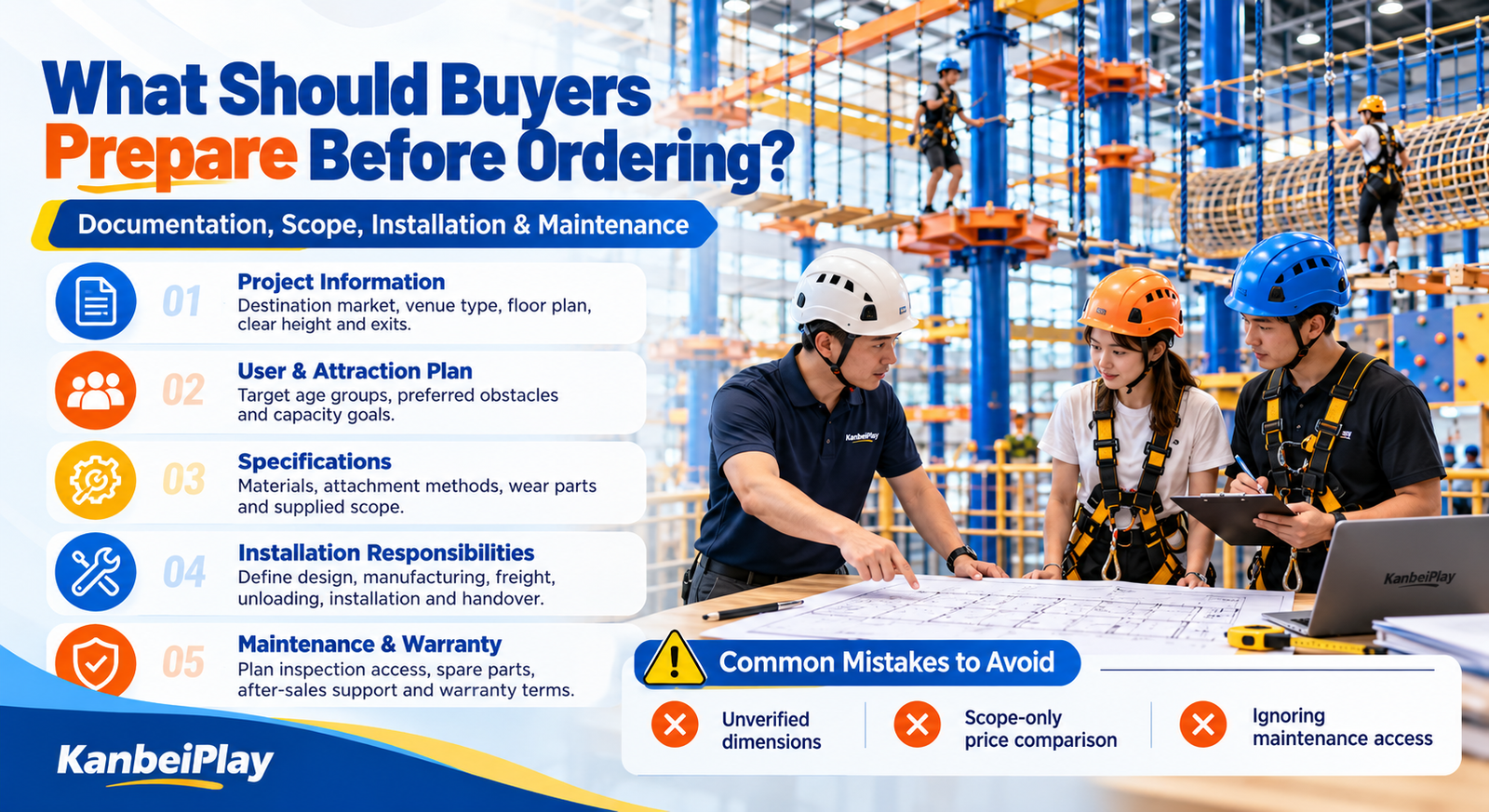
Quick Answer Before working with an indoor playground manufacturer, prepare a measured floor plan, clear ceiling height, target age range,

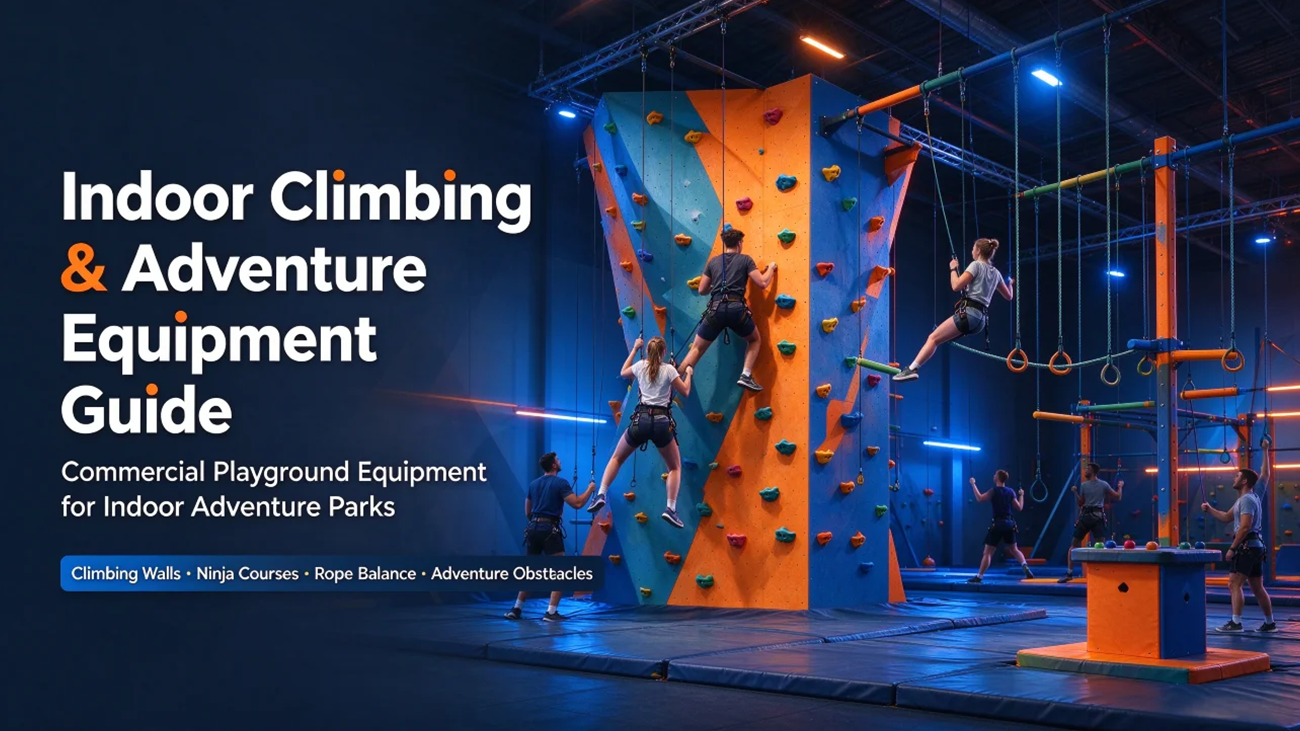
Running an Indoor Adventure Park? You will need Indoor Climbing Equipment and different kinds of Adventure Play features. These include climbing walls, ninja courses, rope-balance setups, and interactive obstacles. When you shop for Commercial Playground Equipment, think about your visitors, available floor space, and ceiling height first. Then work out your site zoning.
Your total cost changes with project size and custom work. You must double-check every safety point. A full custom job has several key steps. You need drawing review, design work, manufacturing, and on-site installation. Do not skip any of these steps.
Commercial Playground Equipment built for an Indoor Adventure Park falls under indoor climbing and adventure equipment. It follows core Adventure Play ideas. Guests take on challenges. They climb, cross gaps, and move along balance paths.
Such equipment suits a broad span of user ages. Little kids can experience low padded play units. Teens and adults are able to attempt more difficult climbing and rope challenges.
It works differently from regular soft-play areas. Soft play lets guests move freely. Adventure Play sets clear challenges and gets bodies moving. This equipment helps you keep guests on-site longer. It lifts income from tickets and food or drink sales. It also helps your park stand out from local competitors.
A well-equipped Indoor Adventure Park uses four main groups of Commercial Playground Equipment.
Indoor Climbing Equipment serves as one of your main draws. Popular options are bouldering walls, top-rope climbing walls, and short climbing panels.
Bouldering, roped climbing and low climbing panels have different layouts, landing or protective arrangements and operating needs. Compare the specific equipment documents, user requirements, supervision and access before choosing a configuration; do not infer those requirements from the activity name alone.

A ninja challenge is a linked obstacle path. It has moving platforms, balance beams, rope nets, hanging rings, and jump points.
You can build routes for different skill levels. Keep simple paths for younger children. Make harder tracks for teens and grown-ups.
Multiple guests can race each other on ninja courses. It creates high energy in your venue. This makes visitors want to return again.
Compare ropes course equipment by the proposed activity, intended users and site conditions. Options may include balance paths, suspension bridges and rope-ladder activities; confirm the equipment and support arrangement in the project proposal.
Low and elevated rope activities have different design and operating requirements. Ask the supplier to identify the protective arrangements, user limits, supervision and inspection requirements for the actual equipment; do not select a generic protection system from a photograph.
The footprint depends on the chosen route, structure, movement zones, access and surrounding activities. Review the measured site plan before deciding whether a rope feature can fit an atrium or corner area.
Adventure Play Obstacles are separate challenge stations. Some examples are climbing nets, tunnels, climbing pillars, and rotating play structures.
They offer varied, fast-paced activities. They work well while guests wait in lines. Add lights, timers, and scoreboards. Then these stations turn into interactive competitive games. Swap out obstacle parts whenever you want. You can refresh guest experiences and keep old visitors coming back.

Three points matter most when you pick Commercial Playground Equipment. Think about your target guests, your real-world site conditions, and how many people you want to host.
Work out who your main visitors will be. Will your park mostly host young family groups? Or will teens make up most of your crowd?
For younger children, choose low obstacles with full soft padding and simple tasks. For teenagers, install tall walls and fast-paced racing-style challenges.
Guest age shapes what height, difficulty, and safety settings you need. Do not place high-risk obstacles where small kids can reach them. Also avoid overly simple play for teen visitors.
Floor space and ceiling height are hard limits. Take precise measurements before buying any equipment.
Determine the footprint from the proposed activities, equipment dimensions, movement and landing zones, circulation and staffing plan. A general area range cannot establish whether a particular adventure layout fits your site.
Measure usable clear height below beams, services and other obstructions by zone. Confirm required clearances and structural conditions for the selected activities against equipment drawings and the site review before ordering.
Capacity tells you how many guests you can host at one time. It directly changes visitor turnover and how fast you earn back your investment.
You can build dual-lane ninja courses or multi-lane climbing walls. These let more people take part at the same time.
Offer multiple difficulty tiers in one area. Create beginner, intermediate, and advanced tracks. They welcome guests of different skill levels. You may also set different ticket prices for different challenge levels.
Smart zoning helps your Indoor Adventure Park run safer and makes equipment more useful. Four separate zones work for most venues.
This zone welcomes small children and people trying Adventure Play for the first time. Install low-lying equipment with thick padding and slow-speed activities.
Put low climbing panels, padded obstacles, and balance walkways here. Parents can stay near and watch their kids. This is your entry-level play space. Keep steep or high-risk features out of this section.
Group all your Indoor Climbing Equipment inside this zone. Include bouldering walls, top-rope walls, and low climbing panels.
Place this section where your ceiling reaches maximum height. Lay protective mats under all wall structures. Make sure your staff can see every climber at all times.
This zone serves guests with intermediate skill levels. Place ninja challenges, balance beams, suspension bridges, and rope challenges here.
Obstacles carry moderate challenge but keep risk under control. They fit teens and adults who want excitement without climbing far off the ground. Full ground protection must be in place.
Reserve this area for skilled players and older kids. Add high rope courses and hard-difficulty Indoor Climbing Equipment.
Elevated activities need a project-specific review of the selected equipment, protective arrangements, supervision, access and operating procedures. Confirm documented user limits and required staff training before approval.
Material choices impact safety, service life, and upkeep for your Indoor Climbing Equipment.
Most climbing wall panels use layered birch plywood. It withstands everyday friction and surface scrapes. Workshop crews cut panels into custom shapes. Each panel gets safe water‑resistant paint for surface protection.
Steel or aluminum forms the main frames. Steel supports heavy loads well for tall walls and large-size gear. Aluminum weighs less. It works great for movable obstacle pieces. Treat every metal part against rust.
Padding and landing mats use high-density foam wrapped in fire-safe, tough fabric. Foam gives solid shock absorption. Outer fabric cleans easily. Seal all seams tightly. Stop foam material from leaking out.
Request material specifications and applicable equipment-specific test or inspection documents. Check the model, standard scope, issuer and date, and separate equipment documentation from local building, fire, accessibility and operating requirements.
Prices for your Indoor Adventure Park hardware vary a lot. Project scale, installation height, and custom requirements drive most cost differences.
Small low obstacles stay budget-friendly. Full-size Indoor Climbing Equipment and complete rope-course packages cost significantly more. Custom shapes and themed paint jobs add further expense.
Do not only calculate the price of equipment itself. Site rework, protective floor surfaces, installation, and official inspections all cost money. Set aside a yearly maintenance budget after you open your doors.
Request full detailed quotes from suppliers. Confirm every cost item appears on the document. Compare offers from several vendors to control spending.
Safety stands as your top priority. Watch three key points closely when you purchase Commercial Playground Equipment.
Confirm the protection and landing provisions specified for each activity, with supporting equipment documents and installation details. Do not assume the same mat, net or other system is suitable for every climbing or elevated activity.
Follow the specified landing-system requirements and the manufacturer’s inspection and replacement instructions. Thickness alone is not an adequate selection rule; record how wear or damage is reported and resolved.
Plan your layout so team members can observe every play spot. Do not let tall walls or large obstacles block their line of sight.
Clear sightlines help staff spot unsafe behaviour quickly. They can respond to incidents without delay. This forms your first defence against accidents.
Build-in access points for maintenance on all equipment. You need easy access to screws, ropes, bearings, and other wearing parts for checks and replacement.
Run visual checks before you open each business day. Look for loose screws, torn padding, and worn-out ropes. Book thorough professional inspections on a periodic basis.
Building a custom Adventure Play project for your Indoor Adventure Park follows four essential phases. Do not skip any phase.
Send your floor drawings to the manufacturer first. Mark dimensions, support columns, ceiling height, and entry or exit points clearly.
Manufacturers review these documents. They work out where equipment can fit and what layout delivers best results. Drawings with exact details reduce later-stage rework.
Once requirements are clear, suppliers produce 2D layout drawings. Next, they create 3D visual renderings.
3D renderings let you picture zoning and equipment appearance. At this step, you can adjust colours, themes, and obstacle combinations. Only move to manufacturing after you are fully satisfied.
Start production after you lock in the final design. Factories build steel frames, climbing panels, and padded components following your drawings.
Agree separate milestones for drawing approval, manufacturing, inspection, dispatch, transport and installation. Confirm the actual schedule for the order and record how design changes, site readiness and approvals may affect it.
Confirm dispatch readiness, packing, delivery terms, customs and unloading responsibilities. Specify whether installation support is on site or remote and which local labor, tools and site works are excluded.
Agree installation and handover checks and request operating and maintenance documents for the supplied equipment. Confirm local inspections, approvals and opening readiness separately with the responsible project parties.
You will typically find Indoor Climbing Equipment, ninja challenges, rope-balance units, and Adventure Play Obstacles. Climbing walls cover bouldering and top-rope variants. Ninja challenges are connected obstacle tracks. Rope-course units focus on balance training. Adventure obstacles work as standalone challenge stations.
No fixed price exists. Small low-height units cost less. Complete large-scale setups come with higher price tags. Custom design work, protective flooring, installation, and inspections push total spending higher. Ask suppliers for custom-tailored quotations.
There is no single ceiling-height figure for every adventure activity. Submit measured clear heights and obstructions by zone, then confirm the selected equipment clearances and structural conditions against the proposed drawings.
Yes. Suppliers adjust height, shapes, colours, and theme styling. They can print your park logo onto panels. Even custom-built gear must follow safety rules.
Area requirements depend on the activity mix, equipment footprints, movement and landing zones, circulation and site constraints. Use a project-specific layout review rather than a general minimum area.
Indoor Climbing Equipment and Adventure Play projects act as core Commercial Playground Equipment for a successful Indoor Adventure Park. Combine climbing walls, ninja courses, rope features, and obstacles. Match the equipment’s documented use conditions to your audience and operating resources. Visitor spending and return visits depend on the venue and are not guaranteed by the equipment mix.
Match your equipment choices to your site, visitor groups, and available budget. Safe, durable materials plus logical zoning support stable long-run operation. Custom projects go through drawing review, design, manufacturing, and installation. Take every step seriously.
Send us your floor layout and project requirements. Our team can create custom‑fit designs for your Indoor Adventure Park. Reach us via https://www.kanbeiplay.com.
Quick Answer Before working with an indoor playground manufacturer, prepare a measured floor plan, clear ceiling height, target age range,
Quick Answer Pick a soft play equipment supplier by checking five things: real factory capability, custom design experience, commercial project