
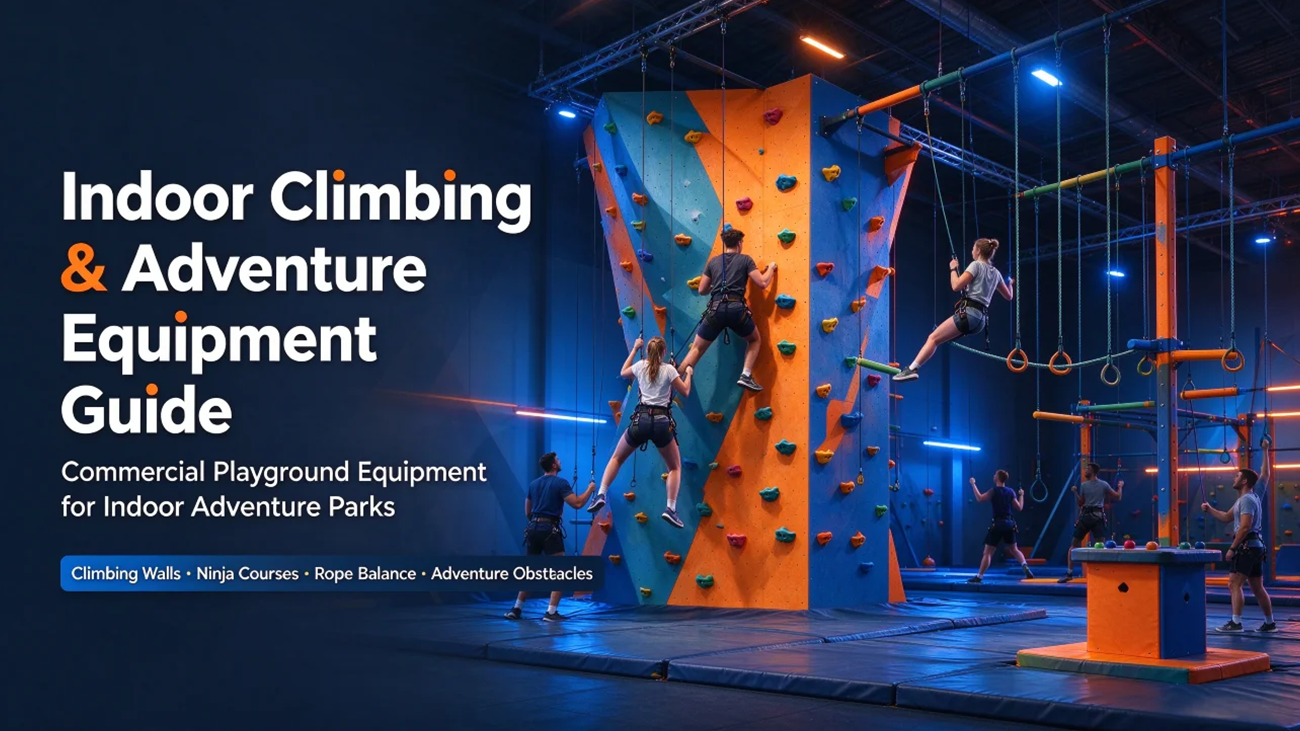
Indoor Climbing and Adventure Equipment Guide
Quick Answer Running an Indoor Adventure Park? You will need Indoor Climbing Equipment and different kinds of Adventure Play features.

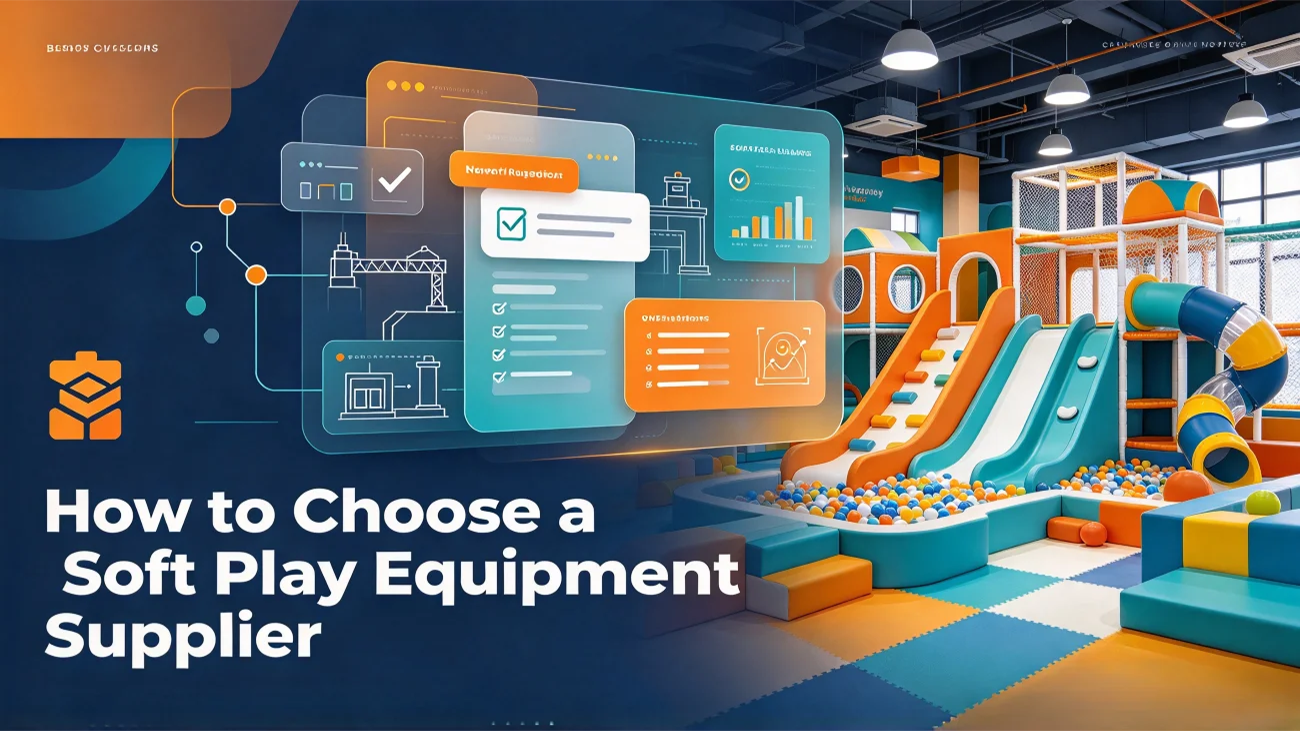
Pick a soft play equipment supplier by checking five things: real factory capability, custom design experience, commercial project references, safety documents, and all-in pricing (equipment + shipping + installation + warranty). Shortlist 2–3 makers, send your floor plan, and compare quotes line by line before you pay a deposit.
A soft play supplier is basically the maker behind those padded structures you see inside indoor venues. They work out your floor plan, build the foam and vinyl parts, and put in the slides and ball pits. A lot of them will also design the theme, come measure your site, and help you install everything once the gear shows up.
A good supplier is not just a seller. They help you turn an empty room into a running playground.
Ask whether the supplier owns its own factory or trades from others. A real maker has a production line, workers on payroll, and a QC team.
Ask for a factory video or a live video call. Check how many units they ship per month and whether they can handle your order size.
Every venue is different. Room shape, ceiling height, age group, and theme all matter. Your supplier should offer 3D design before production. Ask to see past custom projects. If they only sell standard sets, they may not fit your space.
Soft play for a café, mall, or family entertainment center is different from home play. Ask for references of similar commercial jobs. A supplier who has built real indoor playground equipment knows foot traffic, loading, and daily cleaning needs.
Toddler zones have to stay low to the ground, with rounded edges and thick foam underneath. You’re basically looking at small padded climbers, a little ball pit, short crawl tunnels, and mini slides — all built for kids between 1 and 3.
Slides and climbers are the core of any indoor playground. Check the slide gradient, the climber grip, and the fall height. These parts take the most wear. Ask about foam density and vinyl thickness.
Ball pits are always popular. Ask about pit ball material (food-grade PE is common), ball count per m², and whether the balls come out easily for washing.
Theme areas — jungle, space, ocean — sell tickets. A strong supplier can build custom shapes, signs, and photo spots around your brand. Ask for design mockups before you pay.

Three things matter most:
Ask for material test reports. Real suppliers have them on file.
Two quotes can look similar and mean very different things. One may include slides, ball pits, and soft mats. Another may only cover the main frame. List every item line by line before you compare numbers.
Sea freight to your port can add 20–40% on top of equipment cost. Ask whether the quote is EXW, FOB, or CIF. CIF is easier for first-time buyers but not always cheaper.
Does the price include installation? Some suppliers send a technician. Others send a video guide and let your local crew do it. Plan install cost early — it often runs 10–20% of equipment value.
Ask what warranty you get (1–2 years is common for commercial use). Also ask whether spare parts are free or paid. Vinyl scratches and ball pits wear out — you want a supplier who ships replacements fast.
A factory usually gives better prices, faster tweaks, and direct communication on custom jobs. A trading company may offer a wider product mix and English support, but adds a margin. How to tell? Ask for the factory address, production photos, and a video call on the shop floor. If they dodge, they’re likely a trader.

Material test reports (heavy metal, phthalate, flame retardancy).
Compliance with standards such as ASTM F1918 (US), EN 1176 (EU), or ISO 8124 (international toy safety).
Export documents: commercial invoice, packing list, certificate of origin.
A serious supplier already has these. If they promise documents “later,” that’s a red flag.
At minimum, a drawing pack with installation steps, labeled parts, and a contact person for questions. For larger projects (over 200 m²), ask for on-site installation support.
After opening, you should get a quick reply to repair or spare-part requests within a few business days.
To get a fast, accurate quote, send:
1. Room dimensions (width × length × ceiling height).
2. Photos or a floor plan of the venue.
3. Target age group and budget range.
4. Theme or brand style you like.
5. Whether you need shipping and installation.
More detail means fewer round trips and a faster quote.
Picking the cheapest quote without checking what’s included.
Skipping factory verification and ending up with a trader.
Forgetting shipping, installation, and tax in the budget.
Not asking for safety certificates until after deposit.
Ordering too little equipment for your ceiling height and expected crowd.
Start by figuring out whether they really own a factory, then look at their custom design work, past commercial jobs, safety certs, and whether the price covers everything. Don’t just take one quote — get 2 or 3 and compare them line by line before you put down any money.
A small toddler corner may start at a few thousand USD. A full commercial indoor soft play equipment project often runs tens of thousands. Cost depends on area, ceiling height, theme, and what’s included.
Yes. Most makers build to your room size, theme, and brand. Send your floor plan and ask for a 3D design first.
Many do, either by sending a technician or by guiding your local team with drawings and video. Confirm this before you sign.
1–2 years for commercial use is reasonable. Get it in writing, and confirm how spare parts are handled after the warranty ends.
Choosing the right soft play equipment supplier saves you money, avoids safety headaches, and gets your venue open on time. Shortlist, verify the factory, compare line by line, and ask for certificates before you pay.
Looking for a maker that designs, builds, and supports custom indoor soft play projects? Visit kanbeiplay.com to see our work, or send us your floor plan for a free quote.
Quick Answer Running an Indoor Adventure Park? You will need Indoor Climbing Equipment and different kinds of Adventure Play features.
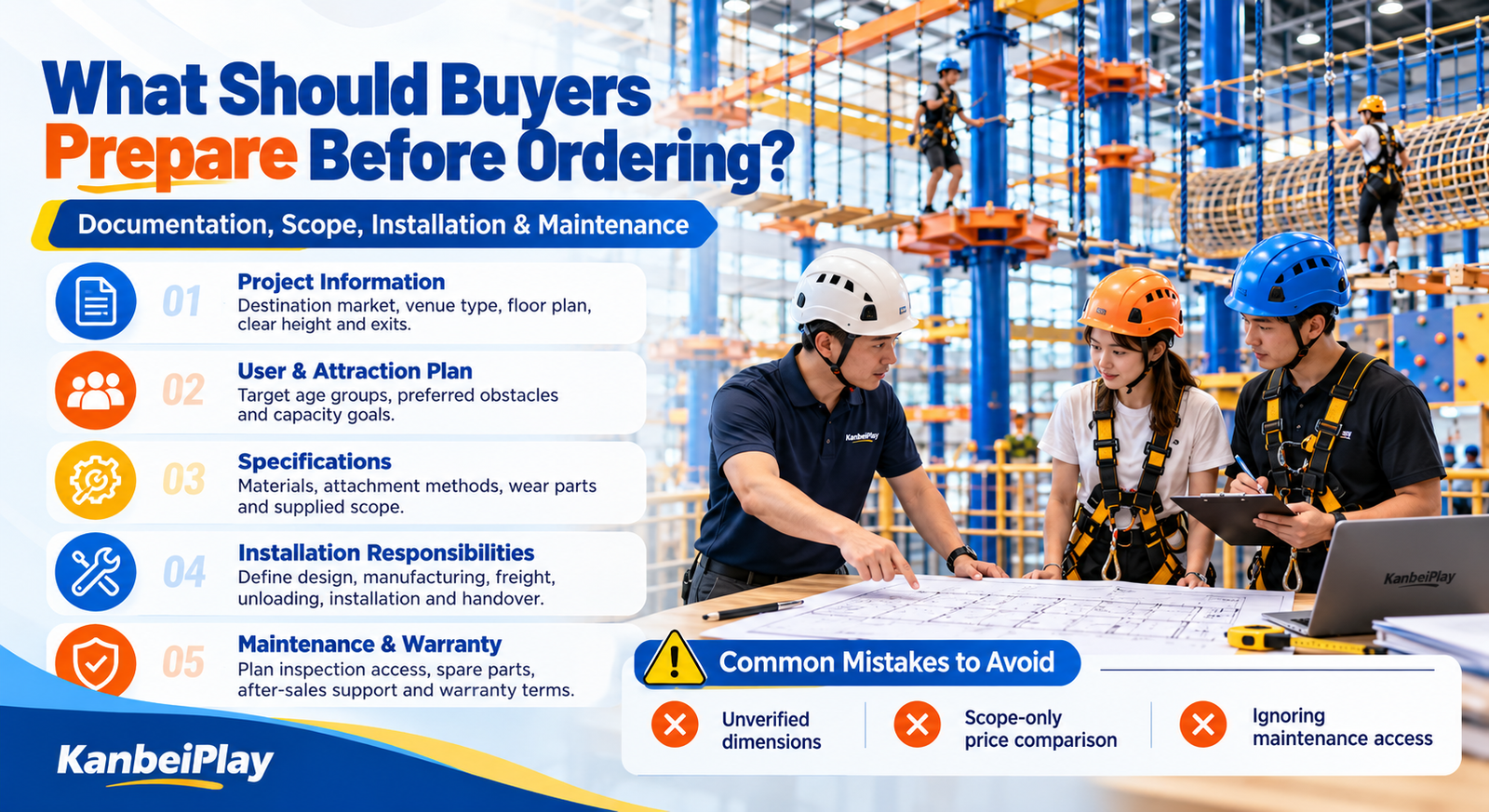
Quick Answer Before working with an indoor playground manufacturer, prepare a measured floor plan, clear ceiling height, target age range,