
Quick Answer
Choose a rope course manufacturer by comparing coordinated drawings, an itemized equipment package and a written installation responsibility list. Ask how the proposed route fits the measured venue, which support and system components are supplied, and what information or local work the buyer must arrange.
The most useful offer explains interfaces between the course, the building and the operating team. KanbeiPlay includes rope course options within its adventure play range. Buyers should confirm the selected configuration and support deliverables for their own project instead of treating a general rendering or broad service description as a complete agreement.
Are Suppliers Designing Against the Same Site and User Brief?
Provide one measured venue plan, clear-height information, column positions and relevant overhead obstructions. Describe the intended users and whether the course is a standalone attraction or part of a larger venue.
Ask each rope course manufacturer to identify assumptions and missing information. A proposal based on an unverified building dimension should be labeled accordingly. Otherwise, visually similar concepts can conceal different expectations about the site.
Use the same brief when comparing suppliers. If one proposal assumes a different route, support arrangement or participation model, record the difference before comparing its price with another offer.
Which Drawings Should Buyers Request from a Rope Course Manufacturer?
Clarify which documents are available at enquiry, approval and installation stages. A concept drawing may communicate the route but leave important dimensions, interfaces and responsibilities for later development.
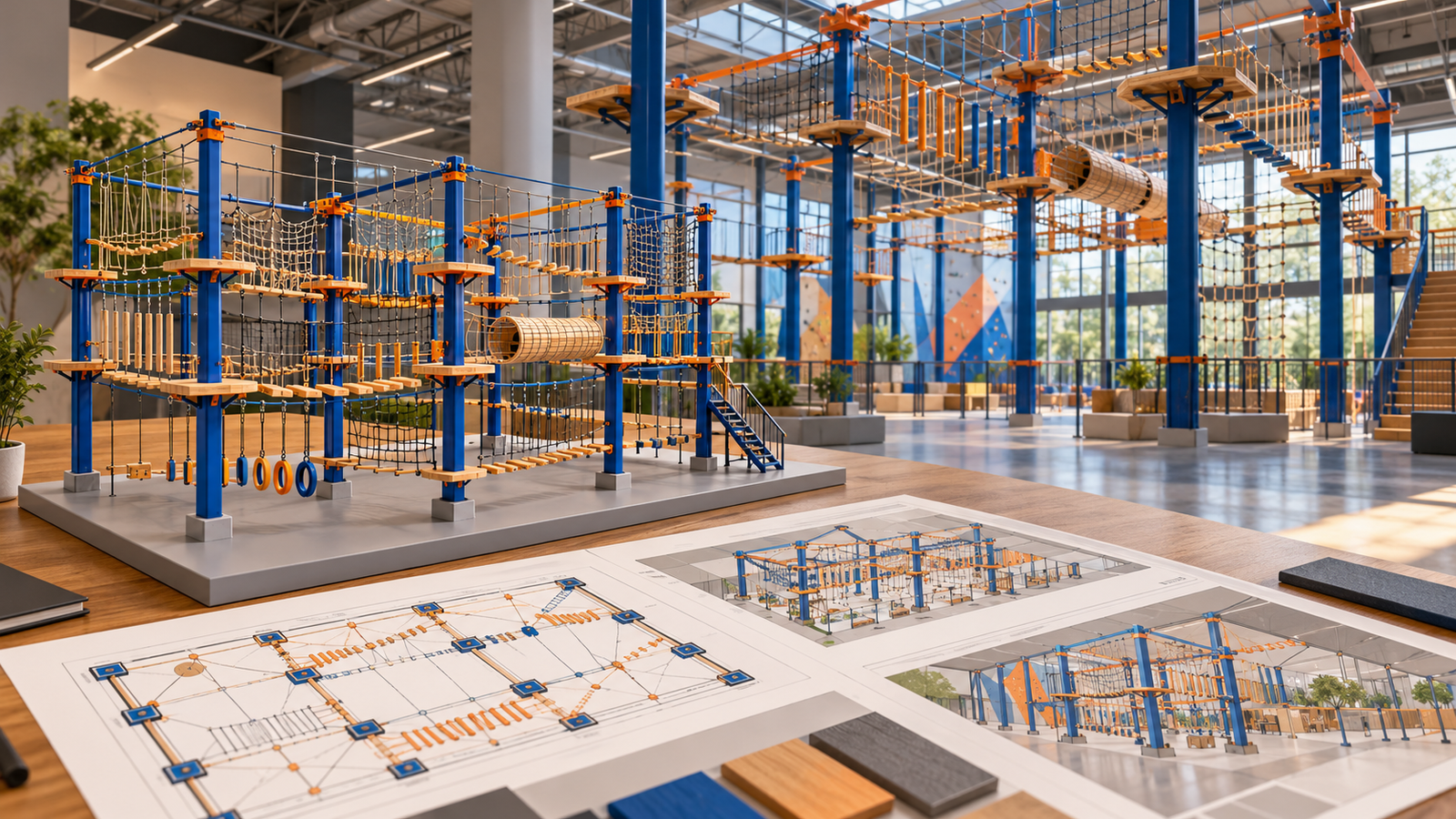
Ask for the information needed to understand the proposed activity route, platforms, access and relevant support arrangement. Identify the drawing revision and how it connects to the quoted equipment schedule.
When evaluating KanbeiPlay as a rope course manufacturer, request project-specific confirmation of the documents included. A finished visual should help explain the proposal while the relevant drawings define what is being approved.
How Should the Equipment and System Scope Be Itemized?
Request a rope course manufacturer equipment schedule identifying the supplied activity elements, structures, platforms and associated components relevant to the selected configuration. Ask which connections, hardware and supporting items are included.
If a participant protection system or other specialist equipment is proposed, request its identification, documentation and supply boundaries. Do not infer compatibility or completeness because components are pictured together.
| Scope area | Question for the supplier |
|---|---|
| Activity route | Which elements and quantities are priced? |
| Supports and platforms | What is supplied and what depends on the venue? |
| System components | Which models and associated items are included? |
| Installation materials | What comes with the order and what is local supply? |
| Drawings and guidance | Which deliverables are included at each stage? |
| Handover | What operating and maintenance information is supplied? |
Keep optional attractions separate. This allows the buyer to compare a consistent base package and understand what an additional element actually changes.
Who Handles Building Interfaces and Local Installation Work?
Ask the rope course manufacturer to explain the proposed support concept and the site information it requires. Identify which details need review by the buyer's responsible building or structural professionals.
A course connected to a building creates different coordination questions from a separately supplied support structure. Neither description alone establishes suitability for the actual site. The relevant interface information needs to be reviewed before local works proceed.
Create a responsibility list covering equipment supply, local preparation, assembly, handling and technical assistance. If on-site supplier personnel are included, define their role and the resources the buyer still needs to provide. “Installation support” should not remain an undefined line in the quotation.
What Evidence and Operating Information Should Be Reviewed?
Request available documents associated with the proposed equipment and systems. Check the item identification and stated scope, and ask the responsible project team to establish any further requirements for the destination venue.
Discuss how the course is intended to be operated, including the instructions, training arrangements and support information applicable to the selected configuration. Clarify who prepares the venue's operating and emergency procedures and which input the supplier provides.
Keep evidence types distinct. A rendering shows an intended appearance; a production photograph shows a manufacturing stage; an installed-project image shows a particular site. None should be presented as proof of an unrelated order or every project requirement.
How Should Changes, Handover and Future Support Be Agreed?
Agree with the rope course manufacturer how route changes, substitutions and site differences will be reviewed. A modified activity can affect surrounding components or operating arrangements, so a change should be assessed in context rather than accepted as an isolated replacement.
Ask for the consequences in writing: revised drawings, equipment schedule, price and installation responsibilities where affected. Use a named buyer contact for approvals to avoid conflicting instructions from different project participants.
Before ordering, agree handover documents, component identification, maintenance guidance and the after-sales contact process. Request the actual support and warranty conditions. Do not assume that a general service statement includes unlimited revisions, training or replacement items.
What Information Should Buyers Prepare?
Prepare the project location, measured plan, clear heights, known building constraints and intended users. Describe the preferred course experience, available structural information and installation model. Include budget priorities, delivery restrictions and the opening target. List the documents and support you expect so suppliers can price a comparable scope and identify matters requiring further review.
Common Mistakes to Avoid
- Comparing routes that use different site assumptions.
- Approving a course from its rendering alone.
- Leaving support and building interfaces undefined.
- Treating installation guidance as a complete local labor package.
- Accepting substitutions without reviewing the affected system.
Frequently Asked Questions
Can a manufacturer quote before receiving detailed building information?
An initial proposal may be possible, but assumptions should be identified. Confirm the information needed before final design approval and permanent site work.
Should all suppliers offer the same course route?
They may propose alternatives. Compare each against the same user and venue brief, and record differences in equipment and supporting requirements.
Does a supplied structure remove the need for site review?
No. The relevant installation and site interfaces still need to be reviewed by the responsible project parties.
Is operating training automatically included?
Confirm the actual offer. Identify the training, documents and assistance provided, who receives them and any separately priced services.
What should happen if the building changes during the project?
Notify the supplier and responsible site professionals. Review the effect on drawings, equipment and installation before continuing with affected work.
Commercial Buyer Checklist
For industry context, ACCT International provides challenge-course standards and accreditation information. Ask the responsible project professionals which requirements apply to the proposed course and destination. Referencing ACCT does not establish that a manufacturer, component or venue is accredited.
- Use one site and user brief.
- Identify provisional information.
- Compare drawing deliverables and revisions.
- Match the route to an equipment schedule.
- Identify all proposed system components.
- Assign building-interface reviews.
- Define installation assistance and local work.
- Clarify operating support deliverables.
- Agree change approval procedures.
- Confirm maintenance and handover information.
Final Thoughts
A rope course supplier comparison should reveal how the proposal becomes an installed and supported attraction. Clear drawings, identified components and assigned responsibilities provide a better decision basis than appearance or package price alone.
To discuss a KanbeiPlay proposal, send your venue drawings and course requirements. Include clear heights, intended users, available building information and the installation support you expect.