
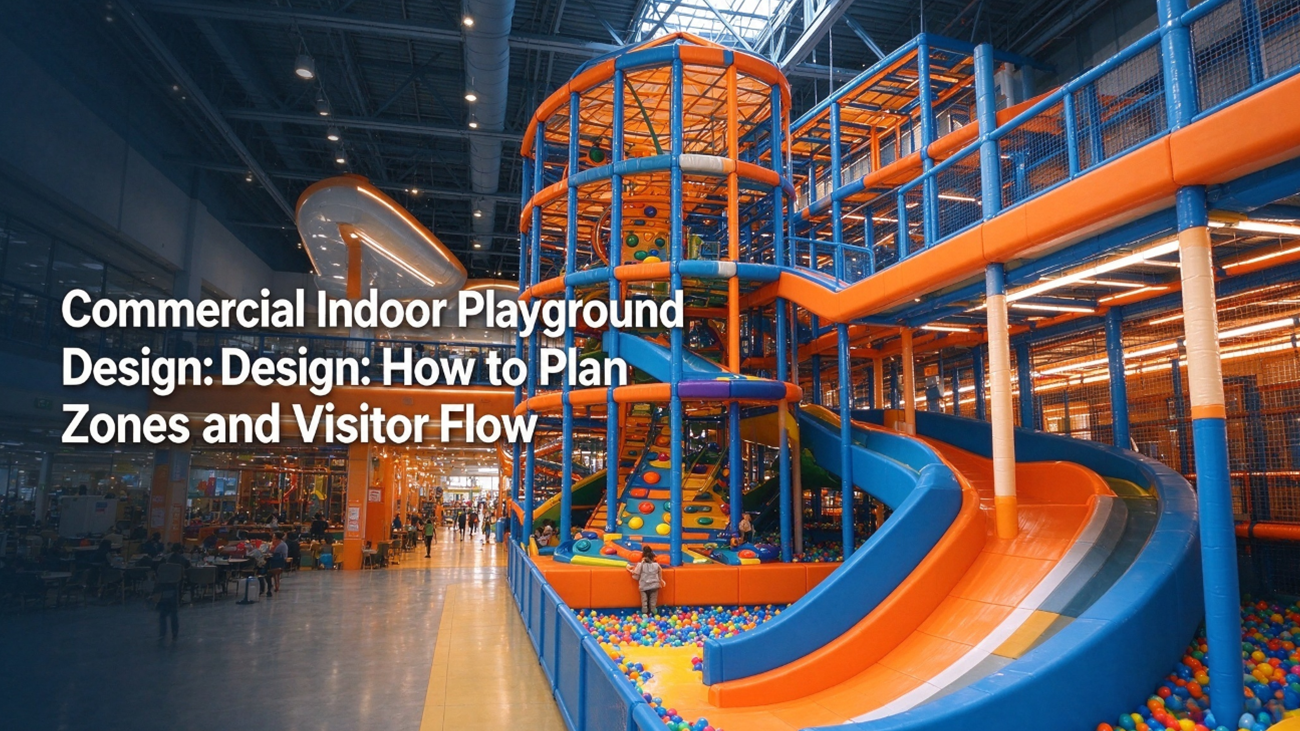
Commercial Indoor Playground Design: How to Plan Zones and Visitor Flow
Quick Answer Getting the layout right is one of the most important steps before opening a Commercial Indoor Playground.


If you are weighing whether to launch a new family entertainment project, you will naturally focus on one core question: can a Commercial Indoor Playground deliver stable, predictable returns? In short, it can, but profitability hinges heavily on careful budgeting, sensible equipment selection, accurate revenue forecasting, and a reliable Indoor Playground Supplier. Many new investors rush into signing a venue lease before mapping out all expenses, only to hit cash flow pressure halfway through construction. A complete financial estimate covers upfront capital outlay, recurring running expenses, and realistic income projections, so you can judge ROI before committing your budget.
As with all leisure businesses, there are risks, but this is a popular choice as it meets steady local demand from families with young kids, birthday parties, preschools, and weekend visitors. A Commercial Indoor Playground runs consistently on rainy days, cold winters, and hot summers – helping you keep your visitor flow throughout the year. Below we break out typical initial investment items, ongoing operating costs, and common revenue assumptions so that you can run a clear return estimate.
| Category | Items | Notes for return calculation |
| Initial investment | Venue deposit & renovation, Indoor Playground Equipment, shipping, installation, safety certification, branding, ticketing system | One-time spending before opening; forms the base of your total capital |
| Ongoing operating costs | Monthly rent, staff wages, utility bills, equipment inspection & maintenance, insurance, marketing, cleaning supplies | Fixed and variable costs that subtract directly from gross revenue |
| Revenue assumptions | General admission tickets, birthday party packages, group bookings, add-on sales for snacks and merchandise, membership cards | Peak revenue usually falls on weekends, school holidays, and vacations |
The total figure varies dramatically based on location, space size, and the grade of Commercial Playground Equipment. You can split the lump sum into several major buckets for easier calculation.
Venue is often the highest variable cost. If you rent space in a shopping mall, the unit price per square meter will be much higher than a standalone warehouse on the city outskirts. Besides the rent deposit, you need to reserve money for fire safety renovations, floor surfacing, lighting, restroom upgrades, entrance counters, and fenced safety boundaries. Fire compliance work is non-negotiable for indoor play venues, and skipping related budgets frequently delays your opening date.
Equipment takes up the second biggest share of your startup budget. Indoor Playground Equipment covers soft play structures, slides, climbing walls, ball pits, obstacle courses, interactive games, and toddler zones. Premium materials, custom branding, and higher safety standards push the quote upward, while standard modular sets come with a more predictable price tag. Working with a trustworthy Indoor Playground Supplier also means you receive clear itemized quotations instead of vague bundled pricing.
Shipping fees depend on the total volume and delivery distance. If your venue sits in a remote region, or you order oversized custom play structures, freight and local haulage charges will rise accordingly. Always ask your supplier to separate shipping from equipment cost, so you can compare offers fairly.
Installation cost includes the labor team, assembly tools, on-site adjustment, and final safety checks. Complex multi-level play systems take longer to assemble than compact toddler areas. If your venue is on an upper floor of a mall, budget for lifting equipment and extended working hours. Ask for a clear installation scope covering who supplies power, who handles trash removal, and who tests each play zone before handover.

Choosing the right Indoor Playground Equipment depends on your target age group and space size. Popular categories include:
Mix several categories to serve different visitor ages. A balanced selection keeps older kids engaged while parents with toddlers still feel the venue is worth a return visit. Avoid buying too much of one single type; a venue offering only soft play often struggles to attract teenagers, while an all-trampoline venue can feel unsafe for very young children.
Larger venues need more equipment, higher ceilings, more staff, and bigger utility budgets. As square meterage grows, the cost per square meter of equipment usually drops because fixed costs like design and shipping are spread across a bigger order. That said, the total sum still climbs. A 200-square-meter mini play area and a 1,500-square-meter family entertainment center operate on very different budget structures. Match your project size to realistic local demand rather than chasing maximum scale.

Revenue forecasts should be based on conservative assumptions, not best-case scenarios. Build your estimate around:
Use a realistic occupancy rate for your area. A new venue in a busy mall might run 40 to 60 percent capacity on weekends, but weekdays often sit far lower. Keep your forecast aligned with similar local play venues, and review the numbers every quarter after opening.
Rent, wages, utilities, insurance, cleaning supplies, equipment maintenance, and marketing comprise your monthly operating costs. Don’t forget about staff training and annual safety inspections (mandatory in some areas). Reserve approximately 5 to 10 percent of monthly revenue for maintenance and replacement parts. Repairing equipment fast prevents downtime on peak weekends while maintaining customer trust.
Choose your Indoor Playground Supplier carefully, because equipment quality and after-sales service directly affect long-term running costs. A reliable supplier should offer:
Ask for project references and visit a completed site if possible. A supplier with real overseas projects understands customs, shipping, and installation coordination far better than a trading company with no factory.

High-quality Commercial Playground Equipment lasts longer, needs fewer repairs, and reduces accident risk. Cheap equipment may save money at purchase but often leads to frequent breakdowns, expensive replacements, and reputational damage if a safety issue occurs. A well-built play structure with certified materials keeps visitor satisfaction high and supports steady revenue for years. Treat equipment spending as a long-term investment, not a one-off cost to cut.
Before requesting a detailed budget, prepare the following items:
Complete information lets suppliers give you accurate quotations and realistic schedules instead of rough guesses.
New investors often run into these avoidable mistakes:
Review every item with your supplier and financial advisor before committing capital.
Total spending varies widely, from compact community sites all the way up to full-scale family entertainment centers. The final budget hinges on your venue footprint, the quality tier of Commercial Playground Equipment, freight fees, on‑site assembly, and local labour expenses. Reach out for a detailed breakdown quote so you can work out your real expenditure.
Yes, when revenue, operating costs, and occupancy are managed carefully. Many venues earn steady profits after the first two to three years. Location, ticket pricing, and party package sales are the strongest profit drivers.
Most play spaces blend soft play frames, slides, climbing features, ball pools, dedicated toddler corners, and interactive game stations. The right lineup will shift based on which age groups you aim to serve and how much usable floor area you have.
Payback periods usually range from roughly two to four years for well-run venues, though this depends on investment size, local demand, and operating efficiency. Conservative forecasting protects you from overestimating early returns.
Revenue is total income from tickets, parties, and add-on sales. Operating profit deducts rent, wages, utilities, maintenance, and marketing from revenue. Track both figures separately so you know whether your venue is merely busy or actually profitable.
Estimating costs and returns for a Commercial Indoor Playground is a numbers exercise combined with careful planning. Build a full budget covering venue, equipment, shipping, and installation, then layer realistic operating costs and revenue assumptions on top. Work only with an Indoor Playground Supplier that gives itemized quotations, verified certifications, and clear after-sales support. When every number is transparent, your investment decision is far easier to justify.
Ready to plan your Commercial Indoor Playground investment? Request a project scope and budget review from Kanplay, a turnkey Indoor Playground Equipment manufacturer and Indoor Playground Supplier with 14+ years of experience and 1,000+ global projects. Our team will map venue, equipment, shipping, and installation costs, and share realistic revenue and ROI estimates for your market. Contact us today.
Quick Answer Getting the layout right is one of the most important steps before opening a Commercial Indoor Playground.
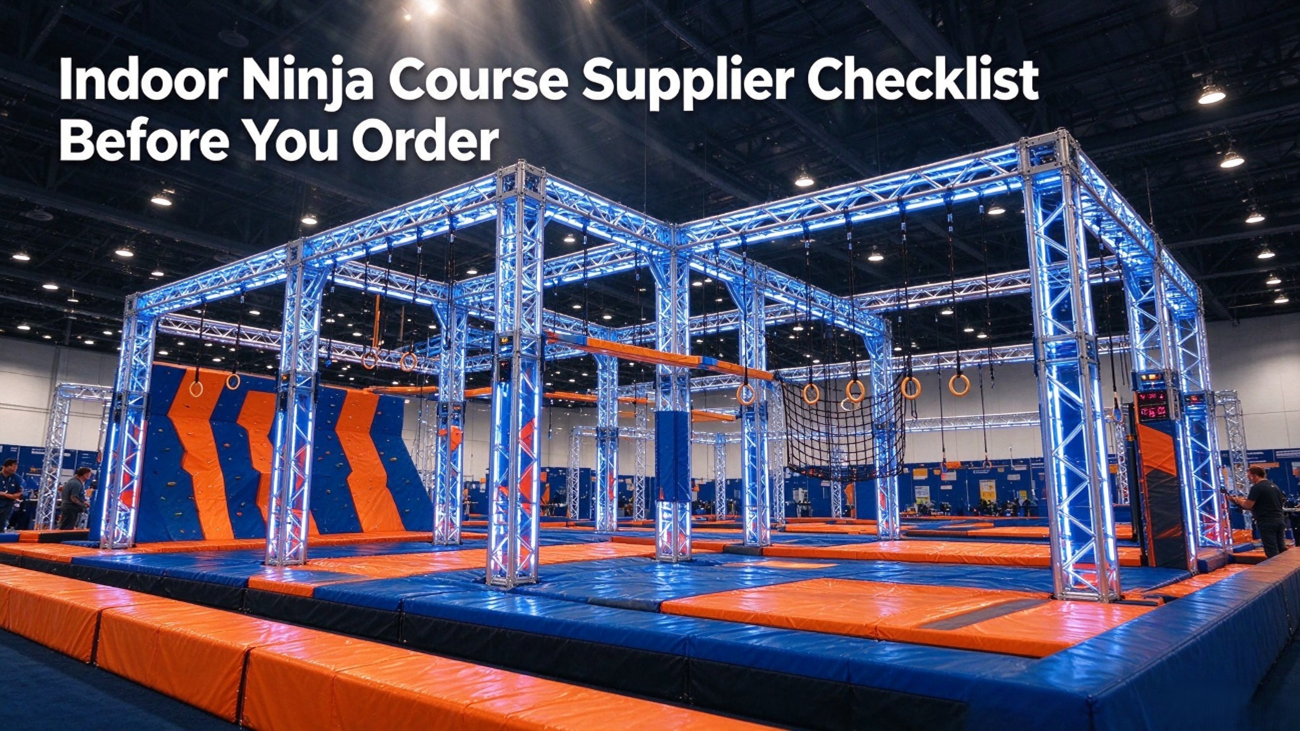
Quick Answer Choosing the right Indoor Ninja Course supplier comes down to four things: proof of real factory capability,