

How to Plan a Safe Toddler Zone Indoors
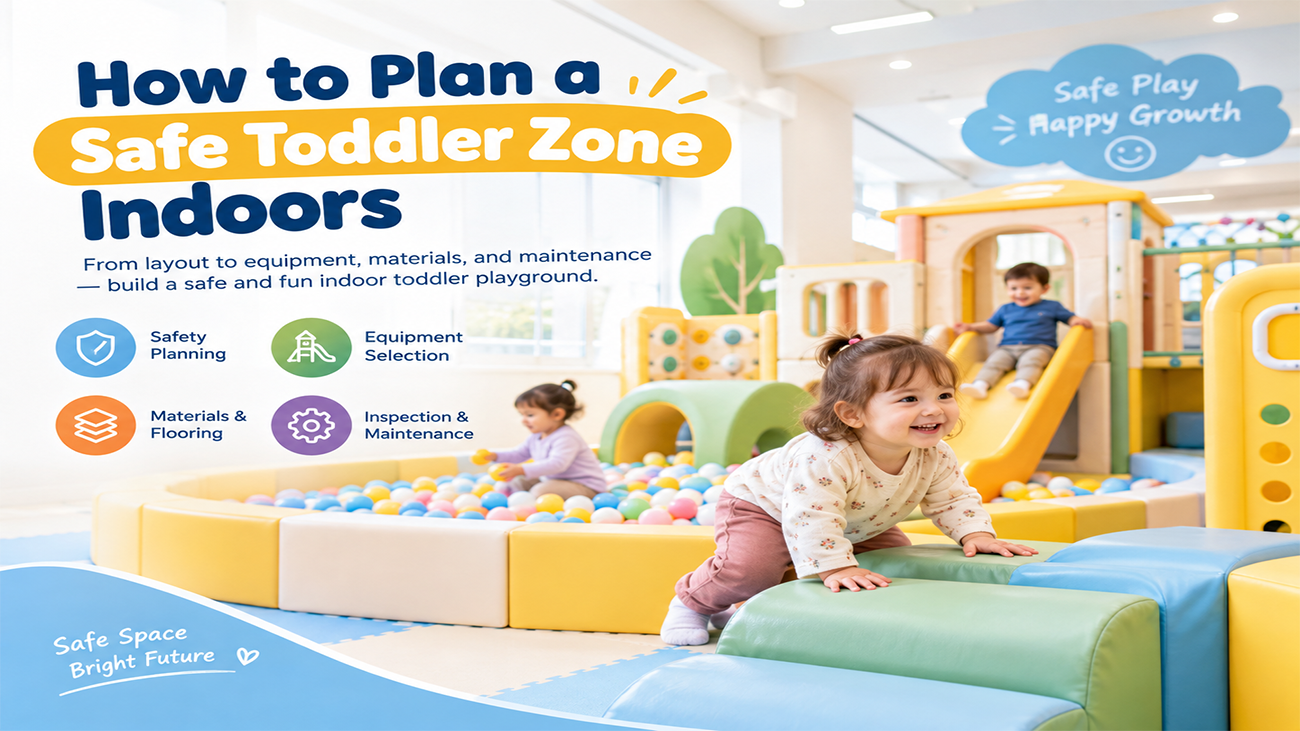
Table of Contents
ToggleHow to Plan a Safe Toddler Zone Indoors? Creating a safe Toddler Play Area requires multi-dimensional system planning, including research, site layout, equipment selection, flooring materials, daily operation, and maintenance. Qualified indoor playgrounds should not only be interesting, but also rely on suitable amusement equipment to reduce various safety risks. The following article will break down the planning points step by step to help you build a standardized and safe Indoor Toddler Playground.
What Should You Confirm Before Planning a Toddler Play Area?
Target Age Group
To build a safe Toddler Play Area, the first step is to clarify the target age group of children. Children's mobility, cognitive level, and risk resistance vary greatly at different ages. After accurately identifying the age group, we can choose the amusement equipment in a targeted manner and avoid equipment that is too high, too steep, or has sharp dead angles.
Available space
The size of the space directly determines the layout, facility allocation, and functional zoning of the Indoor Toddler Playground. Before planning, it is necessary to accurately measure the length and width, floor height, and corner position of the available area, and avoid dangerous points of hard furniture. Sufficient space can realize the independence of functional zoning; narrow spaces need to streamline equipment, give priority to retaining basic play facilities, and eliminate the problem of compressing children's activity space for stacking equipment.
Parent and Staff Supervision
When planning the venue, the perspective of supervision and the allocation of supervision manpower must be considered in advance. In the family scene, it is necessary to reserve a permanent care position for parents. In the design stage, it is necessary to predict the difficulty of nursing, avoid the appearance of blind spots to prevent accidents caused by children being alone and accidentally touching dangerous items.
How Should a Safe Indoor Toddler Playground Be Designed?
Create Clear Play Boundaries
The activity area needs to be set up with clear and soft play boundaries to help children understand the scope of activities. The boundary is highly suitable for young children, as it can not only serve as a barrier but also not block the caregiver's view, so that the activity range of the entire Indoor Toddler Playground is clear at a glance, reducing the risk of losing.
Separate Toddlers From Older Children
The intensity of children's activities at different ages varies greatly. When designing the venue, the play area for young children must be divided separately, using soft partitions and signs to distinguish, and older children must be prohibited from entering the infant zone at will.
Maintain Clear Sightlines
In the whole activity area, do not place large equipment too high to block the view of the caregiver, and all partitions and amusement facilities should be kept at a reasonable height. Parents or staff standing at the monitoring point can see every child in the venue, which is convenient for stopping dangerous movements in time.
Leave Enough Circulation Space
When arranging the play equipment, there should be enough space for circulation between the equipment. Children need buffer areas to run, turn, and fall, and narrow aisles are prone to crowding and trampling. In the layout of an indoor toddler playground, the width of the channel should meet the needs of multiple people to pass at the same time.
What Toddler Playground Equipment Should Be Included?
Low Slides and Soft Climbers
Low slides and soft climbing frames are the core amusement equipment of a toddler play area. The drop of the slide should not be too high, and there should be protective handrails on both sides. The soft climbing facilities use sponge-outsourced waterproof fabric, suitable for children's hands and feet to grip, and exercise limb strength.
Crawling and Soft Play Equipment
For children who are still in the stage of learning to climb, it is necessary to match with crawling and soft equipment such as tunnels, soft steps, and padded hills. This kind of equipment is soft in texture, which encourages children to crawl and drill holes to exercise their sense of balance and physical coordination. It is an indispensable basic configuration in the indoor children's field.
Ball Play and Sensory Activities
Ball games can exercise children's hand-gripping ability, and a variety of tactile props can stimulate sensory development. When choosing this kind of equipment, you should pay attention to the depth of the ball pool to prevent the risk of burial and suffocation. At the same time, ensure that the size of the parts is larger than that of the children's mouth.
How Should a Toddler Play Area Be Zoned?
Main Play Area
The main play area is the core area of the Toddler Play Area, which focuses on low slides, soft climbing frames, crawling tunnels, and other amusement equipment. This area should occupy the largest area of the site, and a full set of protective cushions should be laid on the ground to ensure that the activity is open and to reduce obstacles. It is the most lively activity area in the whole site.
Quiet and Sensory Area
In addition to the main play area, the quiet sensory area is divided separately. The quiet sensory area is also an activity site. Place cushions, soft picture books, touch toys, and quiet partitions to prevent fast-moving children from crashing into children who are resting, and improve the function of the venue.
Parent Seating Area
The planning of the activity site should not ignore the needs of caregivers, and it is necessary to set up a separate parent rest area. The rest area is adjacent to the playground. It is equipped with seats and storage space. The parent rest area does not block the view, so caregivers can take care of their children at ease and improve the user experience of the entire Indoor Toddler Playground.

What Materials and Flooring Should an Indoor Toddler Playground Use?
Soft Protective Surfaces
High-density EVA cushions and rubber floor mats are preferred, which have the effect of shock absorption and cushioning and reduce the risk of injury when children fall. The floor mat is tightly stitched, and the gaps are narrow to prevent fingers from getting stuck.
Rounded and Padded Components
All amusement facilities must be treated with rounded corners. Metal and hard plates are all wrapped in thick, soft bags, and sharp corners and hard edges should not appear. When selecting equipment, focus on checking the corner process, which is the hard standard for the selection of Indoor Toddler Playground materials.
Easy-to-Clean Materials
The material must be waterproof, smooth on the surface, and easy to wipe and disinfect. The activity area is made of washable materials, which can quickly be cleaned and ensure the hygiene of the site.
How Should Toddler Playground Equipment Be Inspected and Maintained?
Daily Visual Checks
Before opening every day, the staff conducts a visual inspection of the entire Toddler Play Area. Check whether the soft bag is cracked, whether the floor mat is warped, whether the connectors are loose, and troubleshoot the risk of small parts falling off.
Cleaning and Maintenance
Wipe the surface of the equipment, clean up the debris in the gaps of the floor mat, regularly clean and sterilize ocean balls and sensory toys, maintain the hygiene of the site, reduce the spread of germs, and extend the service life of the equipment.
Repair and Replacement
The soft package is damaged, the floor mat is aging, and the fasteners are loose. If you can't continue to use it reluctantly, it should be repaired in time. If the equipment is seriously damaged and cannot be repaired, it should be replaced directly.
How Much Space Does a Safe Toddler Play Area Need?
The space demand of a Toddler Play Area should be determined by the number of children present at the same time. Small venues can serve a small number of children; commercial venues need to be enlarged according to the flow of passengers to avoid crowding. Insufficient space will greatly increase the risk of collision. Leave redundant space when planning, and do not maximize the toddler playground equipment.
Common Indoor Toddler Playground Safety Mistakes
Mixing Age Groups
The most common mistake is to put older children and toddlers in the same area to play. If the site is not divided, the low-age play area will be continuously exposed to the risk of collision, which is contrary to the original intention of the equipment design.
Poor Parent Visibility
The site uses high partitions and large-scale equipment, creating a large number of blind spots, and caregivers cannot observe children.
Overcrowding Equipment
In order to enrich the project, the limited space is filled with amusement equipment, and the traffic buffer area is compressed. The venue is crowded; children have nowhere to dodge, and it is easy to hit other equipment after falling, which is a very common problem in indoor playgrounds.
Ignoring Cleaning Access
There is no reserved cleaning channel. Under the floor mat and the dead corners of the equipment cannot be cleaned and disinfected, and bacteria accumulate, which reduces the hygiene level of the activity area and improves the hidden health risks.
People Also Ask
How do you make a toddler play area safe?
The core is to zone isolation, soft-padded protection, maintain caregiver's line of sight, match age-appropriate amusement equipment, establish a daily inspection and maintenance system, and build a complete safety system.
What toddler playground equipment is safest?
Low, fully soft-packed equipment with no small removable parts is the safest, such as low soft slides, crawling tunnels, and padded hills.
How should an indoor toddler playground be designed?
An Indoor Toddler Playground needs to be divided into independent children's activity areas, with clear boundaries, quiet and quiet zones, to ensure the sight of caregivers. And parents' rest points are supported.
What flooring is best for a toddler play area?
High-density splicing EVA cushions and rubber shock-absorbing mats are the first choice. They have a strong cushioning effect, are waterproof, and are easy to clean.
How often should toddler playground equipment be inspected?
In the operation of a Toddler Play Area, daily inspection is indispensable to ensure the continuous safety of the venue.

Conclusion / CTA
Safety is the core background of an Indoor Toddler Playground. From the preliminary confirmation of age and available space to site boundary design, functional zoning, material selection, and long-term equipment inspection and maintenance, every step affects the safety of children's play. If you are preparing an indoor children's play space, you can combine the above planning points to customize the plan to adapt to the scale of the venue and create an activity space that is both interesting and safe, so that young children can explore and play at ease.
Related Posts
Indoor Playground Equipment Suppliers: How Should Buyers Score a Shortlist?
22 9 月, 2026
没有评论
Quick Answer Buyers