
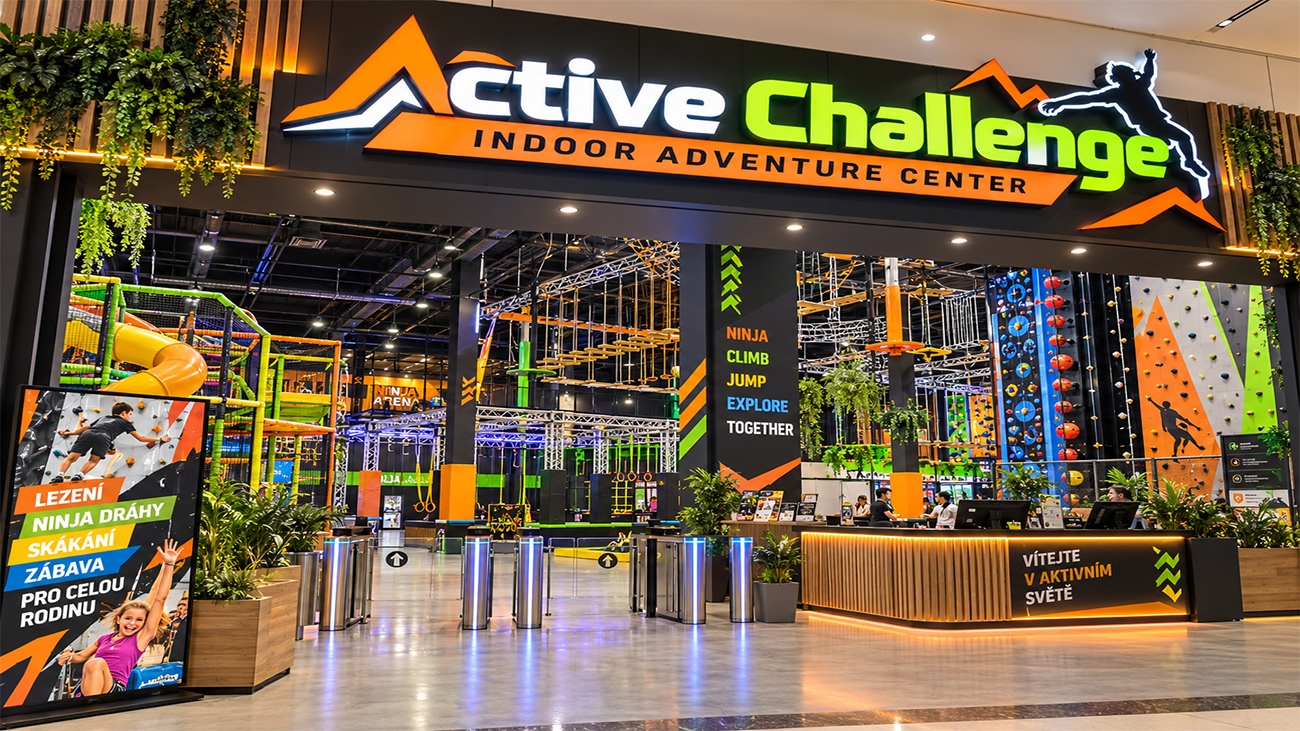
Indoor Playground and Ninja Course Project in the Czech Republic
Project Basic Information Project Name: Active Challenge Indoor Adventure Center Location: Czech Republic Project Type: Commercial Indoor Playground /

Table of Contents
ToggleYou know what? Nowadays, parents are paying more and more attention to play venues for their kids. Most parents want to find a safe playground that is completely unaffected by the weather. This has created extremely strong market demand for the global indoor playground industry. The sector is absolutely booming with excellent prospects. Driven by such huge market demand, its compound annual growth rate has remained steady at 8% to 10%.
Spending a large sum of money on upfront investment is already an outdated way of doing business. Nowadays, if you want to break into this industry, you can start with zero cost. You can launch the business as a no-money startup. How do you do it? Simply rely on revenue-sharing partnerships, community crowdfunding, and asset-light business models.
Next, I’m going to share a complete guide specially designed for B2B aspiring entrepreneurs. I will walk you through every step personally. From building your soft play business model, with no money, to achieving steady profits step by step, I’ll explain everything clearly, all at once.
This indoor playground business plan covers all you need to know about how to start an indoor playground business with no money.
As I was saying earlier, even with very low upfront investment, an indoor playground can still make solid money from plenty of other revenue streams:
If you want to launch your indoor playground business with zero cost, you need to adopt a business mindset that focuses more on operational efficiency and cash flow:
So, how can you start an indoor playground business with no money? You need to partner with venues that have large foot traffic and a strong appeal to families with kids. This way, you can completely cut down the rent cost.
You can raise funds in advance through pre-sales. This way, you can use the money to purchase playground equipment, as well as cover the daily operation and maintenance costs of the playground:
Of course, it’s also crucial to partner with brands that target families and kids. This way, you can get free equipment or financial support:
Another way to start an indoor playground business without spending money is to use your own trade skills and labor for capital or resources instead of a cash investment:
This is an ideal model for anyone looking to start an indoor playground business with no money. It’s a portable operation that requires no fixed storefront. The model relies on two key elements:
Using temporary venues to test the market in this industry is a great way to greatly lower your startup risks:
Of course, if you want to cut rent expenses significantly, you can also share a venue with other family-oriented stores:

As a beginner, how do you avoid wasting time on immature business ideas or those that haven’t been tested by the market? You need to first confirm the market demand in your local area.
First, identify your target audience. Since this is an indoor children’s playground, your target group should focus on parents of kids aged 1 to 10 living in urban areas.
Second, conduct competitor analysis. You need to research your rivals. Look into other indoor and outdoor playgrounds in your local area, study their pricing, equipment configurations, and figure out the operational mistakes and weaknesses they have made in their business. You have to analyze all of these carefully.
Now you need to start on a small scale. For your indoor children’s playground, only equip it with the most basic facilities to strictly control your upfront costs.
When it comes to equipment, you should only choose core essentials, such as soft play blocks, small slides, and ball pits. Avoid buying fancy or high-end equipment.
As for the venue, make a small-scale layout plan. It is best to choose a space of 500 to 1000 square feet, which is the ideal size suitable for our current small-scale revenue-sharing business model.
Next, how can you move into a venue with zero rent? You need to negotiate cooperatively and skillfully with your preferred venue owners.
During the negotiation, you must highlight what you can bring to the venue. For example, you can deliver large foot traffic and a strong appeal to family and parent-child customer groups.
In terms of site selection for potential venues, you need to choose locations strategically. Prioritize spots that are easily accessible, convenient to reach, and with parking available. Ideal locations include areas near residential communities and shopping malls.
Where will the money come from for equipment purchases and the daily operations of the indoor playground? This is why you need to raise funds in advance before opening. Here are the common methods:
First, promote and sell memberships early through local parent groups, mom communities, neighborhood chats, and social media platforms.
Second, offer birthday party bookings. During pre-opening promotions, advertise early bird discounts for customers who reserve in advance.
Third, partner with schools and kindergartens to host their group play sessions. This way, you can fully book your indoor playground’s time slots well before opening
Now you need to fully equip your indoor playground through various methods, all without any cash investment.
The first method is to buy second-hand playground equipment on Facebook Marketplace. Such items are 30% to 50% cheaper than brand-new ones.
The second option requires no large upfront capital for equipment purchases. Instead, you can rent playground equipment on a monthly basis. The monthly rental cost ranges from $200 to $500.
Third, you can adopt a modular way to arrange and add your playground facilities. You can start a business with only a basic set of equipment. As your indoor playground revenue grows, you can gradually add more facilities and expand scale until it becomes a standard-sized indoor playground.
Soft opening is the most critical part for a beginner launching an indoor playground. During this phase, you need to test your operational and opening processes in real time, collect feedback from customers—both positive and negative—and use their input to optimize and adjust your playground equipment and marketing strategies.
First, for the actual operational trial: You can sell a limited number of memberships in advance and invite these pre-sale members to enjoy discounted visits during the soft opening. Use their feedback to make adjustments.
Second, throughout the soft opening, continuously gather customers’ suggestions to refine your equipment layout, pricing plans, pricing rules, and venue layout.
Now comes the final step. You don’t need to invest any extra capital. Instead, you only reinvest the profits you earn from daily operations to grow your business.
First, you can use your operating profits to purchase new equipment and expand your business space.
Second, after you expand your venue and upgrade your store, growing customer traffic will give you a much better chance of negotiating with your venue partner to secure a larger operating space.
Third, as your indoor playground becomes more mature, you will no longer rely only on admission fees for income. You can add new revenue streams. For example, you can set up a snack and beverage bar or designate a special area to sell cultural and creative merchandise. This not only builds brand uniqueness but also greatly improves your overall profit margin and diversifies your sources of income.
If the methods mentioned above still cannot help you start an indoor playground with zero capital, you can try the following alternative funding channels.
Most regions offer non-repayable government startup subsidies specially set up for family-oriented businesses. You can consult the local small and micro enterprise administration departments to apply for special support funds for community entrepreneurship projects.
You can actively look for angel investors. They invest in early-stage startups and provide capital in exchange for equity shares in your business. You can also cooperate with toy brands and other family-related companies to obtain financial support or playground equipment, which helps reduce your own upfront investment.
Local residents can make small investments and take shares in your project. This not only expands your promotion channels but also allows these participants to receive a share of the profits. This approach is highly effective: it helps build strong customer loyalty while providing you with interest-free and debt-free initial startup capital.
We talked about the step-by-step guide to starting an indoor playground with zero capital, as well as alternative funding channels to ease entrepreneurial pressure if a fully zero-investment approach is not achievable. Next, we will focus on the most critical part for beginners: cost reduction and risk control.
First, to cut costs, you can use second-hand and refurbished playground equipment. Second-hand equipment can reduce expenses by 30% to 50% compared with brand-new items. You can also refurbish old facilities at a low cost, such as repainting the surface or replacing soft outer covers, which saves a large amount of money.
Second, adopt a modular and scalable playground system. Modular equipment allows you to avoid overspending with a one-time large investment. You can expand gradually as your capital becomes sufficient. Meanwhile, modular facilities can be flexibly rearranged according to venue changes and market demand.
Third, apply a lean staffing and lightweight operation model. You can hire part-time employees or recruit volunteers to help run the indoor playground. Local parents can work as parent volunteers and be rewarded with free play access. If you have very limited operating funds, you can adopt online booking and self-check-in with QR code entry, which greatly reduces the need for on-site staff.
Lastly, follow a phased investment and expansion strategy. At the initial stage, beginners must avoid blind and rapid expansion, which can lead to one-time excessive capital waste. You should only expand step by step based on market demand after your cash flow becomes stable. By growing in phases, you can prevent capital shortage and business collapse before the playground even turns a profit. These strategies are extremely beginner-friendly for new entrepreneurs.
How to Maximize Your Revenue? Here’s Exactly How.
Offer two tiers of packages: a basic package and a premium package. Both are equipped with different levels of additional services, such as venue decorations and catering. Price the premium package at $300–$500, which can significantly increase profits.
Launch an auto-renewal membership service to secure a steady monthly income, which is crucial for the store’s cash flow. To further stabilize the cash flow, provide members with occasional perks, such as unlimited access to the indoor playground and discounts on consumption. This will attract customers, stabilize the passenger flow, and encourage them to sign up for long-term memberships.
The indoor playground can be used not only for individual visitors but also for rental purposes, such as undertaking corporate team building activities, school trips, and family gatherings. On slow business days, offer high-priced private bookings to avoid wasting the empty venue and maximize revenue.
Place high-margin items such as snacks, drinks, and branded merchandise (either of the indoor playground or cooperative manufacturers) near the checkout counter. In addition, when a customer books a party, proactively ask if they need to add extras such as goodie bags (one per person) or custom venue decorations, which can significantly increase the revenue of a single order.
You must spend 50 to 100 US dollars per month to purchase liability insurance, and this expense cannot be cut under any circumstances. If children get injured while playing in your indoor playground, this insurance will serve as your main safeguard against losses. Besides, you need to set clear rules, such as requiring parents to accompany their kids and setting age restrictions for different play facilities. This can greatly lower potential safety risks.
Seasonal passenger flow changes. Business in winter is far better than in summer, with visitor numbers rising by 30% to 40%. In summer, people prefer outdoor activities and are less willing to stay indoors. Therefore, you can launch various discounts, hold in-store activities, carry out membership card promotions, offer free gifts and drinks for visitors, or launch preferential policies for birthday party bookings and venue rentals. These methods can keep your business stable throughout the slow season.
You need to clean and conduct routine minor maintenance on all playground equipment every month. The relevant cost accounts for roughly 5% to 10% of the total value of all equipment. You should inspect all facilities every week instead of repairing them only after they break down, which will cost more money and bring hidden safety hazards
It is quite hard for newly opened small indoor playgrounds to hire reliable full-time or part-time workers. Once you recruit suitable employees, you can offer them proper benefits. For example, allow their children to play for free or enjoy consumption discounts in the store. Such welfare measures help retain staff and reduce turnover.
Within the first 30 days before opening, you need to conduct market research targeting the area surrounding the indoor playground. Clarify the core business model of the store and confirm cooperative partners for venue leasing. After finishing these tasks, you may test the actual local market demand. It is advisable to launch pre-sales of membership cards and birthday party packages to learn about real market needs.
After confirming the venue and signing revenue-sharing cooperation agreements with venue providers, you can start purchasing playground equipment. Subsequently, increase the promotion intensity of pre-sales activities. Meanwhile, establish online official accounts and carry out drainage work in local communities to build public momentum and create a sufficient publicity atmosphere for the official opening.
On the 90th day, officially launch the soft opening. During this period, actively collect feedback and suggestions from customers, and adjust business operation modes in a timely manner. After the official full-scale opening, reinvest the operating profits into business development, and gradually expand the scale of the indoor playground to develop it into a large-scale formal entertainment venue.
The following errors are the main reasons why most zero-cost indoor playground ventures end in failure:
Absolutely. You can adopt venue revenue sharing, pre-sales promotion, and various partnership cooperation models mentioned above to start a business without paying any upfront startup funds. It is recommended that you give priority to light-asset operation modes such as mobile and pop-up playgrounds, which feature the lowest entry threshold and are ideal choices for novice entrepreneurs.
The most economical option is to operate mobile soft play facilities such as inflatable castles. You can start operations by renting equipment and undertaking various on-site activities. In addition, you can make use of pre-sales customer resources and equipment leasing to launch your business with zero initial investment.
As mentioned before, profits mainly come from admission tickets, birthday party hosting, membership card sales, and various value-added services. Among all profit items, birthday party services bring the highest profit margin, while membership programs can guarantee stable and continuous income.
For early small-scale operation, you only need to prepare basic soft play facilities, including soft building blocks, small slides, and ball pits. The total cost of purchasing second-hand equipment ranges from 500 to 1500 US dollars. Alternatively, you can choose to rent them with a monthly rental fee of 200 to 500 US dollars.
For most zero-cost startup stores, if you complete sufficient market research and maintain stable pre-sales volume, you can achieve cost recovery and gain profits within three to six months. Furthermore, vigorously promoting high-profit birthday party services and membership programs can effectively speed up the profit cycle of your indoor playground.
It is completely feasible to start an indoor playground with zero cost. You only need to adopt a light-asset operation mode and focus on cash flow management to launch your business with no initial capital.
Besides, you can make full use of cooperation, joint operation, pre-sales promotion, and other lightweight business models. These methods can greatly cut down early-stage investment and effectively lower startup risks, which is especially suitable for novice entrepreneurs.
You are advised to start on a small scale. First, verify local market demand and confirm whether there is sufficient demand for indoor playground services in your area. Afterwards, reinvest your business profits to expand operation scales step by step. In this way, you can grow from scratch and eventually run a steadily profitable playground store in your soft play business model with no money.
Take action right away! Follow this startup guide to launch your zero-cost indoor playground business and seize opportunities in the booming family entertainment market. If you want to learn more details about indoor playground facilities or place relevant orders, feel free to contact us. We will provide you with all the information and solutions you need for your indoor playground funding options.
Project Basic Information Project Name: Active Challenge Indoor Adventure Center Location: Czech Republic Project Type: Commercial Indoor Playground /
Quick Answer Before ordering soft play equipment, confirm the cleaning instructions for the supplied materials, access to areas that need
Thank you very much for your inquiry! Your trust is our greatest motivation. We are committed to offering playgrounds that combine high quality with affordable pricing. Let us bring vitality to your venue!