
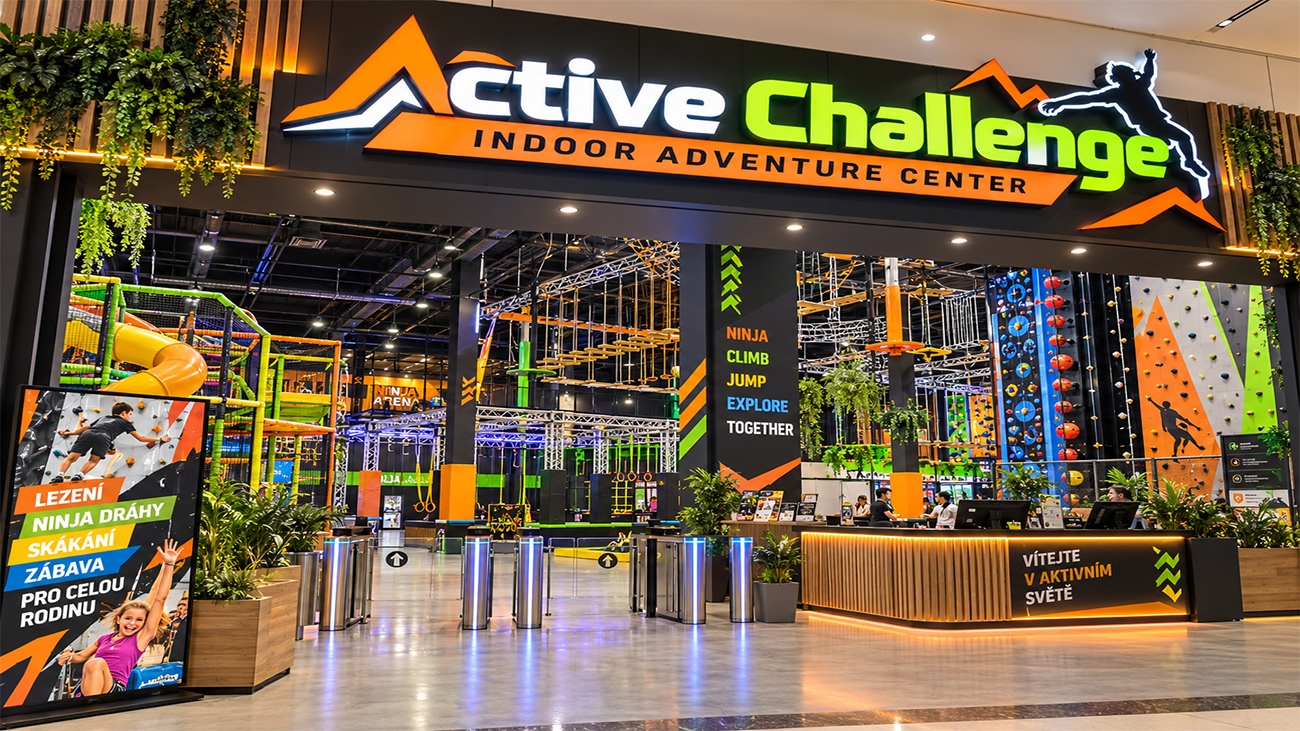
Indoor Playground and Ninja Course Project in the Czech Republic
Project Basic Information Project Name: Active Challenge Indoor Adventure Center Location: Czech Republic Project Type: Commercial Indoor Playground /

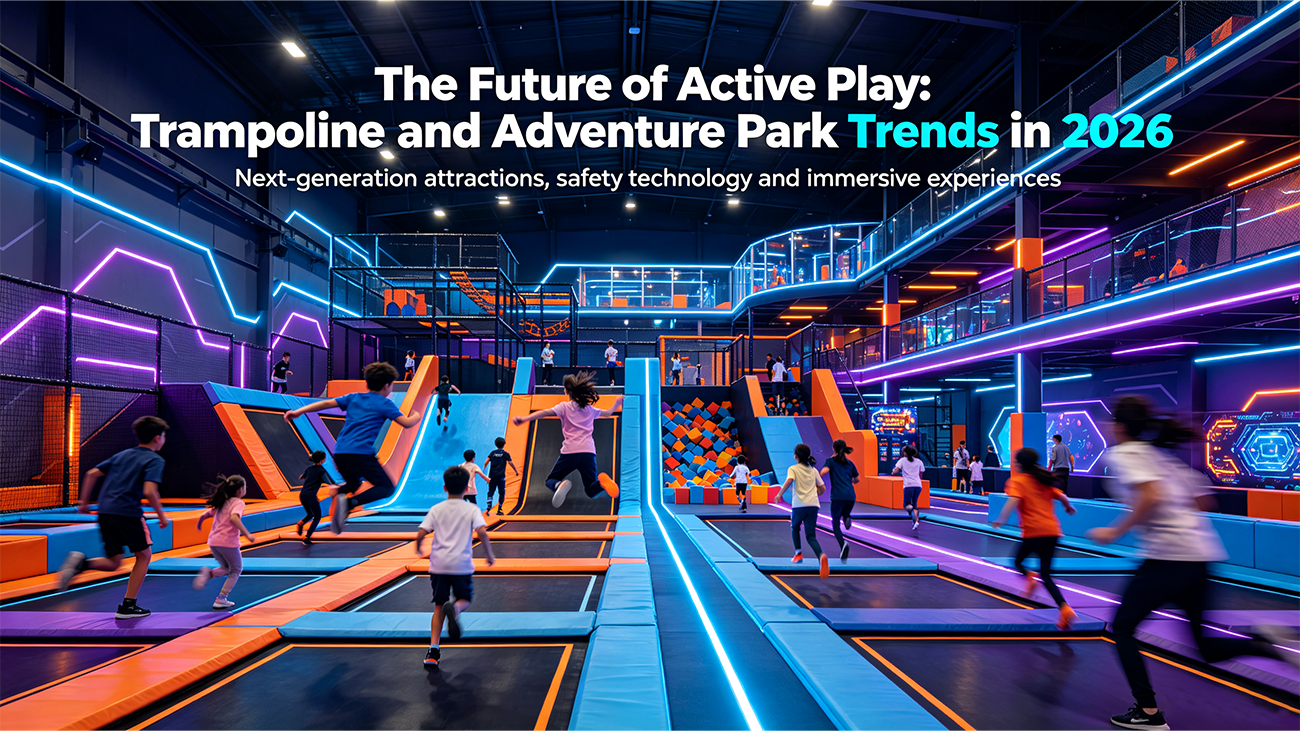
Table of Contents
ToggleThe commercial indoor entertainment sector has entered a new epoch. In 2026, the term “trampoline park” no longer captures the reality of what modern consumers demand or what successful asset managers build. The market has irrevocably shifted from mono-attraction jumping centers to immersive, multi-dimensional Adventure Parks and high-yield Family Entertainment Centers (FECs).
Driven by an obsession with physical wellness, the integration of screen-free gamification, and a massive influx of institutional real estate investment, the indoor play industry is experiencing a massive design renaissance. For B2B investors, developers, and international project builders, staying ahead of these structural shifts is the difference between achieving a 24-month capital recovery and operational obsolescence.
Here are the macro trends and engineering standards redefining the future of active play in 2026.
The modern generation of children and teenagers (Gen Z and Gen Alpha) does not merely want to interact with physical hardware; they expect the environment to respond to them. Static ninja courses and standard climbing walls are rapidly being replaced by Sensory Playground Design and gamified tech integration.
Modern spaces leverage architectural psychology to create inclusive, multi-sensory ecosystems. This involves integrating synchronized soundscapes and localized interactive LED lighting clusters directly into the play structures.
AR-Infused Trampolines: Technologies like mixed-reality tracking and projection mapping have shifted from luxury novelties to standard procurement mandates. By projecting interactive games directly onto jumping mats and climbing walls, parks are successfully turning physical exercise into a live video game, radically boosting repeat visitation metrics.
Reactive LED Environments: When a jumper triggers a specific zone or hits a target on a battle beam, the entire room’s visual profile reacts. This multi-sensory integration not only boosts immersion but creates highly shareable “Instagrammable” moments that drive massive organic marketing on social platforms.

In the B2B entertainment ecosystem, risk mitigation is inextricably linked to profit margins. Operational overhead and soaring liability insurance premiums in 2026 are being slashed through two critical technological upgrades:
The Phase-Out of Foam Pits for Commercial Airbags
Traditional loose foam cubes — once a staple of indoor parks — are effectively obsolete due to severe operational liabilities:
Hygiene & Maintenance: Foam cubes trap sweat, dust, skin cells, and bacteria, making them nearly impossible to sanitize.
Safety Hazards: Foam degrades rapidly under friction, creating toxic dust and presenting a notable fire hazard. Furthermore, foam displacement leads to “bottoming out,” where jumpers hit the concrete floor beneath.

The Inflatable Alternative: 2026 facilities lean heavily on dual-chamber commercial safety airbags engineered with non-porous, flame-retardant, antimicrobial PVC vinyl. These systems offer uniform, micro-adjusted landing deceleration, can be instantly wiped down with medical-grade sanitizers, and accelerate user throughput by up to 400% since jumpers can easily walk off the inflated surface effortlessly.
AI-Driven Edge Monitoring
Premium adventure parks are now layering computer-vision AI over their standard CCTV networks. These smart sensors automatically flag high-risk behaviors — such as double-jumping on a single mat, inverted flips in unapproved zones, or a collision in a slide landing area — alerting floor marshals instantly via haptic wearables before an incident occurs.
The most profitable parks in 2026 are those that maximize their dwell time— the amount of time a family stays inside the venue, spending money on secondary high-margin revenue streams (cafés, private birthday party packages, and merchandise). To achieve this, the layout must cater to the entire family demographic simultaneously via strict acoustic and visual zoning.
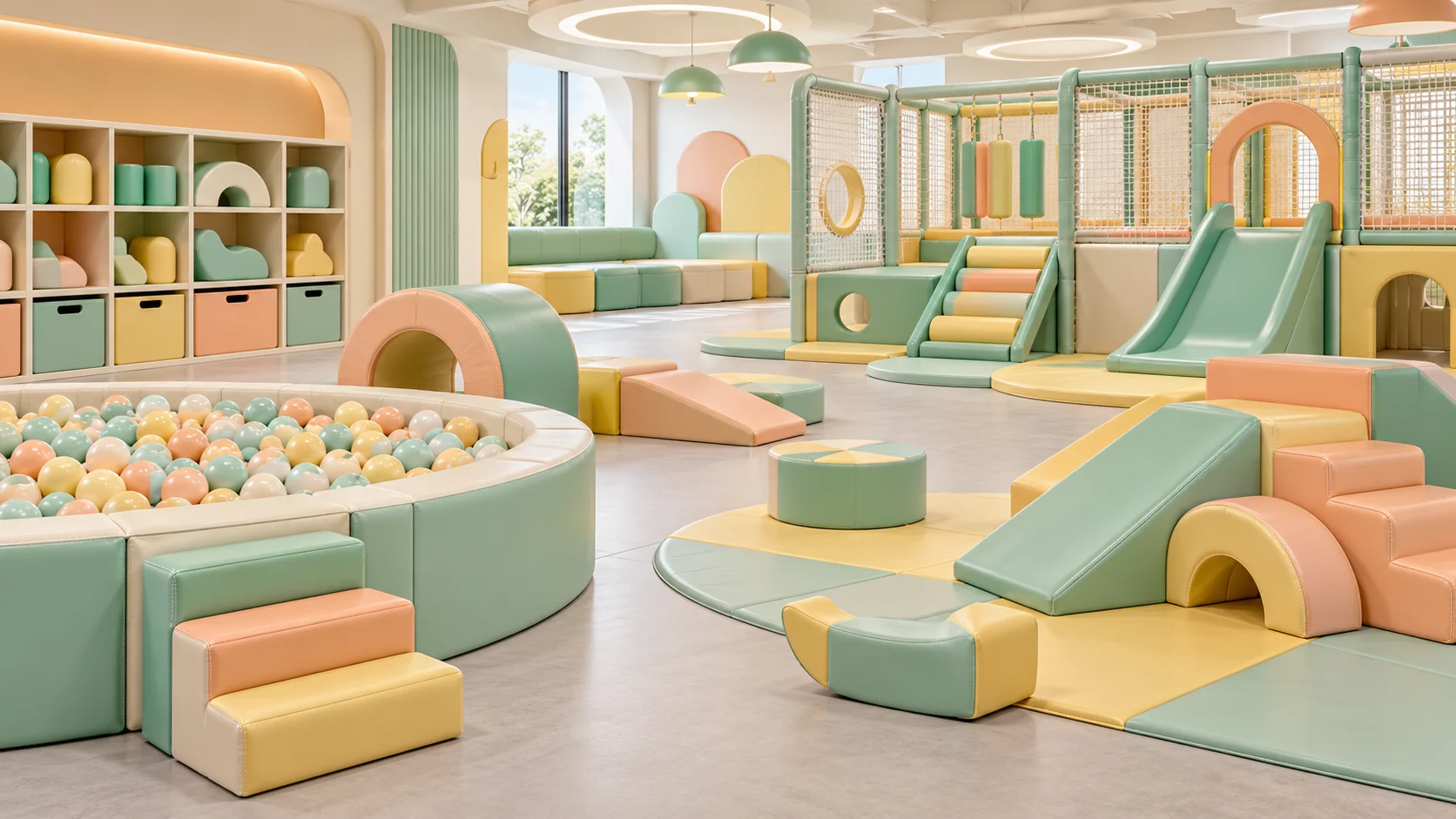
Sensory playground design has expanded to include therapeutic, low-stimulus zones for neurodivergent or sensory-sensitive children. By offering dedicated hours or physically insulated spaces with softer textures, tactile wall panels, and calming color palettes, parks tap into a highly loyal, underserved market segment.
Placing a 4-year-old next to a 16-year-old doing extreme wall-flips is a recipe for liability. 2026 layouts feature clear physical barriers and visual delineations.
Toddler soft-play zones are heavily padded and visually separated from high-octane ninja courses, competitive dodgeball courts, and extreme high-ropes lines. This ensures absolute peace of mind for parents while allowing older demographics to push their physical limits safely.

For global international project builders, procurement friction has historically been a massive headache. Custom-built indoor parks often suffered from misaligned steel frames, delayed shipments, and hazardous on-site welding corrections.
In 2026, leading global providers like Kanplay and Nanplay have revolutionized this pipeline through strict, one-stop turnkey service models backed by rigorous industrial specifications:
Industrial Engineering Specifications (BOM Standards)
The Framework: Heavy-duty, hot-dip galvanized Q235 structural steel with a minimum frame profile of 50mm × 50mm or 100mm × 100mm, treated for anti-corrosion.
The Connections: Structural nodes must utilize precision heavy-duty bolt connections engineered to millimeter-level tolerances via CAD/BOM digital prototyping, eliminating weak on-site structural welds.
The Soft Elements: Safety padding must feature a minimum of 70mm high-density polyethylene (PE) or EPE closed-cell foam, wrapped in heavy-duty, double-stitched 650g/m² PVC vinyl fabric cover.
Compliance: Complete hardware assembly must strictly meet independent third-party certifications, including ASTM F2970 (North America) and EN 1176 / EN 15567 (Europe).

The Verdict for Investors
Active play is no longer a commodity; it is an engineered experience. As we move deeper into 2026, the highest yields will belong to operators who view their parks not as a collection of trampolines, but as a dynamic, safe, tech-enabled, and inclusive ecosystem.
Investing in high-durability hardware, utilizing advanced sensory playground design, and partnering with professional turnkey manufacturers like Kanplay isn’t just about building a park — it’s about building a future-proof, high-ROI commercial asset.
Project Basic Information Project Name: Active Challenge Indoor Adventure Center Location: Czech Republic Project Type: Commercial Indoor Playground /
Quick Answer Before ordering soft play equipment, confirm the cleaning instructions for the supplied materials, access to areas that need
Thank you very much for your inquiry! Your trust is our greatest motivation. We are committed to offering playgrounds that combine high quality with affordable pricing. Let us bring vitality to your venue!