

Indoor Playground Equipment Suppliers: How Should Buyers Score a Shortlist?
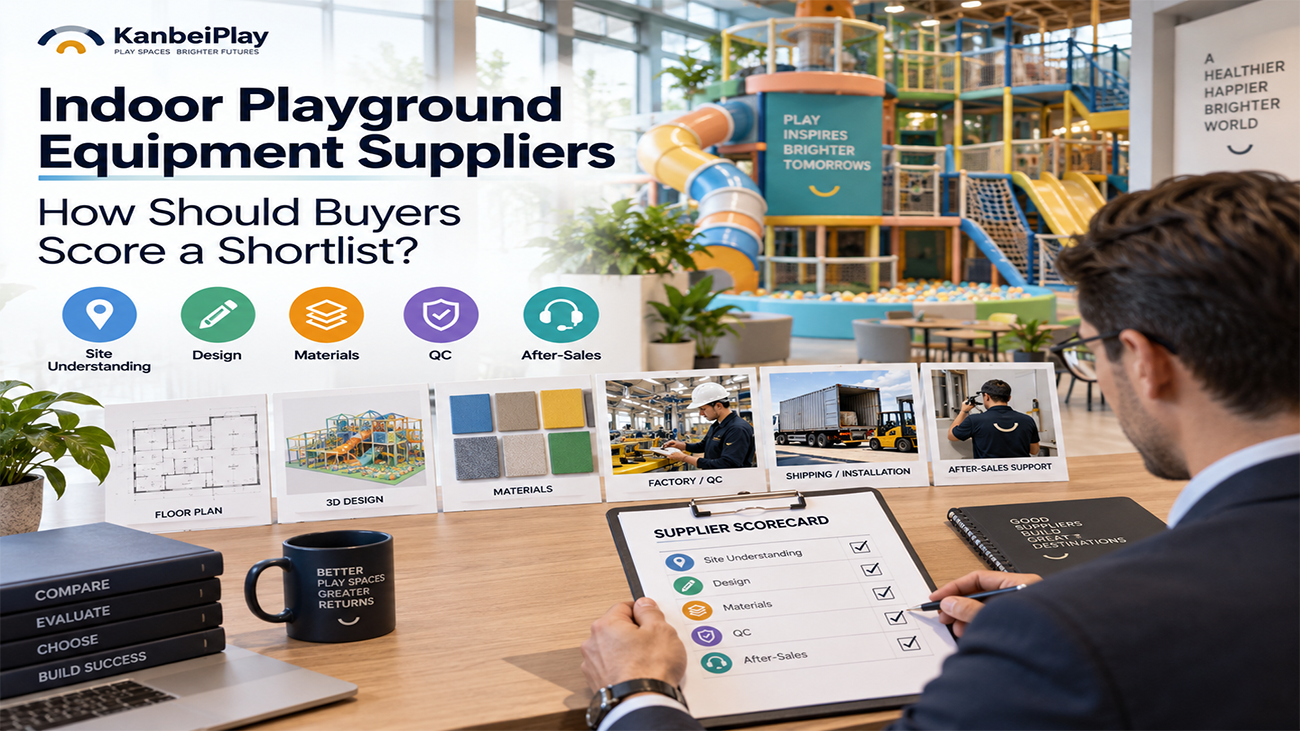
Table of Contents
ToggleQuick Answer
Buyers can score indoor playground equipment suppliers more consistently by using the same project brief and the same evaluation categories for every company. A practical shortlist can be scored across site understanding, 2D/3D design, attraction fit, material specifications, manufacturing/QC evidence, similar projects, market-specific documentation, delivery/installation, spare parts, warranty, and communication. The score is not meant to identify a universal “best supplier.” It helps the buyer compare which proposal is strongest for the actual project and which risks still need clarification.
Category 1: Site Understanding - Did the Supplier Ask the Right Questions?
Score whether the supplier requested a dimensioned floor plan, clear height, columns, exits, target ages, venue type, attraction priorities, theme, budget, and opening date. An indoor playground equipment supplier that asks specific questions is more likely to identify building constraints before they become expensive changes. The buyer should also note whether the company identifies missing information instead of making assumptions.
- Floor plan
- Clear height
- Columns/exits
- Target users
- Budget/timeline
Category 2: Design - Is the Layout Operationally Clear?
Review the 2D plan for zoning, circulation, parent visibility, staff sightlines, entry/exit, queues, and maintenance access. Then review whether the 3D rendering accurately represents that planning. A high visual score should not compensate for a weak operating layout. Buyers can ask each supplier to explain three key design decisions and the site condition behind each one.
- Zoning
- Circulation
- Sightlines
- Maintenance
- 3D accuracy
Category 3: Product and Material Fit - Is the Scope Specific?
Score whether the equipment list is appropriate for the target ages and venue, and whether material and component specifications are clear. Avoid rewarding proposals simply because they contain more attractions. The better proposal is the one where each attraction has a reason to be there, and the quotation identifies what is actually included.
- Age fit
- Attraction role
- Equipment list
- Material specs
- Included/excluded items

Category 4: Manufacturing and QC - Is There Verifiable Evidence?
Ask for relevant factory, production, trial-fit, QC, labeling, and packing evidence. The exact proof will differ by indoor playground equipment type, but the buyer should be able to understand how the approved project becomes real components. Score evidence higher when it is project-relevant and supported by written specifications or records, not only promotional videos.
- Production evidence
- QC checkpoints
- Project photos
- Part labels
- Packing process
Category 5: Project Experience and Documentation - Is It Relevant?
Similar projects can demonstrate experience with comparable size, destination, theme, or attraction mix. Buyers should also ask what equipment documentation can be provided for the target market. Avoid scoring every certificate equally; relevance to the actual equipment and project is more important. Local building, fire, insurance, and authority requirements may still require local professionals.
- Comparable projects
- Destination experience
- Equipment documents
- Market relevance
- Local requirement boundaries
Category 6: Delivery and After-Sales - What Happens After Production?
Score the clarity of packing, shipping coordination, installation drawings, remote/on-site support, local labor responsibilities, spare parts, maintenance guidance, warranty, and claims process. The lowest-priced supplier can become less attractive if these items are undefined. Buyers should also evaluate communication speed and whether technical questions receive specific answers.
- Shipping scope
- Installation support
- Spare parts
- Warranty
- Technical communication
What Information Should Buyers Prepare?
Prepare one comparison sheet with the same project brief, weighted criteria, required evidence, score, open questions, and notes for every supplier. Weight the criteria according to the project; for example, a complex overseas installation may deserve more weight than theme variety.
Common Mistakes to Avoid
- Changing evaluation criteria after seeing a low price.
- Giving too much weight to catalog size or visual style.
- Scoring certificates without checking relevance.
- Ignoring open questions because the supplier responds quickly.
- Using one total score without reviewing any critical red flags.
Frequently Asked Questions
How many suppliers should be shortlisted?
There is no fixed number, but comparing a small group with the same brief is usually more manageable than requesting generic quotes from many suppliers.
Should price be part of the score?
Yes, but compare price only after normalizing the scope. A cheaper quotation may include fewer services or different specifications.
What criteria deserve the highest weight?
That depends on the project. Site fit, design, manufacturing/QC, installation, documentation, and after-sales often matter more than catalog size.
Can a supplier with the highest score still be rejected?
Yes. A critical issue such as unclear scope, unresolved documentation, or unacceptable contract terms can outweigh the total score.
Commercial Buyer Checklist
- Use the same project brief
- Set weighted criteria
- Request evidence for each score
- Normalize quotation scope
- Track open questions
- Review critical red flags
- Document the final decision

Final Thoughts
A scoring system turns an indoor playground equipment supplier shortlist into a repeatable commercial decision. Indoor playground equipment suppliers should earn points for evidence, project fit, and clear responsibilities - not for marketing claims alone. The final choice still requires judgment, but a structured scorecard makes it easier to explain why one proposal fits the project better than another.
Related Posts
Buy Trampoline Park Equipment: What Should Investors Confirm Before Paying a Deposit?
19 9 月, 2026
没有评论
Quick Answer Before