
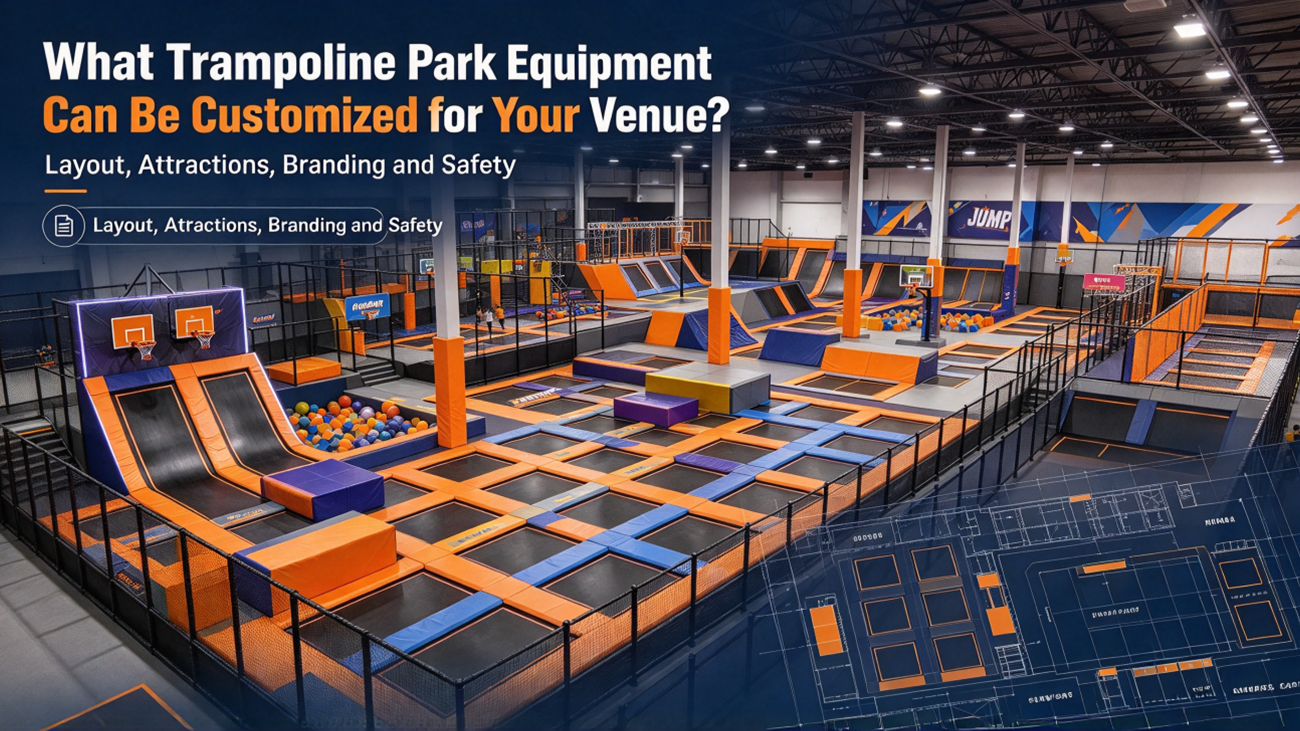
What Trampoline Park Equipment Can Be Customized for Your Venue?
Quick Answer If you are planning an indoor trampoline park, one of the biggest advantages of working with a professional

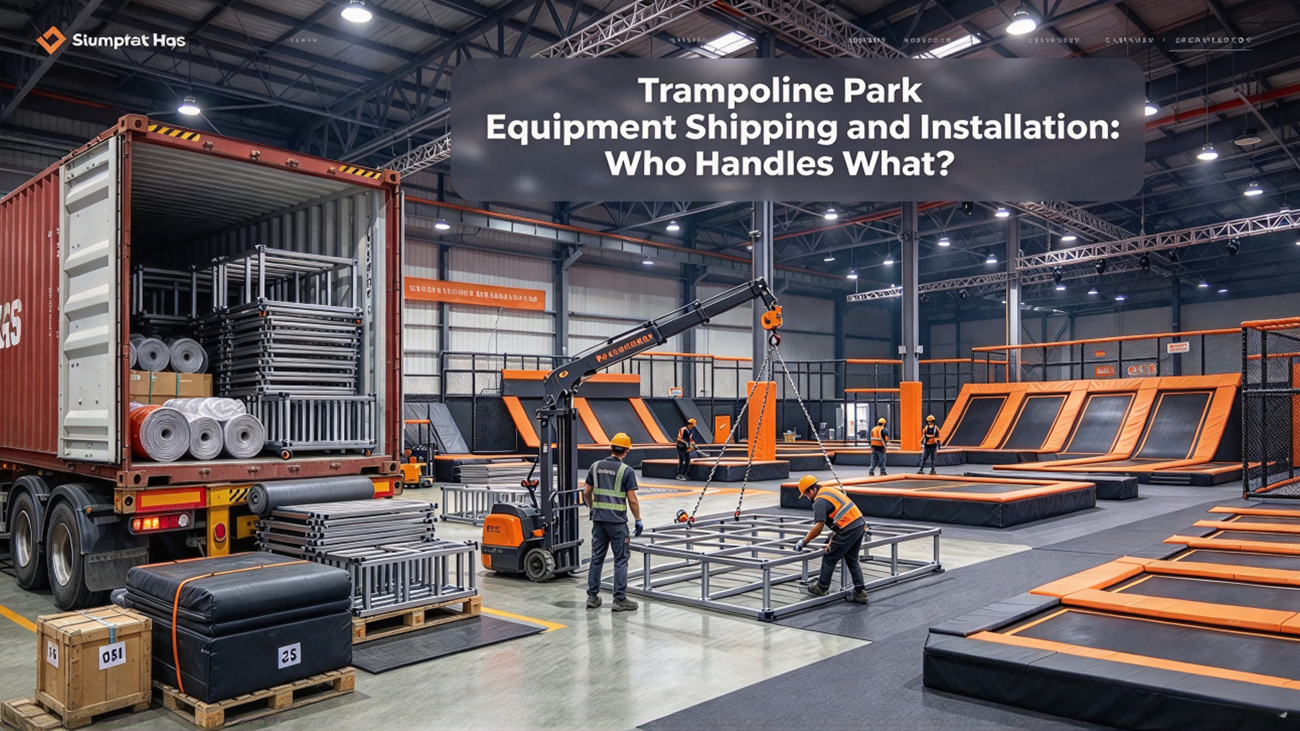
Planning a commercial indoor playground involves more than picking equipment. Once your design is approved and production is finished, two questions decide whether your project opens on time: how the trampoline park equipment reaches your country, and who installs it. This guide explains the full process—packing, container planning, customs, site preparation, and on-site installation—so you know exactly who is responsible for what before you sign a contract.
In most turnkey trampoline park projects, the manufacturer handles packing, export documents, sea freight booking, and either sends its own installation team or provides detailed installation guidance. The buyer handles import customs clearance, site preparation (floor, ceiling height, electricity, access), and local permits. A responsibility allocation table should always be written into the contract before production starts.
| Stage | Manufacturer (Kanbei Play) | Buyer |
| Packing & crating | ✔ Export-grade packing, loading list | Confirm delivery schedule |
| Freight booking | ✔ Sea freight to named port | Choose CIF or FOB terms |
| Shipping documents | ✔ B/L, packing list, commercial invoice, CO | Receive and verify documents |
| Import customs | Provide support documents | ✔ Hire customs broker |
| Site preparation | Provide site requirements list | ✔ Floor, ceiling, power, access |
| Installation | ✔ Installers or supervision | Local labor (if guided) |
| Inspection & handover | ✔ On-site testing, training | Final acceptance sign-off |
Trampoline park equipment is bulky but generally not fragile, yet steel frames, jump mats, springs, safety pads, and netting each need separate protective treatment.
A professional manufacturer marks every package with a loading number matching the packing list. This lets your installation crew locate parts quickly, instead of unpacking every crate on the first day. Freight lead time depends on the route. A shipment from China to the US West Coast usually takes around 3–4 weeks by sea, while routes to Europe or Australia can run 4–6 weeks depending on the port and transshipment stops. Planning your production finish date and freight window together is what actually protects your opening date, not adding buffer at the last minute.

A mid-size indoor trampoline park generally fills 2–4 × 40HQ containers. Experienced suppliers plan loading layouts in advance: heavy frames sit at the bottom, while soft pads and lightweight accessories go on top. They will share a container loading drawing, so you know exactly which goods arrive in each container. This is especially useful if your venue cannot receive all shipments at once.
Core export paperwork includes the Bill of Lading (B/L), commercial invoice, packing list, Certificate of Origin, plus insurance documents under CIF terms. Shipments headed for the US require ISF filing before vessel departure. Your customs broker will need B/L details roughly 10 days before arrival. Cargo sent to the EU may also need CE supporting documentation for play equipment.
Import customs clearance falls under the buyer’s scope by law, though an experienced exporter can simplify this process. Ask Kanplay for HS codes early on — trampoline parkhttps://www.kanbeiplay.com/trampoline-park/ goods are usually classified under HS 9506 or 7308 depending on structure, which lets your broker calculate duties ahead of cargo arrival.
Most project delays happen because the venue is not ready when goods arrive. Three core factors require your focus:
A flat concrete slab is standard for an indoor trampoline park. If the floor has unevenness over a few millimeters within a 2-meter span, the steel frames will not align properly. All floor coating work should be fully finished before delivery.
For standard jump zones in a commercial indoor playground, reserve a minimum clear height of 5.5–6 meters. Performance trampolines and foam pit areas need 7–8 meters of clearance. This is a fixed building limitation that cannot be adjusted after equipment arrives, so double-check this before placing your order.
Check doorway width, corridor space, and elevator load capacity, especially if your trampoline park sits on an upper mall floor. Large frame sections of trampoline park equipment can be longer than 3 meters.
Installers first mark the approved layout on the floor, then anchor galvanized steel frames (wall thickness 2.0–2.5 mm). They check levelness and squareness for every section before fully tightening all fasteners.
Jump mats are laced into place and springs fitted section by section. Technicians tune mat tension carefully to deliver consistent bounce across the whole jumping surface.
PVC safety pads cover all exposed frames and springs, secured with zippers or fasteners. Every joint will be inspected; loose padding is one of the most frequent issues spotted during safety checks.
A full on-site review covers frame stability, anchor points, mat tension, padding fit, and safety net connections. The team will complete load testing before handover and operator training.
For a typical indoor trampoline park covering 800–1,500 m², on-site installation takes 15–25 working days with a trained crew. Small parks under 400 m² can be finished within 7–10 days. Timelines get extended when floors are uneven, goods arrive late, custom theming is added, or local officials schedule extra site inspections. Give yourself one more planning note: keep a buffer of 5–7 working days between the expected handover and your grand opening. Shipments get delayed, local inspections sometimes reschedule, and a small reserve keeps you from having to cancel launch marketing at the last minute.

Before requesting a shipping and installation schedule, prepare:
With these five items, a manufacturer can give you a realistic schedule instead of a guess.
Almost all trampoline park equipment moves by sea freight in 40HQ containers, as steel frames are heavy and take up a large volume. Air freight is only used for emergency spare parts such as replacement mats or springs.
A mid-size indoor trampoline park needs 15–25 working days on site. Small parks take 7–10 days, while large multi-zone parks may need 30 days or more. Pre-production lead time before shipment usually runs 30–60 days based on project scope.
Most turnkey manufacturers do. Kanplay provides professional overseas installation teams, plus remote guidance options if you prefer to hire local workers.
A level concrete floor, a minimum 5.5–6 m clear ceiling height, a stable power supply, and unobstructed access for long steel components. Complete all painting and flooring work before delivery arrives.
The buyer, following the site requirement checklist shared by Kanplay. We send this document at the design stage so there are no unexpected issues on installation day.
Ceiling height measured and documented
Floor flatness checked
Trade terms confirmed (FOB/CIF/DDP)
Customs broker appointed
Installation responsibility in writing
Spare parts included in first order
Target opening date shared with supplier

Shipping and installation for trampoline park equipment run smoothly when responsibilities are sorted out early. A reliable supplier like Kanplay that offers solid packing, complete documentation, and professional on-site installation turns this complicated international project into a predictable schedule. For operators across North America, Europe, and Australia, partnering with a manufacturer experienced in commercial indoor playground exports cuts down unexpected troubles — and helps you lock in a realistic opening date. If you are planning a trampoline park project, send Kanplay your site dimensions and target opening date to request a project schedule review covering production time, sea freight, and on-site installation. It takes one email, and it is the easiest way to find out whether your timeline is realistic before you sign a contract.
Quick Answer If you are planning an indoor trampoline park, one of the biggest advantages of working with a professional
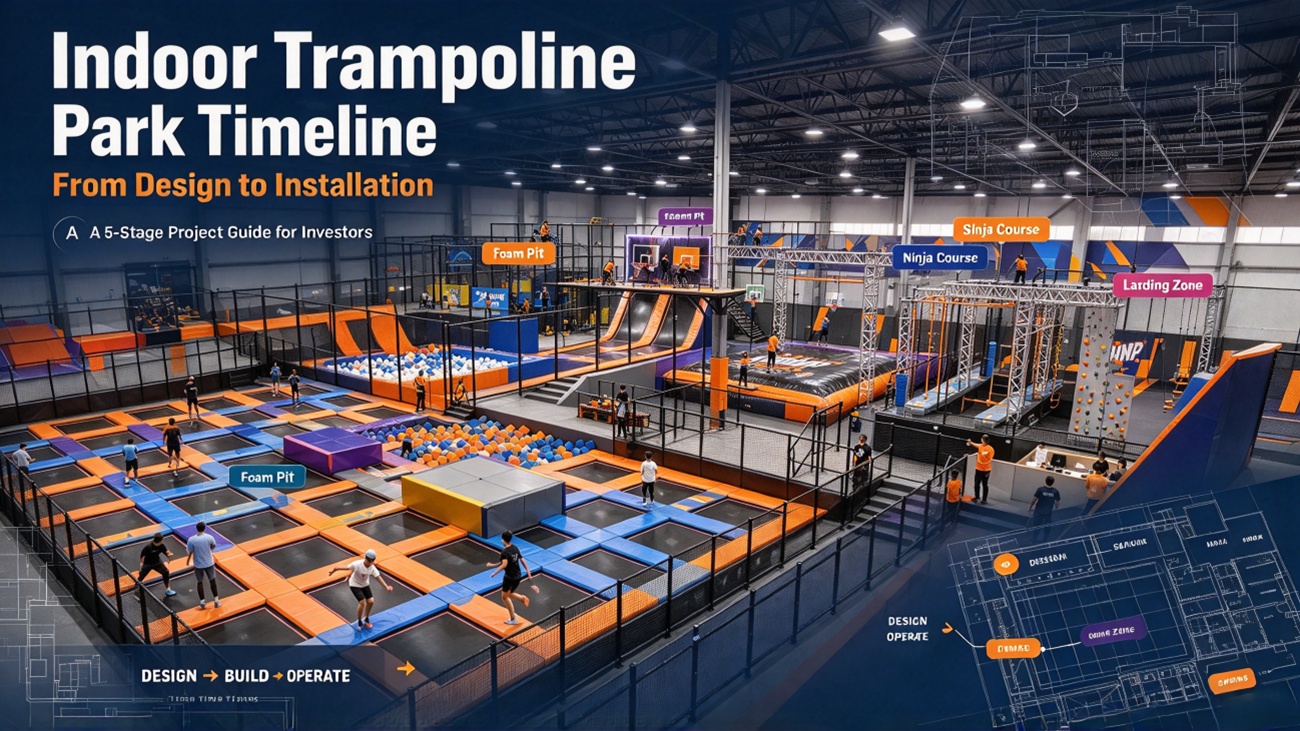
Quick Answer A typical Indoor Trampoline Park project from initial site assessment to finished installation usually spans 8 to