
What Trampoline Park Equipment Can Be Customized for Your Venue?
Quick Answer If you are planning an indoor trampoline park, one of the biggest advantages of working with a professional

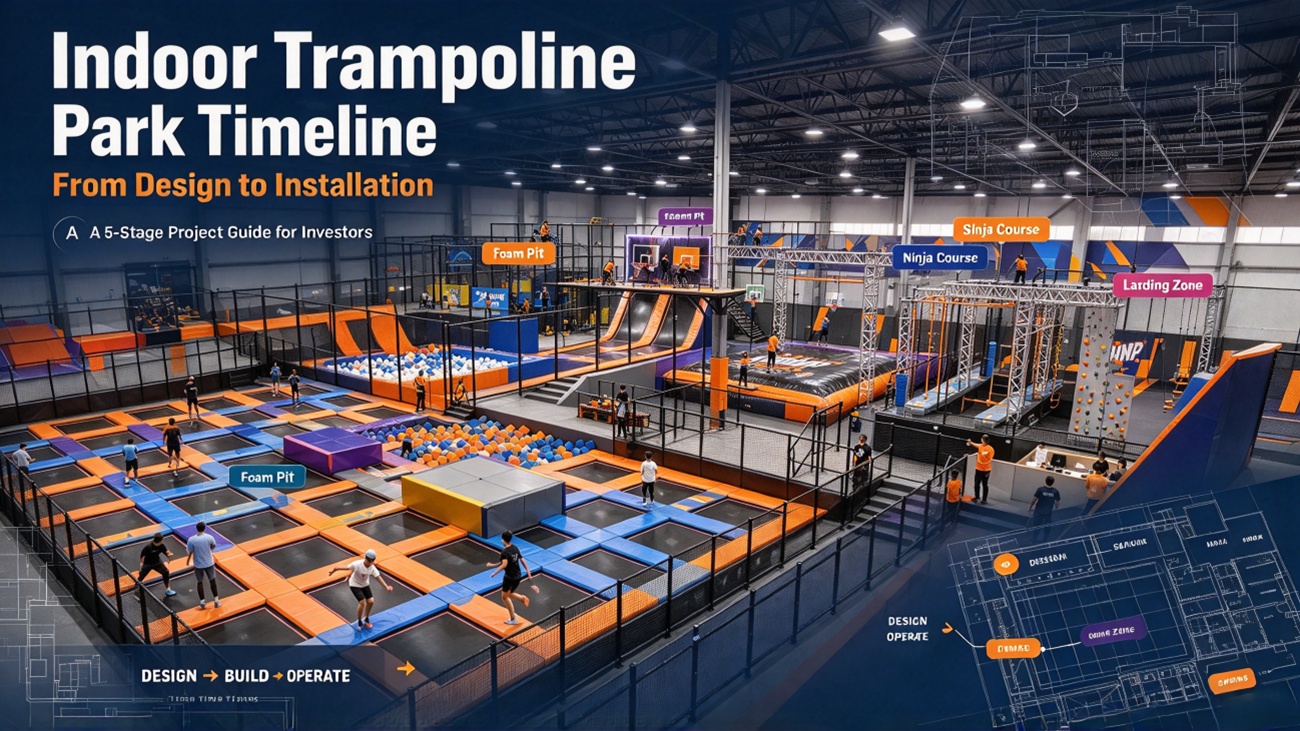
A typical Indoor Trampoline Park project from initial site assessment to finished installation usually spans 8 to 16 weeks, depending on park size, custom features, local permit speed, and shipping arrangements. Smaller standard Trampoline Park builds can wrap up faster, while large custom Commercial Indoor Playground projects with multi-level structures, add-on attractions, and complex site conditions sit toward the longer end.
The workflow follows a clear sequence: site review and requirement confirmation, design drafting and revision, trampoline park equipment manufacturing, packing and freight, then on-site assembly, testing, and handover. Many first-time operators underestimate how long permits and factory production take, and these two steps cause most schedule slippage. Lock in your site details early and work with a turnkey supplier to keep the plan predictable.
All timelines are custom for every Trampoline Park, but these key phases give you a realistic picture. This table shows each milestone’s typical duration, who is responsible, and the main dependencies – aligning expectations of your team, landlord, and budget:
| Milestone | Typical Duration | Responsible Party | Key Dependencies |
| Site review & requirement confirmation | 1-2 weeks | Supplier + Buyer | Site drawings, floor load data, budget, target opening date |
| Design development & revisions | 2-4 weeks | Design team | Buyer feedback, local safety code rules |
| Equipment manufacturing | 4-7 weeks | Factory | Final approved design, deposit confirmation |
| Packing & shipping | 2-5 weeks | Logistics team | Port schedule, customs clearance, destination access |
| On-site installation & safety inspection | 1-3 weeks | Installation team | Ready site, power access, clear indoor space |
Compact Indoor Trampoline Park layouts (under 300 square meters) typically hit the 8 to 10 week mark. Larger Commercial Indoor Playground facilities (over 800 square meters), custom obstacle courses, soft play zones, and themed decor typically take 12 to 16 weeks or more
Before any design work begins, a thorough site review is the foundation of an accurate timeline. This step confirms whether your space can support the trampoline park equipment and related play features you want, and it surfaces structural or utility issues before you invest in drawings. Your supplier collects key site data: ceiling height, floor load capacity, column positions, door and elevator sizes for delivery, power supply, fire safety layout, and queue area planning. They also confirm your business goals: target age groups, expected visitor volume, budget, and must-have attractions. Missing information at this stage forces design pauses and pushes the whole schedule back.
Design for a standard Trampoline Park usually takes 2 to 4 weeks from the day all site data and buyer requirements are locked. Simple layouts with off-the-shelf trampoline arrangements fall on the shorter side, around 2 weeks. Custom Commercial Indoor Playground concepts with bespoke shapes, branded theming, multi-level towers, and integrated soft play take 3 to 4 weeks, plus more time if you request several rounds of revisions. Typical design deliverables include 2D floor plans, 3D renderings, equipment layout drawings, and safety zone markings. Finalize and sign off on the drawings before production starts. Any design change after manufacturing begins creates expensive rework and adds weeks to the schedule.

After the design gets signed off and your deposit is received, we generally need 4 to 7 weeks to make your trampoline park gear. This window covers steel frame fabrication, custom accessory building, raw material procurement, pre-assembly testing, and our full quality checks before shipment.
Metal frames form the core support structure of your Indoor Trampoline Park. Steel cutting, bending, welding, and surface treatment take up the largest share of production time. Safety standards apply to every weld point and load-bearing component, so this stage cannot be rushed. Custom-sized frames for unusual site layouts add time compared with standard modular frames.
All supporting parts are produced in parallel with the frames: trampoline jumping mats, safety padding, netting, foam blocks, ladders, handrails, and signage. Many are custom-cut to match your approved layout. Add-ons like dodgeball courts, slam dunk zones, climbing walls, and interactive games carry their own lead times.
Before packing, every batch of Trampoline Park equipment passes factory inspection. Teams test frame stability, padding fit, net tensile strength, and edge safety. Non-conforming parts are reworked or replaced at this stage. Skipping quality control saves time upfront but creates serious safety risks and on-site problems later. Kanplay completes full factory pre-inspection before shipment on every turnkey project.
Once quality control passes, packing takes roughly 3 to 7 working days. Equipment is sorted, labeled, and packed into export-grade crates to prevent damage in transit.
Shipping time varies by destination. Sea freight is the most common choice for large Commercial Indoor Playground orders and usually takes 2 to 5 weeks, not counting customs clearance at the destination port. Air freight is faster for urgent projects but costs significantly more. You also need to plan for local trucking from the port to your venue.
Common delays here come from port congestion, incomplete customs documents, or restricted delivery access to the building. Your supplier can share an estimated transit window once the shipment is booked.
Installation: The on-site installation of your Indoor Trampoline Park. Small parks can be completed in as little as a week. Medium to large facilities typically require between 1-3 weeks based on equipment quantity, venue accessibility, and crew size.
Installation cannot start until your space is ready: floors finished, major construction complete, loading pathways clear, and power available. The team assembles frames, attaches trampoline beds, installs safety nets and padding, marks safety boundaries, and tests every attraction. A full safety check is completed before handover.
Many buyers schedule installers before their venue construction is finished. If the site is not ready when the crew arrives, you pay idle labor and reset your opening timeline.

Even with a clear schedule, several common issues can slow your Trampoline Park rollout:
Working with a turnkey provider like Kanplay helps you anticipate these risks and build buffer time into the schedule.
To keep your Indoor Trampoline Park on schedule, prepare these documents early and share them with your supplier:
Handing all of this over at the site review stage avoids stop-start workflows.
First, do not lock a grand opening date before confirming the full timeline with your trampoline park equipment supplier. Many operators advertise opening dates too early and then face disappointed customers.
Second, do not skip factory quality control to speed up shipment. Defective padding or unstable frames create safety hazards and extra on-site work.
Third, avoid choosing a site without verifying ceiling height and floor load capacity. Some spaces look perfect but cannot support trampoline loads.
Fourth, do not leave permits to the last minute. Local safety approvals often run independently of your equipment timeline and can take far longer than manufacturing.
Total timeline from design start to ready-for-opening is generally 8 to 16 weeks. Small standard Trampoline Park builds sit at the lower end, while large custom Commercial Indoor Playground projects take longer. Permit delays can extend this further.
Standard Indoor Trampoline Park equipment production takes 4 to 7 weeks after design approval and deposit. Custom themed elements add extra manufacturing time.
Installation usually ranges from 1 week for compact layouts up to 3 weeks for large parks with multiple zones. Site readiness is the biggest factor.
Order once your site is confirmed, structural checks are complete, and preliminary permits are in progress. Leave a 2- to 3-week buffer between your target opening date and the expected handover date.
At minimum, confirm building structural approval and local amusement or fire safety permits before production starts. Ideally, begin your permit applications while the design is still being finalized, so approvals do not block your installation and opening.

When you manage site info, design sign-off, and permit timing — your timeline from design to installation stays predictable. Lock your requirements early; verify each milestone with your supplier; leave a small buffer in the schedule. Your opening date and your budget are protected by a clear timeline
Ready to plan your Indoor Trampoline Park opening? Request a free project schedule review from Kanplay, a turnkey Indoor Trampoline Park and Commercial Indoor Playground equipment manufacturer with 14+ years of experience and 1,000+ global projects. We will map your design, production, shipping, and installation milestones and give you a realistic timeline for your site. Contact us today.
Quick Answer If you are planning an indoor trampoline park, one of the biggest advantages of working with a professional
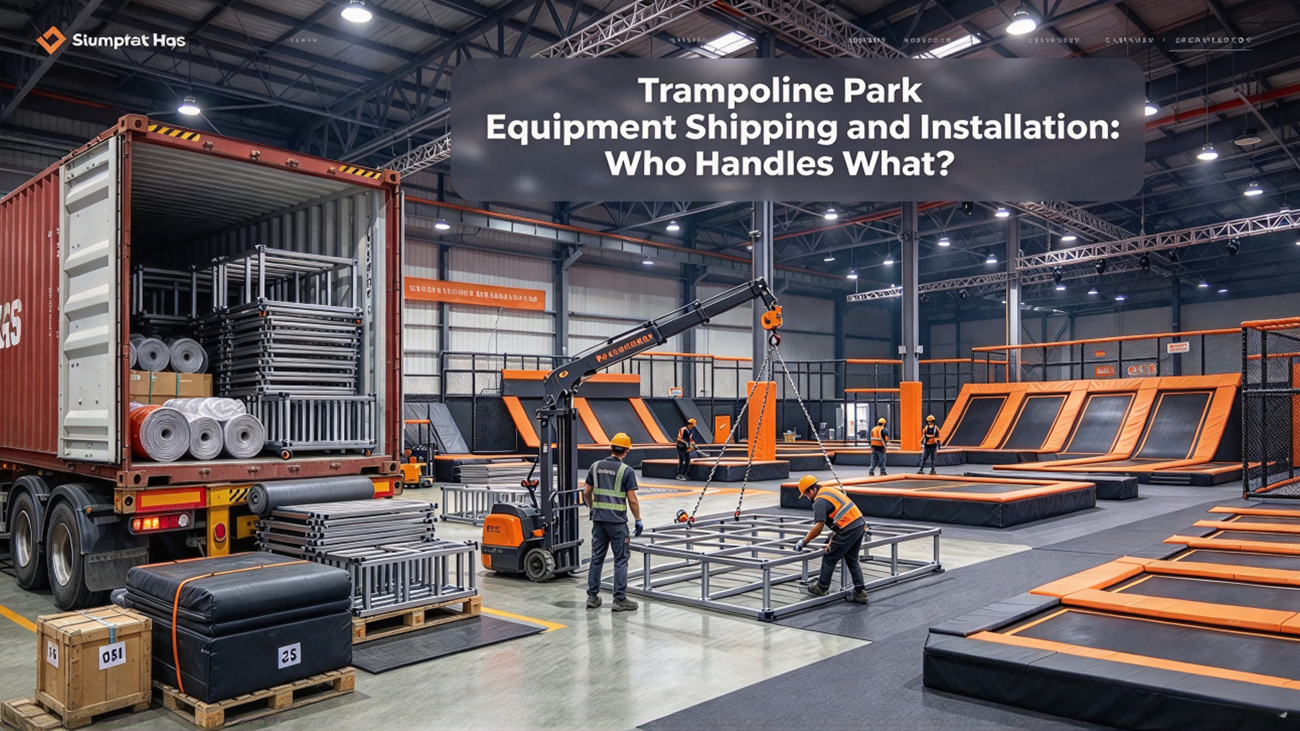
Planning a commercial indoor playground involves more than picking equipment. Once your design is approved and production is finished, two