Introduction
What Is an Indoor Playground? In today’s family entertainment market, indoor playgrounds have emerged as a profitable commercial investment.
More and more parents want to know what an indoor playground is and why it has become so popular. They are looking for safe, fun places where their kids can run, climb, and explore. That’s why the demand for good indoor playgrounds keeps growing.
Unlike traditional outdoor parks that depend on good weather, modern indoor playgrounds have comfortable temperatures, indoor soft play equipment, and staff watching over the kids — so they can stay open all year round and keep families coming back again and again.If you want a clear answer to what is an indoor playground, this is one of its biggest advantages.
A range of entertainment equipment in the venue not only supports children’s development benefits of indoor play but also creates diversified revenue streams.
This article will fully explain what is an indoor playground, including its core types, equipment, value, and business benefits. By the end, you’ll understand why investing in a commercial indoor play structure is a smart and sustainable business decision.
The Definition of an Indoor Playground
Many people ask, what is an indoor playground? Let’s start with the clearest definition.
Core Concept: A climate-controlled, contained environment designed for active play.
That means it’s not just any room with a few toys. It’s a fully enclosed space where kids can safely run, climb, jump, and slide. No worries about weather or safety. This is the basic idea behind what is an indoor playground.
Key Features: Soft-contained structures, foam padding, and safety-first design.
What does an indoor playground actually look like? No concrete, no metal frames, no hard plastic. Everything is soft—Soft climbing structures wrapped in foam, padded floors, and slides with soft edges.
Safety comes first in every detail. Kids are going to fall. That’s just a fact. But when they do, they land on something soft. That’s the magic of an indoor playground.
Primary Value: All-weather accessibility and supervised safety.
Why do more and more parents love and support indoor playgrounds? To fully understand what is an indoor playground, you must know its two core values.
First, all-weather accessibility: you can use it 365 days a year
Second, supervised safety: Most indoor playgrounds have dedicated staff whose job is to watch over the play area. They stop older kids from knocking over toddlers, and spot problems before accidents happen.
Essential Components: What Makes Up an Indoor Playground?
To keep answering what is an indoor playground, let’s look at its key parts.
Multi-Level Soft Play Structures
An indoor playgurond usually has a few different levels. And on each level, there’s always something fun waiting. A little slide. A rope bridge.
The whole thing is made from soft foam, wrapped in a tough PVC cover. So no hard edges. No sharp points anywhere. Just soft, safe play.
Dynamic Elements — Slides, Ball Pits, Climbing Walls
No indoor playground is complete without these exciting features.
- Slides — from small wavy ones for toddlers to steep, fast ones for big kids.
- Ball pits — thousands of plastic balls that kids love to jump into.
- Climbing walls — short, padded walls with soft handholds.
These dynamic elements keep kids coming back. They help complete the full picture of what is an indoor playground.
Interactive “Phygital” Zones (Digital + Physical)
The modern answer to what is an indoor playground also includes technology. Interactive “phygital” zones — that’s where physical play meets digital fun.
Imagine a climbing wall. But instead of just climbing, it’s got projected games that react when you touch them. Or a ball pit — you throw a ball at a screen, and it actually scores points. Even the floor can light up under your feet as you step.
Pretty immersive, right? These zones get kids moving faster — and thinking faster too. They’re reacting, deciding, climbing, and throwing. Physical activity plus tech engagement, all in one.

The Core Benefits: Why Indoor Play Matters
Understanding what is an indoor playgroundalso means understanding its benefits for kids.
Playing indoors isn’t just about burning off energy — it’s about growing stronger, smarter, and more connected. From building muscles to making friends and learning to calm down, indoor playgrounds quietly support real developmental gains. Let’s look at the key child development benefits of indoor play.
Physical Development (Gross Motor Skills & Coordination)
Walk into an indoor playground and it just looks like a tornado of kids and noise. Pure happy chaos. But if you watch a little closer, there’s actual development happening.
Take a kid climbing a foam ramp — that’s leg strength right there. Crawling through a tunnel? That gets both sides of the body moving together. That’s what they call bilateral coordination.
Every slide, every climb, every jump is a workout disguised as fun. Kids don’t realize they’re exercising — but their bodies are getting stronger and more coordinated every time they play.This is one of the most important advantages when explaining what is an indoor playground.
Social Interaction in a Controlled Environment
A crowded outdoor park doesn’t give you this.
An indoor playground — it’s a controlled space. Rules are right there on the wall. Staff is watching. Kids have to learn to take turns on the slide, say “excuse me” in a tunnel, and maybe even make a friend while throwing balls at a target.
That’s how they learn — just by playing together. Handing someone a block. Figuring out who goes first. Real social skills grow from that.This social value is also part of what is an indoor playground.
Weatherproof Accessibility for Year-Round Use
Indoor playgrounds work in any weather. This reliability is a major part of what is an indoor playground and why parents love it.
Types of Indoor Playgrounds
When exploring what is an indoor playground, you should also know its different types.
Commercial Family Entertainment Centers (FECs)
You can think of a Family Entertainment Center as the big brother of a basic indoor playground.
A simple indoor play area might only have a soft climbing structure,but an FEC goes way further. You’ve got arcade games, laser tag, party rooms, and they even serve food. Don’t get me wrong — there’s still a large indoor play structure as the main attraction. It’s just that now it’s surrounded by all this extra stuff.
These places are really for families with kids, usually between four and twelve. People come for half a day or a full day: birthday parties, weekend trips, school holidays — that kind of thing.
If you’re looking to actually make good money from an indoor play business, an FEC is easily your best bet.
Boutique Play Cafés & Toddler Zones
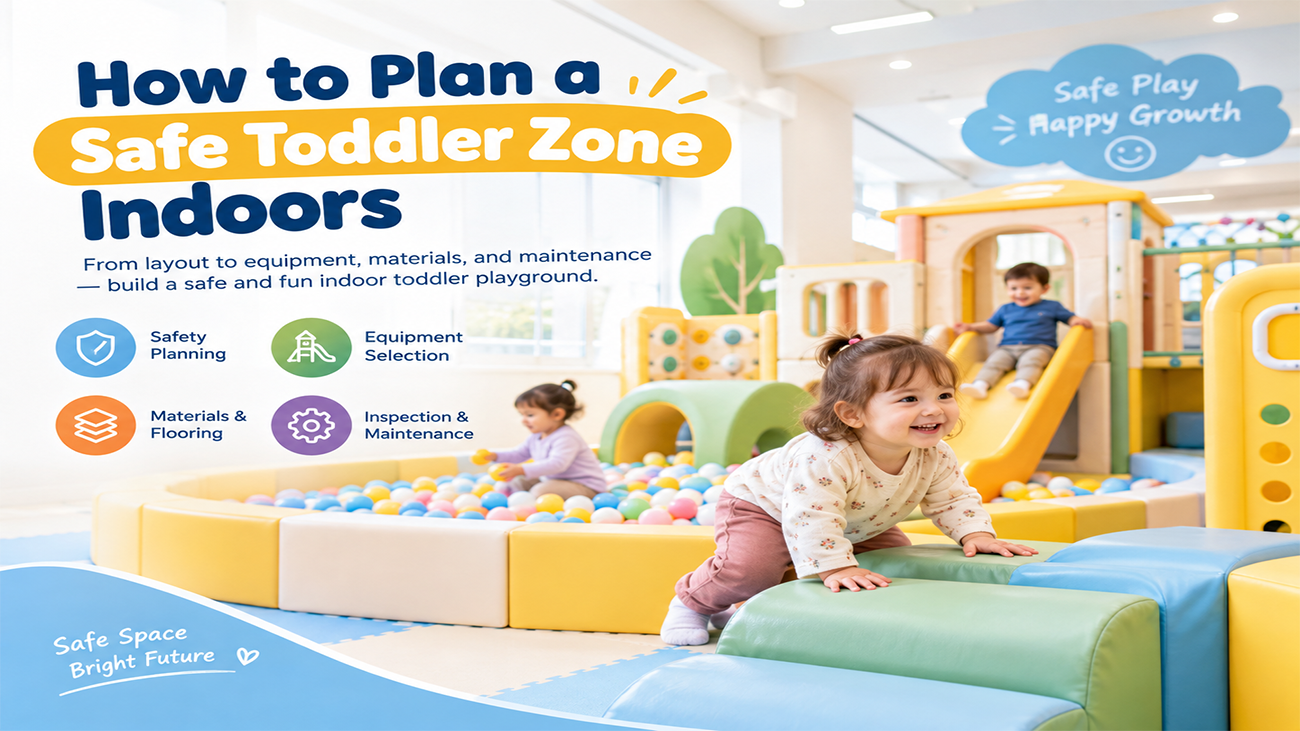
Here’s a cozy little indoor playground right next to a coffee shop or snack bar. It’s made for little ones — toddlers from one to four years old. Everything is lower, softer, and smaller.
Parents can just sit there with their coffee, watching their kid crawl through a soft tunnel.
These work great in neighborhoods, near daycares, or inside malls that don’t have a ton of space.
Institutional Areas (Malls, Daycares, Schools)
Many indoor playgrounds aren’t a business by themselves. They’re just tacked onto something else.
Like shopping malls — they install one so parents can shop while kids stay busy. Daycares and schools? On bad weather days, they use it for indoor recess. Hospitals even put one in waiting rooms.
These are usually smaller and simpler. But here’s the thing — they serve a really important purpose. Kids get a safe, active outlet in places where they’d otherwise be bored or restless.
Indoor vs Outdoor Playground Comparison
Still wondering if indoor is better than outdoor? Let me give you a straight comparison.
| Factor | Indoor Playground | Outdoor Playground |
|---|---|---|
| Safety | Soft surfaces, padded edges, staff supervision. | Hard surfaces, metal edges, no supervision. |
| Maintenance | Low — weather doesn’t damage equipment. | High — rust, rot, weather wear. |
| Climate Control | Yes — heated and air-conditioned, comfortable year-round. | No — hot sun, rain, snow, freezing cold. |
| Supervision | Trained staff on site. | Parents are the only supervisors. |
Many people compare the two when learning what is an indoor playground. Indoor playgrounds are safer, more controlled, and usable all year.
Industry Standards & Materials
Safety is key when answering what is an indoor playground. You really need to know the standards and what materials are used. Let me put it simply.
1️⃣ Safety Compliance: ASTM, CE, and EN 1176
There are three big names you’ll see: ASTM F1487, CE, and EN 1176. A reliable manufacturer will give you certificates for those. If they can’t — honestly, just walk away.
2️⃣ Material Quality: High-Density Foam, Fire-Retardant PVC, and Non-Toxic Plastics
Commercial playgrounds use three key materials: high-density foam, which lasts for years. Fire-retardant PVC — covers the foam, easy to clean. This plastic is non-toxic. It contains no lead and no phthalates. That’s how you build safe, long-lasting commercial indoor play structures.
Kanbei play’s equipment uses only commercial-grade materials, complies with the world’s strictest standards, and guarantees high-strength durability.
Even better, as a direct manufacturer, Kanbei Play offers more favorable prices by eliminating middlemen and lowering equipment costs.
The Evolution of Indoor Play: 2026 Trends
The modern answer to what is an indoor playground now includes eco-friendly materials and inclusive design.
Take eco-friendly and sustainable materials— that’s one big shift. More manufacturers are turning to recycled plastics, sustainable wood alternatives, and water-based adhesives.
Take sensory-inclusive and universal design— that’s another big shift: creating play opportunities for everyone, including children who use wheelchairs. This trend is developing quickly, and it’s also fully aligned with current best practices.