What Is an Indoor Playground? The Definitive 2026 Guide
Add Your Heading Text Here
Introduction
In today’s family entertainment market, indoor playgrounds have emerged as a profitable commercial investment. More and more parents are looking for safe, fun places where their kids can run, climb, and explore. That’s why the demand for good indoor playgrounds keeps growing.
Unlike traditional outdoor parks that depend on good weather, modern indoor playgrounds have comfortable temperatures, indoor soft play equipment, and staff watching over the kids — so they can stay open all year round and keep families coming back again and again.
A range of entertainment equipment in the venue not only supports child development benefits of indoor play but also creates diversified revenue streams.
This article will talk about the core types of indoor playground equipment, the value of Family Entertainment Centers, and how they actually make money. By the end, you’ll understand why investing in a Commercial indoor play structure is a smart and sustainable business decision.
The Definition of an Indoor Playground
Core Concept: A climate-controlled, contained environment designed for active play.
That means it’s not just any room with a few toys. It’s a fully enclosed space where kids can safely run, climb, jump, and slide. No worries about weather or safety.
Key Features: Soft-contained structures, foam padding, and safety-first design.
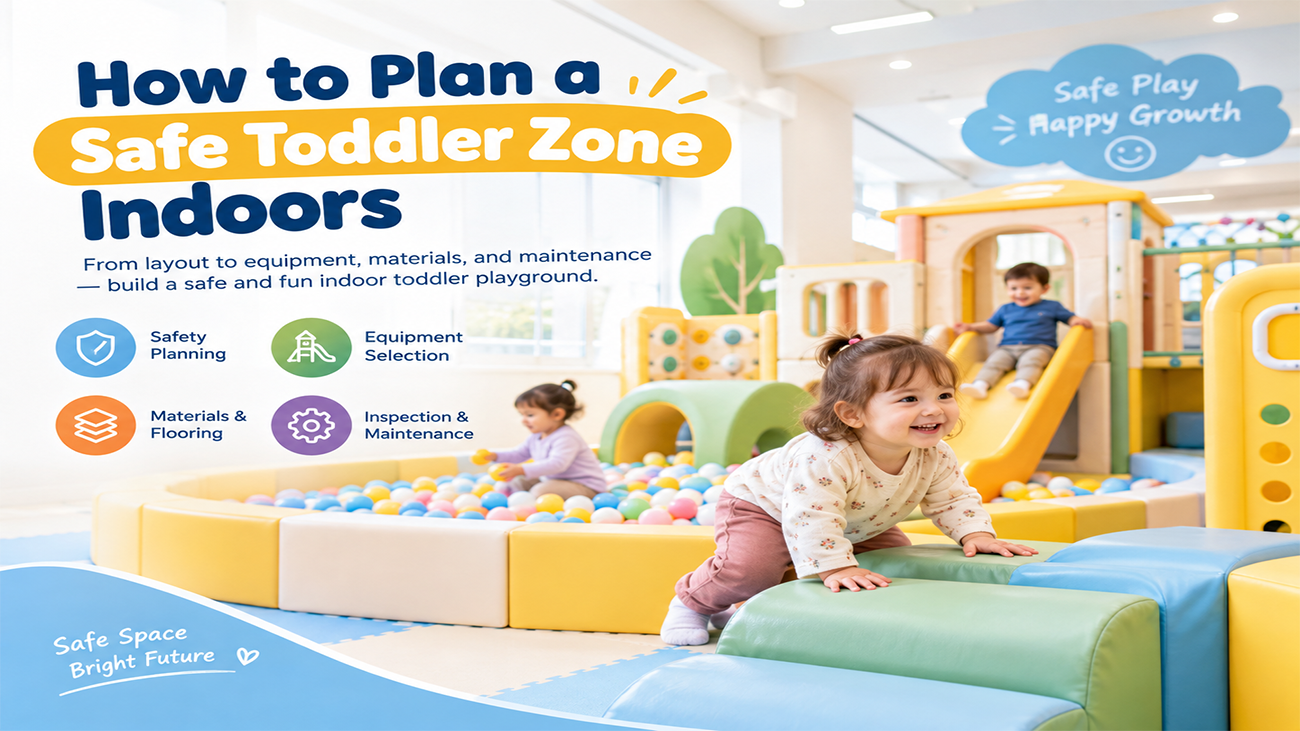
What does an indoor playground actually look like? No concrete, no metal frames, no hard plastic. Everything is soft—Soft climbing structures wrapped in foam, padded floors, and slides with soft edges. Safety comes first in every detail. Kids are going to fall. That’s just a fact. But when they do, they land on something soft. That’s the magic of an indoor playground.
Primary Value: All-weather accessibility and supervised safety.
Why do more and more parents love and support indoor playgrounds? There are two main reasons.
«First, all-weather accessibility: you can use it 365 days a year
«Second, supervised safety: Most indoor playgrounds have dedicated staff whose job is to watch over the play area.They stop older kids from knocking over toddlers, and spot problems before accidents happen.
Essential Components: What Makes Up an Indoor Playground?
üMulti-Level Soft Play Structures
An indoor playground usually has a few different levels.And on each level, there’s always something fun waiting. A little slide. A rope bridge.
The whole thing is made from soft foam, wrapped in a tough PVC cover. So no hard edges. No sharp points anywhere. Just soft, safe play.
üDynamic Elements — Slides, Ball Pits, Climbing Walls
No indoor playground is complete without these exciting features.
- Slides— from small wavy ones for toddlers to steep, fast ones for big kids.
- Ball pits— thousands of plastic balls that kids love to jump into.
- Climbing walls— short, padded walls with soft handholds.
These dynamic elements keep kids coming back. They’re the heart of the action.
üInteractive “Phygital” Zones (Digital + Physical)
What’s the newest thing in indoor playgrounds? Interactive “phygital” zones — that’s where physical play meets digital fun.
Imagine a climbing wall. But instead of just climbing, it’s got projected games that react when you touch them. Or a ball pit — you throw a ball at a screen, and it actually scores points. Even the floor can light up under your feet as you step. Pretty immersive, right?
These zones get kids moving faster — and thinking faster too. They’re reacting, deciding, climbing, throwing. Physical activity plus tech engagement, all in one.
Related Posts