
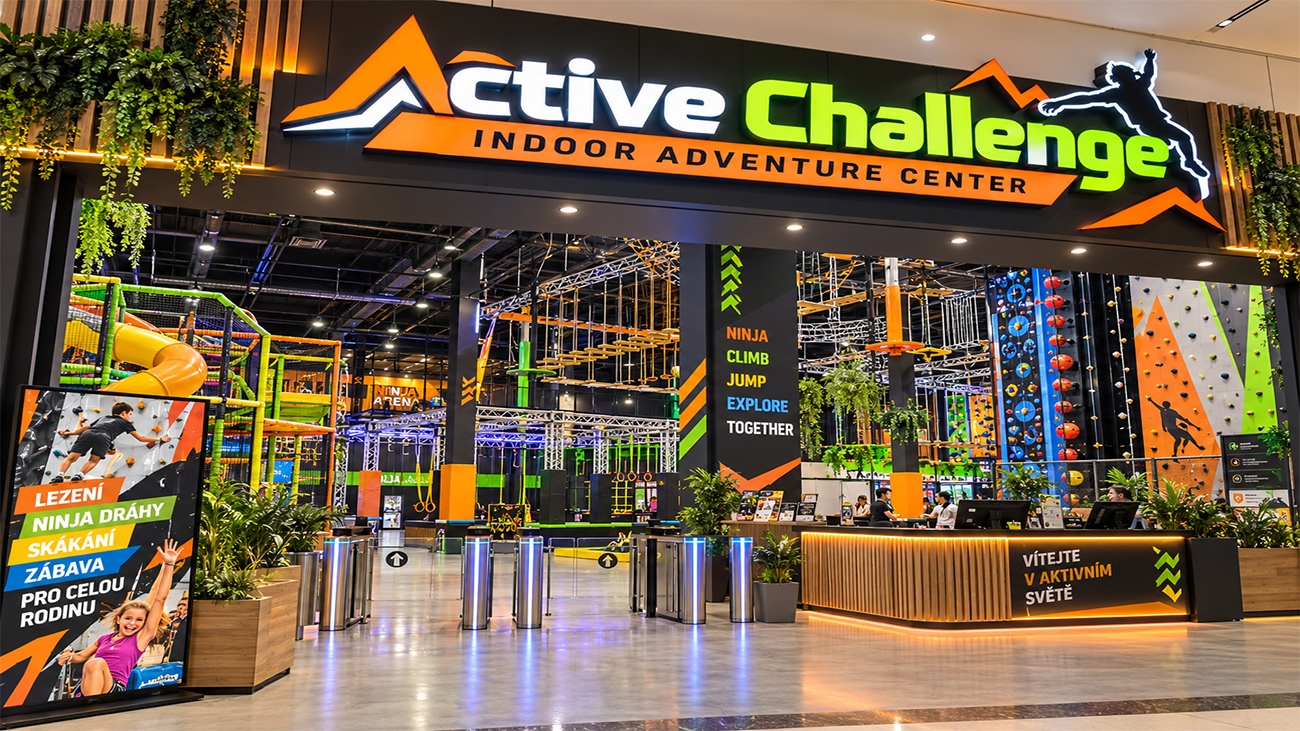
Indoor Playground and Ninja Course Project in the Czech Republic
Project Basic Information Project Name: Active Challenge Indoor Adventure Center Location: Czech Republic Project Type: Commercial Indoor Playground /

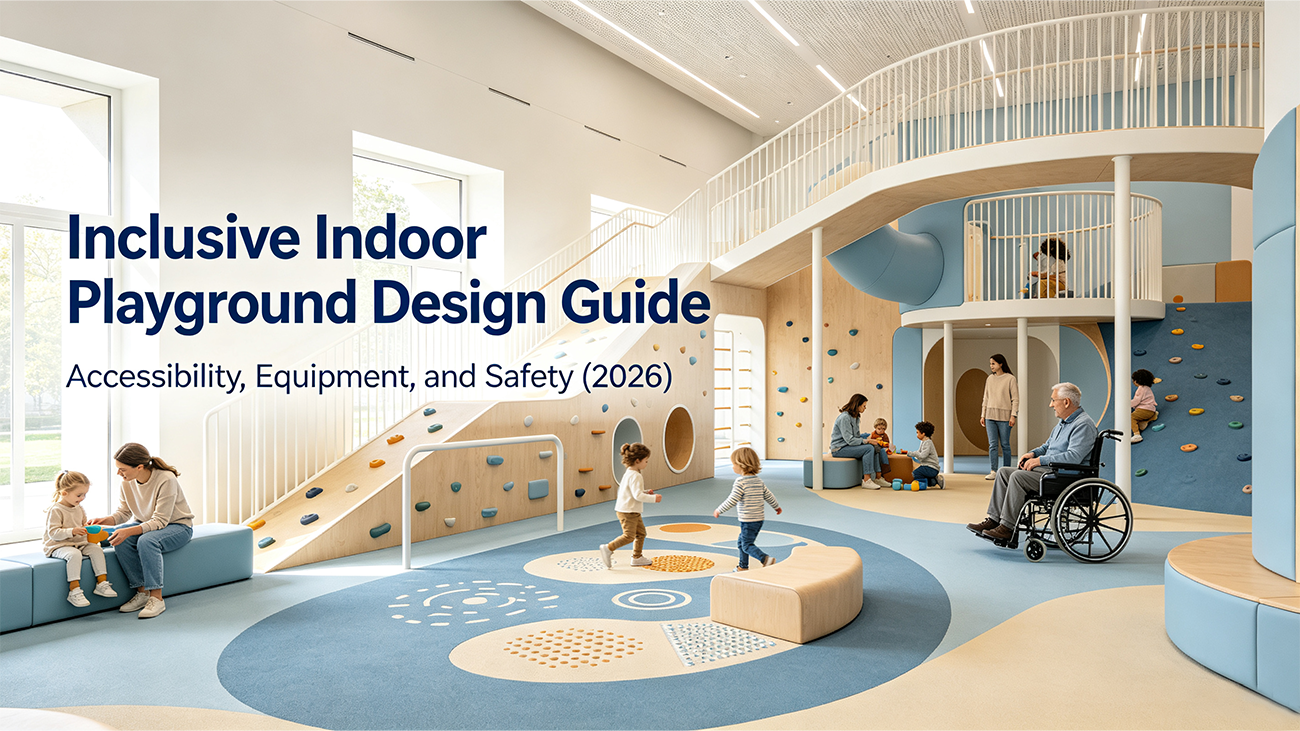
Table of Contents
ToggleParents can clearly notice that some children can have fun freely, while others can only watch. Therefore, building a fully compatible FEC venue is easier to gain the trust of family customers and improve the repurchase rate.
Universal Design for Indoor FECs is designed for the main passages, rest seats, visual guidance signs, queuing areas, private party rooms, and rides of the venue, so as to adapt to the vast majority of visitors.
High-quality venues will provide amusement facilities suitable for different children, quiet and soothing zones, unobstructed vision, and support, which will not make any child feel discriminated against.
Inclusive Indoor Play Design provides children with a variety of ways to participate so that they can understand, enter, and experience the same set of rides.
Barrier-free only ensures children's access to the rides, while Inclusive Indoor Play Design can allow children to truly participate in it and feel inclusive and accepted.
When siblings and friends can play together, families are more willing to book venue parties, repeat visits, and take the initiative to recommend venues to relatives and friends.

In the small Accessible Indoor Play Area, the control devices, rotational activity spaces, flat-ground play areas, and transfer points are all Universal Design for Indoor FECs. It is reflected in the landing.
Inclusive Indoor Play Design needs to integrate sports, tactile, auditory, and visual diversified play experiences, while supporting the lower intensity of various sensory stimulation.
The core of Inclusive Indoor Play Design is to create multiplayer shared rides, not simply relying on speed, height, or physical strength to divide the threshold of play.
The standard Accessible Indoor Play Area needs to plan clear traffic routes to eliminate sharp bends, steps, passage blockages, and cut-off roads.

The standard Accessible Indoor Play Area needs to be fully connected to the front desk, bathroom, rest area, party private room, play area, and exit, and should not block traffic during peak hours.
Universal Design for Indoor FECs adopts simple rules, universal icons, exclusive color matching for subdivisions, visual itinerary guidelines, and easy-to-understand staff guidance.
Uniformly control the comprehensive stimulation brought by glare, echo, background music, electronic screens, crowd noise, and strobe lights, and set up quiet and soothing areas that can be selected independently.

Tactile operation panel, music interactive device, puzzle puzzle, simulation game console, and other flat Adaptive Indoor Play Equipment do not require climbing, and are suitable for most children.
Dynamic Adaptive Indoor Play Equipment shall be equipped with supportive seats, safe access passages, and adjustable movement ranges; adequate landing buffer zones shall be reserved, and dedicated attendants shall be assigned for on-site supervision.
Digital Adaptive Indoor Play Equipment shall allow free adjustment of brightness, volume, and operating speed, with emergency stop buttons and posted operation instructions installed beside each unit.
Team competition equipment, side-by-side dual-control operating tables, and other multi-person shared Adaptive Indoor Play Equipment, which is convenient for children to interact with each other.
Climbing Adaptive Indoor Play Equipment needs to set up low-difficulty alternative routes, spare parts, and reserve auxiliary space for accompanying personnel.

The implementation of Indoor Play Safety Compliance (ASTM/EN) requires checking the local applicable safety standards, building standards, fire protection requirements, and inspection processes before purchasing equipment.
Indoor Play Safety Compliance (ASTM/EN) also requires the complete retention of test records related to material flame retardant performance, indoor air quality, clean maintenance, and high-load performance.
When implementing Indoor Play Safety Compliance (ASTM/EN), it is necessary to verify the full configuration of the platform height, protective opening, fence guardrail, safety net, buffer area, and ground cushion.
Daily inspection is the basis for ensuring Indoor Play Safety Compliance (ASTM/EN). The scope of inspection includes protective doors, safety nets, soft bags, fastening bolts, moving components, ground, environmental sanitation, and emergency exits.

Active Play Zone
Climbing, slides, and bounce-type high-energy projects are centrally arranged to avoid blocking the passages to quiet areas, bathrooms, and emergency exits.
Sensory Play Zone
The sensory play area is far away from the noisy main road, supports the adjustment of sound and light effects, and reserves sufficient space for accompanying activities.
Quiet/Rest Zone
The rest area adopts soft lights and comfortable seats to reduce the obstruction of visual debris, and reserves separate entrances and exits to meet the common use of children and attendants.
Enable staff to clearly observe entrances, landing buffer zones, and height difference areas, and support the implementation of regular inspection routines.
Instead of blindly pursuing a higher site utilization rate, priority of a qualified Accessible Indoor Play Area shall be given to reserving sufficient space for passage, queuing, turning movements, and maternal-infant care services.

Inclusive Indoor Play Design provides diversified play options to help children develop limb coordination, logical thinking, social communication, and emotional calming ability.
Children's rides, unobstructed nursing vision, a convenient bathroom, and a rest space will make families willing to extend their stay.
Universal Design for Indoor FECs can create the unique competitiveness of the venue, and the humanized venue layout, standardized service process, and inclusive employee service culture are difficult to copy by peers.

The procurement of equipment should not only look at the revenue capacity. It is necessary to comprehensively evaluate the suitability, the difficulty of supervision, the cleanliness and maintenance, the safe reserved space, and the compliance requirements of Indoor Play Safety Compliance (ASTM/EN).
Modular equipment maintenance and transformation are simpler; customized equipment is suitable for special-shaped sites, but complete and accurate construction drawings and archiving materials are required.
Priority is given to equipment that can wipe the surface, removable replacement accessories, protective electronic components, complete operation manuals, and suppliers who can provide spare parts for a long time.

Even if an Accessible Indoor Play Area is built, if the music in the area is noisy, the echo is strong, the screen is bright, the lights are flashing, and the passenger flow is crowded, it will still cause children's sensory overload.
The passage needs to ensure that wheelchairs and stroller aids can be used in both directions, waiting in place, and turning around to assist children during peak hours.
The venue should be equipped with support seats, accompanying exclusive seats, and stroller parking areas.
Before special amusement equipment enters operation, it is necessary to formulate complete inspection specifications, cleaning standards, procurement channels for spare parts, and the temporary maintenance process of the equipment.
Soft technology amusement combines soft protection equipment with lighting, sound effects, projection, and induction devices to ensure the comfort of playing.
Natural curve modeling, soft touch material, controllable natural light, and low saturation color matching weaken the rigidity of indoor commercial venues.
Digital amusement equipment can automatically adjust the difficulty, sound, and light intensity, but the operator needs to plan user privacy protection and screenless alternative gameplay in advance.
Low-intensity team interaction projects, wide viewing areas, and multi-person collaborative challenges are suitable for children and parents to play together.

It is feasible to add all-age-friendly party booths featuring low noise and exclusive play hours, so as to attract school and community groups and expand customer sources.
Universal Design for Indoor FECs adopts universal design principles extensively. Rely on smooth circulation routes, sanitary restrooms, cozy lounge areas, and supporting catering facilities to effectively extend customer dwell time.
Clearly mark access requirements, quiet hours, low-noise play periods, and target user groups for equipment on the official website.
The first decoration stage of the venue will create an Accessible Indoor Play Area at the same time, which is far better than the later renovation, with lower cost and less difficult landing.

Before selecting equipment, first account for the site area, floor height, external parking conditions, local family consumption demand, and a reasonable passenger flow carrying limit.
Completely sort out the visitors' full play line, and invite local barrier-free standards and security professionals to review in advance to avoid the high costs of later modification.
Inclusive Indoor Play Design focuses on clear site landmarks to avoid excessive and complicated decoration, causing sensory burden.
It is necessary to finalize the traffic channel, supervision vision, personnel duty point, safety buffer distance, equipment cleaning and parts replacement channel, and then place the Adaptive Indoor Play Equipment.
Before opening, complete the installation and carry out full-service training to ensure that Indoor Play Safety Compliance (ASTM/EN) is implemented in daily operations.

AI-driven amusement equipment can automatically adjust the rhythm of play and sound and light feedback, but the whole process is controlled by the staff to reduce user data collection and retain the alternative gameplay without electronic screens.
Universal Design for Indoor FECs also needs to cover online appointments, queuing systems, venue guidance, zoning equipment regulation, and universal operation interface.
Virtual and real combination amusement projects should use digital effects to drive physical movement, hands-on construction, and teamwork.

Inclusive Indoor Play Design allows children to smoothly access the rides, understand the rules of play, and independently adjust the intensity of sensory stimulation in a variety of ways.
This design can save additional expenses for later transformation and reduce long-term operating costs.
Yes. The core rides are prioritized in the flat area.
Although dimensional standards vary across different regions, passageways must meet spatial requirements for two-way traffic and emergency evacuation, and comply with local accessibility codes.
Publicize the sensory-related information of the venue online in advance, open low-noise exclusive play time, provide visual play guidelines, adjustable sound and light equipment, and independent quiet rest areas.
The mature Accessible Indoor Play Area allows all children to freely participate, rest, and choose to play during peak hours.
Before the venue layout and equipment procurement are determined, priority should be given to the Universal Design for Indoor FECs scheme, and the complete Indoor Play Safety Compliance should be verified.
After determining the operation line, personnel duty plan, and equipment maintenance process, purchase Adaptive Indoor Play Equipment.
Project Basic Information Project Name: Active Challenge Indoor Adventure Center Location: Czech Republic Project Type: Commercial Indoor Playground /
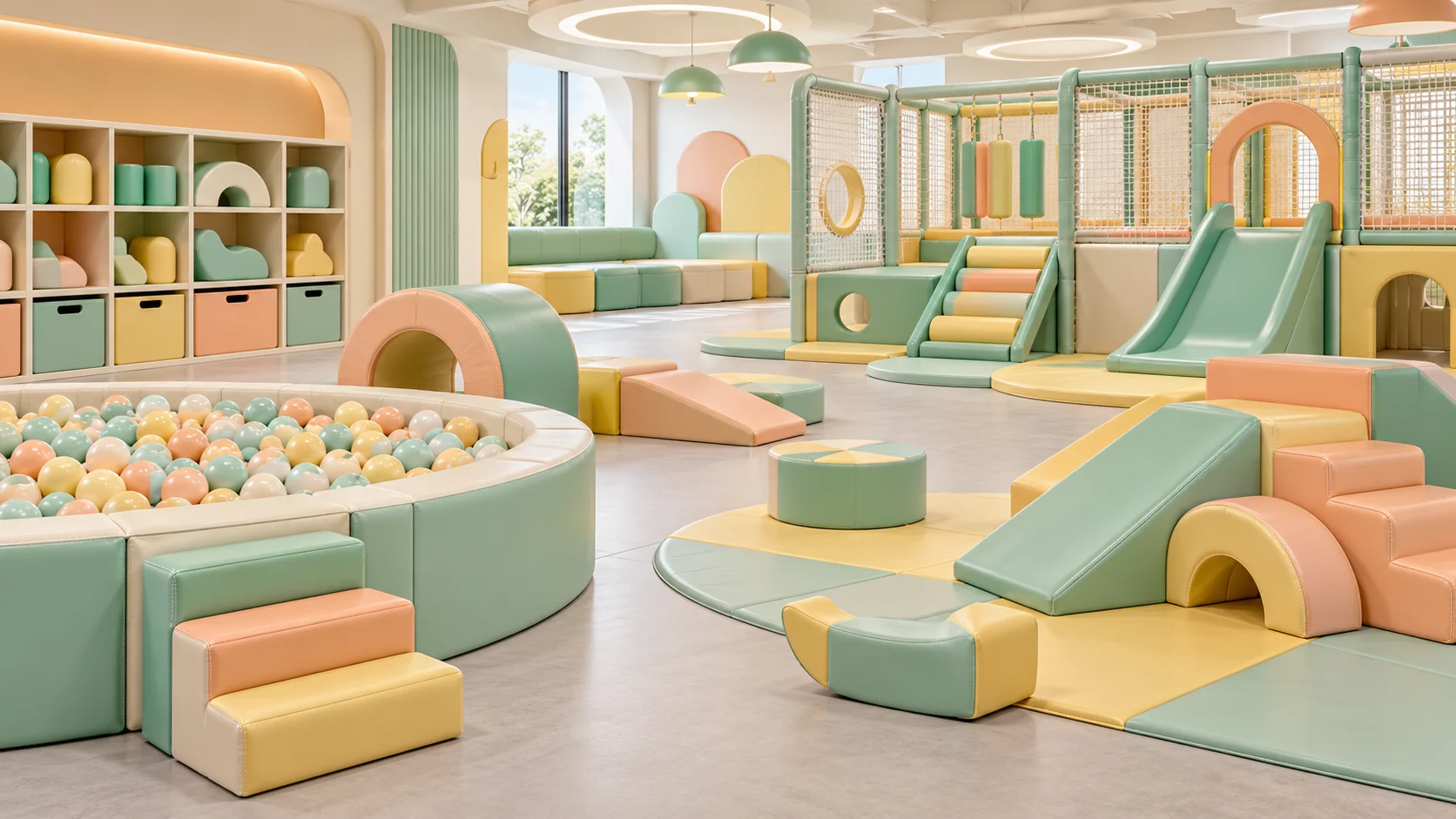
Quick Answer Before ordering soft play equipment, confirm the cleaning instructions for the supplied materials, access to areas that need
Thank you very much for your inquiry! Your trust is our greatest motivation. We are committed to offering playgrounds that combine high quality with affordable pricing. Let us bring vitality to your venue!