
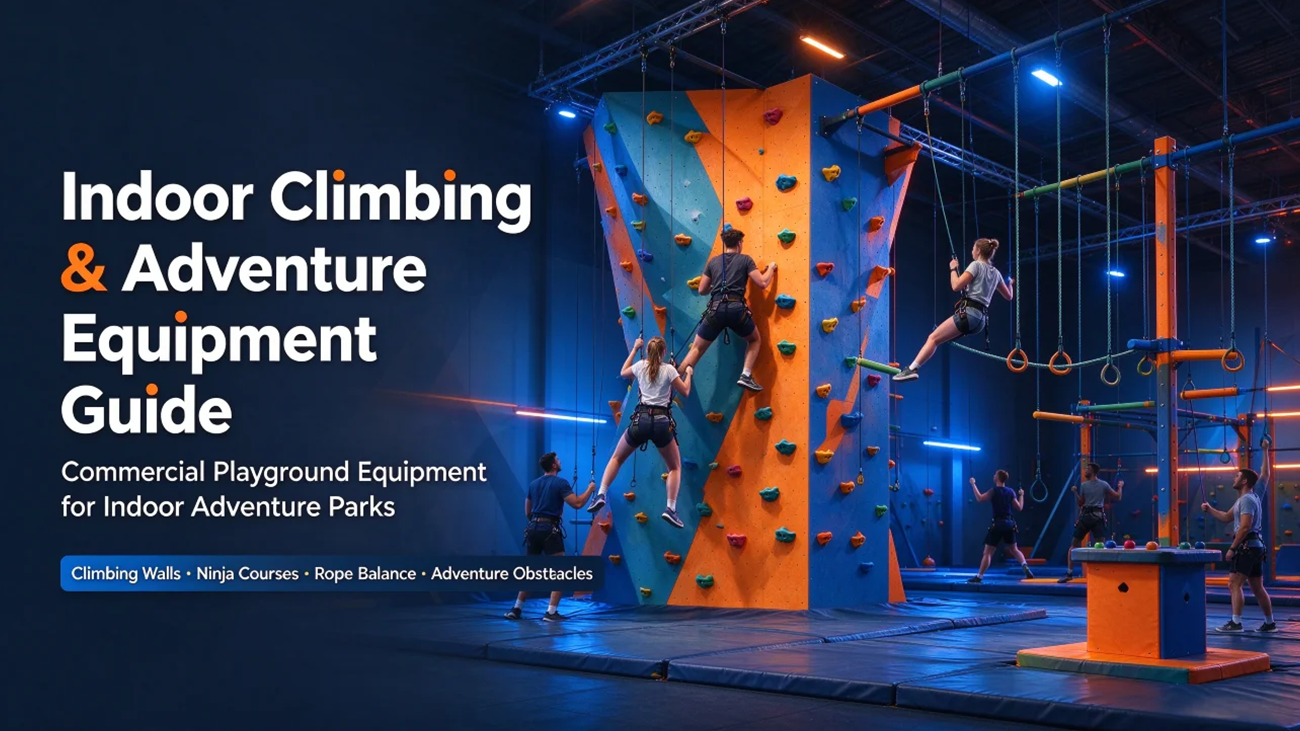
Indoor Climbing and Adventure Equipment Guide
Quick Answer Running an Indoor Adventure Park? You will need Indoor Climbing Equipment and different kinds of Adventure Play features.

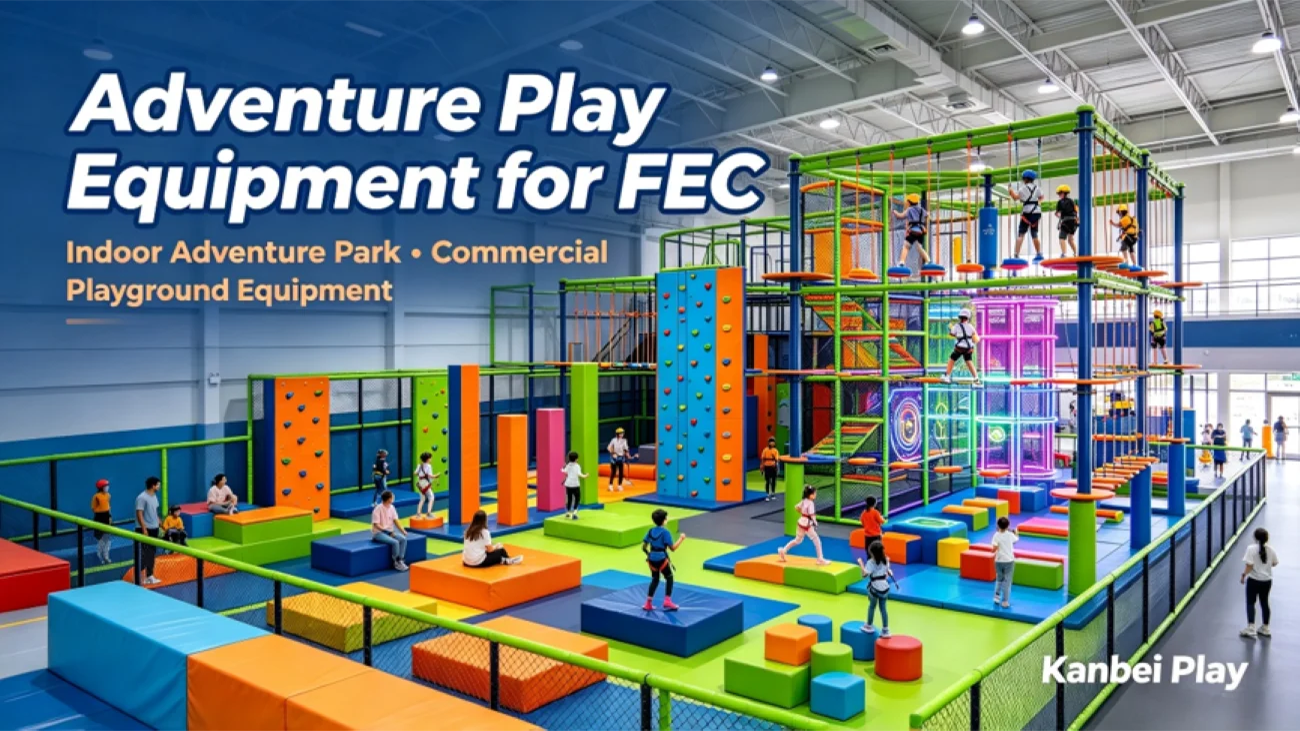
Modern‑day family entertainment center venues compete heavily for repeat family and teen guests, and basic arcade or soft‑play setups often struggle to hold older kids and young adults. Integrating Adventure Play turns part of your floor space into a small‑scale Indoor Adventure Park, expanding your target audience beyond toddlers to cover children, teenagers, and even participating parents.
Adventure Play brings tangible business upsides: longer average visit durations, higher potential for party bookings and group events, and a standout feature that differentiates your family entertainment center from nearby competitors. Unlike many passive amusement options, physical challenge attractions encourage return visits as guests attempt harder obstacle routes, which strengthens membership and repeat‑customer metrics for your location.
Adding adventure‑themed attractions to an FEC answers a common problem: repeat family and teen guests expect fresh, physical experiences that basic arcade or soft‑play setups cannot deliver. A dedicated Adventure Play zone turns unused or under‑performing floor space into a draw that brings older kids, teenagers and participating parents back again and again.
The business case for FEC owners is concrete. Adventure Play equipment lifts average visit duration, creates natural hooks for birthday‑party and group bookings, and gives your venue a distinctive edge over competing entertainment locations. Because physical challenge courses push guests to attempt harder routes on each visit, they also strengthen repeat visits and membership retention, which directly supports higher ticket revenue over time.
When building an adventure zone inside an FEC, you can mix‑and‑match modular commercial playground equipment instead of committing to a huge standalone facility. Below are four proven categories that fit most family‑oriented entertainment spaces, each contributing to a balanced Indoor Adventure Park experience.

Ninja courses remain one of the highest‑demand pieces of Adventure Play equipment for FEC environments. Made up of moving platforms, hanging rings, balance beams, and jump obstacles, these modular setups support competitive timed challenges for kids and teens. Many operators add leaderboards to boost engagement. Ninja systems can be sized for small corner zones or expanded to fill large floor areas, making them flexible for both new‑build and retrofitted FEC projects.
Indoor climbing hardware ranges from low beginner bouldering walls to full‑height auto‑belay climbing panels. For FEC use, auto‑belay systems are strongly recommended: they reduce staff workload while allowing multiple guests to climb safely at once. Climbing equipment draws casual first‑time participants alongside more experienced visitors, fitting naturally beside other Adventure Play zones within your Indoor Adventure Park layout.
Rope‑based challenge courses use netting, suspended bridges and rope obstacles, either at low ground‑level height or multi‑level elevated tracks. Low‑height rope structures work well for younger children, while elevated rope courses with harness systems target older kids and adults. Since many rope‑challenge components are modular, suppliers can adjust footprint and difficulty to match your exact FEC space constraints.
Interactive Adventure Play blends physical obstacles with digital elements like projection mapping, sensor‑triggered games, timed missions, and RFID checkpoint systems. This equipment adds gamification to regular physical play, keeping attention spans high and creating shareable social‑media moments for your FEC. Interactive modules are often added alongside ninja or climbing features rather than operating as a standalone zone.
Simply dropping Commercial Playground Equipment into available floor space creates operational headaches like bottlenecks, blind spots, and unsafe crowding. Good layout planning ensures your Indoor Adventure Park works harmoniously with your existing FEC zones such as food service, arcade, and party rooms.

Ceiling height is one of the most frequently overlooked requirements for Adventure Play. Climbing walls, elevated rope courses, and tall ninja obstacles demand adequate vertical clearance. Low‑height Adventure Play options exist for venues with limited overhead space, but high‑capacity elevated attractions typically need 4.5 meters or higher ceilings. Measure usable clear height, not just raw building height, accounting for ducts, sprinklers, and lighting fixtures. Floor area must include not only the equipment footprint itself but also queuing zones, harness storage, safety fall zones, and staff check‑in space.
Effective Adventure Play layouts separate guest groups by age and challenge difficulty. Younger children need low‑height, low‑risk obstacle paths; teens and adults can access advanced, high‑challenge routes. Color‑coded path systems are widely used in the industry to guide guests to appropriate levels. Zoning prevents small children from entering advanced obstacle sections, cutting down accident risk and simplifying staff supervision within your FEC.
Visitors should flow logically from entry, through ticketing and brief safety orientation, into the Adventure Play zone, then back out toward food, retail or arcade areas. Avoid placing adventure‑play exits into narrow hallways or high‑traffic arcade hotspots that create crowd jams. Your layout should also make it easy for birthday‑party groups and school bookings to enter and exit without disrupting regular walk‑in guests.
Every section of Adventure Play equipment should remain visible to on‑duty attendants. Tall multi‑level structures can create hidden corners. During design reviews, walk through the attendant station positions and confirm no play zones fall completely out of view. If blind spots cannot be eliminated with layout changes, you will need to add extra staff positions or adjust equipment configuration.
Before committing capital to adventure‑themed hardware, it helps to understand how Adventure Play stacks up against other popular FEC attractions in terms of audience, staffing needs, and revenue potential. This comparison helps you decide the right mix of Commercial Playground Equipment for your venue.
Traditional soft play targets mainly toddlers and younger children, with low physical challenge. Adventure Play extends appeal to teens and adults, opening higher‑value ticket and group‑booking opportunities. On the downside, Adventure Play usually carries higher upfront investment and stricter safety protocols. Many successful FEC venues run both zones side‑by‑side: soft play for little kids and Adventure Play for older family members, covering the full family demographic in one building.
Trampoline parks deliver high‑energy bouncing fun but come with well‑documented injury risks and specific insurance requirements. Modern Adventure Play mixes balance, climbing, and problem‑solving challenges instead of constant jumping. Ninja‑style adventure courses can often operate with lower insurance premiums compared to full‑size trampoline zones. Still, many FECs combine limited trampoline sections with Adventure Play for maximum guest variety.
Stand‑alone climbing walls only deliver one type of activity. Adventure Play packages climbing together with balance obstacles, swinging elements and competitive courses. Pure climbing walls are excellent as one component within your larger adventure zone, yet they cannot match the broad‑based replay value of a full multi‑challenge Adventure Play setup for a busy mixed‑use FEC.
Choosing Commercial Playground Equipment for an FEC means looking past visual renderings and price tags toward real‑world commercial venue performance. First, confirm all hardware meets regional safety standards such as ASTM, EN‑1176, or local amusement‑attraction codes; certified materials and construction reduce liability and insurance‑related headaches later on.
Prioritize modular systems where possible. Modular Adventure Play components allow you to expand, remove, or re‑arrange obstacles as your audience preferences shift, without fully replacing the whole installation. Ask suppliers about wear‑part availability: high‑use items like hand grips, harness clips, and netting will need periodic replacement in busy FEC locations.
Also think about your operating model. If you run birthday parties and large‑group events, pick equipment that can handle simultaneous batches of participants. Always verify whether installation costs, site surveys, safety training for your team, and spare‑part kits are included in supplier quotes or billed separately.
Total investment for FEC Adventure Play varies widely based on zone size, height, custom theming, safety systems like auto‑belays and interactive add‑ons. Small corner‑fit modular ninja setups for limited square footage represent the entry‑level price bracket. Full multi‑level Indoor Adventure Park builds with climbing, high‑ropes and interactive features carry significantly larger budgets, including fabrication, shipping, on‑site assembly and safety‑accessory costs.
Operators should remember to budget for more than just hardware. Installation labor, safety surfacing, harness stock, staff training, insurance adjustments, and an annual maintenance reserve need to factor into your total project budget. Many buyers start with a scaled‑down initial zone, then expand their Adventure Play offering as revenue from the first section proves successful.
Safety is non‑negotiable for Adventure Play inside any FEC. Start with formal pre‑opening inspections carried out by qualified third‑party amusement safety auditors. Build daily checklists for your on‑site team covering harness condition, netting tears, anchor‑point tightness, and fall‑surface integrity. High‑touch parts will degrade faster in high‑traffic FEC environments, so schedule periodic component replacements instead of waiting for visible failure. Staff training is equally critical. Team members must understand how to brief guests on rules, spot risky behavior, and respond to incidents. Even with top‑tier Commercial Playground Equipment, poorly trained attendants create safety risks. Keep accurate maintenance logs for every piece of adventure‑play hardware; these records prove invaluable during insurance reviews or regulatory visits.

Most established FEC venues can retrofit Adventure Play equipment without rebuilding the entire building, but you must first complete a site audit. Confirm floor load‑bearing capacity, ceiling height, sprinkler placement, emergency‑exit pathways, and local building‑code requirements before finalizing designs. You may need to re‑allocate existing space currently used for under‑performing attractions to host your new Indoor Adventure Park zone.
Modular Adventure Play systems are ideal for retrofits because they can be shaped around existing columns, walls, and service points. Some operators choose a compact low‑height Adventure Play setup when ceiling height limits prevent elevated courses. Retrofitting often involves shorter installation timelines than ground‑up construction, though you will need to plan partial‑venue downtime for install work.
To get accurate, practical proposals for your FEC adventure‑play zone, prepare and share these documents with your potential equipment supplier: scaled floor plans with structural elements marked, photos or laser measurements of ceiling height and overhead obstructions, your target age range for guests, maximum available project budget, and your core business goals (such as prioritizing birthday‑party capacity or teen‑focused competitive play).
Be clear about must‑have versus nice‑to‑have features. If you know you definitely want ninja obstacles but are unsure about interactive add‑ons, communicate that upfront. The more precise your site data and operational priorities, the better your supplier can tailor Commercial Playground Equipment layouts that fit your real‑world FEC workflow, rather than delivering a generic concept drawing.
A balanced FEC adventure zone typically combines ninja‑obstacle modules, climbing hardware (bouldering or auto‑belay walls), rope‑challenge structures, plus optional Interactive Adventure Play features. Start with core modular attractions, then add extras based on your available space and target guest demographics.
There is no fixed minimum. Small‑scale Adventure Play for an FEC can fit within a few hundred square meters, while full‑featured Indoor Adventure Park concepts require far larger footprints. Always allocate extra room for queuing, safety buffers and staff work areas beyond the pure equipment footprint.
Costs shift dramatically with zone scale, custom theming and safety‑system specifications. Small modular adventure‑play zones sit at a lower investment level; multi‑level, fully‑themed builds carry substantially higher expense. Always include installation, surfacing, and ongoing maintenance within your total cost projections.
Yes. Most reputable manufacturers offer customization for Commercial Playground Equipment, including theme styling, obstacle‑difficulty tuning, dimension adjustments to match awkward FEC room layouts, and branded visual elements. Custom work will influence lead‑times and overall project pricing.
Absolutely, as long as you complete a full site review covering floor loading, ceiling height, building codes, and emergency‑exit routes. Modular Adventure Play hardware works well for retrofit projects, allowing you to add an Indoor Adventure Park‑style zone without a full venue rebuild.
Adventure Play equipment gives FEC operators a powerful way to expand their audience, boost repeat visits, and create memorable experiences that stand apart from competing entertainment venues. Whether you are planning a brand‑new build or retrofitting an existing location, success hinges on thoughtful layout planning, safety‑first hardware selection, and a clear understanding of your target guests.
Looking to add adventure attractions to your family entertainment venue? Visit https://www.kanbeiplay.com/ to view project cases, explore modular commercial playground equipment, and consult specialists for your indoor adventure park or FEC needs.
Quick Answer Running an Indoor Adventure Park? You will need Indoor Climbing Equipment and different kinds of Adventure Play features.
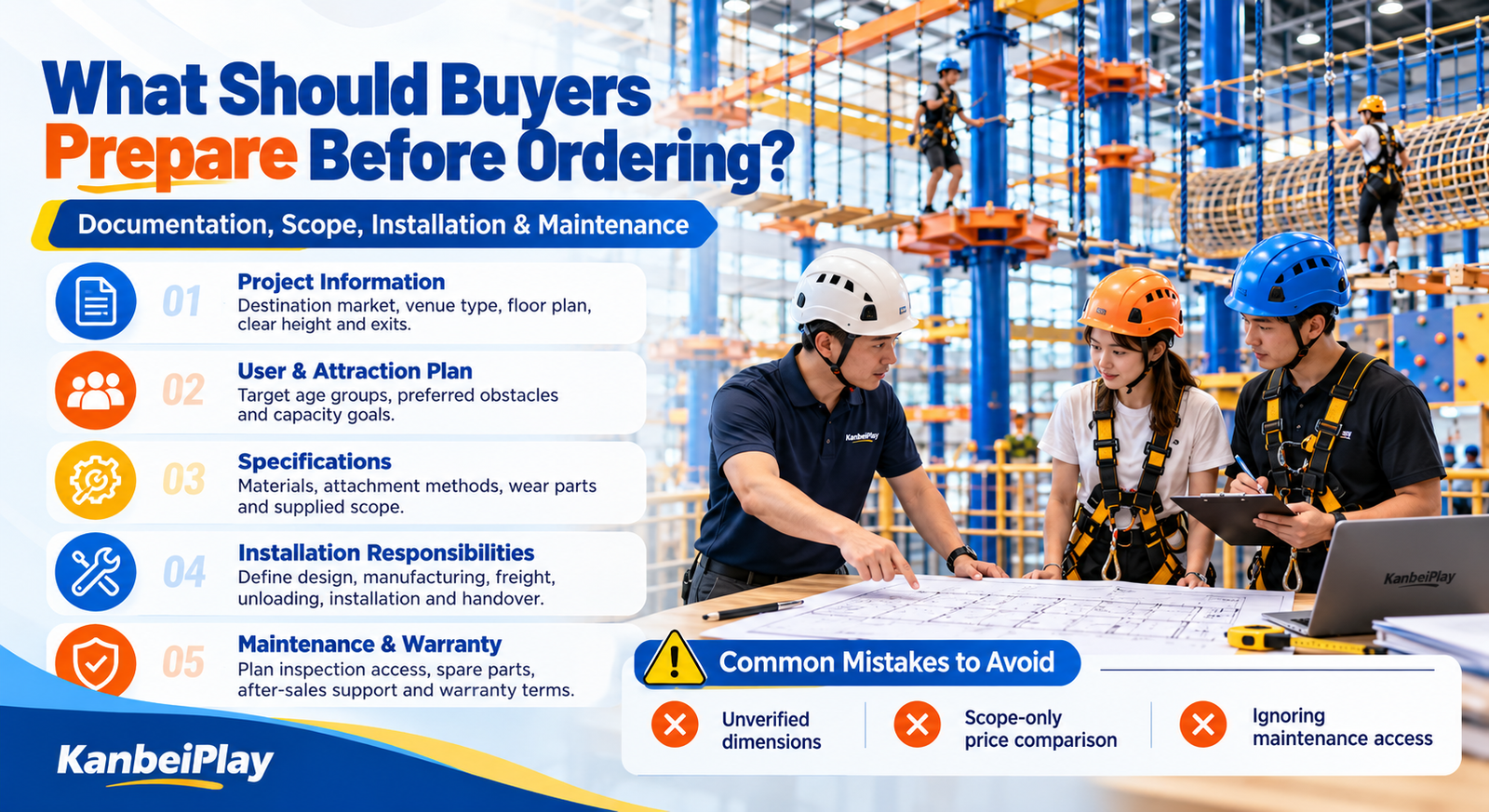
Quick Answer Before working with an indoor playground manufacturer, prepare a measured floor plan, clear ceiling height, target age range,