
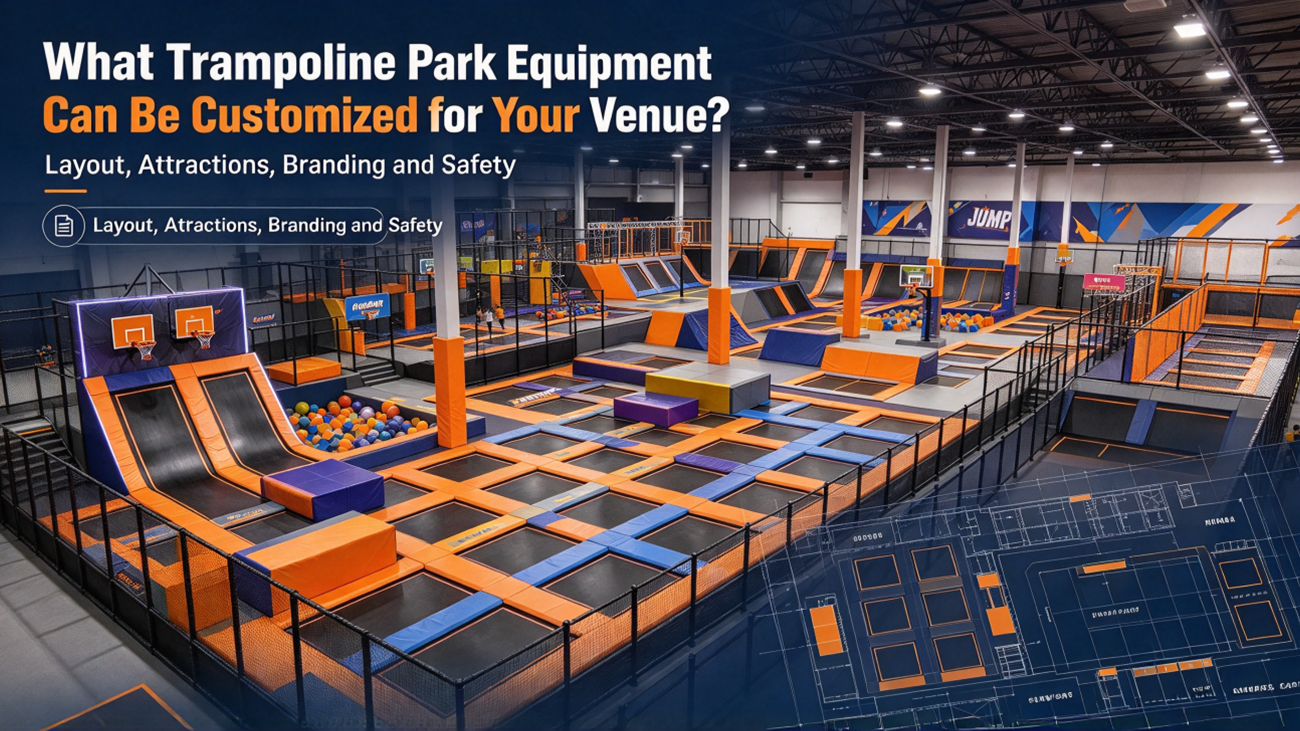
What Trampoline Park Equipment Can Be Customized for Your Venue?
Quick Answer If you are planning an indoor trampoline park, one of the biggest advantages of working with a professional

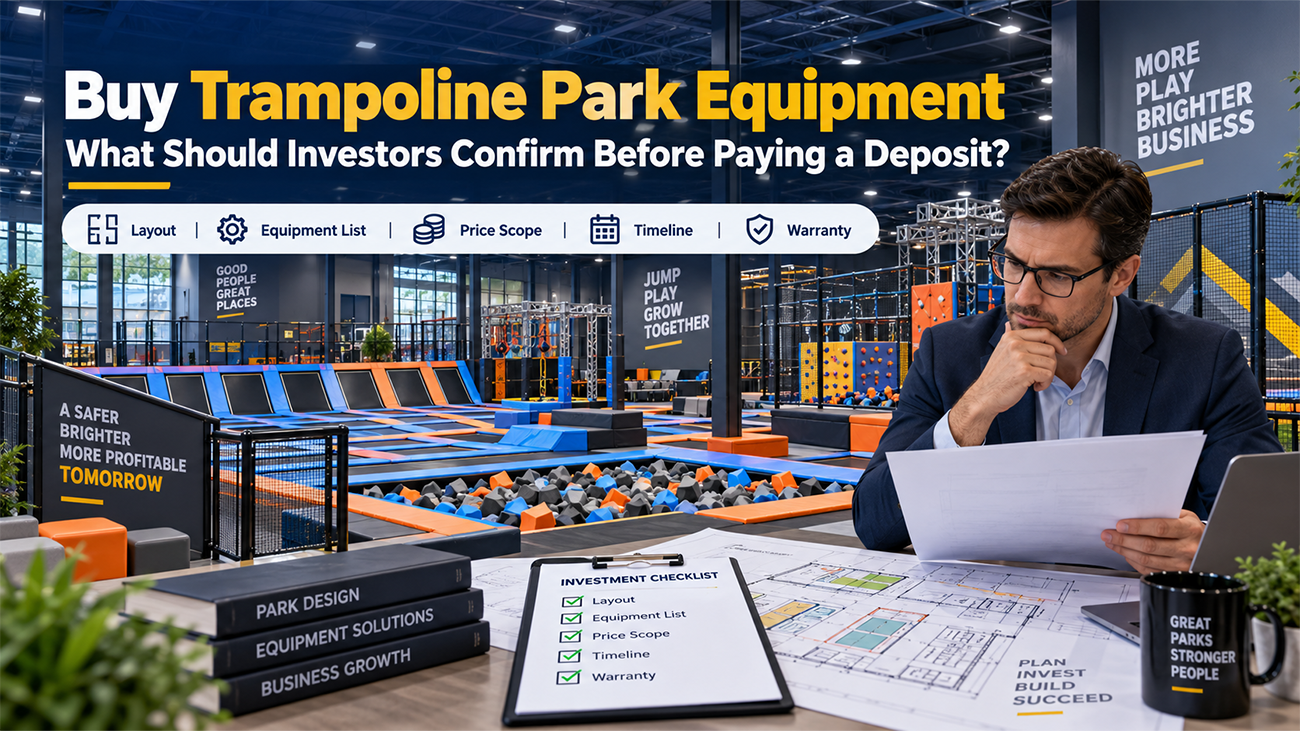
Table of Contents
ToggleBefore investors buy trampoline park equipment and pay a deposit, they should confirm the approved layout, equipment list, major specifications, destination-market documentation, price scope, payment milestones, production timeline, shipping assumptions, installation responsibilities, spare parts, warranty terms, and the process for later design changes. The deposit should start a clearly defined project, not an open-ended concept. A lower price is less valuable if important items such as installation, freight, site work, or replacement support are still unclear.
Before payment, confirm the usable area, clear height, columns, exits, attraction mix, circulation, and major support spaces of the commercial trampoline park. If the building or trampoline park layout is still changing, the contract should explain which information is provisional and what happens if revisions are required. Buyers should avoid authorizing production from a concept rendering that has not been checked against the real trampoline park site.
The quotation should identify the main jump areas, dodgeball, dunk, performance, landing systems, ninja or climbing features, padding, nets, platforms, gates, and other included components as applicable. Major materials and specifications should be documented. If optional items are shown in the trampoline park 3D rendering but not included in the equipment list, that difference should be resolved before the deposit.
Buyers should separate indoor playground trampoline park equipment, design, packing, freight, customs-related charges, local delivery, unloading, installation, technicians, local labor, tools, travel, accommodation, spare parts, and site preparation. Some items may legitimately be excluded, but exclusions should be visible. A scope table can prevent later disagreements and allow investors to compare competing quotations on the same basis.

The contract should state payment milestones, what triggers each payment, and how approved design changes affect price and schedule. Customized projects can evolve, but every revision should be documented so the buyer and factory are working from the same version. Investors should avoid relying on informal chat messages as the only record of major scope changes.
The schedule should distinguish design approval, production, QC, packing, shipping, customs, local site readiness, installation, and final checks. Production time is only one part of the opening timeline. Buyers should also understand what can delay the project: late approvals, changing site conditions, custom materials, shipping schedules, or incomplete local preparation.
Before paying the deposit, confirm installation drawings, technical support, spare-parts process, maintenance instructions, warranty coverage by component, exclusions, and the claim procedure. Local building, fire, insurance, and operating requirements should also be assigned to the appropriate local professionals. The supplier's after-sales role is easier to manage when it is defined before the first payment.
Prepare the final or near-final floor plan, clear heights, attraction list, project specifications, destination, installation model, site-readiness schedule, and opening date. Ask for a single written document or contract package that connects the approved layout, quotation, payment terms, timeline, and responsibilities.
The project should be defined enough that the quotation, equipment list, and responsibilities are clear. Any remaining provisional items should be documented.
The contract or project process should explain how revisions are approved and how they affect price and schedule.
Deposit size alone does not show project risk. Investors should compare the complete scope, specifications, responsibilities, and supplier evidence.
Coverage should be component-specific where possible and should state the period, exclusions, claim process, replacement responsibilities, and post-warranty support.

The decision to buy trampoline park equipment should become more specific as the deposit approaches. Investors should move from ideas and renderings to an approved scope, documented specifications, clear commercial terms, and assigned responsibilities. A deposit is best paid when both sides understand what will be produced, how it will be delivered, and how changes and after-sales support will be handled.
Reference: https://www.kanbeiplay.com/product/indoor-trampoline-park-equipment-for-sale/
Quick Answer If you are planning an indoor trampoline park, one of the biggest advantages of working with a professional
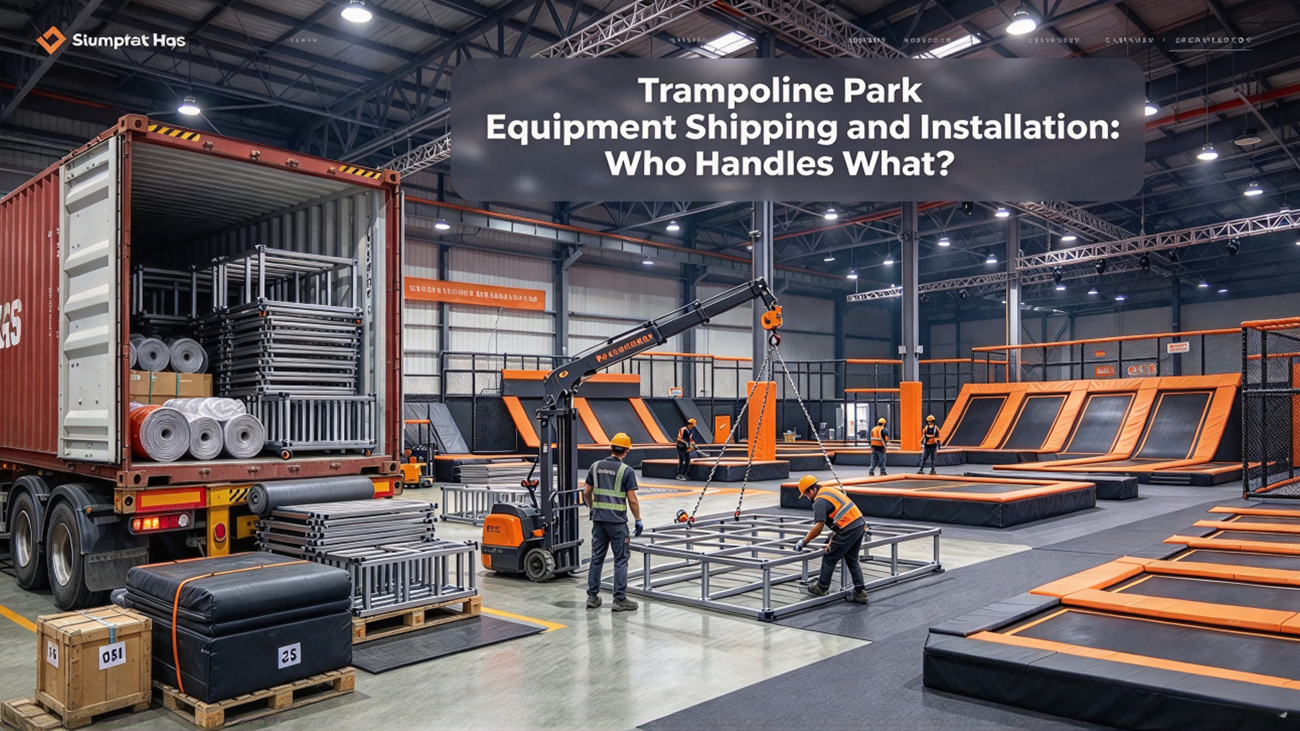
Planning a commercial indoor playground involves more than picking equipment. Once your design is approved and production is finished, two
Thank you very much for your inquiry! Your trust is our greatest motivation. We are committed to offering playgrounds that combine high quality with affordable pricing. Let us bring vitality to your venue!