Quick Answer
Shopping‑mall and FEC venues can invest in a complete turnkey indoor Ninja Course. You do not need to source Indoor Playground Equipment separately. This full‑package service covers custom design, equipment production, delivery, on‑site setup and project handover. A well‑built indoor Ninja Course extends dwell time for families, teens and adults and generates steady ticket and event income. Professional Ninja Course solutions adapt to site constraints, safety rules and budgets, and integrate with trampolines, climbing walls and other Indoor Playground Equipment.
What Is a Turnkey Ninja Course?
Equipment-Only vs Turnkey Project
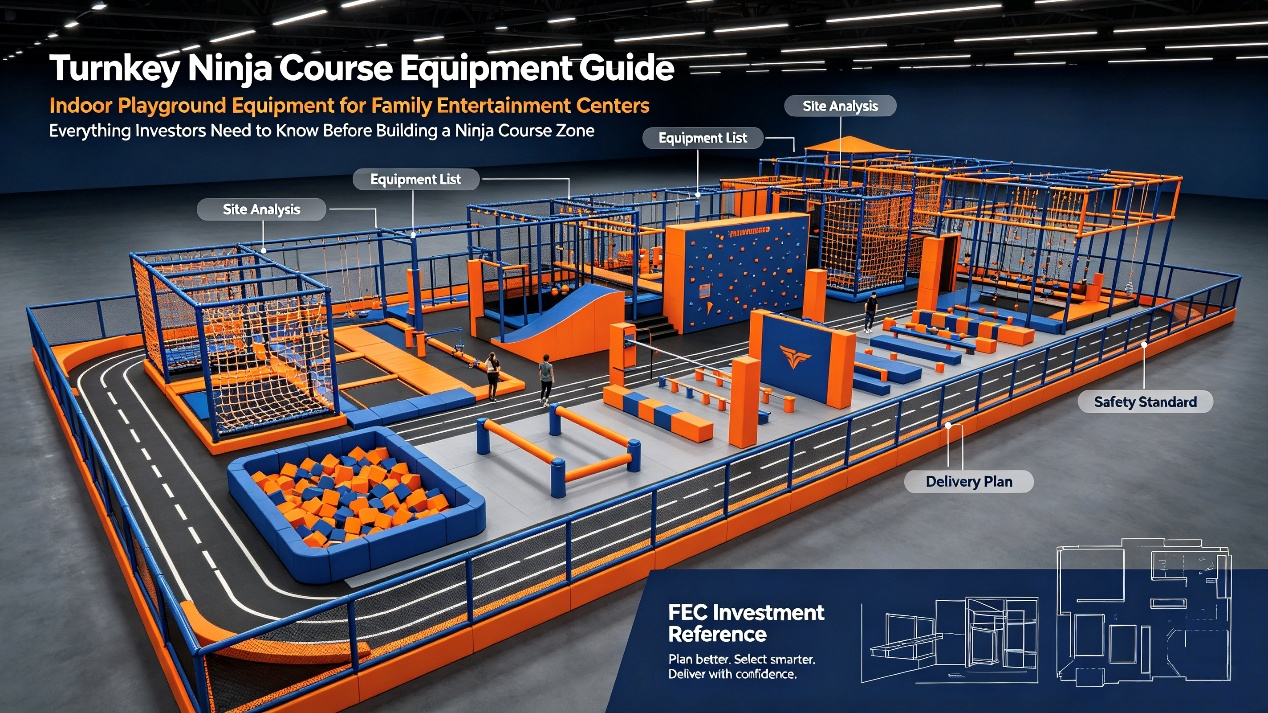
Indoor venues can pick a turnkey Ninja Course as a full commercial obstacle solution. The supplier completes site surveys, custom design, manufacturing, and on‑site delivery to deliver a ready‑to‑open indoor Ninja Course, widely used by mall‑based FECs.
If you build your Ninja Course from scattered Indoor Playground Equipment, extra coordination and hidden risks follow. You handle measurement, layout, and safety checks. Though seemingly cheaper at first, poor layout and non‑standard installation may create unexpected extra costs for your indoor Ninja Course.
A turnkey indoor Ninja Course avoids these issues. This one‑stop service includes design, standardized production, shipping, installation, and operational guidance. The supplier manages layout, obstacle sequence, and safety standards for the whole Ninja Course. Operators receive a ready‑to‑run attraction and focus only on daily venue work.
Why Choose a Turnkey Ninja Course?
A turnkey Ninja Course simplifies project management, as you work with a single supplier instead of multiple vendors. This reduces management expenses and prevents delays for your indoor Ninja Course.
Random equipment placement hurts the experience and creates safety risks. Professional turnkey design sets progressive difficulty for your indoor Ninja Course. Experienced designers build full Ninja Course systems with proper challenge lanes, safe landing zones, and smooth guest flow.
A turnkey indoor Ninja Course works seamlessly with diverse Indoor Playground Equipment. Adding trampoline, climbing, and soft‑play zones creates multi‑functional spaces for broader age groups and strengthens venue competitiveness.
Turnkey projects guarantee commercial‑grade safety for each Ninja Course. Reinforced frames, wear‑resistant surfaces, and certified safety parts are applied. Every installation step complies with amusement‑industry standards for your indoor Ninja Course.
What Information Is Needed Before Indoor Ninja Course Design?
Floor Plan and Ceiling Height
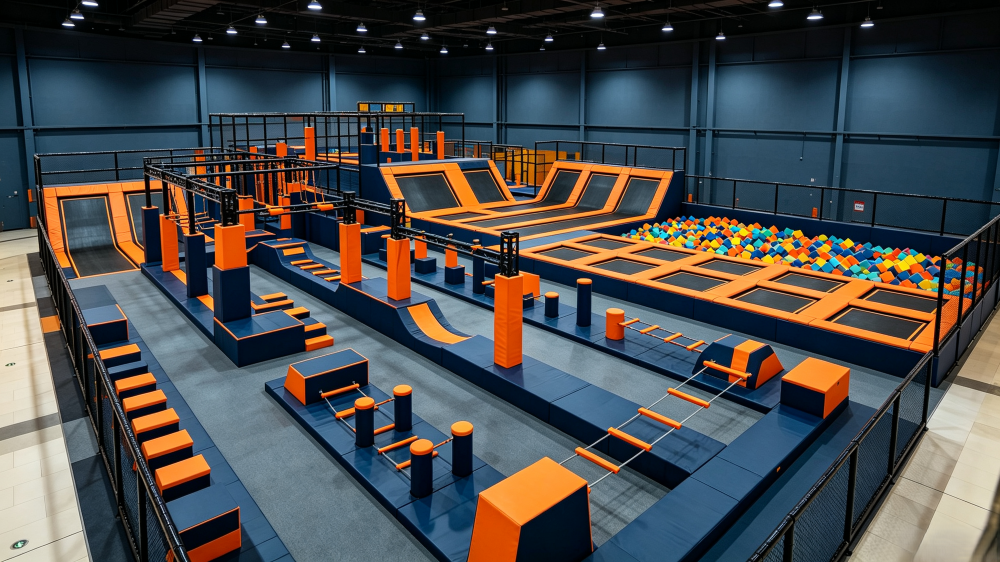
Accurate site data is critical for indoor Ninja Course design. Missing information leads to repeated revisions, re‑production, and project delays. Venue owners shall prepare key site data before formal Ninja Course design starts. A complete floor plan marks usable space, building columns, walkways, and fire exits. Since players swing, jump, and climb on Ninja Course obstacles, designers steer clear of beams and pillars to build safe, practical layouts for your indoor Ninja Course. Ceiling height determines feasible obstacles for your indoor Ninja Course. Low‑ceiling venues only fit balance and short‑swing challenges; high‑ceiling spaces support large swing obstacles, multi‑level climbing, and standard warped walls. Every Ninja Course preserves unobstructed escape routes and follows local fire‑safety codes.
Target Users and Difficulty Levels
Knowing your target guests lets you pick proper difficulty for your Ninja Course. Different groups need totally‑different obstacle setups. You can tailor your indoor Ninja Course for young kids, teens, adults, or mixed‑age family guests. Venues for young kids should run a Ninja Course with low obstacles, easy balance tasks, and full soft‑pad coverage. FECs aimed at teens and adults may add high‑swing obstacles, heavy‑duty climbing sections, and hard‑level warped walls. Most mall‑based projects use multi‑lane layouts for families and skilled players, paired with suitable Indoor Playground Equipment.
Budget and Attraction Mix
A clear budget helps optimize your indoor Ninja Course solution. The total budget covers design fees, equipment production, packaging, transportation, installation, and spare parts. Tell suppliers your budget range. This helps you get a good‑value Ninja Course and avoid extra unnecessary over‑designed parts. You should also define where your Ninja Course fits within the whole venue. If it is your main draw, go for longer tracks and more varied obstacle sets. When it serves only as supporting gear, a tight layout frees up room for other Indoor Playground Equipment and play areas.
What Equipment Should a Ninja Course Include?
Hanging and Swing Obstacles
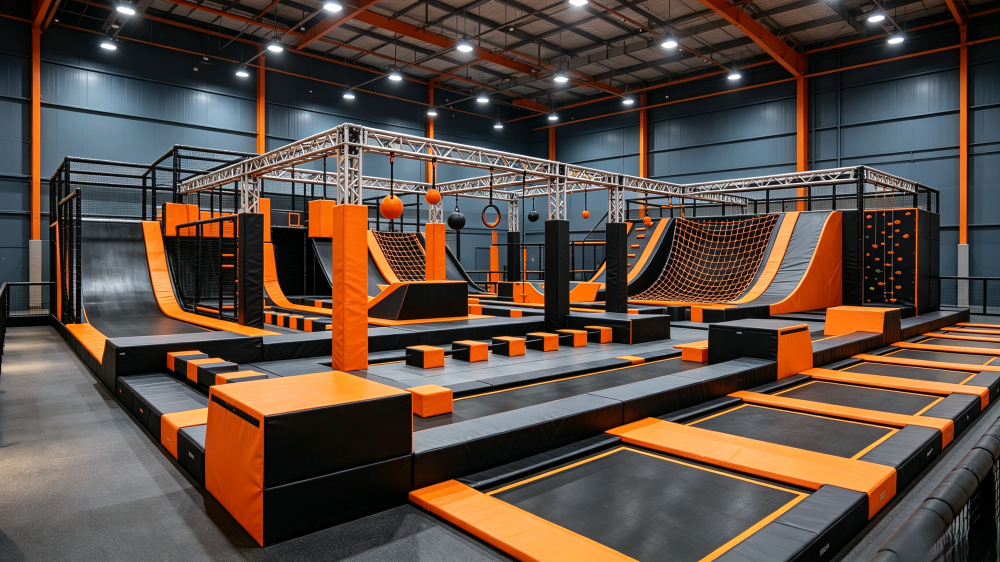
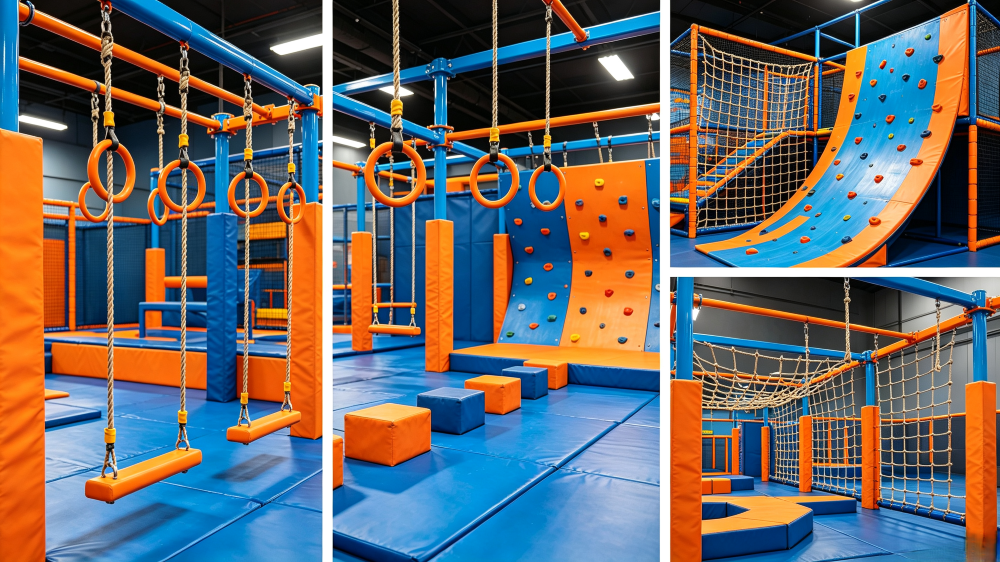
Well‑balanced obstacles bring fun and challenge for a commercial Ninja Course. Hanging‑swing obstacles are core parts of a classic indoor Ninja Course, such as swing cargo nets, ring grabs, and pendulum swings. Players move forward by swinging on suspended components of your indoor Ninja Course.
All hanging parts of the indoor Ninja Course use reinforced bases and high‑strength hardware for stable load‑bearing safety. Commercial‑grade anti‑wear grips and replaceable soft sleeves extend service life. For each custom Ninja Course, designers adjust swing range and obstacle gaps according to guest age and difficulty requirements.
Balance and Climbing Challenges
Balance obstacles are basic beginner‑friendly components for every Ninja Course. They include floating stepping stones, balance beams, and wobble platforms. These obstacles test body coordination and serve as ideal warm‑up sections for formal indoor Ninja Course challenges.
You can adjust the climbing difficulty of your indoor Ninja Course to suit kids, teenagers, and adults. Climbing walls, rope ladders, cargo net climbs, and inclined peg boards are common options that add vertical challenge to the Ninja Course. All climbing surfaces have anti-slip treatment, and surrounding areas are fully covered with high-density safety padding.
Warped Walls and Finish Obstacles
The warped wall is the iconic finishing obstacle of a standard Ninja Course. Its unique curved structure requires players to build sprint momentum and use upper‑body strength to reach the top platform. Commercial indoor Ninja Course warped walls support customized height and radius for different user groups. Complete Ninja Course finish systems also include bell targets, final net climbs, and vertical jump platforms. A dedicated finish zone brings a strong sense of accomplishment for players. Thickened safety padding in landing areas effectively cushions falls and guarantees full safety for your indoor Ninja Course.
How Is an Indoor Ninja Course Designed?
Lane and Obstacle Planning
Excellent indoor Ninja Course design is never simple equipment stacking. Well‑thought‑out layouts adjust lane positions, obstacle gaps, safety zones, and guest flow to improve user experience and operating efficiency of your Ninja Course.
The lane quantity of your Ninja Course depends on site size and peak‑hour visitor volume. Single‑lane layouts suit small auxiliary zones. Multiple parallel lanes let several players race together and cut waiting queues for your indoor Ninja Course during busy hours.
Designers arrange Ninja Course obstacles in logical playing sequences. Adequate safe spacing prevents collisions. Challenge lanes and spectator zones are strictly separated to stop visitors from mistakenly entering active indoor Ninja Course playing areas.
Difficulty Progression
Safe landing zones are indispensable for any indoor Ninja Course. Every jump‑and‑drop point is equipped with standard shock‑absorbing padding. Pad thickness and density match the maximum fall height of each Ninja Course obstacle.
A full Ninja Course project reserves circulation space for spectators, waiting guests, and access passages. Fire exits and public passages must stay clear. Sufficient buffer space prevents crowd congestion and simplifies daily management for your indoor Ninja Course venue.
Landing and Circulation Areas
Safe landing areas are necessary for any indoor Ninja Course. Standard shock‑absorbing padding covers every spot where players jump or fall. Pad thickness and density fit the maximum drop height of each Ninja Course obstacle.
A full Ninja Course project needs practical circulation space for viewers, waiting guests, and entry‑exit paths. Fire exits and public passages must stay clear. Enough buffer space stops crowd jams and eases daily work for your indoor Ninja Course venue.
How Can a Ninja Course Be Combined With Indoor Playground Equipment?
Ninja Course + Trampoline
Combining play zones improves guest experience and stay time — a key advantage of the indoor Ninja Course, which works well with all types of Indoor Playground Equipment. Pairing a Ninja Course with trampolines creates energetic play areas. Trampolines serve as warm‑up spots before indoor Ninja Course challenges. Custom layouts may add small trampoline launch points. Keep zones clearly divided and follow unified safety standards for mixed Indoor Playground Equipment and indoor Ninja Course.
Ninja Course + Climbing
Independent climbing walls serve as good supporting facilities for commercial Ninja Course projects, while short climbing obstacles inside the indoor Ninja Course provide transitional challenge moves. The two can share safety‑padding space to save floor area. Venues can launch combo tickets for the Ninja Course and climbing wall to lift per‑customer consumption.
Ninja Course + Indoor Playground
High‑energy Ninja Course zones should be separated from quiet toddler areas. You can combine your Ninja Course with complete Indoor Playground Equipment to build a full‑scale family entertainment center. The indoor Ninja Course appeals to teens and older kids. This mixed layout breaks age limits of traditional playgrounds, welcoming multi‑age families to visit together.
What Does the Turnkey Ninja Course Process Include?
2D and 3D Design
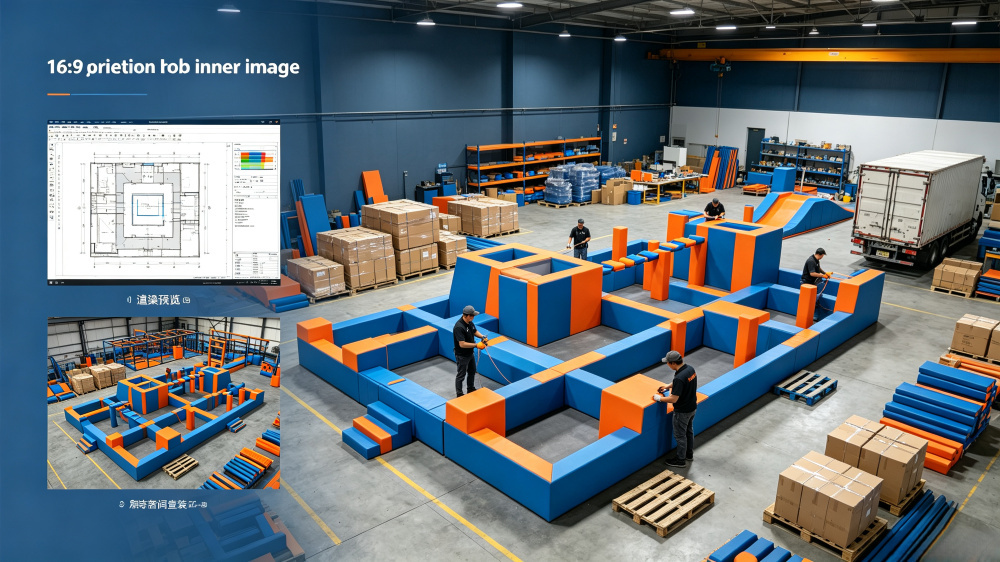
Commercial turnkey service for Ninja Course covers full project cycles. After confirming site and project requirements, designers draw precise 2D floor plans marking Ninja Course lane positions, obstacle layout, and evacuation routes. After 2D approval, realistic 3D renderings are generated for a visual preview of your custom indoor Ninja Course.
Manufacturing and Quality Control
Production starts after Ninja Course design finalization. Metal frames use anti‑rust galvanized steel, while grips and padding adopt commercial‑grade wear‑resistant materials. Every component of the indoor Ninja Course passes strict quality inspection to guarantee long‑term stable operation of your Ninja Course.
Packing and Shipping
All Ninja Course parts get professional packaging with clear labels for fast sorting and smooth on‑site assembly of your indoor Ninja Course. Suppliers arrange suitable transportation and provide shipping documents until all Ninja Course equipment arrives at your venue.
Installation and Handover
Professional teams install your indoor Ninja Course following drawings and mall rules. Work includes frame assembly, obstacle fitting, padding laying, and full‑system testing. At handover, you get operation guides, maintenance tips, and safety documents for your commercial indoor Ninja Course. Suppliers will run a full safety check on the finished Ninja Course to test stability, swing range, and load‑bearing performance.
How Much Does a Turnkey Ninja Course Cost?
The total investment for a turnkey Ninja Course varies by site size, lane count, obstacle complexity, material grade, and matched Indoor Playground Equipment. Small, compact Ninja Course projects have low entry costs for budget‑limited investors. Large‑scale commercial Ninja Course with multiple lanes and rich obstacles costs more; adding extra Indoor Playground Equipment further increases budgets. Full turnkey fees cover design, shipping, installation, certification, and spare parts. Disclose your budget early to suppliers for practical Ninja Course solutions matching your venue positioning. How to Choose a Turnkey Ninja Course Supplier
Custom Design Capability
Supplier capability decides your Ninja Course project outcome. Custom‑design competence is the core evaluation criterion for professional indoor Ninja Course manufacturers. Qualified suppliers tailor Ninja Course layouts for special‑condition sites and achieve seamless coordination with existing Indoor Playground Equipment. You may assess capability by reviewing completed indoor Ninja Course cases.
Manufacturing Experience
Ninja Course equipment faces stricter production standards than ordinary playground facilities. Rich manufacturing experience ensures stable quality for your commercial indoor Ninja Course. Reliable suppliers hold mainstream safety certifications and adopt reinforced structures for easily‑worn parts of the indoor Ninja Course.
Indoor Playground Equipment Capability
Most indoor Ninja Course projects need supporting Indoor Playground Equipment. One‑stop integrated production avoids compatibility and communication troubles brought by multiple suppliers, keeping unified standards for your Ninja Course‑centered family entertainment venue.
Installation and After-Sales Support
Trustworthy suppliers send experienced installation teams to guarantee your indoor Ninja Course meets commercial safety standards. Complete after‑sales support supplies spare parts and maintenance suggestions, preventing partial shutdown of your Ninja Course and keeping stable revenue from all your Indoor Playground Equipment.
People Also Ask
What is included in a turnkey ninja course?
A full turnkey Ninja Course includes custom 2D/3D design, obstacle hardware, quality inspection, shipping, installation, and after‑sales service. It can pair with various Indoor Playground Equipment to build a complete indoor Ninja Course entertainment system.
How much does an indoor ninja course cost?
Ninja Course investment varies greatly. Site scale, lane count, obstacle difficulty, and supporting Indoor Playground Equipment influence total costs of the indoor Ninja Course. Small projects have lower budgets, while large full‑featured Ninja Course systems cost more.
How much space does a ninja course need?
Commercial multi‑lane Ninja Course generally requires 200‑400 m² plus safety zones. A compact single‑lane indoor Ninja Course only needs 80‑120 m².
Can a ninja course combine with indoor playground equipment?
Yes. The Ninja Course features strong compatibility with all forms of Indoor Playground Equipment. Proper combinations enhance the commercial value of your indoor Ninja Course.
Can an indoor ninja course be customized?
Yes. Commercial indoor Ninja Course supports full customization of lanes, obstacles, and difficulty. It adapts to special‑site conditions and existing Indoor Playground Equipment.
Conclusion
A full‑service turnkey Ninja Course attracts crowds and creates good profit as a core attraction for mall FECs. Compared with purchasing separate Indoor Playground Equipment, it delivers safer and more cost‑effective solutions. A custom-built indoor Ninja Course fits your site, budget, and target visitors, and can be combined with trampolines and climbing walls to lift venue revenue. If you need a reliable turnkey indoor Ninja Course and custom Indoor Playground Equipment, contact our team or visit https://www.kanbeiplay.com/. We offer free design, professional manufacturing, and full‑range project support to build your safe, popular, and profitable entertainment venue.