
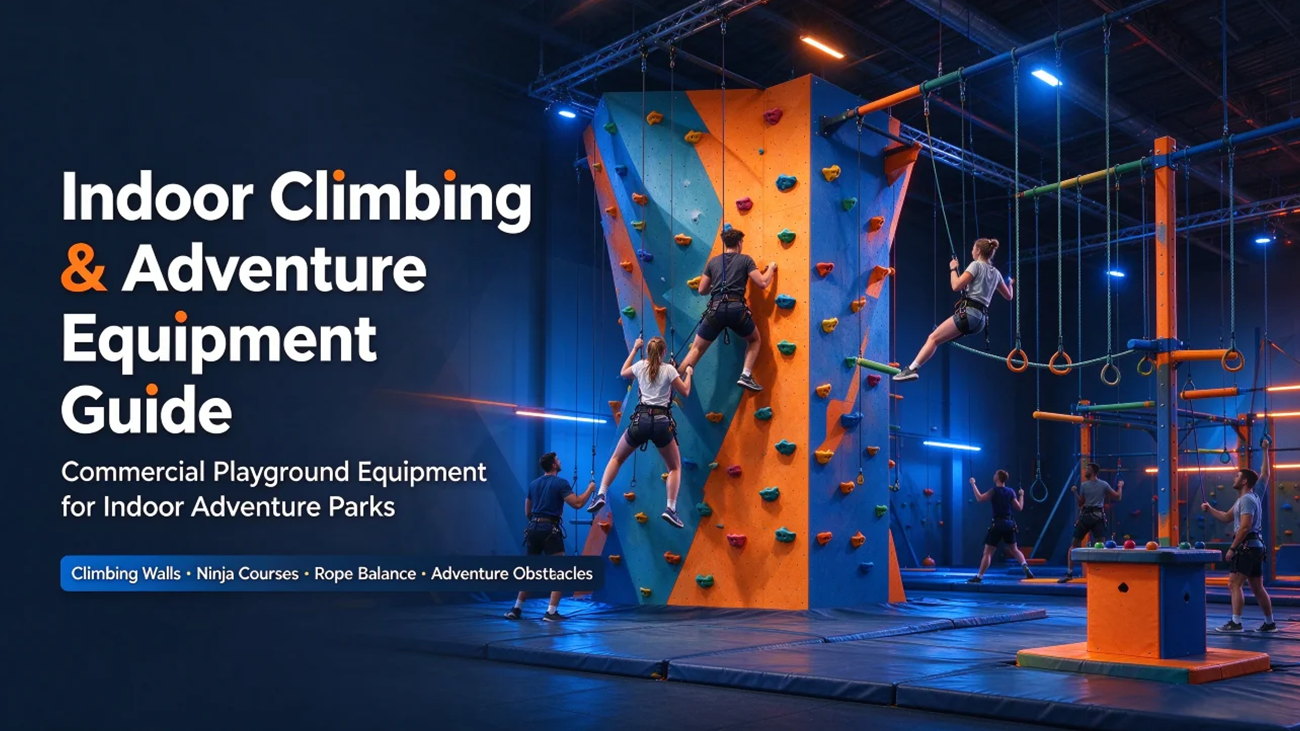
Indoor Climbing and Adventure Equipment Guide
Quick Answer Running an Indoor Adventure Park? You will need Indoor Climbing Equipment and different kinds of Adventure Play features.

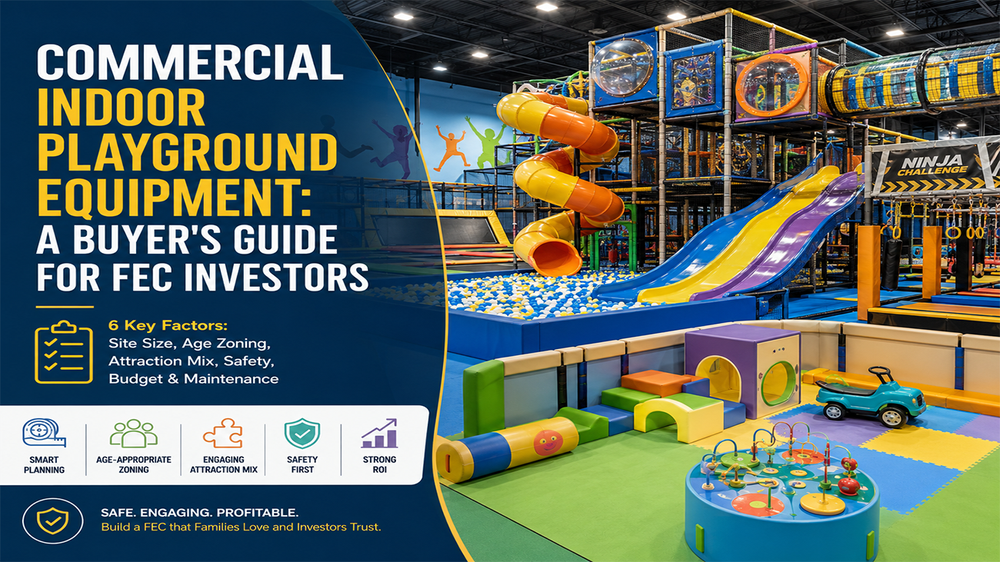
Table of Contents
ToggleWhen you invest in a family entertainment centre, your equipment choice matters for more than the opening-day appeal. It shapes your guest capacity, safety risks, maintenance costs, and revenue per square metre over the next five to ten years. When you evaluate commercial indoor playground equipment, focus on six key factors in order. They are site size and ceiling height, target age groups, play-attraction mix, operation flow, budget efficiency, and long-term maintenance. Get these details right, and your FEC can turn a profit. Make poor choices, and you may have to remodel the whole space as early as the second year.
Commercial indoor playground equipment is built for busy, revenue-making venues instead of home backyards. It must stand up to daily use by hundreds of kids, meet public-use safety standards, and allow modular expansion. There are three main types:
These are the signature commercial indoor playground equipment structures of most FECs: vertically stacked platforms connected by slides, crawl tunnels, climbing nets, and bridges. A standard single-level structure stands around 1.4 metres high. Kids can play comfortably, while adults keep an easy eye on them. Two- to three-level play structures need a clear ceiling height of 4.0 to 6.0 metres. Big indoor kids’ entertainment centres can even go up to 12 metres or higher. Manufacturers like KanbeiPlay design custom multi-level commercial indoor playground equipment layouts around your floor plan and column positions rather than forcing a one-size-fits-all structure.
Soft play and commercial indoor equipment for toddlers use high-density foam. They are covered with durable PVC material, creating a safe, cushioned play space for kids aged 1 to 6. They usually come with ball pits, small slides, climbing shapes, and interactive panels. This type of commercial indoor playground equipment does not demand much vertical space. A ceiling height of just 2.4-2.8 metres is enough, so soft-play zones work well for mall family areas and smaller FECs.
This type of commercial indoor playground equipment covers all active, lighted, and fitness-focused attractions. It includes trampoline parks, ninja courses, climbing walls, rope courses, interactive projection games, and battle-style inflatable elements. Custom-built for older kids aged 6-14 and teenagers, these attractions help FECs draw visitors beyond toddlers and expand revenue groups.
Your ideal mix of commercial playground equipment depends on your local market. A well-balanced FEC usually combines three types of attractions. It includes passive play items such as soft-play zones. It adds active attractions like trampolines and climbing structures. It also sets aside social spaces such as party rooms. This layout helps boost guest stay time and revenue.
Soft Play Zones: Soft-play attractions build the core base for every FEC targeting family guests. This zone comes with minimum safety risks. It also requires a relatively low ceiling height. Children between 1 and 6 years old can enjoy play sessions lasting 30 to 60 minutes here. A practical, well-thought-out soft-play area features a ball pit. It has several gateways so staff can watch over kids easily. Custom decorative elements are also added to keep the style consistent with your brand.
Toddler Play Zones: A separate toddler zone (ages 0–3) prevents older, faster children from colliding with toddlers. It should have lower platforms, smaller slides, sensory panels, and a clear physical barrier from the main play area. Many operators find that a dedicated toddler zone increases parent satisfaction and reduces incident reports.
Trampoline Zones: Trampoline zones are high-throughput revenue generators — they accommodate more children per square meter than most other attractions and naturally limit session time, which helps with turnover. They require a minimum ceiling height of 4.5 meters and proper padding on all surrounding surfaces.
Ninja & Climbing Courses: Ninja courses and climbing walls target kids and teenagers aged 6 to 14. They play a key role if you do not want your FEC to be seen as a venue only for young children. Ninja courses require around 4 metres of ceiling height, while climbing walls can go taller. Both attractions need trained on-site supervisors. Safety harnesses and ropes must be checked on a regular basis.
Party & Role-Play Areas: Party rooms and role-play zones (mini grocery store, fire station, doctor's office) drive secondary revenue through birthday party bookings — often the highest-margin revenue stream for an FEC. These areas don't need specialized play equipment, but they do need good sightlines, easy access to the play floor, and enough seating for 10–15 children plus adults.

The industry rule of thumb is 1.5–2 square meters per child for safe play density when arranging commercial indoor playground equipment. A 500-square-meter play zone with properly arranged commercial indoor playground equipment can safely host 250–330 children at peak, though you'll want a lower operational limit to account for circulation, party rooms, and parent seating. For a commercially viable independent FEC, 300–500 square meters is the common entry point for a full commercial indoor playground equipment configuration.
Ceiling height is the single most restrictive physical parameter. Different attractions have different minimums:
Attraction | Minimum Clear Height |
Soft play/toddler | 2.8 m |
Adventure/obstacle | 3.5 m |
Ninja warrior course | 4.0 m |
Trampoline park | 4.5 m |
Multi-level (2–3 levels) | 4.0–6.0 m |
Always measure from the finished floor to the lowest hanging pipe, sprinkler head, or light fixture — not the structural ceiling- before installing your commercial indoor playground equipment. Maintain at least 45 cm (18 inches) of clearance between commercial indoor playground equipment tops and overhead fire sprinklers to meet commercial safety codes.
Age zoning for commercial indoor playground equipment layout isn’t just a safety recommendation — it’s a revenue strategy. Scientific zoning that separates 0–3 toddler areas, 3–6 soft play zones, and 6+ active play zones allows you to implement tiered ticketing and sustain long-term visitor engagement. A mixed-age playground layout without targeted equipment grouping will cause resource imbalance, driving away families with young kids and reducing venue profitability.
Plan for at least 20–25% of your total floor area to be non-play space when designing commercial indoor playground equipment layouts: entry/greeting, shoe storage, parent seating, party rooms, restrooms, and staff corridors. A common mistake is filling every square meter with commercial indoor playground equipment, which creates bottlenecks at peak times and makes supervision impossible. Circulation paths should be wide enough for two adults to pass, and every commercial indoor playground equipment zone should have at least two exit points. A 450㎡ mall FEC in Europe reportedly increased mall footfall by 40% within 30 days by placing trampoline commercial indoor playground equipment in a 4.2m high-ceiling zone and routing climbing elements around structural columns.
Commercial indoor playground equipment with basic solid-colour themes costs much less. It is far cheaper than fully immersive custom themes such as ocean, space, jungle and castle styles. Custom themes feature carved foam shapes, custom vinyl prints, themed logos and built-in lighting. These details push up material and labour costs. Yet a beautifully themed playground keeps guests longer, gains more social-media exposure, and lets your FEC charge higher ticket prices.
Your budget per square meter varies dramatically by commercial indoor playground equipment type. Soft play structures are relatively cost-effective, while trampoline parks and ninja courses require higher investment due to specialized hardware and safety padding. Interactive electronic attractions feature higher unit costs but deliver stronger customer appeal. A balanced equipment mix always brings better long-term ROI for FEC operators.
For international FEC projects, shipping and installation can add 15–30% to the total budget. Most commercial play structures are manufactured in China, with sea freight taking 4–8 weeks and on-site installation requiring 1–4 weeks based on project scale. Always confirm installation services in advance to avoid hidden costs.
All commercial indoor playground equipment must reserve dedicated maintenance access. Professional designs include inspection hatches for slides, adjustable tension points for climbing nets, and exclusive cleaning space for ball pits and trampoline components. Well-maintained facilities avoid costly dismantling repairs and extend overall service life.

Different regions follow different safety rules. Your commercial indoor playground equipment must meet local requirements. Only in this way can you pass official inspections and run your business safely:
Always verify manufacturer certification validity and confirm your playground models are fully covered, as counterfeit certificates are common in the commercial play industry.
Top-grade commercial indoor playgrounds are built with heavy-duty industrial materials. You will find galvanized steel frames, high-density EPE foam, and tear-resistant PVC covers on these products. Every metal fastener sits fully recessed into the structure. Ball pits are filled with non-toxic, pressure-resistant balls. Such designs keep high-traffic FEC venues safe over a long service life.
Build a complete inspection schedule before opening your FEC. Run checks on a daily, weekly, and monthly basis. These regular checks help you spot loose parts, torn padding, and worn-out structures early. Replace wearable components on time. This maintenance habit keeps your whole play system stable and safe for operation.
Choosing a reliable manufacturer is key to stable FEC operation and long-term ROI. When purchasing commercial indoor play equipment, investors need to evaluate four core factors. These include custom design capacity, strict factory quality control, professional installation, and reliable after-sales support.
Custom Design: Top suppliers deliver venue-customized playground solutions instead of generic catalog products. KanbeiPlay provides 3D renderings and tailored layouts based on your floor plan, venue size, and target age groups, fully compliant with global safety standards.
Factory & QC Certification: KanbeiPlay owns a 20,000㎡ standardized factory with 150+ professional technicians. All playground products pass strict in-house QC and hold ISO9001, CE, ASTM, EN, TÜV, and SGS certifications, fully meeting global commercial venue standards.
Professional Installation: One-stop standardized installation ensures efficient project delivery. We have Over 10 years of industry experience. We have completed 1000 global FEC projects across 50 countries. KanbeiPlay delivers professional on-site assembly and reliable project handover.
After-sales Support: Comprehensive after-sales service covers long-term warranty and fast spare parts supply. It also includes operator training and regular maintenance guidance. These supports keep your FEC playground running stably at all times.
A balanced 500㎡ FEC requires matched commercial indoor playground equipment, combining multi-level structures, soft play & toddler zones, small trampoline areas, and party rooms to cover multi-age groups.
A soft-play zone needs at least 2.8 metres of ceiling height. Multi-level play structures require 4.0 metres. Trampoline parks demand a clear height of no less than 4.5 metres.
Adopt scientific age zoning for your playground layout, separating toddler, soft play, and active play areas to improve safety and equipment utilization.
Custom playground production takes 7–15 days for standard projects and 30–60 days for large-scale customized commercial indoor playground equipment, excluding shipping and installation time.
Yes. Kanbei Play fully customizes commercial indoor playground equipment in themes, sizes, layouts, and attraction combinations to fit unique FEC venue requirements.

Picking solid commercial indoor playground equipment keeps your FEC safe, runs smoothly, and brings steady long-term gains. You need to check your site size, ceiling height, age zones, play combinations, budget, and regular safety checks. Work with trusted turnkey suppliers such as KanbeiPlay. We have 15 years of practical experience, a 20,000-square-meter factory, global safety approvals, and real-world FEC projects across the globe. We build playgrounds that fit your theme, last for years, and meet official rules, with full-round support throughout the whole project. Want your own FEC plan? Share your basic project details: country, venue type, space size, ceiling height, target age group, opening schedule, and floor plan. We will send you a custom layout, full equipment list, and precise cost quote within three working days. Check our website for more FEC project solutions: https://www.kanbeiplay.com/
Quick Answer Running an Indoor Adventure Park? You will need Indoor Climbing Equipment and different kinds of Adventure Play features.
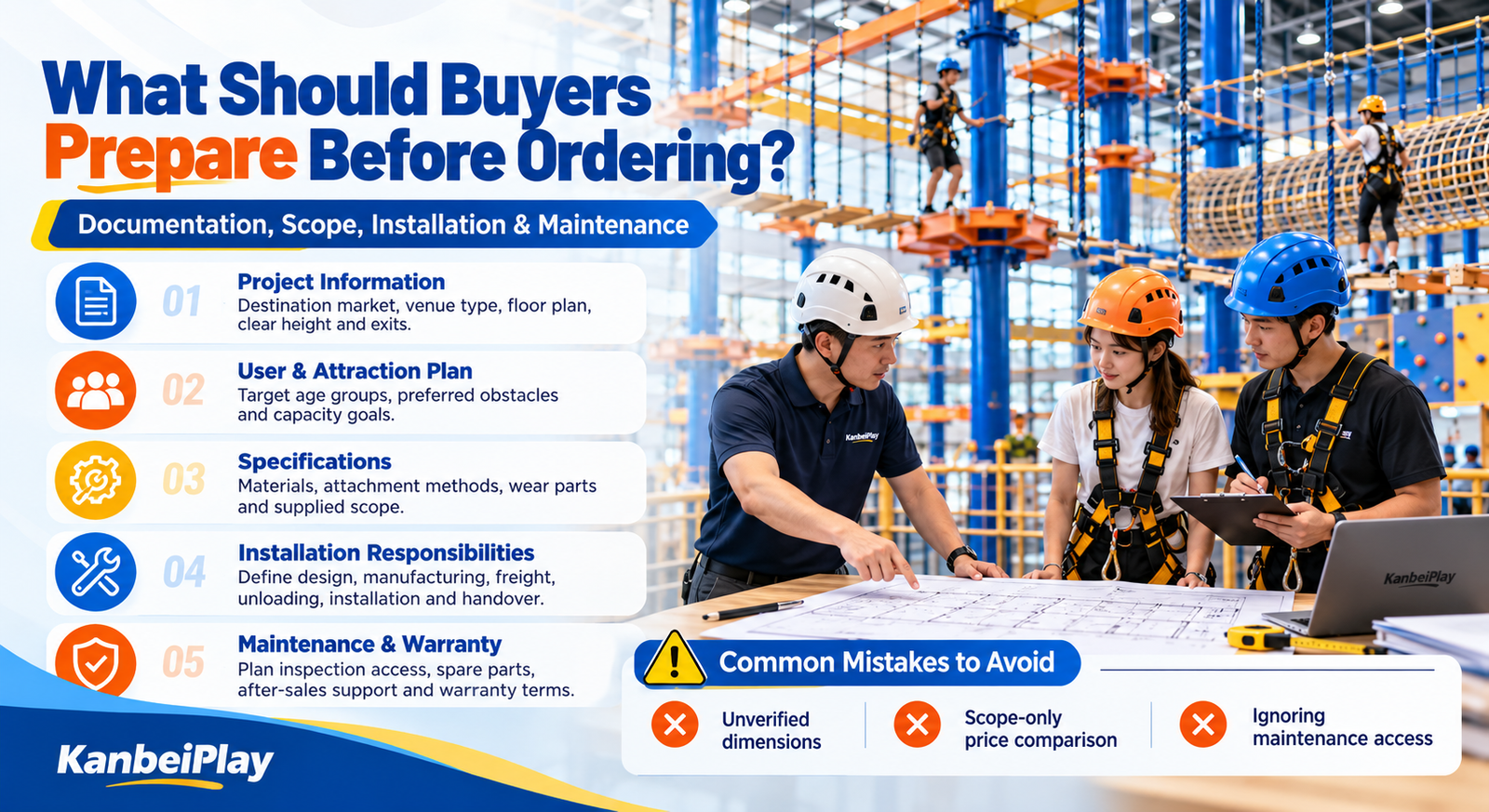
Quick Answer Before working with an indoor playground manufacturer, prepare a measured floor plan, clear ceiling height, target age range,
Thank you very much for your inquiry! Your trust is our greatest motivation. We are committed to offering playgrounds that combine high quality with affordable pricing. Let us bring vitality to your venue!