
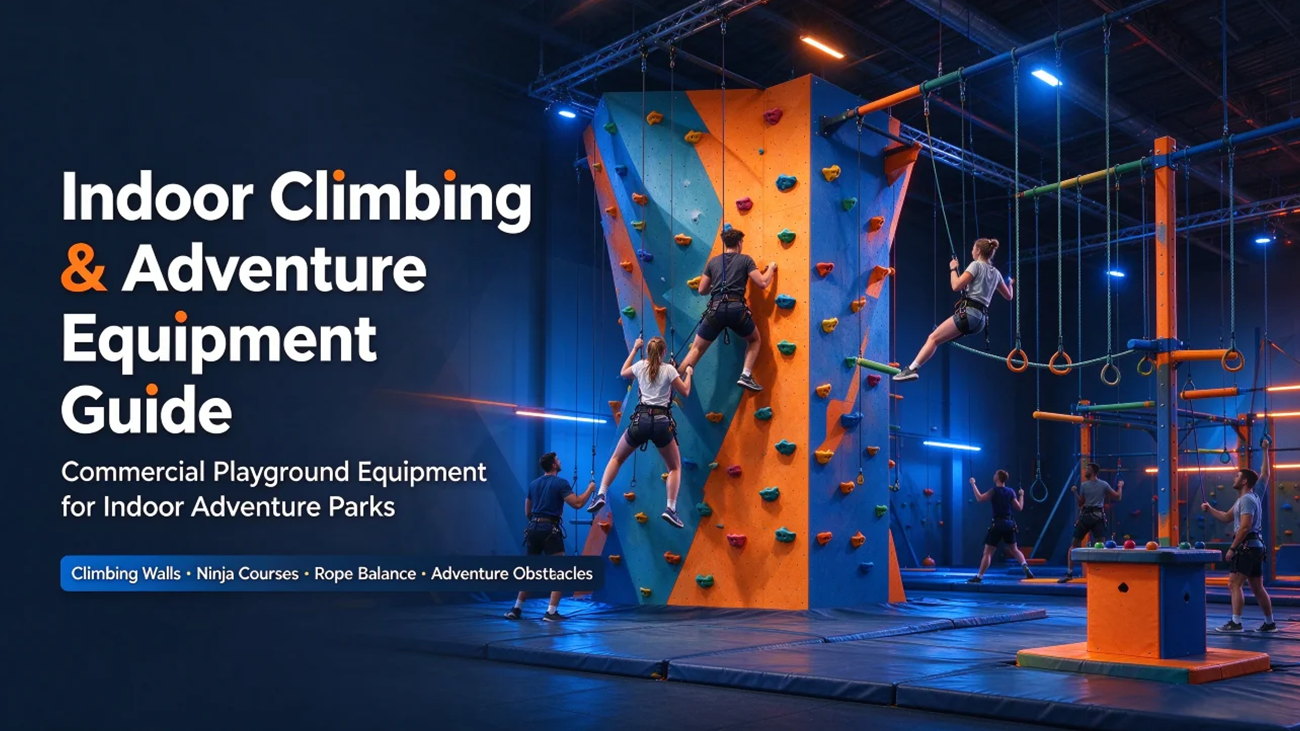
Indoor Climbing and Adventure Equipment Guide
Quick Answer Running an Indoor Adventure Park? You will need Indoor Climbing Equipment and different kinds of Adventure Play features.

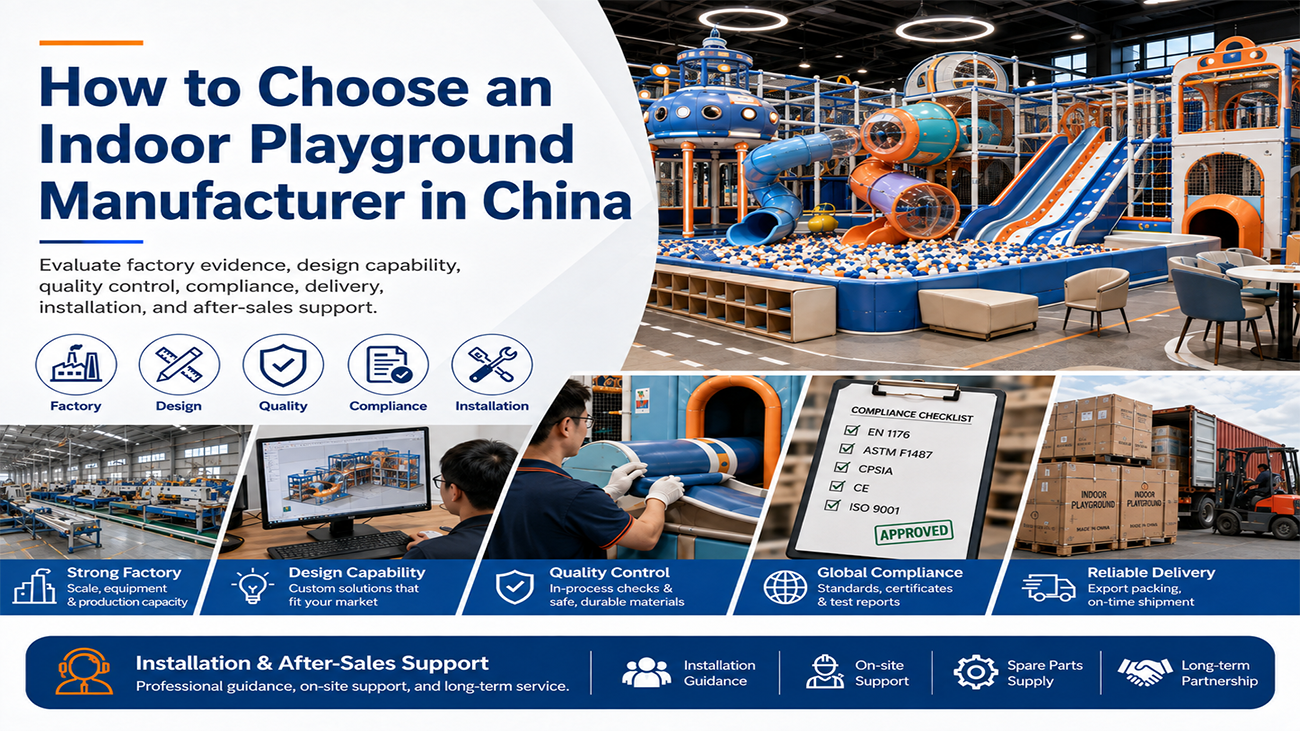
Table of Contents
TogglePicking the right indoor playground manufacturer in China goes beyond comparing quotes. A low price can hide weak engineering, unclear compliance, and installation delays. Evaluate manufacturing evidence, design capability, quality control, compliance support, delivery, installation, and after-sales—not price alone.
Ask for the business license, factory photos, and a live video walkthrough. A real indoor playground manufacturer shows metalworking, sewing, plastic storage, and finished-goods areas. Kanbei runs a 20,000㎡ factory with 150+ staff—a scale hard to fake on a video call.
Request the full flow: cutting → welding → grinding → powder coating → foam cutting → vinyl wrapping → assembly → QC. If a supplier cannot describe or show this, they may be a trading company outsourcing to unknown workshops.
Ask for inspection check sheets from recent orders covering weld quality, coating thickness, foam density, component fit, and load testing. Consistent documentation beats a single certificate on the wall.
Site analysis: Site assessment comes first. Hand over your floor plan, ceiling height measurements, pillar positions, and entry/exit layouts. Before drawing any layout sketches, an experienced design team should spot tight spots, dead zones, and capacity limits of your venue.
2D layout: A trusted indoor playground manufacturer will deliver a readable site plan for you. This drawing marks play zones, visitor walkways, safety gaps, and staff sightlines. All these design points fit your target age groups and expected visitor capacity.
3D rendering: Before production starts, 3D visuals show colors, lighting, and themed details clearly. These images also work well for investor presentations and pre-opening marketing activities.
Theme customization: A full custom theme covers decorative panels, signage, scene props, and matched colour sets. Check real-life photos from finished projects. Make sure the final look works just as well on site, not only in render pictures
Steel structure: Galvanized steel pipe is standard. Check the wall thickness (2.0–2.5mm), fully smooth welds, and even scratch-resistant powder coating. Rust at weld joints is a red flag.
Soft padding: For heavily used zones, pick foam with a density of 30-40kg/m³. This standard stops the foam base from breaking down under constant pressure. Vinyl covers need fire resistance, UV protection, and easy-to-wipe surfaces. Always ask for physical samples before you place your official order.
Plastic components: Rotomolded LLDPE material stands up well to heavy use and color fading. It comes with smooth edges and even color across the whole piece. Low-cost injection-moulded parts crack easily after knocks and bumps. They need regular replacement over time.
Assembly testing: A reliable indoor playground manufacturer trial-assembles key modules before shipping. This catches fitting errors and structural issues on the factory floor—far cheaper than fixing them at your site.

EU / EEA: EN1176 and EN71.
United States: ASTM F1487 and CPSIA.
Australia / New Zealand: AS/NZS 4422 and AS/NZS ISO 8124.
Middle East / Gulf: EN1176 plus local civil defense requirements.
Always request the certificate scope page—not just the cover.
Certificates from your indoor playground manufacturer should name specific product categories. A general ISO 9001 shows quality management but does not prove a slide meets EN1176. Ask for test reports tied to actual products.
Watch out for vague safety claims like “we meet every global standard”. Statements with no supporting proof are a clear red flag. Proper compliance relies on concrete paperwork, solid records, and verifiable test documents.
Components should be packed in labeled cartons or crates with part numbers matching the installation manual. Steel frames need protective wrapping. Ask for packing photos before the container leaves.
Clarify FOB, CIF, or DDP terms—they change your cost and risk. An export-experienced commercial indoor playground manufacturer recommends reliable forwarders and handles customs documentation.
Kanbei has completed installations across multiple countries and offers both models—ask for references in your region.
Evidence: Before paying an indoor playground manufacturer, verify the business license and factory ownership proof, a live video tour, past project photos in your market, material samples, and test reports with scope pages—all verified before you pay.
Timeline: Confirm design revision rounds, production lead time (typically 20–40 days), shipping to your port, and installation duration in writing so you can plan your opening date.
Warranty: Steel structures often carry 5–10 years; soft parts and plastic 1–3 years. Make sure the quote spells out coverage, exclusions, and claim response time.
Spare parts: Check whether spare parts are included or billed separately, the reorder lead time for common wear parts, and whether you can buy spares separately later.

Request a live video tour at a pre-agreed time and check the business license against the factory address.
Business license, product test reports, material specs, commercial invoice, packing list, installation manual, bill of lading, and certificate of origin.
Typically 20–40 days from design approval to container loading. Larger projects may take longer—always confirm in writing.
Yes. Kanbei offers on-site technician supervision or detailed manuals with remote video support for local installers.
Steel: 5–10 years, plastic: 2–3 years, foam and vinyl: 1–2 years. Get all terms in writing and understand the exclusions.
Picking the right playground maker in China counts as a long-term business move. Check real-world factory proof, go over their design skills, look closely at material standards, and confirm compliance rules that fit your target market. Sort out delivery timelines, on-site installation, and after-sales support before you put down any deposit. Ready to move forward with your venture? Send over your floor plan and destination country, and we will prepare a factory-direct quote built for your project. Head to https://www.kanbeiplay.com/ to explore our 20,000 m² production plant, team of over 150 staff, and real-world playground projects around the globe.
Quick Answer Running an Indoor Adventure Park? You will need Indoor Climbing Equipment and different kinds of Adventure Play features.
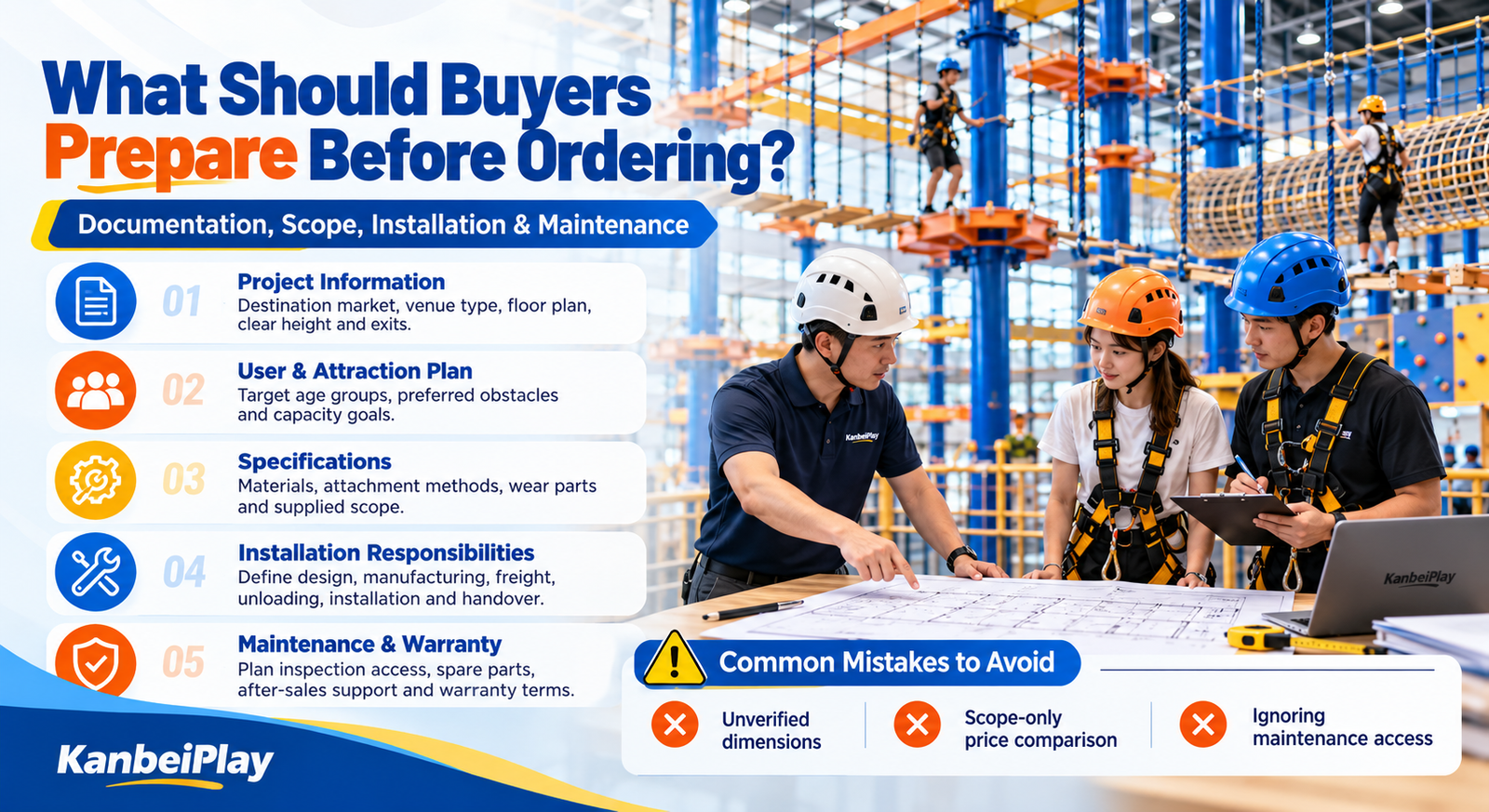
Quick Answer Before working with an indoor playground manufacturer, prepare a measured floor plan, clear ceiling height, target age range,
Thank you very much for your inquiry! Your trust is our greatest motivation. We are committed to offering playgrounds that combine high quality with affordable pricing. Let us bring vitality to your venue!