
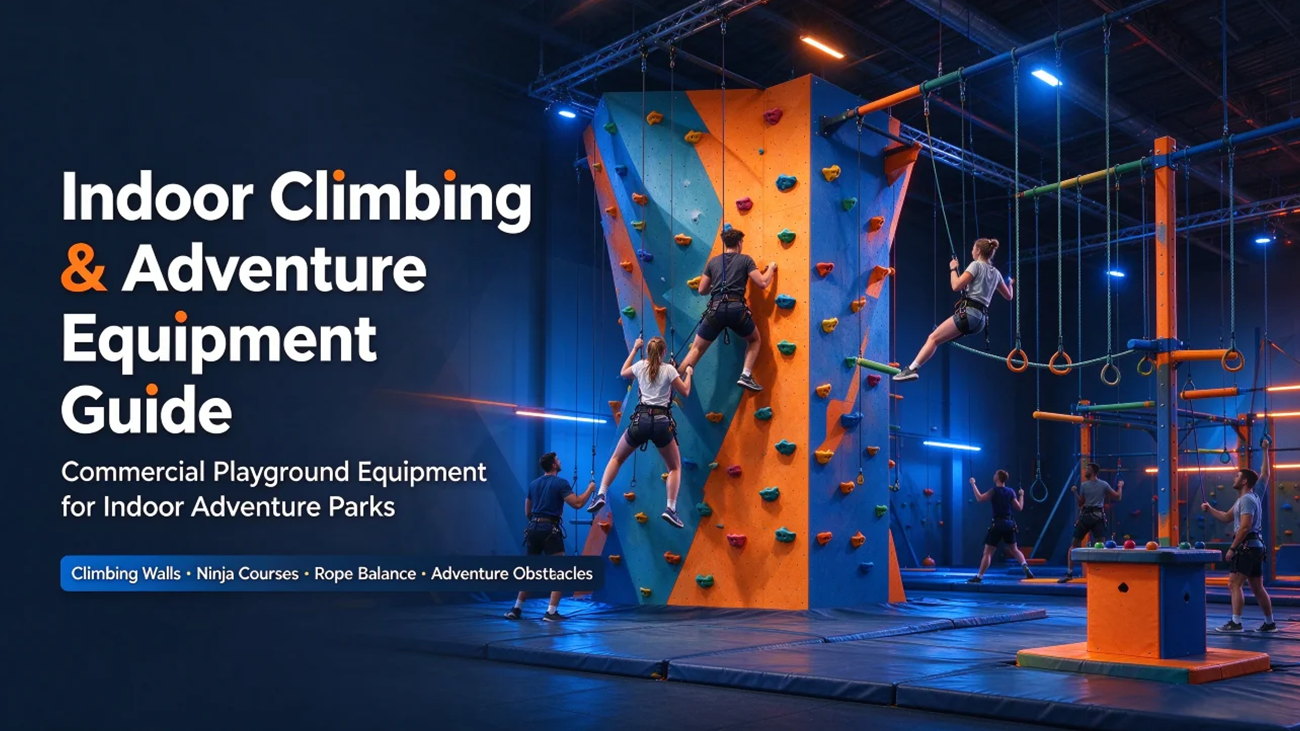
Indoor Climbing and Adventure Equipment Guide
Quick Answer Running an Indoor Adventure Park? You will need Indoor Climbing Equipment and different kinds of Adventure Play features.

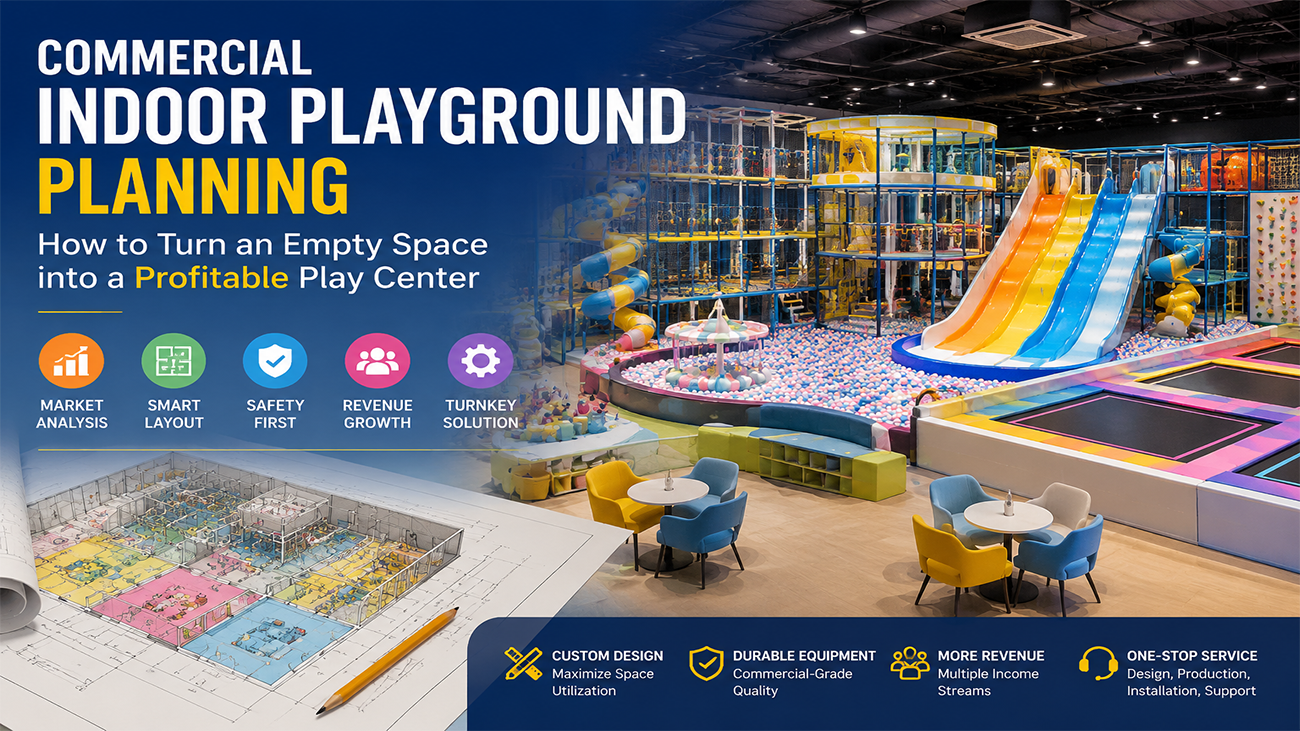
Table of Contents
ToggleA successful commercial indoor playground requires careful planning of location, target customers, layout, equipment, safety, budget, and revenue streams. Turning an empty space into a profitable play center requires market research, efficient design, commercial-grade equipment, professional installation, and a clear operating model.
Planning Factor | Key Considerations |
Location | Traffic, visibility, rent, parking |
Target Customers | Age groups, demographics, spending |
Space Layout | Play zones, seating, party rooms |
Equipment | Age suitability, durability, maintenance |
Safety | Equipment, flooring, exits, local requirements |
Budget | Equipment, renovation, shipping, installation |
Revenue | Tickets, memberships, parties, F&B |
Marketing | Local promotion, social media, partnerships |
A commercial indoor playground is more than an equipment project—it is a complete entertainment business. Good planning determines how efficiently the space is used, how safely customers can move through the venue, how attractive the playground is to families, and how much revenue the business can generate. Investors should therefore plan the market, layout, equipment, safety, budget, customer experience, and future expansion before purchasing equipment.
Professional planning should begin before the final equipment package is selected.
Understand the local market before designing the playground.
Research:
Local family demographics. Commercial indoor playground planning is the process of converting an empty commercial space into a functional and profitable family entertainment venue.
The main goals are to:
This helps determine whether the venue should focus on toddlers, older children, trampolines, adventure activities, or a mixed Family Entertainment Center.
Consider:
A cheaper location is not always better if customers cannot reach it conveniently.
Common models include:
The business model determines the equipment mix, layout, staffing, and investment level.
A commercial layout may include:
Good circulation helps reduce congestion while improving supervision and customer experience.
Popular commercial indoor playground equipment includes:
The goal is not to install as much equipment as possible. The equipment mix should match the available space, target customers, and business model.
Separating activities by age improves safety and play experience.
A typical project may include:
Every area should have a clear function.
Higher ceilings can support multi-level structures, large slides, trampolines, and climbing attractions. Lower areas can be used for toddler zones, party rooms, seating, or reception.
Play equipment should not occupy the entire venue.
Plan space for:
These areas can increase revenue per customer and make the project less dependent on admission tickets alone.

Toddlers usually need softer, lower-height activities, while older children may prefer climbing, trampolines, large slides, ninja obstacles, and interactive challenges.
Evaluate:
Commercial playground equipment should be designed for frequent use.
Applicable standards depend on the equipment and destination market. Projects may need to consider frameworks such as ASTM, EN1176, EN71, or other relevant requirements.
Building, fire, accessibility, insurance, and local approval requirements should be evaluated separately.
Modular equipment allows operators to add new slides, climbing activities, interactive games, or themed elements later without rebuilding the entire venue.
A strong theme helps create a recognizable customer experience.
Popular themes include:
The theme should match the target market and investment level. A large FEC may benefit from an immersive theme, while a smaller community playground may need a simpler and easier-to-maintain design.
A complete commercial indoor playground budget should include:
Playground Size | Equipment Level | Investment Level | Suitable Business |
100–300㎡ | Basic soft play | Low | Toddler center |
300–500㎡ | Standard playground | Low–Medium | Community play center |
500–1,000㎡ | Multi-zone playground | Medium | Shopping mall |
1,000㎡+ | Custom multi-attraction | Medium–High | FEC / adventure center |
Actual costs vary by country, theme, equipment mix, renovation, shipping, installation, and local labor.
Safety should be considered during the design stage rather than after installation.
Important areas include:
Operators should establish daily, weekly, monthly, and professional inspection schedules to keep equipment in reliable condition.

A profitable play center should develop multiple revenue streams.
These may include:
Customer retention is equally important. Membership programs, seasonal activities, new attractions, loyalty rewards, and referral programs can encourage families to return.
For investors, coordinating designers, manufacturers, shipping companies, installers, and after-sales support can become complicated.
A turnkey solution may include:
Kanplay focuses on one-stop turnkey solutions for commercial indoor playgrounds, trampoline parks, children's adventure parks, and family entertainment centers. Its project process connects design, manufacturing, equipment supply, shipping, installation, and long-term support.
Investors should avoid:
A good playground should be commercially practical as well as visually attractive.
Start with market research, venue analysis, business model selection, layout design, equipment planning, safety requirements, and budgeting.
Small play centers may use a few hundred square meters, while large FECs can exceed 1,000–2,000㎡.
Common equipment includes soft play structures, slides, ball pits, trampolines, climbing activities, ninja courses, toddler equipment, and interactive attractions.
The cost depends on venue size, equipment, theme, renovation, shipping, installation, destination market, and operating capital.
Use efficient layouts and combine admission revenue with memberships, parties, food and beverage, events, merchandise, and group bookings.
Yes. Layout, theme, colors, equipment mix, age zones, and branding can be customized according to the venue and budget.
Standard equipment can work for simple projects. Customized equipment can provide better space utilization and a more distinctive customer experience.
Turnkey manufacturers may provide installation guidance or on-site installation depending on the project.
Operators should perform routine daily inspections and schedule weekly, monthly, and professional maintenance according to equipment requirements.
Turning an empty space into a profitable commercial indoor playground requires coordinated planning of the market, layout, equipment, safety, budget, and revenue model.
The most successful projects use space efficiently, select equipment based on actual customer demand, create multiple revenue streams, and plan for long-term operation and expansion.
Kanplay can support investors with one-stop services covering customized design, equipment manufacturing, shipping, installation, and after-sales support for commercial indoor playground and FEC projects.
Quick Answer Running an Indoor Adventure Park? You will need Indoor Climbing Equipment and different kinds of Adventure Play features.
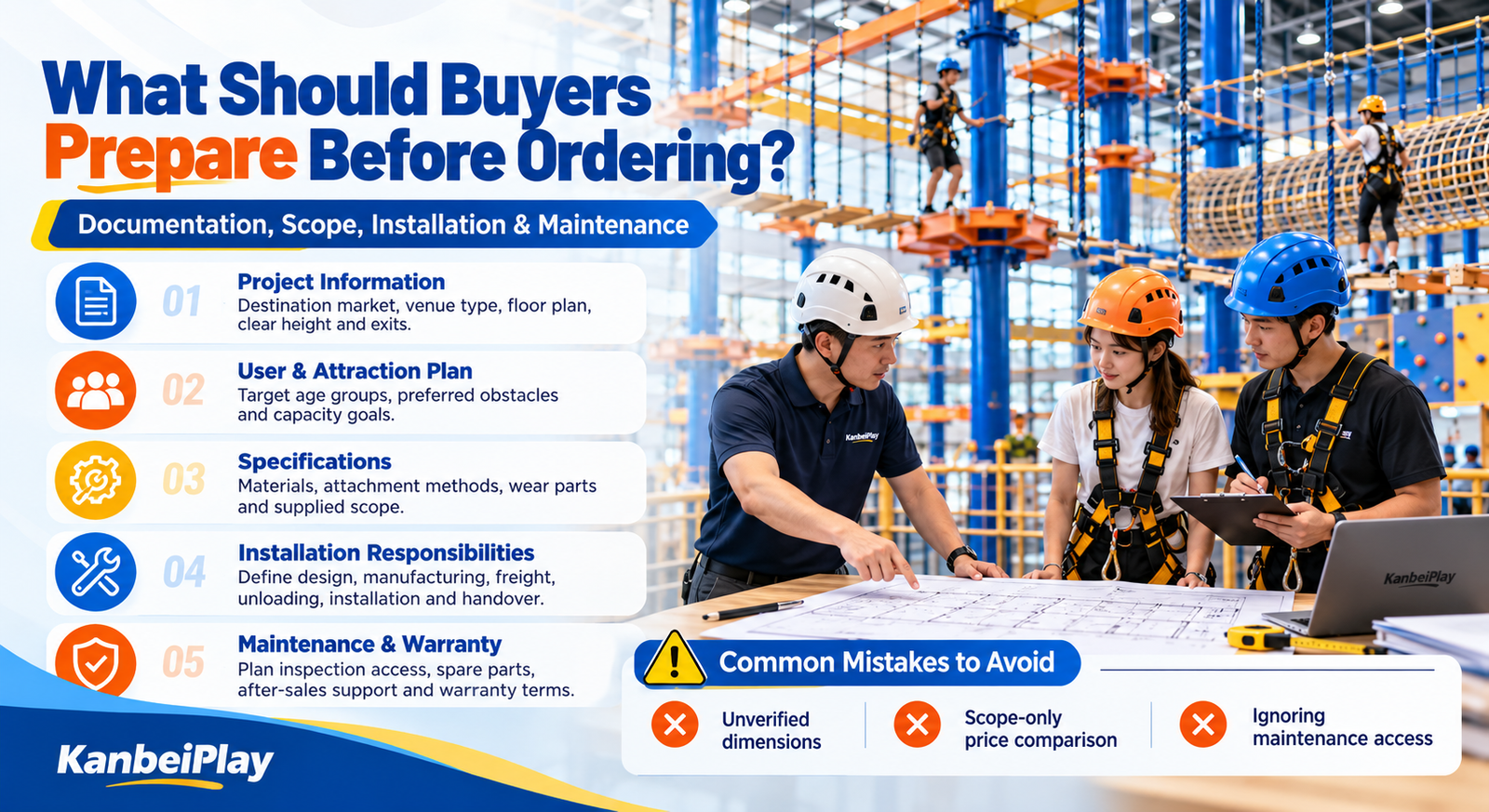
Quick Answer Before working with an indoor playground manufacturer, prepare a measured floor plan, clear ceiling height, target age range,
Thank you very much for your inquiry! Your trust is our greatest motivation. We are committed to offering playgrounds that combine high quality with affordable pricing. Let us bring vitality to your venue!