
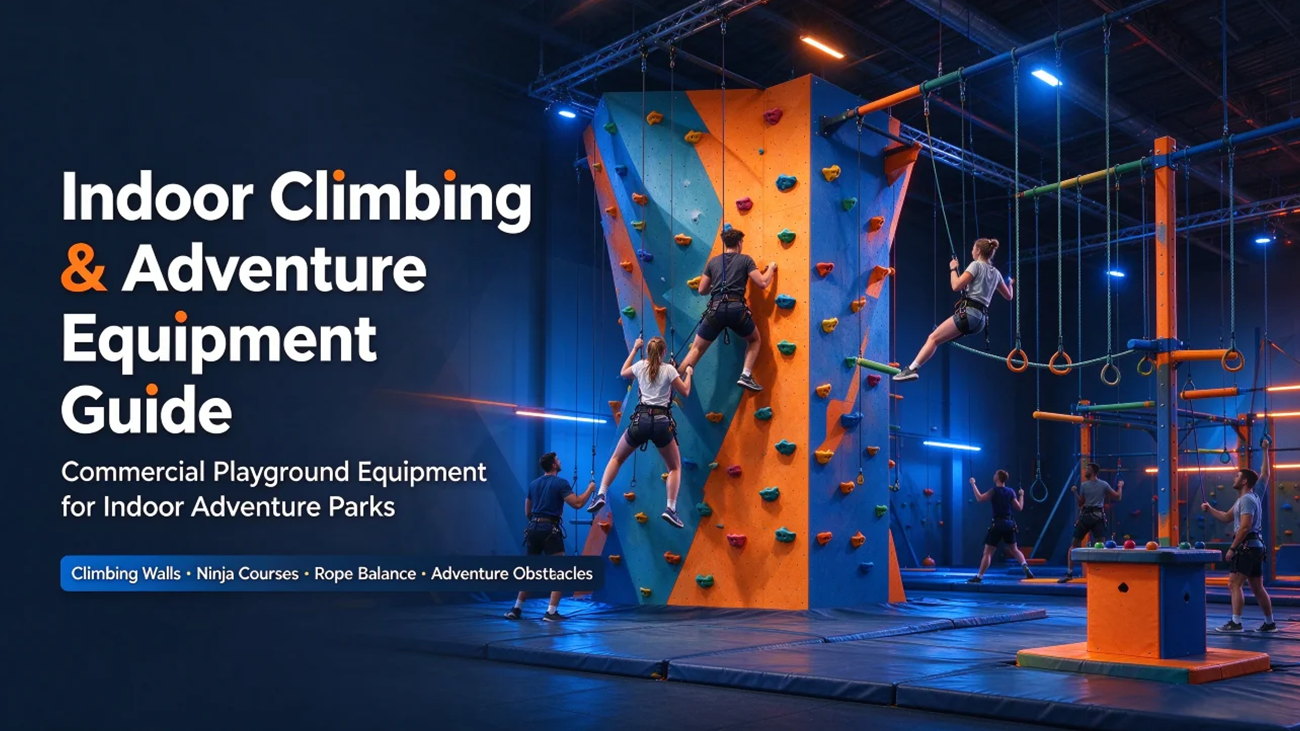
Indoor Climbing and Adventure Equipment Guide
Quick Answer Running an Indoor Adventure Park? You will need Indoor Climbing Equipment and different kinds of Adventure Play features.

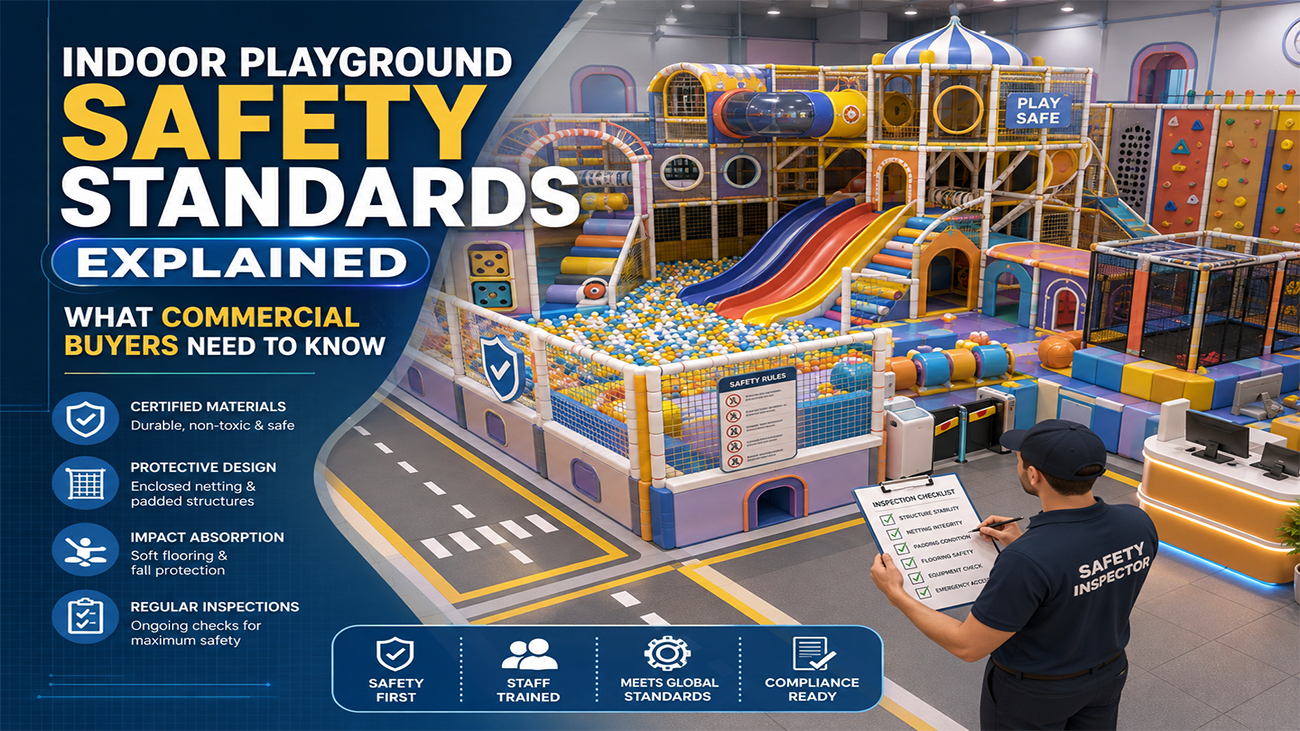
Table of Contents
Toggle
Safety requirements rooted in indoor playground safety standards form the backbone of any well‑run commercial indoor playground. Using non‑compliant indoor playground equipment can trigger accidents, failed official inspections, and heavy financial losses. Bear in mind that supplier‑provided certificates alone cannot cover risks from poor on‑site fitting or gradual material ageing. This guide helps commercial buyers learn global indoor playground safety standards, material specifications, fire protection requirements, installation best practices, and daily maintenance guidelines. It also covers supplier verification methods and real project cases, delivering practical suggestions to keep your commercial indoor playground fully compliant.
Indoor playground safety standards set consistent rules for designing, making, fitting, and maintaining commercial indoor playground facilities. Drawn up by global expert bodies and local regulators, these standards shield children from harm and lower legal exposure for venue operators. They also give buyers clear benchmarks to follow when selecting and accepting new playground equipment.

Crafted jointly by industry experts and local governing agencies, these multifaceted indoor playground safety standards safeguard both commercial indoor playground operators and visiting children. Following these rules can also lengthen the usable service life of your commercial indoor playground equipment.
When built following indoor playground safety standards, quality equipment needs sound structural engineering and solid load-bearing performance for your commercial indoor playground. It must come with complete fall protection setups, proper guardrails, and barrier systems. All moving parts should be shaped so children cannot get trapped or pinched. Slides and climbing pieces need anti-slip features, while full soft padding is needed to prevent collision injuries under heavy commercial usage.
Trusted indoor playground equipment for commercial indoor playgrounds relies on high-grade, risk-free raw materials required by indoor playground safety standards. That means rustproof galvanized steel frames, nontoxic plastic parts, high-density shock-absorbent foam, and tough PVC protective sheeting. Every material should release very low levels of volatile organic compounds, contain no harmful toxins, and meet fire-retardant benchmarks set by international indoor playground safety standards.

For commercial indoor playground venues, flooring solutions have to meet requirements laid out in indoor playground safety standards. Flooring products need official certification for shock-absorbing capability, alongside anti-slip surface treatment to cut down risks of slips and falls. Site teams should carry out daily checks and ongoing upkeep work. When flooring materials wear out or degrade over time, operators must swap them out promptly, so your indoor playground equipment can function within a safe environment.
Indoor playground safety standards enforce strict fire safety rules for commercial indoor playground sites and indoor playground equipment. All materials adopt qualified fire-resistant grades. Sites require standardized emergency exit planning and unobstructed emergency evacuation routes, supported by professional fire detection & alarm systems and sprinkler systems to ensure rapid emergency response.
Safe indoor playground equipment for commercial indoor playgrounds starts inside the factory: manufacturers must run strict quality checks and product tests following indoor playground safety standards. Even well-made gear will become risky without competent on-site fitting. Completed sites need formal acceptance checks and full installation-related documentation before you can safely open your commercial playground to visitors.

Keeping a commercial indoor playground compliant with indoor playground safety standards long-term depends on repeated, scheduled work on your indoor playground equipment. This covers day-to-day safety spot checks, weekly upkeep tasks, monthly structural examinations, yearly third-party safety audits, and timely replacement of worn-out spare parts, so small defects do not build up into real hazards.
Buyers sourcing indoor playground equipment for a commercial indoor playground should check whether suppliers fully follow indoor playground safety standards. Look at valid safety certificates, independent factory audit records, and material test reports. It also pays to examine their internal quality control workflows, past completed commercial playground projects, plus the scope of their warranty and after-sales service offers.
Commercial indoor playground projects face seven frequent sources of danger outlined in indoor playground safety standards: falls, worn-out playground equipment, loose connections, poor installation, overcrowding, neglected maintenance, and insufficient staff supervision. You can largely avoid these dangers by picking certified equipment, hiring professional installers, sticking to scheduled servicing, managing visitor numbers and offering proper staff training.
Use this table to review major global indoor playground safety standards. It helps buyers of commercial indoor playground projects sort out use case differences and key compliance priorities when sourcing indoor playground equipment and rolling out new builds.
Standard | Region | Primary Focus | Applies To |
ASTM | United States / North America | Commercial structural durability, soft play safety, fall impact resistance, material harmful substance control | Indoor soft play systems, commercial playground equipment, public amusement facilities |
EN1176 | Europe / Global mainstream | Overall playground structure safety, load-bearing performance, anti-entrapment, evacuation distance specification | All commercial indoor and outdoor playground equipment and supporting facilities |
EN71 | Europe / Global universal | Material chemical safety, non-toxicity, small-part anti-ingestion, physical safety of accessories | Playground plastic, foam, decorative parts, and all child-contact components |
ISO | International | Factory quality management system, standardized production, overall product safety control | Playground equipment manufacturers, whole production and quality control process |
Many buyers cut corners without realising the consequences for indoor playground safety standards and their commercial indoor playground. Some source uncertified indoor playground equipment purely to chase lower prices. Others overlook installation specifications, settle for inferior-grade materials, or skip recurring inspection work. Working with suppliers who lack hands-on playground experience also stores up safety and operational trouble for your venue.

Teaming up with certified manufacturers makes it far easier for your commercial indoor playground to satisfy global indoor playground safety standards. Reputable suppliers deliver indoor playground equipment built to international benchmarks, use commercial-safe raw materials, design with safety as a priority, arrange expert installation, and offer ongoing technical support covering the whole service life of your facility.
Past commercial indoor playground projects show exactly what difference following indoor playground safety standards makes for your indoor playground equipment. Several mall-based play zones have fixed hidden dangers through compliant retrofits. Some FEC venues maintain accident-free records thanks to strict product testing and professional fitting. Overseas projects have smoothly cleared local acceptance checks by following all relevant standards closely, enabling safe, lawful day-to-day business.
They are agreed-upon rules covering design, material choices, manufacturing, and venue operation. ASTM, EN1176, EN71 and ISO form the main references, helping commercial sites reduce potential safety threats.
Key credentials you should look for include ASTM, EN1176, EN71, ISO 9001, plus local fire-retardant documentation required for your region.
ASTM serves North American markets and emphasizes soft play durability plus fall-impact protection. EN1176 enjoys wider global adoption and focuses more on overall structural strength, load capacity, and evacuation distance requirements.
Indoor playgrounds need daily pre-opening checks, weekly maintenance, monthly structural inspections, and annual third-party safety audits for full-cycle compliance.
Hot-dip galvanized steel frames, food-safe plastic, fire-retardant high-density foam, and low-VOC non-toxic accessories represent some of the most reliable choices.
Review their valid certification papers, independent test results, factory audit records, internal quality control processes and their portfolio of finished commercial playground projects.
Standard commercial playgrounds feature anti-entrapment structures, standard guardrails, fall protection systems, anti-slip shock-absorbing flooring and full fire safety facilities.
Professional installation ensures structural stability and a standardized safety layout, avoiding construction-induced hidden dangers that certifications cannot cover.
Yes. Local building and fire safety rules are legally mandatory, while international standards are essential industry norms for compliant operation.
Absolutely. Reputable manufacturers can design and test one set of equipment to satisfy ASTM, EN and ISO requirements for cross-border projects.
Manufacturers take responsibility for product quality and correct installation. Venue operators remain accountable for daily checks, regular maintenance and on-site staff supervision.
Certificates for fixed product models stay effective long-term. Annual third-party audit reports, however, need renewing to keep your venue operation compliant.
Buyers should request qualification certificates, material test reports, quality control documents, installation templates and official warranty files.
Indoor playground safety standards are essential for legal, safe, and sustainable commercial indoor playground operation. Buyers who prioritize certified indoor playground equipment, standardized installation, and scientific maintenance can effectively avoid compliance risks, build trusted playground projects, and achieve long‑term commercial benefits. For further guidance on compliant playground design, equipment sourcing, and safety support, visit https://www.kanbeiplay.com/ to explore professional solutions for your commercial project.
Quick Answer Running an Indoor Adventure Park? You will need Indoor Climbing Equipment and different kinds of Adventure Play features.
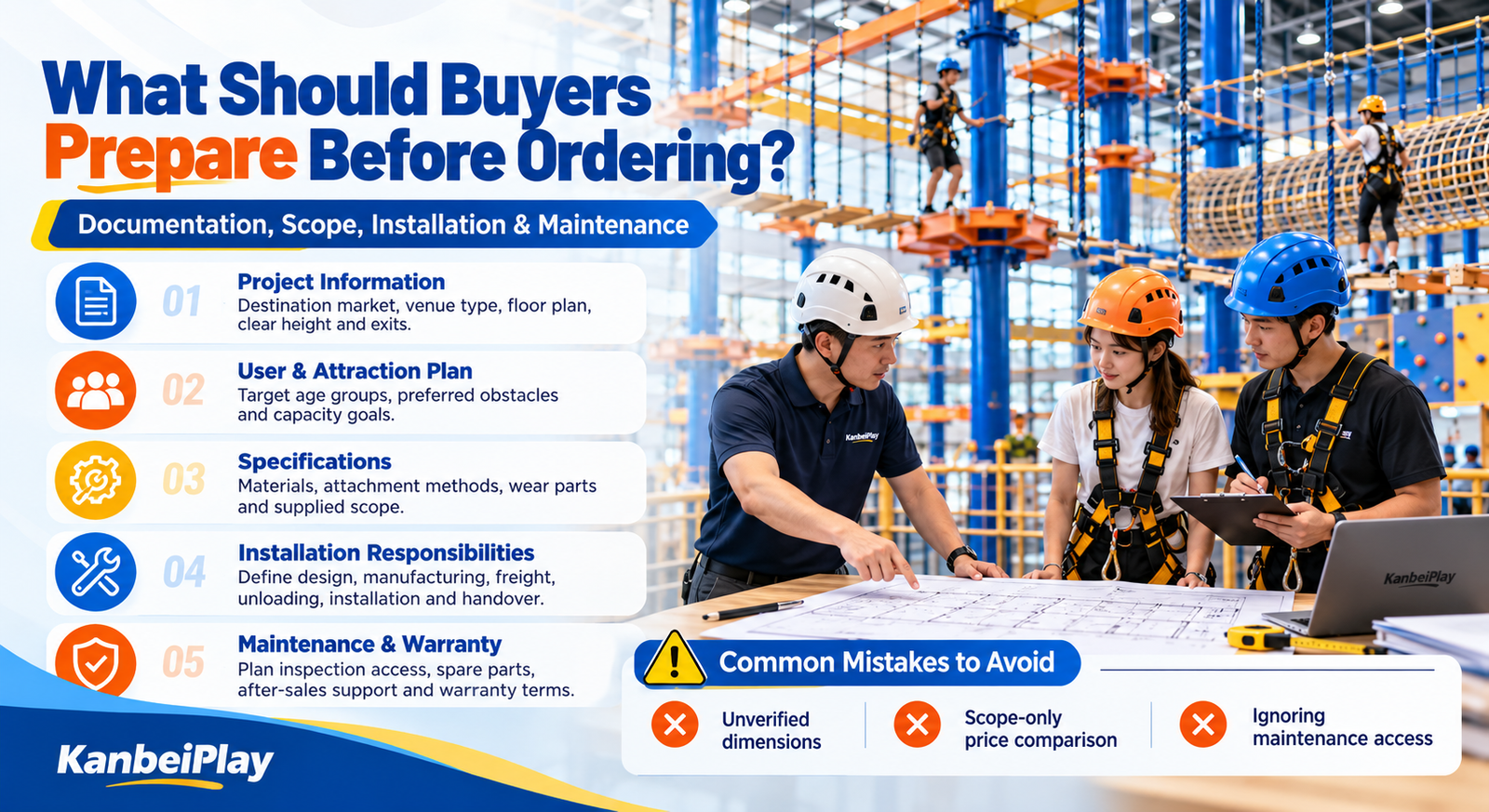
Quick Answer Before working with an indoor playground manufacturer, prepare a measured floor plan, clear ceiling height, target age range,
Thank you very much for your inquiry! Your trust is our greatest motivation. We are committed to offering playgrounds that combine high quality with affordable pricing. Let us bring vitality to your venue!