
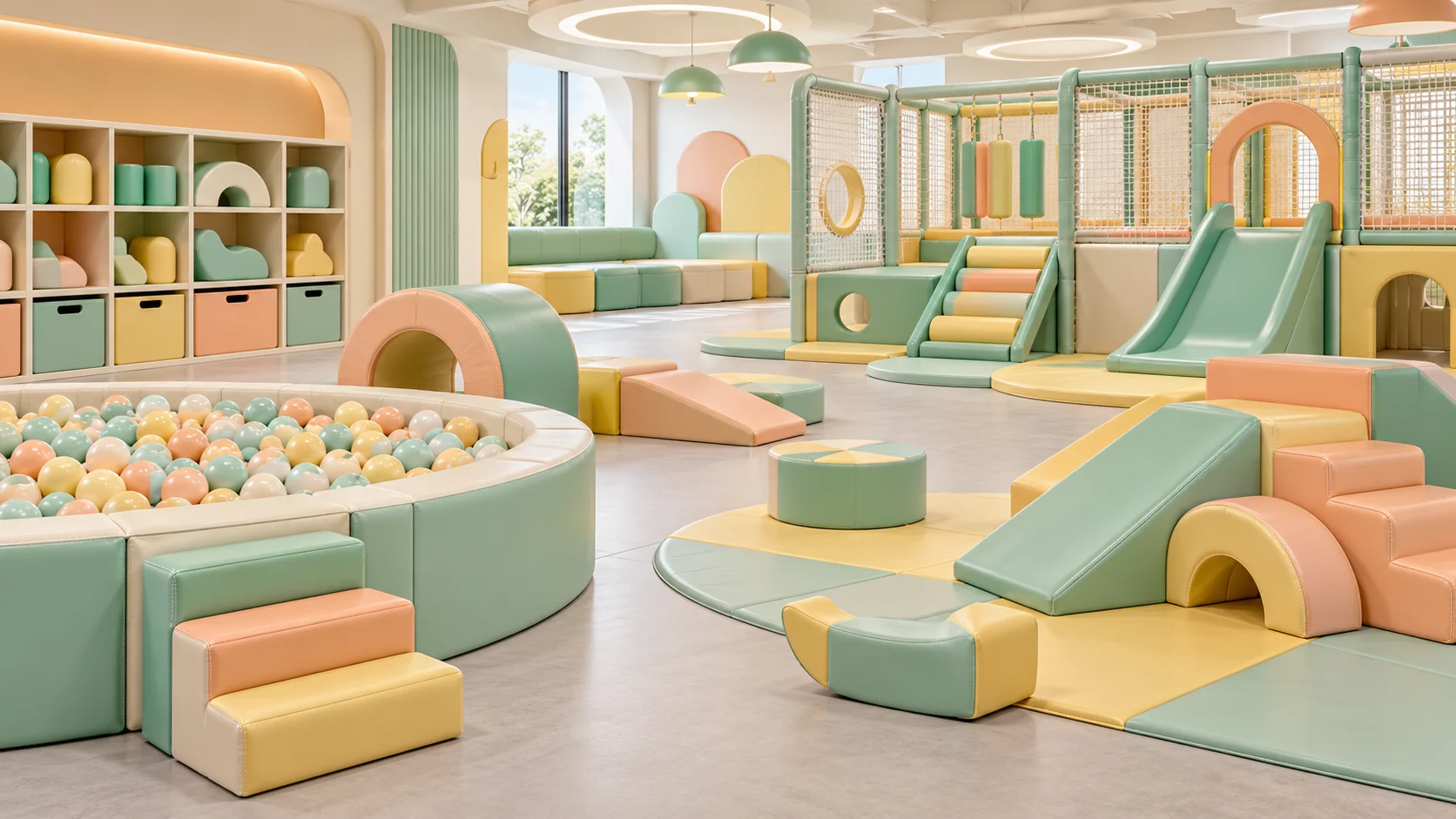
Soft Play Equipment Maintenance: What Should Buyers Confirm About Cleaning and Replacement Parts?
Quick Answer Before ordering soft play equipment, confirm the cleaning instructions for the supplied materials, access to areas that need


Table of Contents
ToggleWhat is an indoor trampoline park business? An indoor trampoline park is a venue filled with trampolines, sponge pools and dodgeball courts. Both children and adults can jump, flip and run around here. Playing in an indoor trampoline park is more physically exhausting than visiting ordinary playgrounds, so it is ideal for family gatherings, birthday parties and school events. By 2026, indoor recreational activities and parent-child entertainment will see rising market demand and promising growth prospects. The indoor trampoline park business has become a popular new business trend. It is regarded as a low-cost and high-profit venture with great entrepreneurial potential and strong market demand. The industry maintains an annual growth rate of over 8%. In medium and large cities, as long as the location is not too remote, business owners will basically never worry about insufficient customer flow. If you want to make profits in this industry, you need to focus on three key points: safety, party-related income and durable equipment. Many new investors choose to cooperate with mature brands such as Kanbei. These brands do not merely sell trampoline facilities, but also assist investors in calculating investment returns.
First and foremost, we need to look at indoor entertainment industry trends, in which trampolines, ninja obstacle courses and climbing walls replace traditional ocean ball pools. Parents prefer to let their kids participate in diverse activities in safe places. And then we’d better conduct target customer segmentation. If your location is surrounded by universities and high schools, you can launch some stimulating activities. After we figure out the target consumers, we need to analyze competitors and market saturation. Spend two weeks researching local competitors and their business types. Are there any local trampoline parks? Besides, what about their scale, pricing and equipment? If there are already three parks within five miles, you need to think twice. If we want to confirm our consumer groups, we can organize free trial activities to assess the market. This method is more reliable than guessing.
Main revenue sources usually come from four areas:
Tickets: 12–20 per person.
Memberships: 40–100 per month, locks in repeat customers.
Birthday parties: 300–800 per party, highest margin.
Group events: school trips, corporate team building, flat rate per person.
Additional income streams add a lot:
Food and beverage: pizza, drinks, protein bars.
Arcade games: claw machines, basketball hoops.
Merchandise: grip socks, t-shirts.
The for-profit structure and pricing strategy is the lower trampoline prices. You can rely on sneaks, parties, and game machines to earn extra money. Many successful parks use Kanbei‘s trampoline-soft-play-arcade combo, which boosts revenue per square foot by about 30%.
Here is the total investment overview of the small indoor trampoline park. If the park is between 1,500 and 3,000 square feet, then it will cost 150,000 to 40,000 dollars. The more squares that you get, the more it costs. If you want to save money, then you need to plan the equipment and construction costs. The smart move is going directly to a factory like Kanbei, because cutting out middlemen saves you roughly 20% for the same quality.
Similarly, if you want to save money on rent and renovation costs, you should search for a place that is cheap and has more people. And you should hire the staff to keep the business surviving and ensure insurance. Don’t spend all of the money to build the playground in case of other situations. To avoid ROI and break-even analysis.
You should work out ideal location requirements, such as shopping mall centers and residential surrounding areas. It is crucial to confirm suitable venue sites, so you can secure steady foot traffic and achieve accurate demographic positioning. You need to distinguish between younger kids and older children and figure out the targeted customer grouping. Lastly, take lease terms and land use regulations into account, and ensure the venue permits high-noise and high-flow business operations. Brands like Kanbei even provide free on-site inspections to measure ceiling height and column spacing, which greatly reduces uncertain planning risks.
Don’t save money on liability insurance requirements. And make sure you have the legally local commercial recreation codes, fire sprinklers. Before the consumers enter the indoor trampoline park, you need to make sure that they sign up for the waiver system.
You can develop ways to expand your management team. Once you achieve stable profitability, you can open a second storefront and explore the multi-location expansion model, as well as franchise opportunities. To generate higher profits, you should add new attractions and conduct equipment upgrades annually.
Ensure you obtain all required licenses and valid insurance approval. Verify that all equipment undergoes safety inspections and pressure tests. Require all staff to complete safety training and pass relevant assessments.
Q1:How much does it cost to start an indoor trampoline park?
A: Small (1,500–3,000 sq ft) is about 15,000 to 40,000 dollars. Medium (5,000 sq ft) is about 50,000 to 80,000 dollars.
Q2:Is an indoor trampoline park profitable?
A: Typical net profit margin is 20–35%. A well-run park can pull 1.5x its investment in annual revenue.
Q3:How much space is needed for a trampoline park?
A: At least 1,500 sq ft, but more than 3,000 is better for proper zoning.
Q4:What licenses are required?
A: Usually, a business license, fire permit, health permit, and special amusement facility license.
Q5:What is the biggest risk in this business?
A: The biggest risk isn’t lack of customers—it’s a serious injury from poor safety. That’s why going with a brand like Kanbei (which has solid insurance track records) plus strict on-floor supervision drops your risk to the lowest possible level.
Starting an indoor trampoline park business is similar to other ventures. Even so, you need to conduct thorough market research and prioritize safety, and reliable brands can help you achieve steady business success.
Quick Answer Before ordering soft play equipment, confirm the cleaning instructions for the supplied materials, access to areas that need
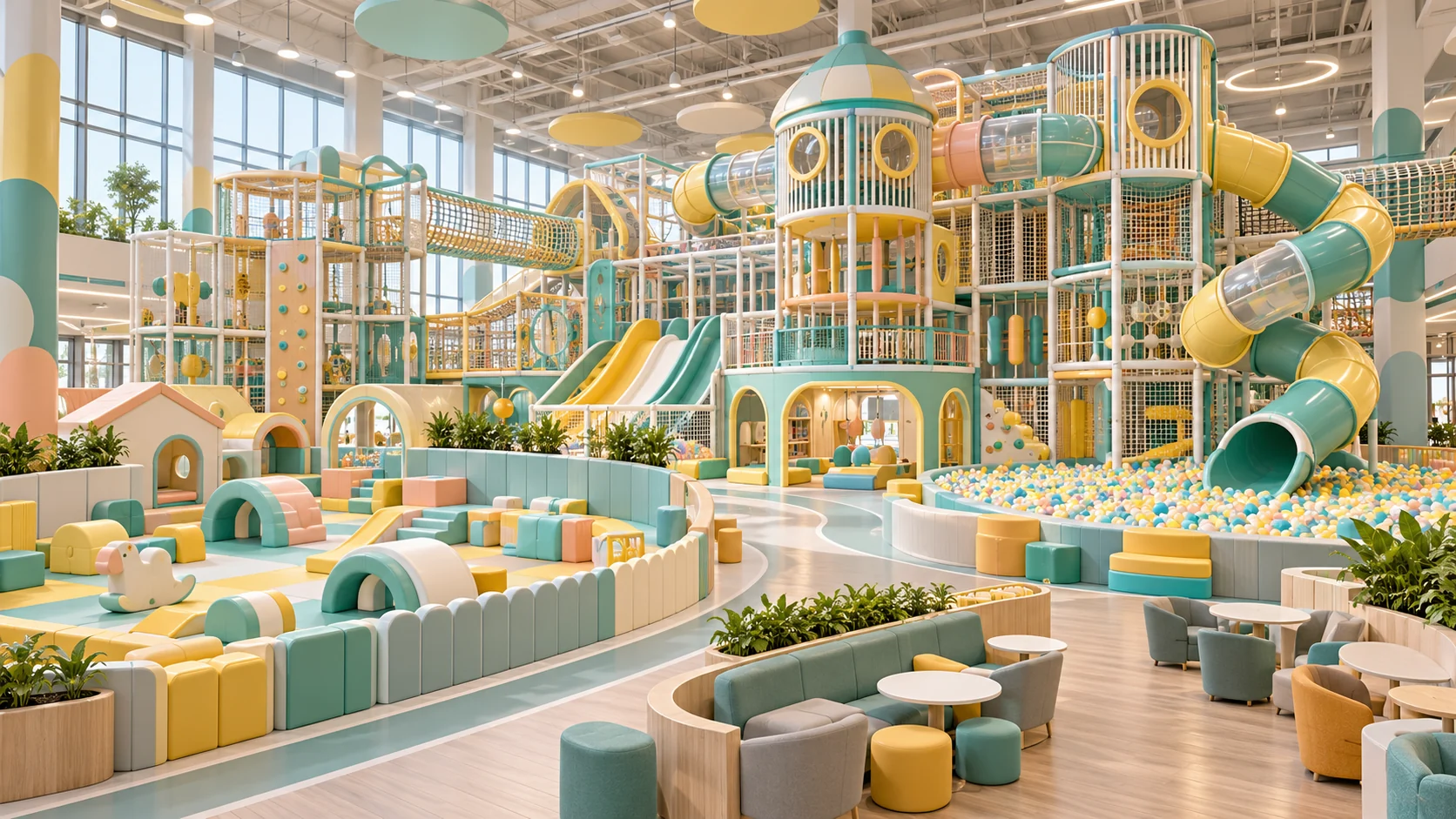
Quick Answer Compare commercial indoor playground equipment proposals in two connected parts: how the layout serves the venue, and what
Thank you very much for your inquiry! Your trust is our greatest motivation. We are committed to offering playgrounds that combine high quality with affordable pricing. Let us bring vitality to your venue!