
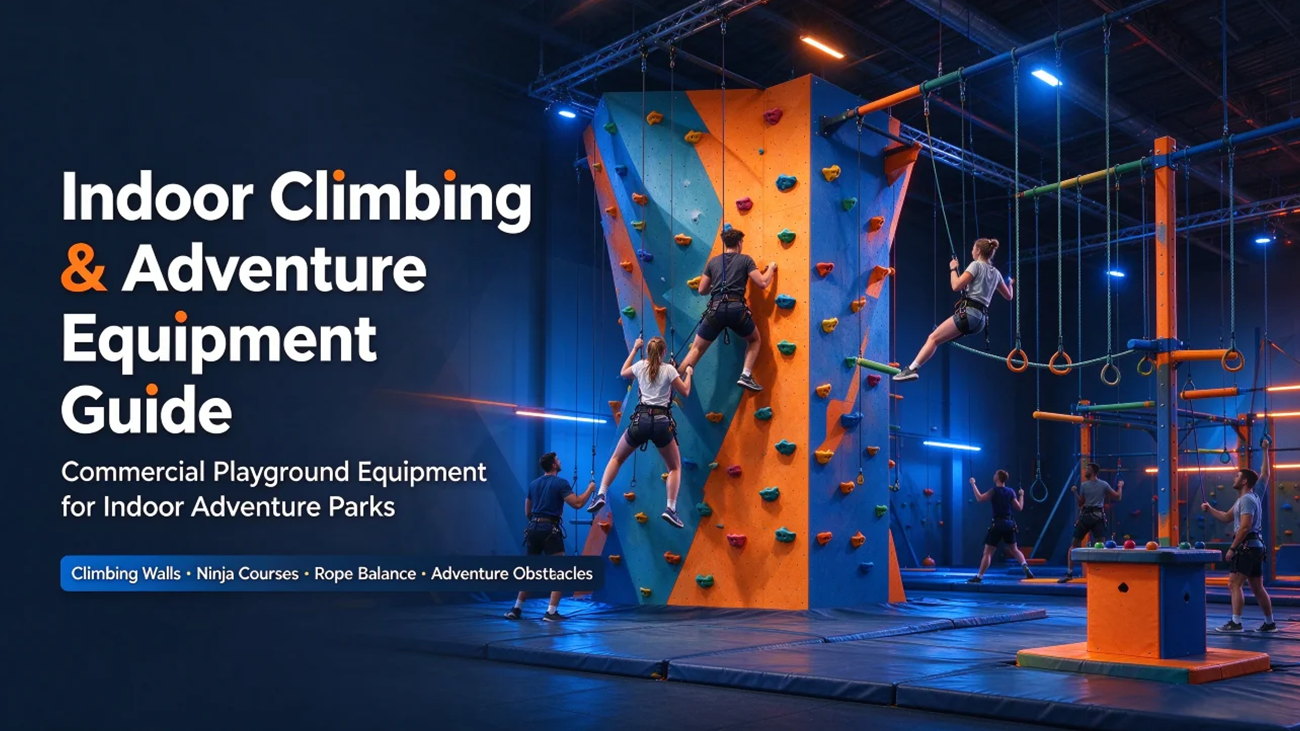
Indoor Climbing and Adventure Equipment Guide
Quick Answer Running an Indoor Adventure Park? You will need Indoor Climbing Equipment and different kinds of Adventure Play features.

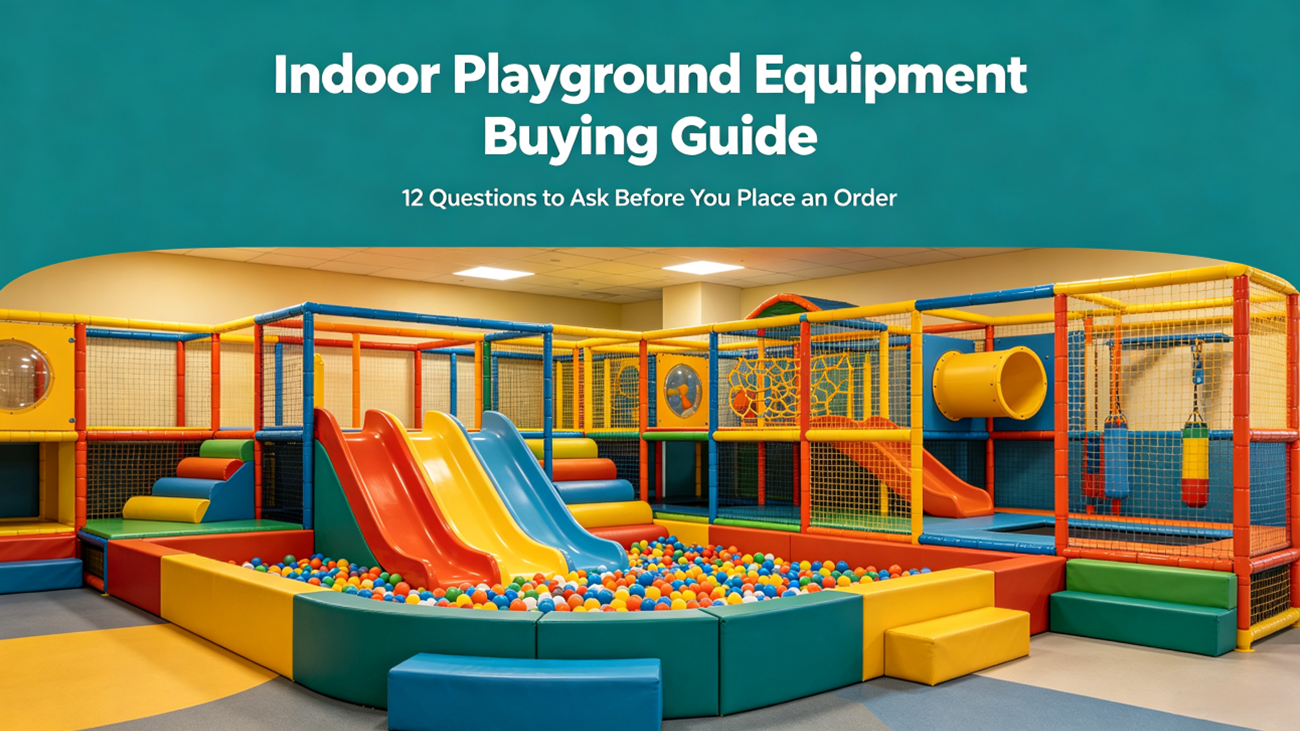
Table of Contents
ToggleChoosing a reliable indoor play equipment supplier is the core of successful commercial indoor playground equipment projects, yet many buyers make costly purchasing mistakes. Most prioritize low prices while ignoring official safety certifications, material quality, professional design, and complete after-sales support. Low-cost uncertified equipment leads to safety hazards, frequent failures, and high long-term operating losses. This professional playground buying guide shares 12 critical questions to help buyers screen qualified suppliers, ensure product safety, control costs, and build profitable compliant indoor playgrounds.
Working with a professional indoor play equipment supplier guarantees strict safety standards and premium-quality indoor playground equipment with certified, durable, and eco-friendly materials to protect child users. It effectively reduces project risks by avoiding design errors, delayed delivery, and unqualified installation through standardized project management. Trusted suppliers deliver tailored custom playground designs, optimized layouts, and 2D/3D rendering solutions to maximize space utilization. High-quality customized equipment extends service life, lowers maintenance costs, and boosts long-term ROI for commercial projects. Meanwhile, professional vendors provide standardized installation, pre-opening inspection, and long-term technical support to ensure stable and smooth playground operation.

Always cooperate directly with professional commercial indoor playground equipment manufacturers instead of trading companies. Factory-direct indoor play equipment supplier partnerships ensure strict production control, flexible custom design, transparent pricing without hidden fees, and stable product quality for commercial projects.
Select an experienced indoor play equipment supplier with 10+ years of manufacturing experience. Mature manufacturers own solid technical expertise, rich global commercial project cases, and in-depth industry knowledge to deliver reliable indoor playground equipment and avoid common operational pitfalls.
A trusted indoor play equipment supplier provides complete safety certifications including ASTM, EN1176, EN71, and ISO credentials, plus official material test reports. These certificates verify that all indoor playground equipment meets international commercial safety, non-toxic, and flame-retardant standards.
Premium indoor playground equipment adopts commercial-grade materials, including anti-rust steel structures, UV-resistant PE panels, flame-retardant EVA foam, waterproof PVC leather, and non-slip flooring. These durable, safe materials support long-term high-frequency commercial use with easy daily maintenance.
A professional indoor play equipment supplier supports full indoor playground equipment customization, covering exclusive themes, site layout optimization, 2D/3D renderings, brand integration, and age-group zoning to match diverse commercial project requirements.
A reliable indoor play equipment supplier offers full-series indoor playground equipment, including soft play units, toddler gear, slides, ball pits, trampolines, ninja courses, interactive devices, and complete FEC commercial playground solutions.
Formal factories implement strict full-process quality control for all indoor playground equipment, including standardized assembly line production, multi-stage inspections, and professional safety and durability testing. Standard ISO management eliminates unqualified products from the source.
A standard quotation from a qualified indoor play equipment supplier covers equipment manufacturing, professional design, shipping, installation, spare parts, and warranty services, with fully transparent pricing and no hidden costs for indoor playground equipment projects.
Standard lead time for indoor playground equipment includes 3–5 days for design confirmation, 15–25 days for regular production, and 30–45 days for large customized projects. A qualified indoor play equipment supplier ensures on-time shipment and installation preparation.
A reputable indoor play equipment supplier provides full installation support for indoor playground equipment, including global on-site assembly, detailed official manuals, and remote technical guidance for cross-border commercial projects.
A trusted indoor play equipment supplier offers comprehensive after-sales service for indoor playground equipment, including a 3–5-year structural warranty, 1–2 years accessory warranty, lifelong maintenance, spare parts supply, and 24/7 customer support.
A credible indoor play equipment supplier provides verified commercial portfolios, global project cases, and real installation records, proving their professional capability to deliver qualified indoor playground equipment for diverse business scenarios.
Comparison Factor | Supplier Nanplay | Supplier Kanbeiplay | Supplier Soft Play |
Factory | Direct manufacturer, 8000㎡ standardized production workshop | Small-scale factory, limited production capacity | Trading company, no independent factory |
Experience | 15+ years indoor playground manufacturing, 1000+ global projects | 5-8 years industry experience, mainly local projects | 3 years new industry participant, few mature cases |
Certifications | Complete ASTM, EN1176, EN71, ISO full certifications | Partial domestic certifications, lack of international certifications | No complete formal safety certifications |
Customization | Full-theme customization, free 2D/3D design, exclusive brand integration | Simple size customization, fixed conventional themes | Only standard equipment sales, no customization service |
Equipment Quality | Commercial-grade raw materials, three-level quality inspection, long durability | Medium-grade materials, basic quality inspection | Inferior cheap materials, no standardized inspection |
Price | Factory direct price, transparent cost, high cost performance | Medium price, partial hidden costs | Low initial price, high later maintenance cost |
Warranty | 3-5 years structural warranty, lifelong maintenance | 1-2 years basic warranty | No official warranty policy |
Installation | Global on-site installation + remote full guidance | Only local on-site installation service | No installation support, self-installation required |
High-quality indoor playground equipment evaluation focuses on five core factors. Buyers must check commercial-grade material durability, safe structural design with anti-fall and anti-clamp protection, qualified load-bearing capacity for intensive use, precise manufacturing details, and low-maintenance performance. These standards help buyers quickly filter reliable indoor play equipment suppliers and avoid defective commercial playground products.

Most procurement failures for indoor playground equipment stem from common avoidable mistakes. Many buyers prioritize low prices over quality and safety, ignore mandatory safety certifications, and cooperate with unvetted indoor play equipment suppliers. Neglecting professional installation, after-sales service, future expansion design, and customized planning also leads to unsafe equipment, high maintenance costs, and poor long-term commercial returns, as summarized in this practical playground buying guide.

Step 1: Define Your Requirements
Define clear project requirements before purchasing indoor playground equipment, including exact site size, total budget, target age groups, and ideal playground theme. Clear positioning helps indoor play equipment suppliers deliver accurate, cost-effective customized solutions.
Budget: Clarify the total project budget, including equipment cost, transportation, installation, and later maintenance costs.
Target age group: Determine the main customer groups (toddlers, school-age children, or all-age groups) to match targeted equipment combinations.
Theme preference: Confirm the playground theme style, brand tone, and functional positioning according to business characteristics.
Step 2: Select Reliable Suppliers
Screen and compare qualified indoor play equipment suppliers using the 12 core questions in this playground buying guide. Verify factory strength, certifications, project cases, and after-sales systems to select reliable manufacturers for indoor playground equipment cooperation.
Step 3: Review Design Proposal
Review and optimize the supplier’s 2D/3D design proposal to ensure the indoor playground equipment layout matches your site size, age positioning, and commercial theme before final confirmation.
Step 4: Confirm Quotation
Confirm full quotation details and eliminate hidden charges, then sign a formal contract to clarify supply, design, installation, warranty, and after-sales terms with your chosen indoor play equipment supplier.
Step 5: Production & Quality Inspection
The indoor playground equipment manufacturer conducts standardized production and multi-round quality inspections. Buyers can verify product quality via factory inspection or video check before delivery.
Step 6: Shipping & Installation
Arrange professional packaging and shipment after quality inspection. After delivery, complete on-site assembly and debugging with support from the indoor play equipment supplier.
Step 7: Final Inspection & Opening
Complete final safety inspection and equipment debugging, train operators, and finish project acceptance for official playground opening.
Buyers can effectively cut procurement costs for indoor playground equipment by cooperating directly with manufacturers to avoid middleman fees. Choosing modular designs, optimizing site layout, adopting all-in-one turnkey solutions, and reserving future expansion space further reduce overall investment and improve cost performance with professional indoor play equipment supplier support.

For indoor playground equipment projects, turnkey solutions from a single indoor play equipment supplier outperform separate equipment purchasing. Turnkey packages offer transparent pricing, unified project management, guaranteed installation quality, and full risk control, making them the safest and most cost-effective choice for new investors, while separate procurement brings higher costs and scattered operational risks.
Choose a qualified indoor play equipment supplier with official factory credentials, complete safety certifications, rich project experience, independent customization ability, and reliable after-sales service to purchase high-quality indoor playground equipment.
Before ordering indoor playground equipment, verify supplier qualifications, safety certifications, material quality, design rationality, quotation transparency, production cycle, installation support, and warranty terms with reference to this playground buying guide.
Indoor playground equipment pricing depends on site size, customization degree, and material grade, ranging from $3,000 for small toddler areas to over $50,000 for large customized FEC playgrounds.
Qualified commercial indoor playground equipment must hold EN1176, EN71, ASTM, and ISO9001 certifications to meet global commercial safety standards.
High-quality indoor playground equipment has a 5–10 year service life, with steel structures lasting over 10 years. Regular maintenance from a professional indoor play equipment supplier extends equipment lifespan effectively.
A professional indoor play equipment supplier supports full indoor playground equipment customization, including tailored layouts, exclusive themes, brand integration, and age-group targeted design.
Indoor playground equipment installation takes 1–3 days for small projects, 3–7 days for medium parks, and 7–15 days for large customized FEC playgrounds, including full debugging.
Indoor playground equipment manufacturers own independent factories, have full quality control, and provide complete customization and after-sales services. Ordinary indoor play equipment suppliers are usually trading companies with higher prices and limited service guarantees.
Verify an indoor play equipment supplier by checking factory qualifications, safety certifications, project cases, customization capacity, and official warranty terms before purchasing indoor playground equipment.
Commercial indoor playground equipment must comply with EN1176, EN71, ASTM F1487, and ISO9001 standards, ensuring eco-friendly materials and safe, stable structural design.
Standard indoor playground equipment suits small-budget and simple projects, while custom equipment from a professional indoor play equipment supplier fits high-end commercial sites with better competitiveness and long-term value.
Reputable indoor play equipment suppliers and manufacturers provide complete after-sales services, including warranty, spare parts replacement, technical guidance, and 24/7 support for all indoor playground equipment.
This professional playground buying guide helps buyers select a qualified indoor play equipment supplier, verify indoor playground equipment quality, avoid procurement risks, and control project costs. By following the 12 key purchasing questions, investors can build safe, compliant, and high-profit commercial playgrounds. For custom design, factory-direct pricing, certified equipment, and reliable turnkey solutions, visit our official website: https://www.kanbeiplay.com/ for professional project support.
Quick Answer Running an Indoor Adventure Park? You will need Indoor Climbing Equipment and different kinds of Adventure Play features.
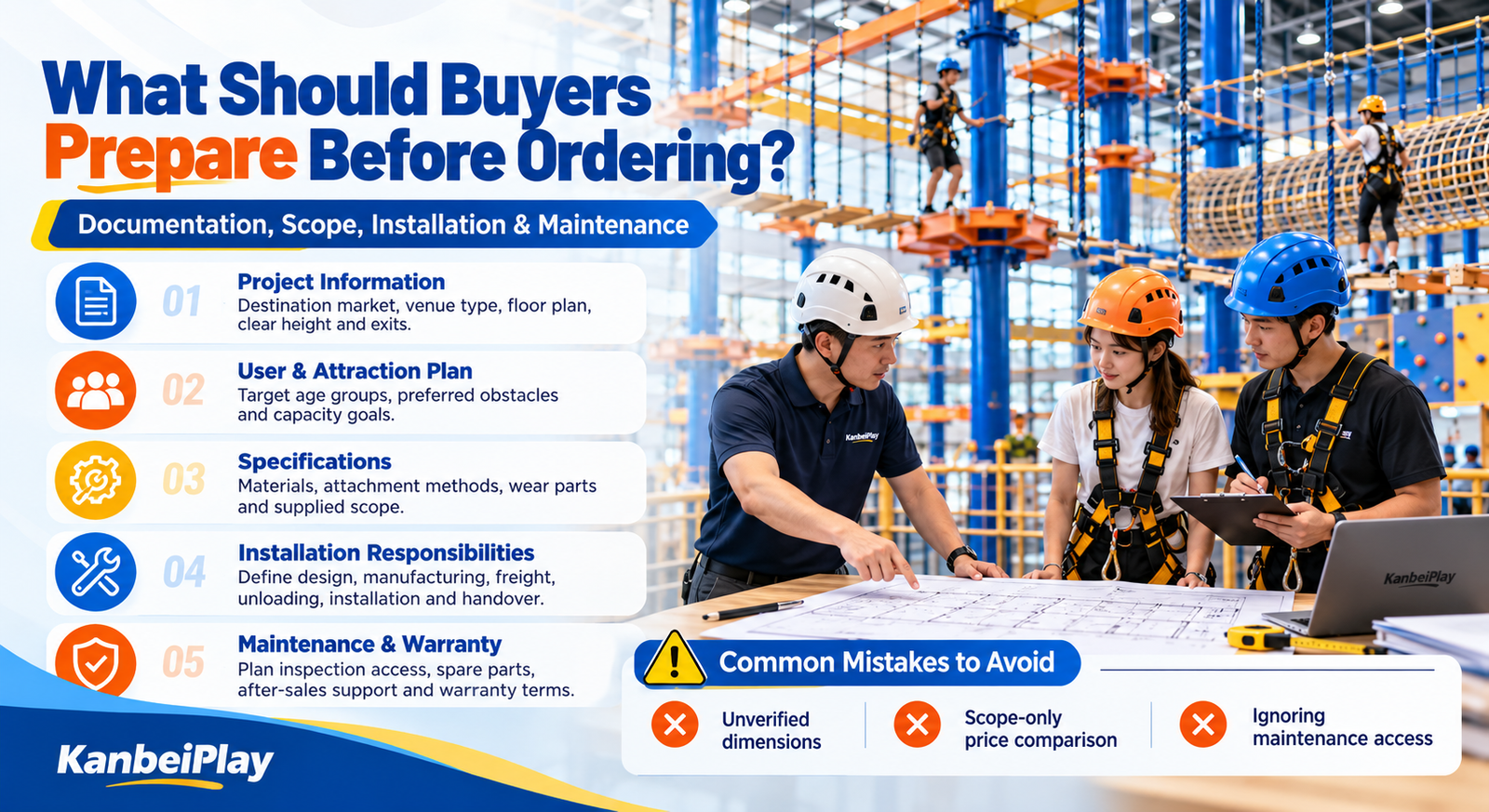
Quick Answer Before working with an indoor playground manufacturer, prepare a measured floor plan, clear ceiling height, target age range,
Thank you very much for your inquiry! Your trust is our greatest motivation. We are committed to offering playgrounds that combine high quality with affordable pricing. Let us bring vitality to your venue!