
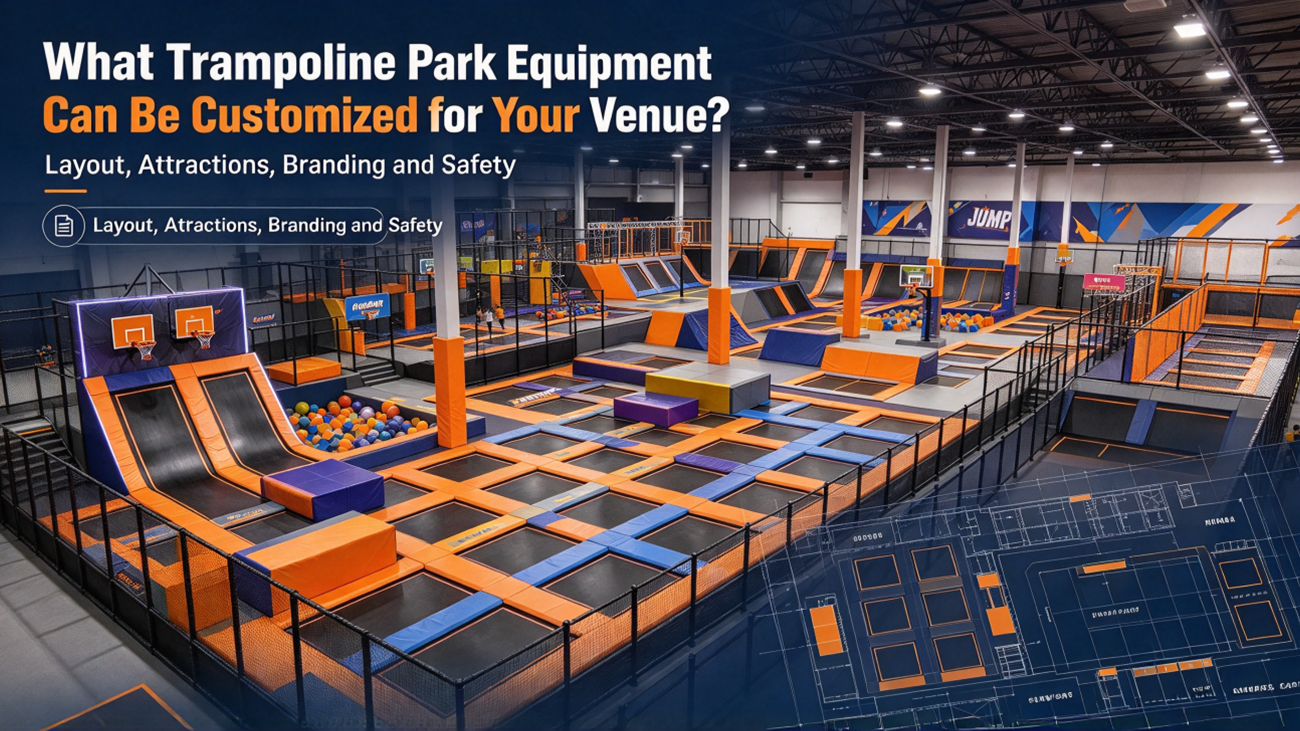
What Trampoline Park Equipment Can Be Customized for Your Venue?
Quick Answer If you are planning an indoor trampoline park, one of the biggest advantages of working with a professional


An indoor trampoline park typically costs roughly USD 300,000 to USD 3,000,000+ to start, depending on size, and trampoline park equipment is the largest single line item. Equipment-only pricing covers just the equipment and export packing, leaving you to handle design, freight, and installation. Turnkey pricing adds project management, shipping, overseas installation, training, and opening support in one agreed budget. For first-time investors, turnkey usually means a more predictable total cost and a faster time-to-open.
The real difference is not just price but responsibility. With equipment-only, you manage the schedule, the freight, and the installer. With turnkey, one supplier owns the process from layout to opening day. Whichever you choose, the figures below give you a realistic baseline to budget against.
Total startup cost depends mainly on footprint, equipment scope, venue work, and how much you manage yourself. As a planning rule of thumb, expect to allocate roughly:
The percentages change with size: a small park spends proportionally more for its equipment per square meter; larger parks spend more (in absolute) for their venue preparations and staff. Below is a comparison of what equipment-only scope includes vs. turnkey scope so that you can compare quotes on the same basis.
| Cost Item | Equipment-Only | Turnkey |
| Design & planning (2D layout / 3D rendering) | Often extra or buyer-arranged | Included |
| Equipment manufacturing | Included | Included |
| Export packing | Included | Included |
| Freight & shipping | Buyer arranges and pays | Managed by supplier |
| Venue preparation (floor, power, HVAC, fire safety) | Buyer | Buyer (with supplier guidance) |
| Installation & assembly | Not included | Included, incl. overseas |
| Staff training & opening preparation | Not included | Included |
The equipment-only number looks smaller on paper, but the turnkey number is usually closer to your real final cost once freight, installation, and coordination are added. Always compare the full scope, not just the headline equipment price.
Rent or purchase, plus site preparation. Flooring underlay, power supply, HVAC, lighting, fire safety, and insurance are all required before equipment arrives. Venue work is often the highest non-equipment cost, and it is the item most first-time investors underestimate. Get a site assessment before you budget: ceiling height, floor load, and power capacity determine what equipment can be installed and how much preparation is needed.
The trampoline park equipment includes the primary jump courts, dodgeball area, foam pit, ninja course obstacles, and soft play zone (for young kids). This is usually 40-60% of your startup budget, and it’s where you have the biggest scope decisions. Number of zones, level of theming, and quality of steel/padding will affect the final equipment price.
Container freight, customs clearance, and inland delivery to your site. Equipment-only buyers must budget this separately — it can add 5–15% depending on destination and port distance. Confirm the Incoterms in your quote so you know exactly who pays for shipping, insurance, and local delivery.
Assembly by a certified crew. If you buy equipment-only and hire a third-party installer, expect to add roughly 8–15% of equipment value in installation labor, plus the risk of rework if the crew is not familiar with the system. A certified installer also reduces the risk of safety and compliance issues after opening.

Prices are estimates and scale with footprint, theme, and equipment mix:
Within a park, equipment cost is usually split across zones:
Per-square-meter equipment cost generally falls as size grows, but the absolute budget still rises. A reliable supplier will give you a 2D layout and 3D rendering before you commit, so the scope and cost are clear early. Ask for an itemized quotation so you can see how much each zone contributes to the total.
Smaller parks are cheaper to equip but carry a higher per-square-meter cost. Larger venues benefit from economies of scale in manufacturing and freight, yet need more zones and higher-capacity equipment to justify the footprint. Size also affects installation time — typically 7–30 days depending on area — and staffing levels after opening. A larger park usually needs more jump supervisors, front-desk staff, and maintenance, which raises both upfront and operating budgets. Before scaling up, model your expected visitor volume and ticket pricing to confirm the larger investment can pay back.
Many investors combine their trampoline area with commercial indoor playground equipment for younger kids and families. Other planned expenses are:
These add-ons increase guest dwell time and per-visitor revenue, but they also increase upfront spend — plan them in the same budget cycle rather than as an afterthought. In practice, many operators find that party rooms and a small café are the fastest paths to higher margins, so it is worth budgeting for them from the start.
The practical difference is scope and risk. Equipment-only lowers the initial equipment price by roughly 20–35%, but you take on design coordination, freight management, installation hiring, and liability for mistakes. Turnkey bundles these into one quote and one accountable supplier, which usually reduces hidden costs and time lost to rework. For a single project, the management overhead of going equipment-only can easily erase the nominal savings.
Choose based on your team:
If you are still deciding, ask your supplier to quote both ways. A transparent supplier will show the same scope under each model so you can compare honestly. How Can Investors Control Startup Costs?
Beyond these, keep a contingency of roughly 10% of the total budget. Construction and freight rarely come in exactly on budget, and a small buffer protects your timeline and your opening date.
A complete supplier quote should specify:
If any item is missing, ask before signing. A vague quote usually means hidden costs later. A detailed, line-by-line quotation is a sign of an experienced and transparent manufacturer.
To get an accurate quote, prepare these before contacting suppliers:
The more complete your information, the more precise your quotation — and the fewer surprises during installation. Most manufacturers also ask about your opening season, because lead time affects how early you need to order.

A: Trampoline parks cost from USD 300,000 – USD 3,000,000+, based on size, equipment scope & venue work. Usually, ~40-60% of the total will be equipment
A: Indoor trampoline park equipment costs span roughly from USD 80,000 for a small park up to USD 400,000–1,000,000+ for large venues, with pricing tied to the site footprint and selected equipment mix.
A: Most commercial parks are around 400–800 m² to begin with, while larger venues at 1,500 m²+ can fit more activity zones. Ceiling height and floor load are also key considerations for safety and layout design.
A: With a turnkey package, overseas installation is typically included. With equipment-only, installation is usually extra or arranged by the buyer with a third-party crew.
A: Turnkey quotes usually exclude venue preparation (floor, power, HVAC, fire safety), local permits, and ongoing operating costs. Confirm freight, customs, and spare parts are included in writing.
A: Manufacturing generally runs 30–60 days, with installation taking another 7–30 days based on venue scale. You can handle venue prep and permitting alongside this work to prevent hold-ups.
Your total cost depends far more on scope than on the sticker price. Decide whether you can manage design, freight, and installation yourself, or whether a single turnkey partner gives you a safer, faster path. Either way, get a written quote that lists every line item before you commit, and keep a small contingency so unexpected costs do not delay your opening.
Quick Answer If you are planning an indoor trampoline park, one of the biggest advantages of working with a professional
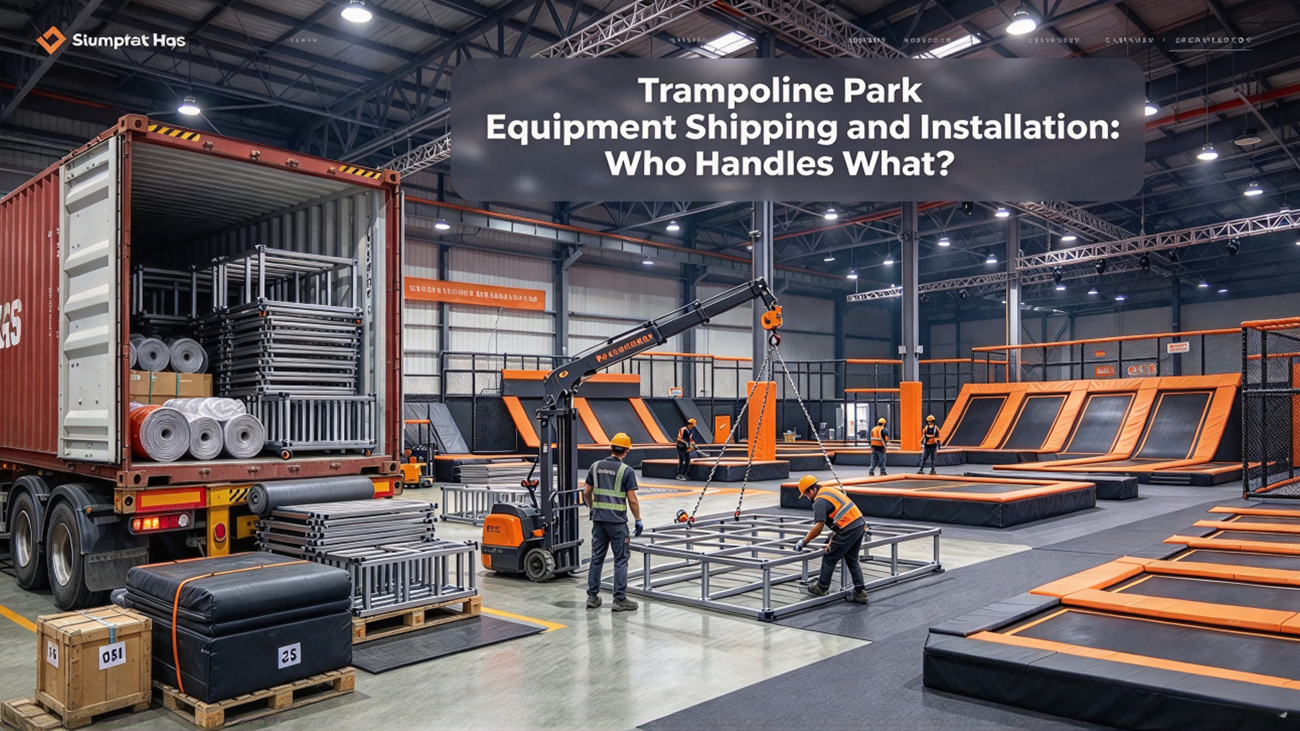
Planning a commercial indoor playground involves more than picking equipment. Once your design is approved and production is finished, two