
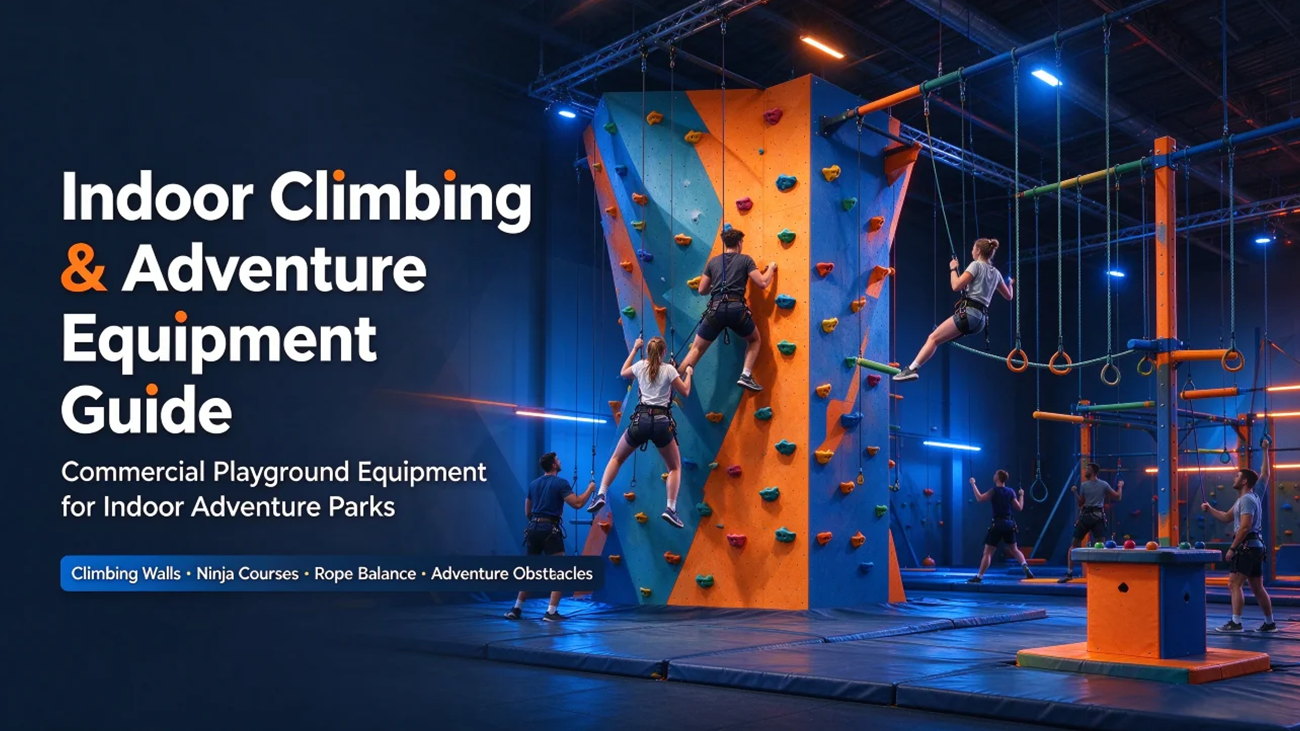
Indoor Climbing and Adventure Equipment Guide
Quick Answer Running an Indoor Adventure Park? You will need Indoor Climbing Equipment and different kinds of Adventure Play features.

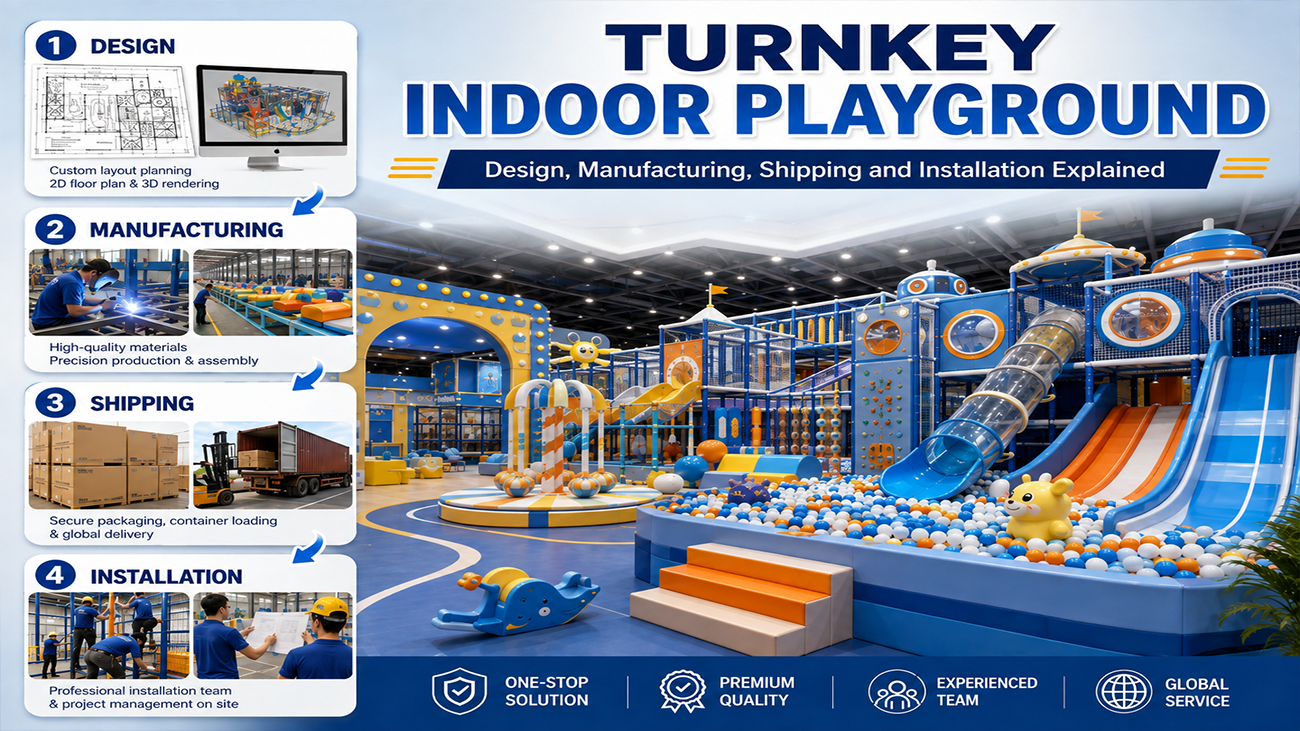
Table of Contents
ToggleIf you are a B2B buyer who is planning to open an indoor playground, you may have heard of the term "one-stop", but what does it mean? Does the manufacturer take care of everything, or do some things have to be done by yourself?
The one-stop indoor playground solution does not mean that the manufacturer handles all local affairs. It is a delivery process with clear stages and a clear division of labour. The manufacturer is responsible for all parts related to the equipment. The design, manufacturing, transportation, and installation support are under their control, but you still have to handle the local construction and consumption yourself. Prevent approval, municipal facilities, and licenses.
This article will talk about what the one-stop plan contains, what will happen at each stage of the project, and what things are your responsibility. After reading it, you will know what the one-stop supplier can do and what you need to prepare.
One-stop suppliers will start to intervene in the planning stage. They will understand your venue concept, target customers, venue status, area and floor height, what products you want, how much the budget is, and when you plan to open, and then help you make professional 2D layout drawings and 3D designs to make full use of the space and ensure safety at the same time.
After the design is decided, the supplier will produce all the equipment in its own factory. For Kanbei, they have a 20,000-square-metre production workshop and more than 150 professionals, who can do soft package amusement structures, trampoline parks, and adventure areas.
The supplier is also responsible for transportation. Packaging, cabinet loading, and export documents are all arranged by them. Each container is loaded in the optimal way, which reduces the risk of damage during transportation, and the logistics cost can also be reduced.
The installation supplier will provide support, including detailed installation manuals, step-by-step drawings, video tutorials, and even sending people to the site to guide. Some manufacturers, such as Kanbei, also provide professional installation services. You can also choose to install it yourself, and the manufacturer will provide guidance.
Before designing, the supplier will first review the size of the site, the position of the column, how to access the entrance and exit, what the building facilities are, how to arrange the dynamic line, and they will write down any missing information in advance. As for whether the building structure is compliant, whether the fire protection is not good, how to do barrier-free design, and how to get a license, these should still be confirmed by local architects, engineers, and contractors.
In the design stage, we should talk about brand positioning, how customers leave, how to divide by age, how many people can be packed, how to manage employees, and how to match the project. Age division is a top priority. In general, it is recommended to divide infants, preschoolers, and school-age children into three independent areas. The supplier will produce 2D layout drawings and 3D renderings, so that you can clearly see the final appearance of the site before production begins.
A well-planned age zone layout typically includes:
| Zone | Target Age | Purpose |
| Toddler soft play | 1–3 years | Safe, low-height sensory play |
| Preschool play area | 3–6 years | Climbing, sliding, interactive play |
| School-age zone | 6–12 years | Multi-level structures, trampolines, ninja courses |
The active area and the quiet area should be separated so that the older children will not bump into or scare the younger children, and the experience will be better for all those who come to play.

After the design is approved, the supplier begins to purchase and prepare materials for production. The soft package amusement structure will use high-density foam and PVC coating, and the structural part will use a galvanised steel frame.
Production is carried out according to the standardised process. There are quality inspection records at each stage. Each piece is made according to the approved specifications. The design and production are completed under the same system, so that the risk is smaller, the delivery time is shorter, and the quality is more stable.
Before delivery, the supplier will do an assembly test to ensure that all the parts can be assembled. The parts also need to check whether the size is correct, whether the surface treatment is good, whether the safety soft package is in place, and whether the structure is stable. Before shipping, check it internally first, and there is no need to toss and rework when you arrive at the site.
Reliable one-stop manufacturers can control everything from raw materials to final assembly, and batch-level traceability can also facilitate later maintenance and upgrades. This is also a place where direct cooperation with factories is better than finding a trading company.
Different suppliers provide different ways to install this piece. Kanbei has its own professional installation team that can be sent to the site to install it. You can also choose to install it yourself, and they will provide guidance to you. If it is a small site of less than 100 square metres, it will save more money to install it yourself. The supplier will give you an installation manual, step-by-step drawings and installation videos, and you can do it accordingly.
Packaging before the equipment is transported to the site is also very important, especially when transporting internationally. The soft package parts should be protectively packaged, the structural parts should be reinforced, and the label on each box should be clear, so that you can know who is who when you open the box at the site.
There is also attention to how to load the container. Each cabinet should be coded according to the optimal space plan, so that it is not easy to bump during transportation, and the logistics cost can also be suppressed. International transportation is especially obvious.
The supplier will also give you a detailed installation manual, step-by-step drawings, and reference videos. If you choose to install it yourself, these materials are enough for you to get the job done.
Many people are easily confused in this part. One-stop equipment suppliers are directly related to equipment design, production, transportation, and installation guidance, but the following things are still up to you.
Local construction, site levelling, wall treatment and structural transformation are all done by local contractors. The supplier provides equipment and installation guidance, but you are responsible for the local labour and site preparation.
Fire inspection and approval, sprinkler systems, fire alarms, emergency lighting, etc. should be done according to local building standards, done by local contractors, local fire departments for acceptance, and suppliers do not care about these.
Public facilities, electrical wiring, air conditioning and HVAC, and water pipes are not within the scope of the supplier's services. They are also installed by local contractors and follow local standards.
Local permits, building permits, use permits, and business licenses are all handled by the local authorities. The supplier will provide corresponding documents to support the application, but you still have to submit the application yourself.
Kanbei provides a full-process turnkey solution from demand analysis and 3D design to production, transportation, installation, and after-sales maintenance. They have been in this industry for more than ten years and have done more than 1,000 projects around the world, with CE, ISO 9001, GS, TÜV, and SGS certifications. 20,000 square metres of factories and more than 150 professionals have customised amusement equipment for more than 50 countries.
For international project transportation, the code of each container has the best space plan to be loaded. The manufacturer will provide installation manuals, step-by-step drawings, and installation videos, and you can do it accordingly.
There is a 400-square-metre ocean-themed indoor playground project in Canada, which requires customised design, production, transportation, and installation support. The whole one-stop process covers everything from conceptual planning to installation guidance. The indoor playground manufacturer also provides free operation suggestions on age grouping and customer dynamic lines.

Yes, the one-stop plan includes transportation and installation support. The supplier is responsible for packaging, cabinet installation, transportation documents, etc., and will also provide installation manuals, drawings, and videos. If the project is relatively large, a team can also be sent to the site to install.
No. Local construction is not included in the one-stop plan. The ground, circuit, air conditioning, and structural transformation are all done by local contractors. The supplier is only responsible for the equipment and installation guidance, and you are responsible for the site preparation.
Does the supplier provide training?
Yes, many one-stop suppliers will provide operational training. For example, Kanbei will give some suggestions on age zoning, customer trends, and long-term profits, and after-sales service will also respond around the clock.
Does the supplier provide spare parts?
Yes. Spare parts are also included. Reliable indoor soft play suppliers will plan the spare parts list in advance, and the after-sales team will stay online. If there is any problem after opening, it can be dealt with in time.
The one-stop solution is the process of stringing design, production, transportation, and installation support together, which saves you the trouble of docking with designers, manufacturers, logistics, and installation teams at the same time. But it does not include everything. Local construction, fire examination and approval, public facilities, and licenses still have to be handled by yourself.
The key is to find the right person. A factory with experience, formal certification, and a clear process can make the whole project smoother, faster, and more stable. Kanbei is a one-stop turnkey solution with more than ten years of industry experience. It has done more than 1,000 projects around the world, with CE, ISO 9001, GS, TÜV, and SGS certifications, from design to installation to after-sales service. What they do is make a playable amusement space for children around the world.
Apply for one-stop project consultation now. Contact Kanbei to talk about your project and see how they turn your idea into a profitable business.
Quick Answer Running an Indoor Adventure Park? You will need Indoor Climbing Equipment and different kinds of Adventure Play features.
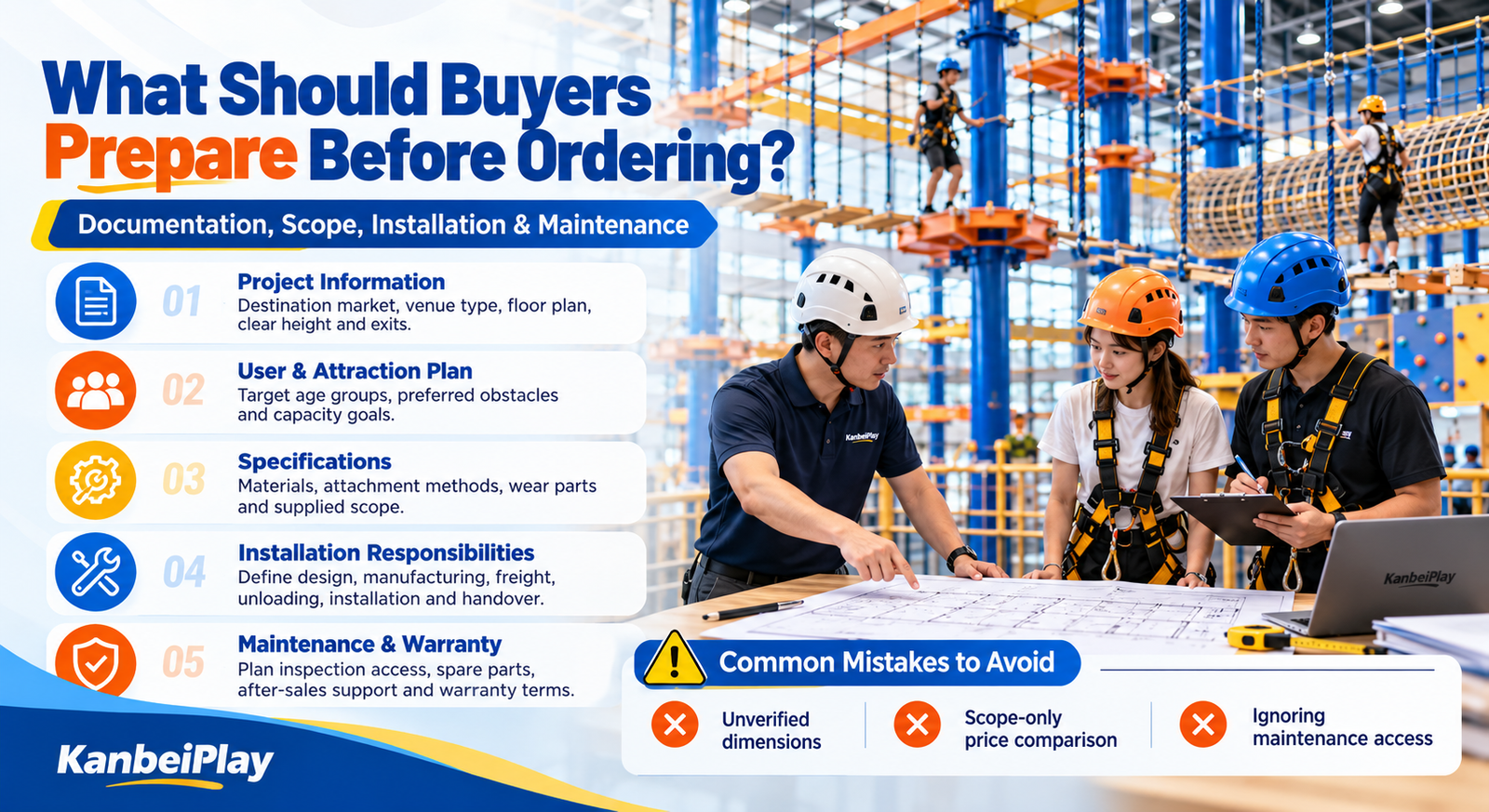
Quick Answer Before working with an indoor playground manufacturer, prepare a measured floor plan, clear ceiling height, target age range,
Thank you very much for your inquiry! Your trust is our greatest motivation. We are committed to offering playgrounds that combine high quality with affordable pricing. Let us bring vitality to your venue!