
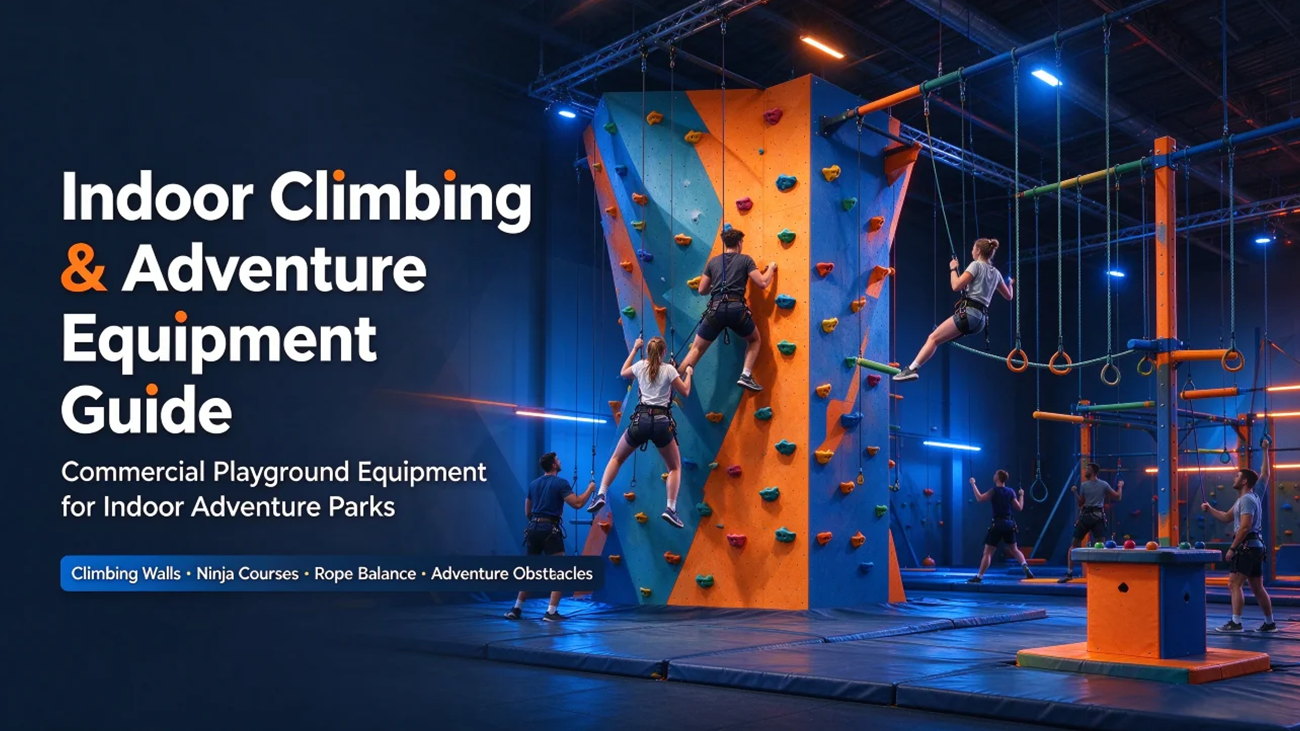
Indoor Climbing and Adventure Equipment Guide
Quick Answer Running an Indoor Adventure Park? You will need Indoor Climbing Equipment and different kinds of Adventure Play features.

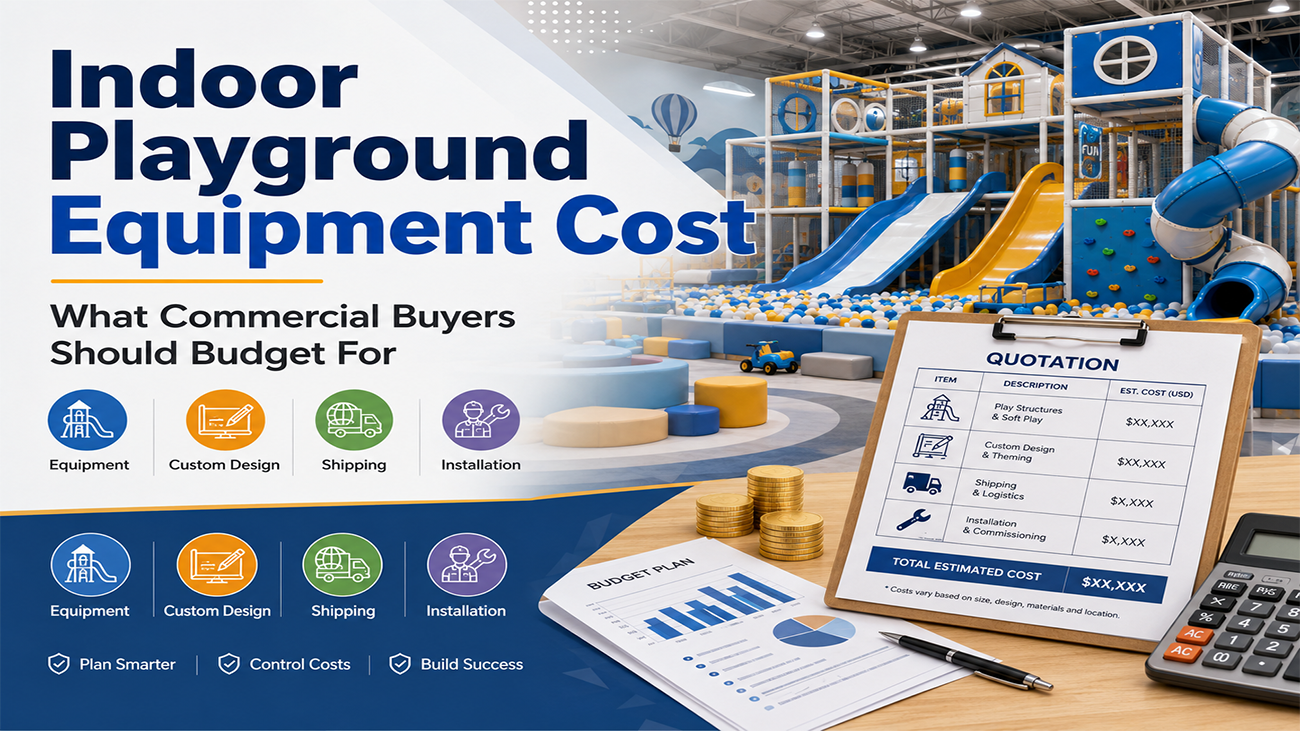
Table of Contents
ToggleIf you are budgeting for a commercial indoor playground, the first key point is this: there is no one-size-fits-all price. Indoor playground equipment costs vary based on space size, chosen theme, included attractions, material grade, shipping, and installation fees. Any supplier that gives a per-square-meter quote before learning your project details will almost certainly leave out important expenses.
Once you receive a quote, do not focus only on the total price. Check exactly what is covered. Here are five items often bundled or hidden within indoor playground equipment costs.
Equipment refers to the physical hardware: steel frames, platforms, slides, climbing walls, ball pits, trampolines, and interactive panels. It usually takes up the largest share of your budget. Check carefully what is included and what counts as extra add-ons.
It covers 3D renders, themed artwork, and structural engineering. Some suppliers include basic layout design in the equipment price. Fully custom themes or complex layouts usually come with extra design fees, so confirm this in advance.
It consists of wooden cases, foam wrapping, and waterproof layers. Export-grade packaging looks plain yet protects equipment during weeks-long sea shipping. It only accounts for a small portion of total cost, but you still need to confirm whether it is included.
Ask which freight, port handling, customs clearance and venue delivery charges are included or excluded. Request an itemized estimate based on the destination, shipment volume and agreed delivery terms instead of applying a fixed percentage.
Trained technicians handle on-site assembly, fixing, safety mat laying, and final inspection. Suppliers charge in different ways: flat rates, daily fees, or a percentage of equipment value. Make sure you know the billing rule. Confirm who provides unloading, tools, local labor and site preparation, and whether technician travel and accommodation are included.
If you collect two or three quotations and notice huge price gaps, do not be alarmed. The biggest fluctuations in indoor playground equipment costs usually stem from four key factors.
Area: It’s easy to understand that a larger space calls for more materials, extra parts, and longer installation hours. However, there is a notable trend. Some fixed costs may be spread across a larger project, but unit prices also depend on equipment density, theme and specifications; a larger area does not automatically mean a lower price per square meter.
Theme complexity: Standard multi-colour play systems are your basic option. Custom concepts such as a space station, jungle adventure or pirate ship require custom moulds, themed panels and exclusive artwork. The more unique your theme, the higher the cost.
Attraction mix: Slides and ball pits are just an entry-level package. Adding interactive projection games, virtual reality zones, go-kart tracks or ninja warrior courses will not only increase costs, but may also rearrange your entire budget.
Material specification: Galvanized steel, LLDPE plastic, high‑density foam and commercial‑grade PVC are examples of play equipment materials. Material names alone do not establish compliance or service life; compare the agreed specifications and relevant product or material test documents. Cutting corners on materials will create noticeable gaps in durability, warranty coverage, and maintenance expenses down the line.

Take a quick reality check before reviewing the figures: these are only estimated price ranges for equipment and serve as a rough reference. Your actual indoor playground equipment costs will vary based on the theme, attractions, materials, shipping, and installation. To get accurate numbers, you will need a formal quotation tailored to your specific project.
Typical indoor playground equipment cost range: 10,000 to 35,000 USD. $10,000 to $35,000. Expect a compact structure with one or two slides, a ball pit, and several basic climbing features. This size is perfect for cafes, community centres and smaller retail spaces. It is the ideal option if you only need a play corner instead of a full‑set entertainment facility.
Typical indoor playground equipment cost range: 35,000 to 90,000 USD. Here you can fit a multi-level structure, a separate toddler zone, bigger slides, and maybe one or two feature attractions. This is the sweet spot for most standalone indoor playgrounds.
Typical indoor playground equipment cost range: 90,000 to 250,000 USD and up. We are talking family entertainment centers here — multiple play zones, custom theming, interactive attractions, party rooms, high-capacity structures. And remember, equipment is only part of it; venue fit-out, lighting, and HVAC all sit outside this number.
The lowest quote may look attractive at first glance. Across the equipment's operating life, cheap indoor playground equipment costs can quietly turn into the most expensive decision you make.
Cheaper builds often rely on non-standard parts. Fast-forward a few years and a broken slide, worn foam, or torn netting might be impossible to replace — and if you cannot fix it, that whole section of the playground sits empty.
Every closed day is revenue you will never get back. And it is not just the direct loss — frequent breakdowns hurt your reputation, kill repeat visits, and make it harder to win back families who had a bad experience.
Maintenance access
Good design takes future maintenance technicians into account with accessible panels, modular parts, and clearly marked service points. Low‑cost systems, by contrast, are sometimes fully welded or fitted with unusual proprietary fasteners. Even simple repairs can turn into expensive, time‑consuming trouble.
Commercial playgrounds experience repeated use. Wear and replacement needs vary by component, visitor activity, environment and maintenance. Request material specifications, inspection instructions, spare-part availability and component-specific warranty terms; a general service-life estimate is not a guarantee for every part.
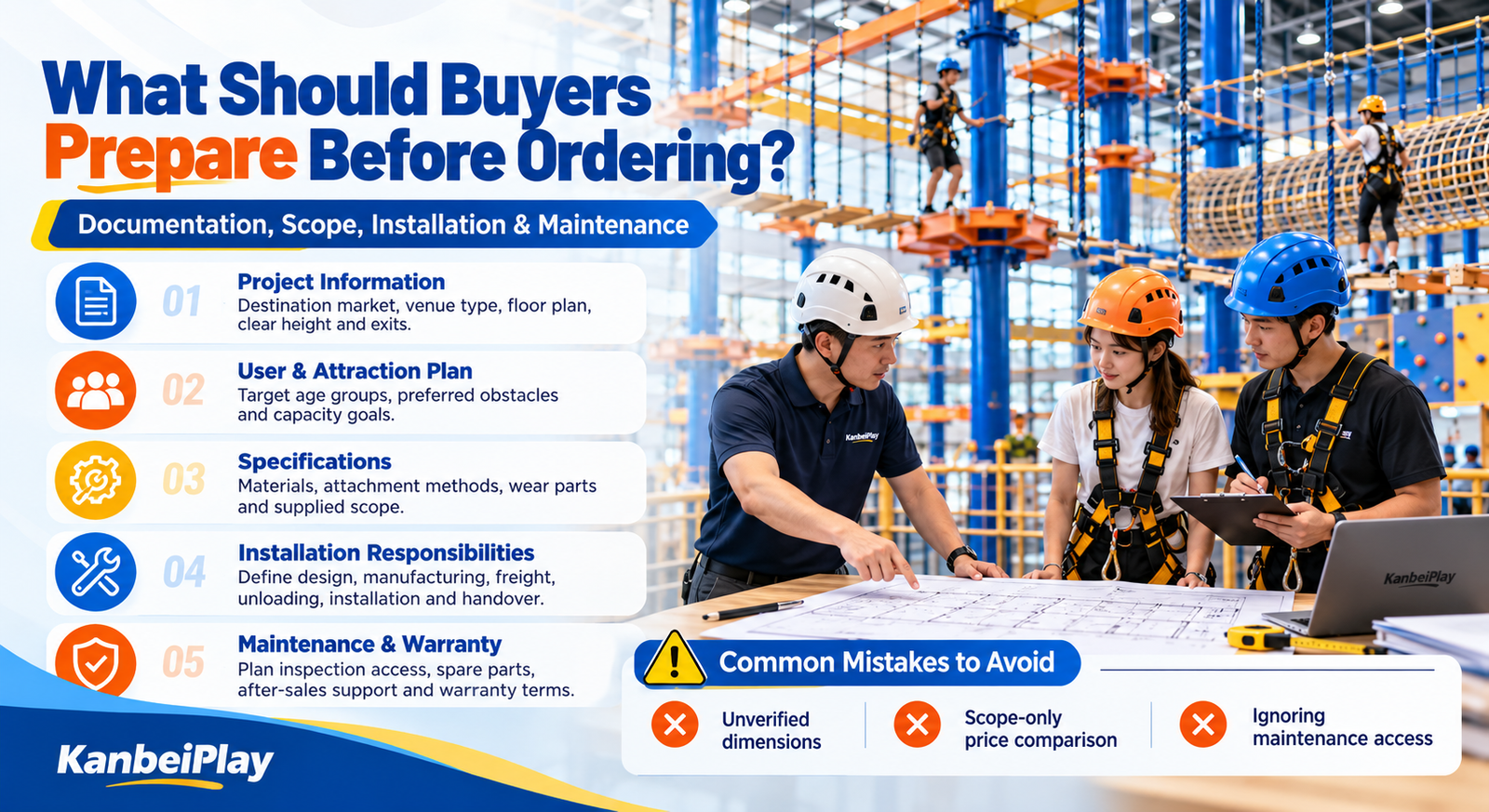
Want a quote that is actually accurate, not a guess? Start with the following details before you reach out. The more you can give a supplier upfront, the tighter your indoor playground equipment cost estimate will be.
Country: Where you are located matters more than you might think. Your country is a key variable in indoor playground equipment cost — it shapes shipping, import duties, electrical standards, and the equipment documentation and local requirements that need to be confirmed for your project.
Floor plan: A CAD drawing or even a carefully measured sketch is highly useful. It marks columns, doors, windows, staircases, restrooms, and all other elements that may affect the layout. Share these documents with designers at an early stage, so they can maximise your usable space instead of charging extra fees for layout revisions later.
Area: It is not the total building area, but the actual usable square metres. This figure determines how much equipment can be placed and how efficiently each square metre can be utilised. If you only provide the overall building size, expect a less accurate quotation.
Height: Provide the usable clear height to the lowest beam, duct, sprinkler or other obstruction, and mark changes across the floor plan. Play levels and activity clearances must be checked against the selected equipment and project requirements; building height alone is not enough.
Age: Who are the players? Your target age range will reshape the entire specification. Toddlers aged 1 to 3 require low platforms, small slides, and soft surfacing. Older children from 5 to 12 can handle taller structures, faster slides and more challenging climbing features. If the space serves mixed-age groups, careful zoning will be necessary.
Theme: Got a theme in mind, or happy with a standard design? Custom themes mean custom artwork, mold costs, and longer production timelines. Jungle, space, ocean, castle, city — these are all popular, but each one moves the price and schedule differently.
Budget, timing and scope: Share your equipment budget and currency, planned opening date and site readiness. Specify equipment supply, shipping coordination, remote guidance or on-site support so the quotation can identify included work and exclusions.

Two quotes, two very different numbers — but are they even comparing the same thing? Not all commercial indoor playground equipment cost quotes are apples-to-apples. Run through this checklist to evaluate suppliers fairly.
Scope: Get specific about what is in the box. Design, equipment, packaging, shipping, installation, post-install inspection — which ones are covered? A lower indoor playground equipment cost might just mean fewer items are included, not that you are getting a better deal.
Exclusions: Ask for a written list of what is NOT included. Venue prep, electrical work, flooring, signage, permits, local taxes — may sit outside the equipment supply. Confirm each item in writing and budget it separately rather than applying a universal percentage.
Installation: Confirm remote guidance or on-site installation, local labor, tools, travel, accommodation and site preparation. Record who pays for each item and which handover documents and checks are included.
Warranty: Read the warranty terms carefully. Compare the actual terms for each component, including the start date, exclusions and replacement procedure. Check whether the warranty only covers components, or both parts and labour — this matters a great deal when something breaks down.
Standards: Do not blindly trust claims of “compliance with safety standards”. Request current documents identifying covered equipment or models, the test standard and edition, issuing body, report number and date. Confirm relevance to the equipment and destination market. Equipment documents do not replace local building, fire, accessibility or operating approvals; confirm those separately with the responsible local professionals.
Compare the same proposal: Use the same approved layout, equipment list and specifications. Record currency, quotation date, delivery terms, payment milestones and exclusions so differences can be explained item by item.
A per-square-meter figure can be an early budgeting reference, but it is not a complete quotation. Confirm its assumed equipment, theme, materials and delivery scope, then compare itemized offers based on the same layout.
Confirm whether the offer includes a basic layout, 3D design, revisions, themed artwork and any required engineering work. Design scope and charges depend on the agreed quotation.
Check the written delivery terms and named destination. Confirm which freight, insurance, port handling, customs, duties and inland delivery charges are included or excluded, and who arranges each stage.
A handful of things move the needle: venue size, how complex the equipment is, local labor rates, whether the supplier sends technicians or just remote guidance, and how much prep the venue needs. Multi-level or custom-themed builds naturally take longer.
Use the expiry date on the written quotation. Confirm whether equipment and freight estimates have different validity periods, and request an updated offer if the layout, specifications, delivery terms or timing change.
Budgeting for an indoor playground means looking beyond the price tag. The full cost of indoor playground equipment covers design, materials, shipping, installation, and years of ongoing maintenance. If you only pick the cheapest option, you will likely pay for it later, whether through repairs, downtime, or premature equipment replacement.
For a quote that is actually itemized and accurate, come prepared with your country, floor plan, area, ceiling height, target age group, and preferred theme. The more detail you hand over, the less guessing the supplier has to do — and the tighter your number will be.
Ready to discuss your project? KanbeiPlay is an indoor playground manufacturer providing equipment for commercial indoor play projects. Share your floor plan, usable clear height, destination, target users, budget and required delivery scope to request a project-specific quotation.
Quick Answer Running an Indoor Adventure Park? You will need Indoor Climbing Equipment and different kinds of Adventure Play features.
Quick Answer Before working with an indoor playground manufacturer, prepare a measured floor plan, clear ceiling height, target age range,
Thank you very much for your inquiry! Your trust is our greatest motivation. We are committed to offering playgrounds that combine high quality with affordable pricing. Let us bring vitality to your venue!