
Indoor Climbing and Adventure Equipment Guide
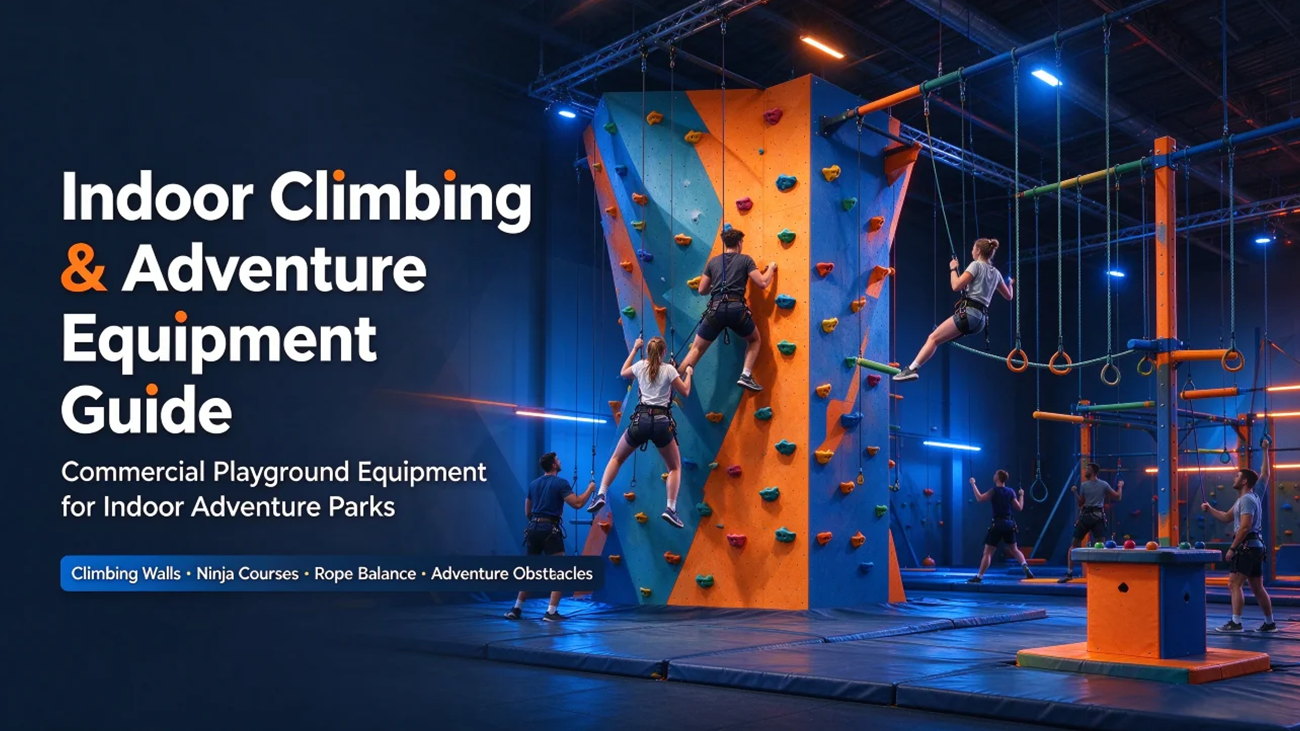
Quick Answer Running an Indoor Adventure Park? You will need Indoor Climbing Equipment and different kinds of Adventure Play features.

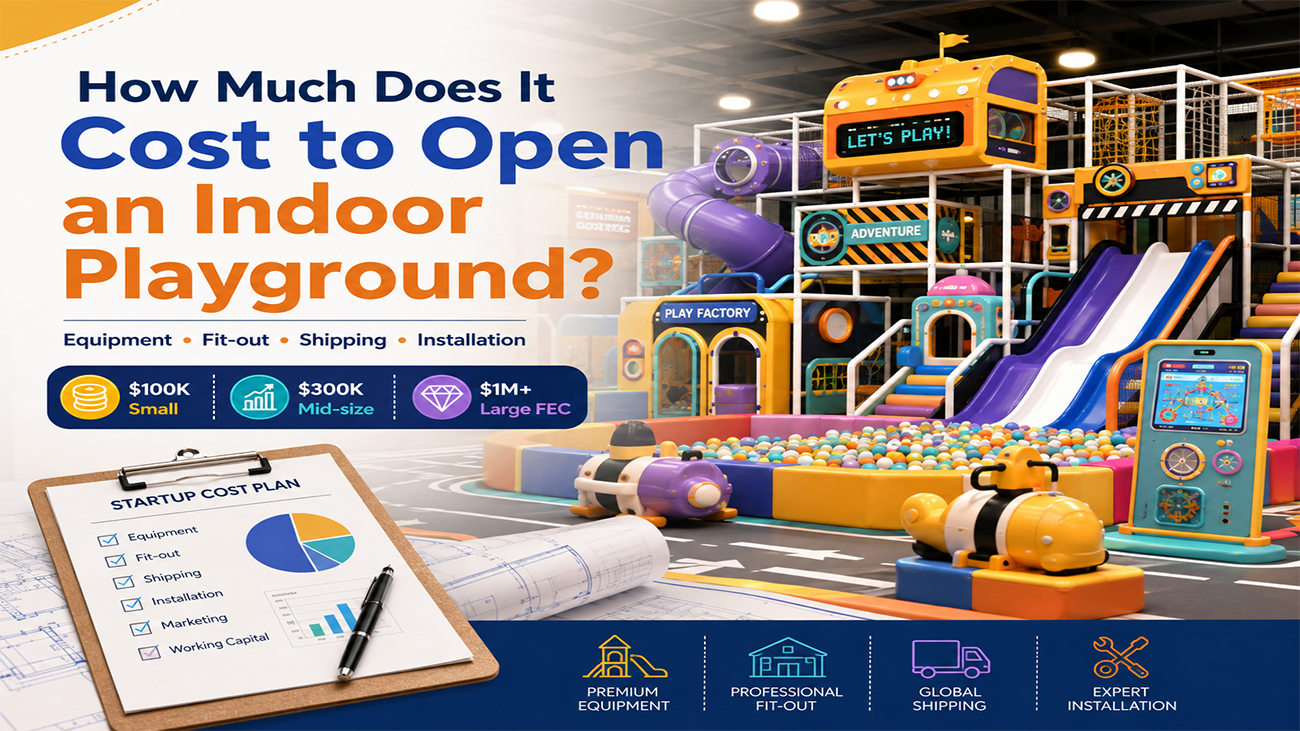
Table of Contents
ToggleHow much does it cost to open an indoor playground? No set price works for every build. It depends on three factors: site conditions, your play equipment selection, and the project location. You need to build a practical budget framework, rather than search for one exact number.
The easiest way to structure your budget is to categorize all investment costs. Your total investment splits into two core groups. The first is play-related hardware, such as main play structures, slides, and interactive game zones. The second covers all other fees: site renovation, shipping and logistics, on-site installation, and pre-opening work.
Indoor playground equipment takes up the largest share of your budget. Additional supporting costs often add another 30-50 % to your initial equipment investment.
NanPlay shares real-world data from finished projects. Small venues of 1,000-3,000 square feet come with an all-in startup budget of around $100,000. Mid-size sites from 3,000 to 8,000 square feet run close to $300,000 for the whole project. Large family entertainment centers over 8,000 square feet can cost $1 million or more. These numbers cover every startup expense, not just the price of the play equipment.
Before contacting suppliers for quotes, you need to know all the expenses your project will incur. Building an indoor playground mainly creates five major expense categories.
This category covers expenses such as rental deposit, site renovation, floor installation, wall painting, HVAC and electrical modification. Besides, construction costs for restrooms, reception desks, and parent lounge areas also fall under venue and fit-out.
Site-related costs vary greatly by city and existing building condition. Ready-to-use retail spaces require little renovation. Empty warehouses need far more investment for upgrades. In NanPlay’s project cost breakdown, site renovation is a separate budget item. It is not included in equipment quotes.
Play equipment is what draws people to your venue. It includes modular frames, slides, ball pits, climbing features, trampolines and interactive panels. For most projects, this will be your single biggest expense.
NanPlay records show playground equipment accounts for roughly 45 % of total startup costs. Kanbei Play pricing shows standard soft‑play modules from $3,000 (50‑100 sqm) up to $30,000+ (200‑300 sqm). Custom‑themed designs cost more per square meter.
For most projects, playground equipment is produced overseas. Costs for sea freight, port handling, customs clearance and last-mile delivery to your venue all add up.
Shipping costs are not fixed or set at a flat rate. Prices change based on cargo volume in cubic metres, weight, destination port and current freight market rates. A small project might pay 6,000. A large FEC shipment can run much higher. Always ask your supplier for a shipping estimate separately from the equipment price.
Trained professionals need to assemble the playground on-site. Costs in this section cover labor and tools. At times, you also need to cover travel and accommodation for the installation team.
Published cost breakdowns from NanPlay show installation costs account for 10-15% of total equipment value. For a $50,000 equipment package, installation will roughly run $5,000$7,500. Larger projects or projects with complex custom themes require longer installation time and bring higher costs.
This category covers everything you need before opening. It includes insurance, licenses, staff recruitment and training, POS systems, signage, initial marketing, and cash reserves for the first few months of operation.
Many first-time investors underestimate this cost item. It delivers no visible show value, but it is real money you have to spend. Plan for it from day one.

Equipment is the cost item you can control most directly in your project. This is key when figuring out how much it costs to open an indoor playground. Four key factors directly drive the overall project price for your indoor playground.
More square meters means more equipment. This is the most obvious variable, but it is worth stating clearly.
Kanbei Play's published soft-play pricing gives a clear reference:
These are equipment-only figures for standard modular designs. Custom themes and premium components push the per-square-meter price higher.
An indoor playground fitted with basic modular equipment costs less than a site with premium play attractions. Ninja courses, highaltitude rope courses and interactive digital walls have higher persquaremeter costs than standard softplay equipment.
Kanbei Play’s 2026 Adventure Playground Guide lists reference prices: standard modular equipment at $3080 per sqm, semicustom themed equipment at $80150 per sqm, and fullycustom immersive themed equipment at $150300 per sqm. Highaltitude rope courses and ninja obstacles are even more expensive, at roughly $280400 per sqm.
Your selection of attractions determines your average cost per square meter, so choose wisely.
The jungle-themed, space-themed or castle-themed designs look attractive to family visitors, yet they come with a higher cost. A custom theme requires bespoke production, specialty materials and a longer design schedule.
If budget is tight, you can start with a standard modular design and add themed elements later. Many investors do this.
Safety standards vary from country to country. The United States follows ASTM standards, while Europe uses EN1176. Other regions also have their own local regulations. Meeting these rules may require special materials, extra padding, or design changes. All these changes will affect the final price.
A supplier that understands your market's requirements will build them into the quote from the start. This avoids costly rework later.
Obvious costs are simple to budget for. It is the unexpected expenses that you need to watch out for.
You may have set aside a budget for shipping costs. Yet many people overlook the extra expense of on-site unloading. Bulk goods may require forklifts, loading docks or extra labor. If your venue doesn’t have a loading dock, you will need to rent equipment or hire extra workers.
Each of these costs looks small next to your equipment budget. These charges can quickly add up over time. Poor early planning may even hold your whole project back.
Your site might need structural upgrades before installation starts. Common jobs include floor reinforcement for heavy‑duty play gear, extra power sockets for interactive areas, HVAC improvements for busy zones, and ceiling adjustments for tall play pieces. Book a professional site check before locking in your equipment order. A space that seems move‑in ready can still cost $10,000‑$30,000 for pre‑installation work.
Commercial indoor Playground equipment gets heavy use every day. Slides get scratched, foam padding tears, balls go missing, and interactive parts wear out over time. You will need a replacement parts budget.
Most suppliers provide spare-part kits with your order. You should plan to swap out heavily worn parts every one to two years. This is not technically a startup cost. You should still budget for this short-term expense before opening.
You will need to secure building permits, fire safety inspections, health-department approvals, a business license, and a zoning permit. Each document costs money and takes time to process. In some markets, the approval procedure can stretch over several months. Plan for these expenses and possible delays. A postponed opening means delayed revenue for your business.

Size changes more than just the total cost. It changes the entire project structure.
1,000–3,000 sq ft (roughly 90–280 sqm). This is the entry-level project. Think a neighborhood play cafe, a small soft-play area in a retail strip, or a community center add-on.
According to NanPlay’s data, total startup costs for this size start at $100,000. Equipment may cost between $15,000 and $50,000. You will pay extra for installation, shipping and renovation.
Its advantages lie in lower risks and fast installation. The main limitation is capacity. You cannot serve large crowds or host big birthday parties.
3,000–8,000 sq ft (roughly 280–740 sqm). This size works perfectly for most business owners. There is enough room for separate play areas, a party room, a small cafe and seating for parents.
According to data released by Kanbei, the total startup cost for venues of this size is close to $300,000. The equipment alone may cost between $50,000 and $150,000, depending on your playequipment mix. Mediumsized venues can host birthday parties, group events and school visits — revenue streams that smaller sites cannot support.
8,000+ sq ft (740+ sqm). This is a full-scale family entertainment center (FEC) with diversified attractions, including an indoor playground, trampoline park, ninja course, arcade, laser tag, cafe and multiple party rooms.
NanPlay's data shows the total startup cost ranges from $300,000 to over $500,000. It requires substantial investment, yet it delivers far greater revenue potential. A large FEC is a full-time formal business operation, not a side project.
You do not have to overspend to build a high-quality indoor playground. Mastering cost-control tactics is essential for anyone researching how much does it cost to open an indoor playground? Here are practical ways to optimize your project spending without sacrificing project quality and customer experience.
You do not need high-end equipment for every square meter. Place costly attractions in key spots: the main play structure, signature slides, and interactive zones. Standard modular equipment works well for other areas.
Focusing your budget on 2-3 core features delivers a better visitor experience than spreading the same amount of money evenly across the whole site.
You do not need every feature ready at launch. Begin with your core play zone and basic facilities. You can add a ninja course, trampoline area or a second party room in the second or third year once your revenue becomes stable. A phasedlaunch approach cuts your initial investment and lets you test real market demand before spending more capital.
A fully‑custom jungle theme with carved details and custom lighting looks fantastic.
It costs far more than a standard modular design with themed prints and colour schemes.
You can achieve 80% of the visual impact with 50% of the cost by using modular structures with themed soft-play panels, wall graphics, and coordinated colors. Save the full custom fabrication for your signature feature.
High-quality play equipment costs more at the start. But it lasts far longer than budget options. You will spend less on repairs over the years, which saves owners plenty of hidden costs in the long run.
Set your daily maintenance routine from opening day. Clean ball pits regularly, and check bolts and connections each month. If any parts wear down, replace them right away. This will help you avoid safety hazards. A well-maintained playground lasts longer and stays safe.
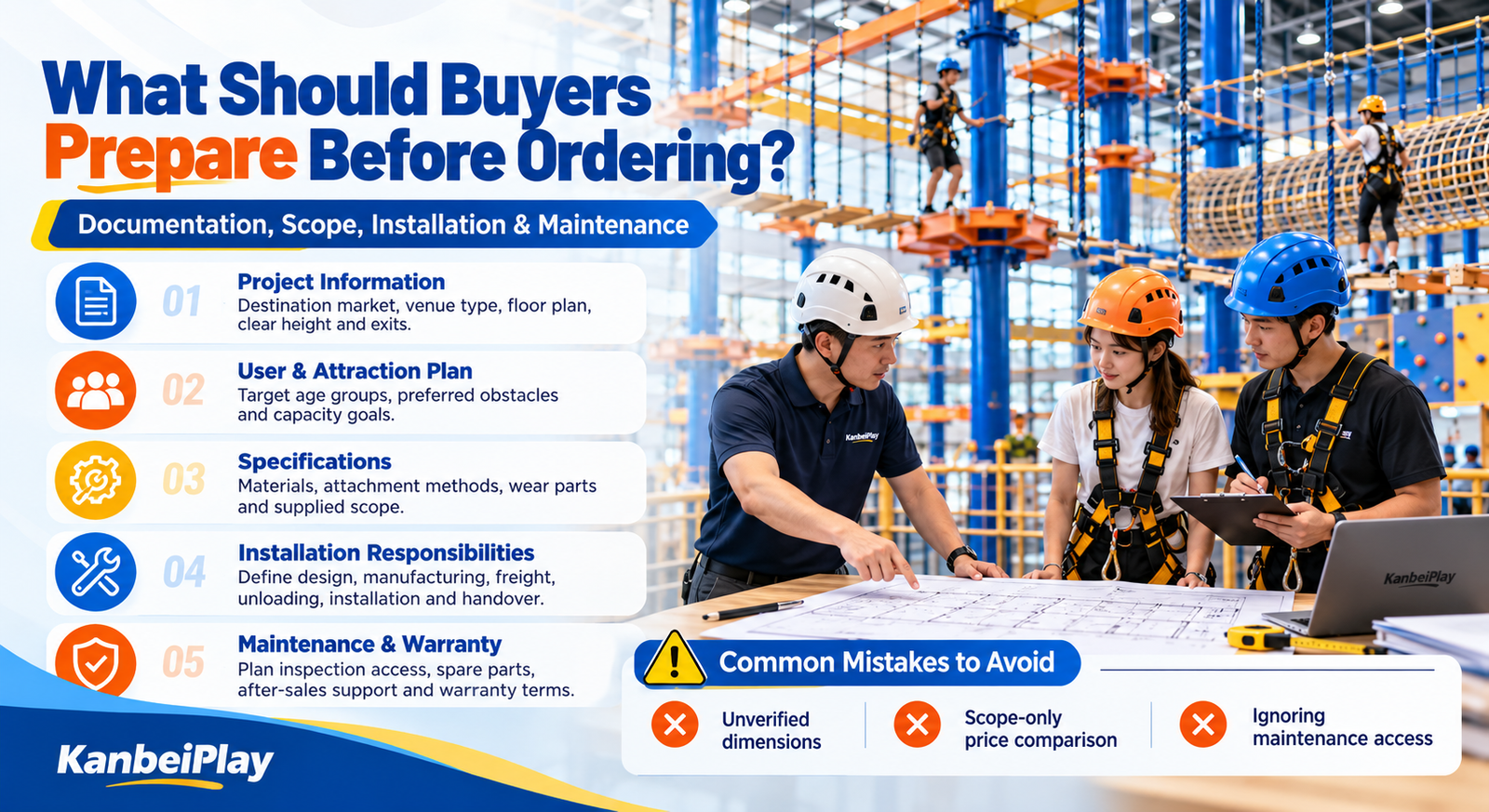
supplier cannot give you an accurate quote without information. Send these five things, and you will get a useful number back.
Floor plan: For your floor plan, you may provide a CAD file, a measured sketch, or even clear photos marked with dimensions. Suppliers need to know the shape of your space, as well as the positions of columns, doors, and windows. All these details will affect the layout and equipment fit.
Height: Ceiling height matters a lot. Tall play structures require a minimum clear height of 34 meters. If your ceiling is relatively low, suppliers will need to design around this restriction. Please share the clear vertical measurement from the floor to the ceiling, or down to the lowest obstructions such as light fixtures or sprinkler heads.
Country: Your country determines shipping costs, import duties, safety standards, and sometimes the equipment design itself. A project in the United States needs ASTM-compliant equipment. European projects must meet the EN1176 standard. Projects in the Middle East may need heat-resistant materials.
Age: Define your target audience: toddlers aged 1-3, young kids aged 3-8, older children aged 8-12, or a mixed-age group? Equipment selection varies for different age brackets. Toddler zones work well with low-profile structures and soft toys, while older children tend to enjoy climbing features, fast slides, and obstacle challenge courses.
Opening date: Set your target opening date. This timeline tells suppliers how much time they have for design, production, shipping and installation. If you are on a tight schedule, the supplier will need to prioritise your order, which may affect the final price.

You only purchase the playground equipment. You need to coordinate shipping, installation, and layout by yourself. This method saves your upfront cost, yet it adds a heavy workload for project management. A turnkey solution covers design through installation by the supplier. Though pricier, it saves your time and coordination work. Kanbei Play provides both options to match your indoor playground budget.
According to Kanbei’s cost breakdown, projects can start at just 500 sq ft (around 46 sqm). This area fits a compact modular structure, a ball pit and a toddler zone. It cannot serve large crowds or hold multiple attractions. But it works perfectly as an add-on facility for cafes and small community indoor playgrounds.
Yes. Many investors build a core playground first and add extra attractions once revenue comes in. The most effective phased plan accounts for future expansion at the design stage: reserve extra space, plan power connections and keep flexible visitor flow. Discuss your phased schedule with the supplier before confirming your first order and final startup costs.
Shipping depends on volume, weight, destination and real-time freight rates. According to Kanbei, shipping costs $3,000 for a 500-sq-ft project and $6,000 including duties for 1,000 sq ft. Larger spaces cost more. Equipment prices exclude delivery, so request a separate shipping quote.
Small playgrounds (500–1,000 sq ft): 3–7 days
Medium-size sites (1,000–3,000 sq ft): 1–2 weeks
Large family entertainment centres: 3–4 weeks or longer, based on complexity
Custom themed builds take more time than standard modular setups. These timelines only cover on-site assembly, excluding production and shipping.
How much does it cost to open an indoor playground? It depends on your space, equipment, and local market-and you now have a framework to work with. Separate costs for equipment, site, shipping, and installation. Plan for hidden expenses. Match your space size to your budget, and control spending via prioritization and phased build-outs.
Kanbei Play benchmarks: $100k for small venues, $300k for medium sites, $1M for large FECs (total project cost, not equipment-only). Get region-specific equipment estimates. Send your floor plan and opening date for a no-obligation custom quote: https://www.kanbeiplay.com/.
Quick Answer Running an Indoor Adventure Park? You will need Indoor Climbing Equipment and different kinds of Adventure Play features.
Quick Answer Before working with an indoor playground manufacturer, prepare a measured floor plan, clear ceiling height, target age range,
Thank you very much for your inquiry! Your trust is our greatest motivation. We are committed to offering playgrounds that combine high quality with affordable pricing. Let us bring vitality to your venue!