
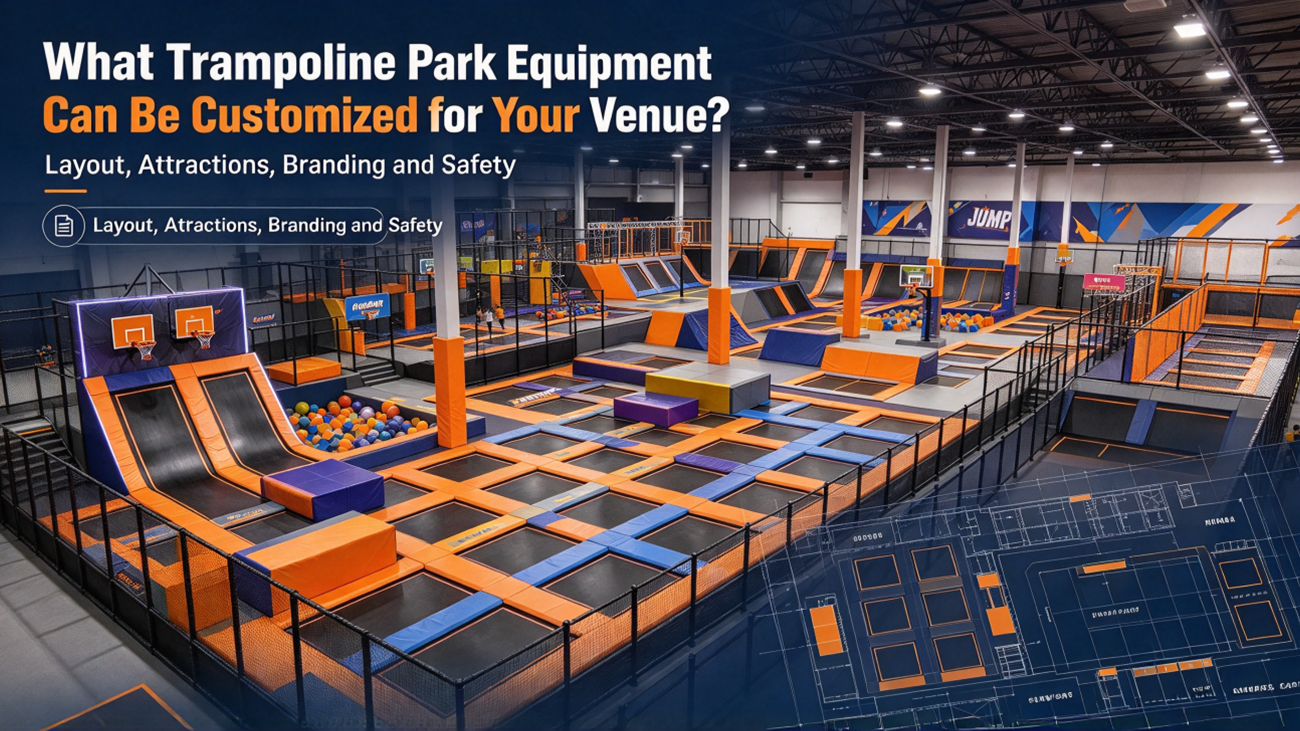
What Trampoline Park Equipment Can Be Customized for Your Venue?
Quick Answer If you are planning an indoor trampoline park, one of the biggest advantages of working with a professional

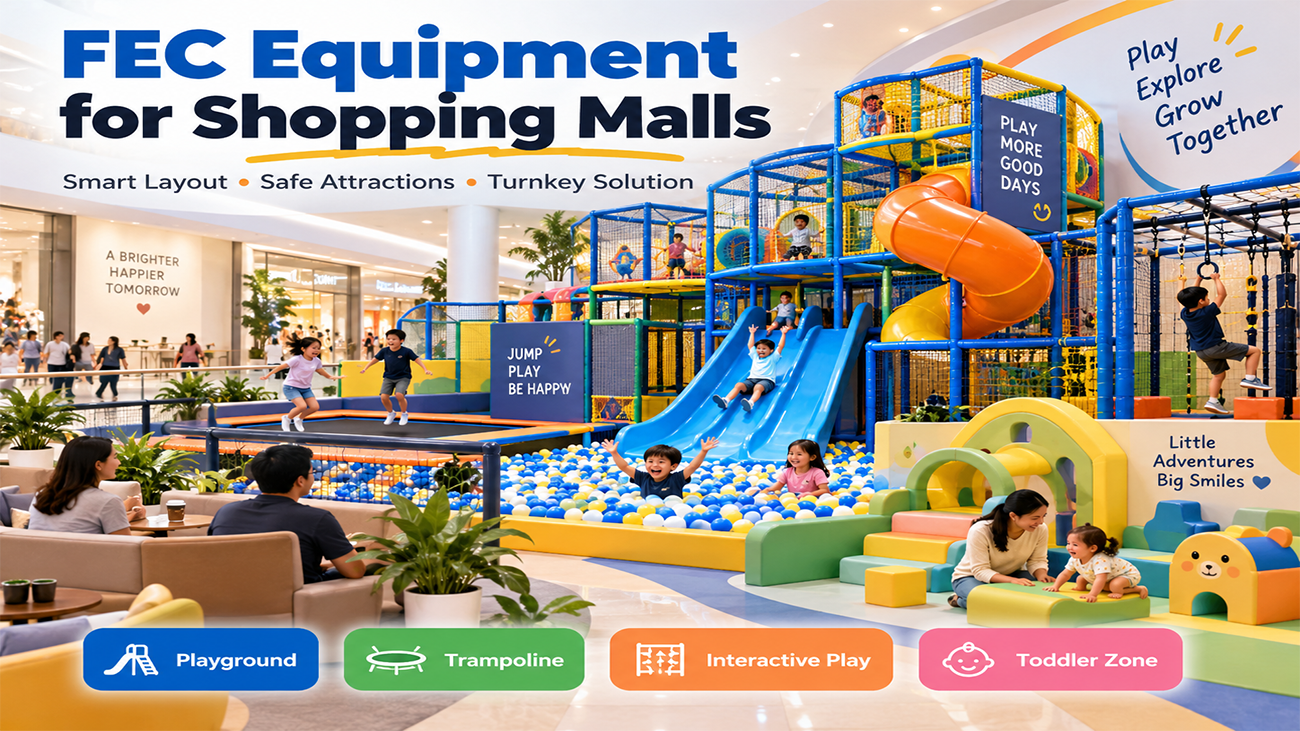
Table of Contents
Toggle
Choose family entertainment center equipment around the mall’s intended audience, measured space, access restrictions and operating plan. Compare activity roles, supervision, maintenance access and the quoted supply scope before ordering. Equipment choice alone does not guarantee visitor spending, profitability or approval of the venue.
Today’s shopping malls are no longer simple places for shopping. They have turned into all‑in‑one leisure‑lifestyle destinations. Online shopping hits offline retail hard. Traditional malls struggle with fierce competition and falling foot traffic. Building a Family Entertainment Center stands as one of the best ways for malls to improve business and gain an edge over rivals.
An FEC may complement a mall’s retail, dining and leisure mix. Assess local demand, footfall patterns, staffing, rent and operating costs before selecting activities. Dwell time, repeat visits and financial performance vary by venue and should be evaluated using actual project data.
Mall FECs differ from outdoor parks and standalone entertainment venues. They face stricter limits on space, noise, and crowd density. The best mall FEC equipment is compact, safe, quiet, and suitable for all ages. It fits busy commercial environments perfectly. Below are the most practical equipment types for shopping mall FECs.
Custom commercial playground equipment forms the core of any shopping mall FEC. It fits all-age family play and meets formal commercial safety standards. Common options include themed soft play structures, slides, ball pits, interactive panels, and safety fences. Its modular design works well for both regular and irregular empty spaces inside malls.
All playground materials use fire-resistant, anti-collision, and eco-friendly formulas to satisfy mall fire and safety rules. Operators can choose ocean, forest, cartoon, and other popular themes. The attractive play areas become viral parent-child check-in spots and drive natural word-of-mouth promotion for malls.
Trampoline and ninja courses are extremely popular active attractions for mall FECs. They mainly serve teenagers and young parents. Standard commercial trampoline sets include free-jump zones, dodgeball courts, dunk trampolines, and sponge pits. Built-in buffer and safety systems fully protect players during active workouts.
Ninja obstacle equipment comes with balance beams, climbing ropes, swing barriers, and professional fitness challenge tracks. It focuses on fun interaction and positive competition among players. As space‑saving yet high‑profit family entertainment center equipment, it works perfectly for FEC zones in medium‑to‑large shopping malls.
Indoor climbing and interactive devices are high-end upgrades for modern mall FECs. Simulated climbing walls, bouldering zones, and vertical challenge towers come with multi-level difficulty settings. They safely serve kids, teens, and adults to achieve full age-group coverage. Interactive attractions include VR devices, projection games, luminous floor games, and redemption machines. They combine technology and fun to break the limits of traditional physical play. This practical family entertainment center equipment runs quietly, saves space, and attracts young shoppers without disturbing neighboring mall stores.
Plan activity zones around the intended users and the documented use conditions of the proposed equipment. Separate younger-user areas from faster or more demanding activities where required by the layout and operating plan. Padding and barriers do not eliminate all risks or replace supervision and inspection.
Family‑oriented play equipment encourages cooperation and interactive games between parents and kids. This line of family entertainment center equipment creates a warm, safe, and relaxing play environment. It not only meets families’ core need for quality bonding, but also greatly improves customer satisfaction and return visits.
Equipment selection determines an FEC’s safety, user experience, and overall profits. Unlike regular indoor playgrounds, mall family entertainment center equipment must match customer groups, space limits, and mall management rules. Here are three key selection factors for mall investors.
First, figure out the core visitors of your mall. Community malls near residential areas should focus on simple and safe parent‑child play projects. Proper commercial playground equipment matches local family spending habits. It keeps steady daily foot traffic.
High-end comprehensive malls need premium customized FEC gear. Themed play scenes create exclusive high-quality experiences. The venue supports private birthday parties and group events. It provides high-value services and builds obvious market differentiation
Use the measured usable area to compare possible attraction mixes. Reserve circulation, reception, queuing, parent seating, staff and service access before allocating equipment footprints. A general area band is not enough to select a complete FEC configuration.
Record usable clear height below beams, ducts and other obstructions for each zone. Confirm activity clearances, structural conditions and access against the selected equipment drawings and the site review; do not assume one height range fits every slide, climbing feature or play structure.
Shopping malls enforce strict rules on noise, building load, and fire safety. When choosing family entertainment center equipment, always pick low-noise and low-vibration models. Avoid high-impact sports devices that create continuous noise and disturb surrounding stores and public areas. For building safety, pick lightweight yet sturdy commercial equipment. It must meet the mall’s floor‑load standards. Avoid extra‑large heavy units that put too much stress on the building structure. Every product needs to pass official commercial safety and fire tests. Eco‑friendly, fire‑resistant materials guarantee stable long‑term operation.
Reasonable zone layout helps mall FECs run more efficiently. It optimizes visitor routes, avoids functional conflicts, and simplifies daily management. A standard mall Family Entertainment Center adopts modular zoning with four core functional areas.
The entrance and reception area serves as the FEC’s front desk and ticket hub. It sits close to the mall’s main walkways with an open layout. This zone handles ticket checking, membership registration, top-ups, and customer consultation. Clear signage and rest seats help guide customer flow and streamline management.
The main attraction zone occupies the largest venue area and drives core profits. It features high-popularity commercial playground equipment, themed play sets, trampoline zones, climbing walls, and game redemption machines. This area delivers the main play experience and effectively extends customer stay time.
Separate quiet toddler zones and dynamic active zones to avoid interference. The enclosed toddler zone offers a safe environment for young kids’ puzzle play and leisure. The active zone hosts trampolines, obstacle courses, and VR games for teens and young adults. This scientific layout improves family entertainment center equipment efficiency and overall visitor comfort.
Supporting zones greatly improve FEC profitability. Parent rest areas provide seats, charging stations, and viewing platforms for guardians. Independent party zones support birthday celebrations, group activities, and team building. They perfectly complement diverse family entertainment center equipment for full-scene services.
On-site F&B stations offer light meals, drinks, and snacks. They create a one-stop “play + rest + dining” experience for visitors and bring steady extra income for the FEC.

Smart equipment matching and operation strategies help FECs build multiple profit channels and break reliance on single ticket sales. Professional family entertainment center equipment supports three major sustainable revenue streams for mall operators.
Ticket sales form the basic FEC revenue source. Flexible ticket types, including single entry, parent-child packages, and all-day passes, serve casual visitors. Well-configured commercial playground equipment supports membership plans such as monthly, quarterly, annual, and family cards to lock in repeat customers and stable cash flow.
Assess membership pricing, redemption rules, demand and delivery costs before relying on it as a revenue source.
Versatile family entertainment center equipment adapts to customized party and event scenarios. FEC venues can host kids’ birthday parties, school group visits, mall theme activities, and corporate team building. Assess event pricing and staffing, catering, cleaning and setup costs using your own operating assumptions.
Tailor-made event set-ups and standardized service procedures draw extra guests in quiet periods. This strategy brings in more traffic on slow weekdays. It makes up for lost income during off-peak seasons.
Premium paid attractions are key to raising per-customer spending. VR experiences, advanced climbing challenges, and exclusive games paired with standard commercial playground equipment upgrade the overall play value. Combined with F&B and retail sales, they form a complete consumption loop.
Visitors naturally spend on food and merchandise during their visit. FECs also drive traffic to surrounding mall stores and lift overall commercial performance.
To get an accurate, well-fitted family entertainment center equipment solution, mall buyers must provide detailed site information to suppliers. Clear project data avoids design errors and rework. Below are all the key details you need to submit.
Floor plan: Submit complete venue floor maps with exact area size and internal layout. It helps suppliers design precise equipment placement and functional zoning.
Ceiling height: Provide accurate height data for every zone. Mark low-height restricted areas to ensure all equipment fits spatial limits.
Columns: Mark all load-bearing columns with exact size and position. Designers can avoid column obstacles and make full use of fragmented space.
Entrances and exits: Mark the entry points, public walkways, and fire exits clearly. The responsible project parties should review evacuation and building requirements for the actual site; marking exits on a plan alone does not establish approval.
Target customers: Define your main visitor groups, age range, and consumption habits clearly. This helps suppliers match suitable equipment and gameplay styles.
Landlord requirements: Sort out mall rules for decoration, installation, noise control, and fire protection. Ensure the entire project meets mall access standards.
Budget: Offer a clear budget range. Suppliers can optimize equipment combinations to deliver cost-effective customized solutions.
Opening date: Confirm your expected opening schedule. It helps suppliers arrange design, production, shipping, and installation and identify dependencies such as design approval, transport, customs and site readiness.
A coordinated proposal may include design, equipment manufacturing, freight and installation support. Confirm each included item, exclusion, handover point and responsibility in writing. The term “turnkey” does not automatically include landlord works, utilities, local labor, inspections or opening preparations.
The design team first creates a 2D floor layout based on your site data and demands. It optimizes equipment placement, visitor routes, and functional zones. After plan confirmation, designers produce 3D renderings to show the final venue effect. All details are adjusted to fit mall rules and business needs before family entertainment center equipment production.
Manufacturing should follow the approved drawing revision, equipment list and agreed material specifications. Request traceable inspection records and applicable test documents for the ordered equipment, and confirm their scope. Equipment documentation and local mall or building approvals need separate checks.
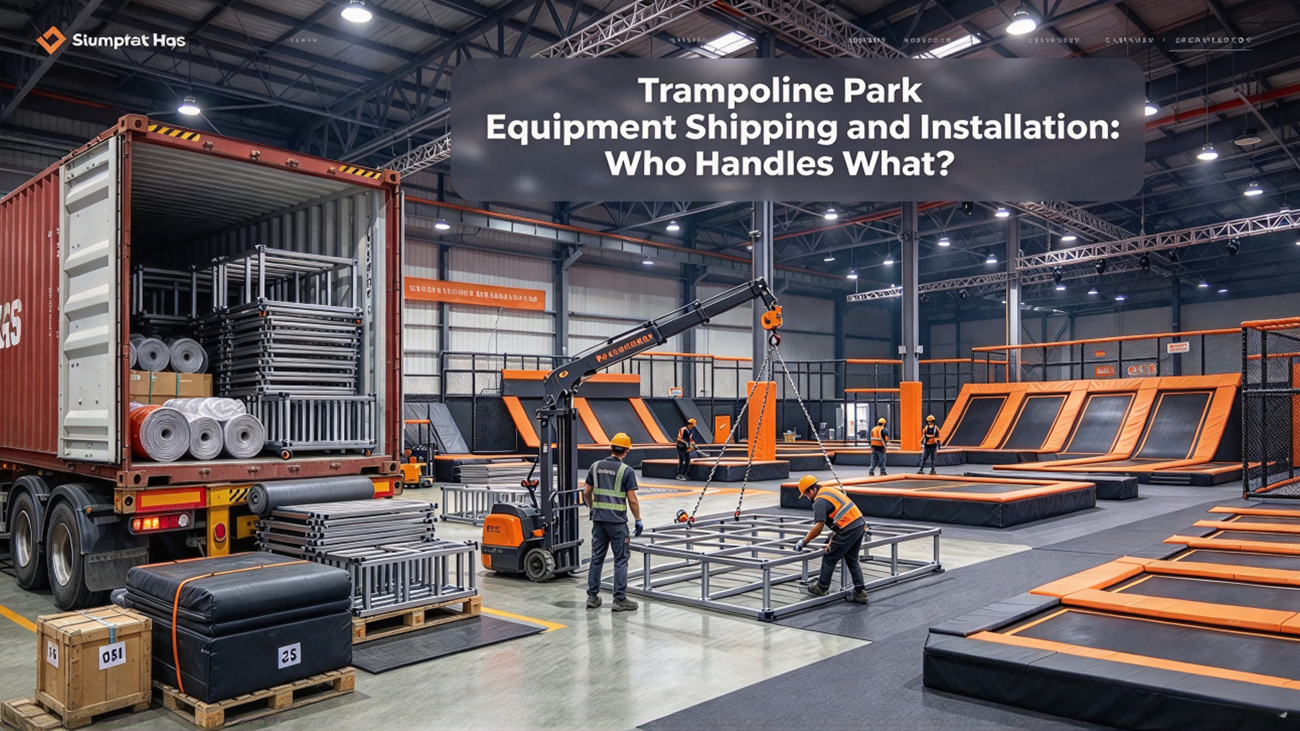
Confirm packing, freight, customs, taxes, unloading and storage responsibilities before dispatch. Specify on-site assembly or remote support, local labor, lifting equipment, tools, mall access hours and site preparation. Agree handover checks and operating or maintenance documents, and confirm local inspections and opening readiness separately.

The best mall FEC mixes safe and compact commercial playground equipment, trampoline zones, climbing walls, and interactive games. This all-age combination suits high-traffic mall environments and delivers balanced fun for every Family Entertainment Center.
Space requirements depend on the selected attractions, usable clear height, access, circulation, reception and operating areas. Use a measured plan and equipment drawings; a general floor-area band does not establish that a complete FEC will fit.
Prices for family entertainment center equipment depend on size, types, and customization levels. Basic small setups have low entry costs. Fully themed, well-equipped mall FEC projects require a larger investment budget.
Yes, mainstream commercial playground equipment supports full customization in themes, sizes, and functions. Custom designs match mall styles perfectly and greatly improve the uniqueness of your Family Entertainment Center.
An irregular space may support a suitable attraction mix, subject to a measured layout and review of columns, clearances, entrances, exits, supervision and service access. Confirm feasibility before ordering equipment.
Plan a shopping mall FEC around its intended users, measured site conditions and operating budget. Compare equipment functions, documented use conditions, maintenance access and the agreed delivery scope. Validate business assumptions using actual local data.
Discuss your floor plan, usable clear heights, target users, budget and opening schedule with KanbeiPlay. Confirm the proposed equipment list, design revisions, freight, installation support, local works, handover documents and after-sales scope in writing. You can contact the team through KanbeiPlay.
Quick Answer If you are planning an indoor trampoline park, one of the biggest advantages of working with a professional
Planning a commercial indoor playground involves more than picking equipment. Once your design is approved and production is finished, two
Thank you very much for your inquiry! Your trust is our greatest motivation. We are committed to offering playgrounds that combine high quality with affordable pricing. Let us bring vitality to your venue!