
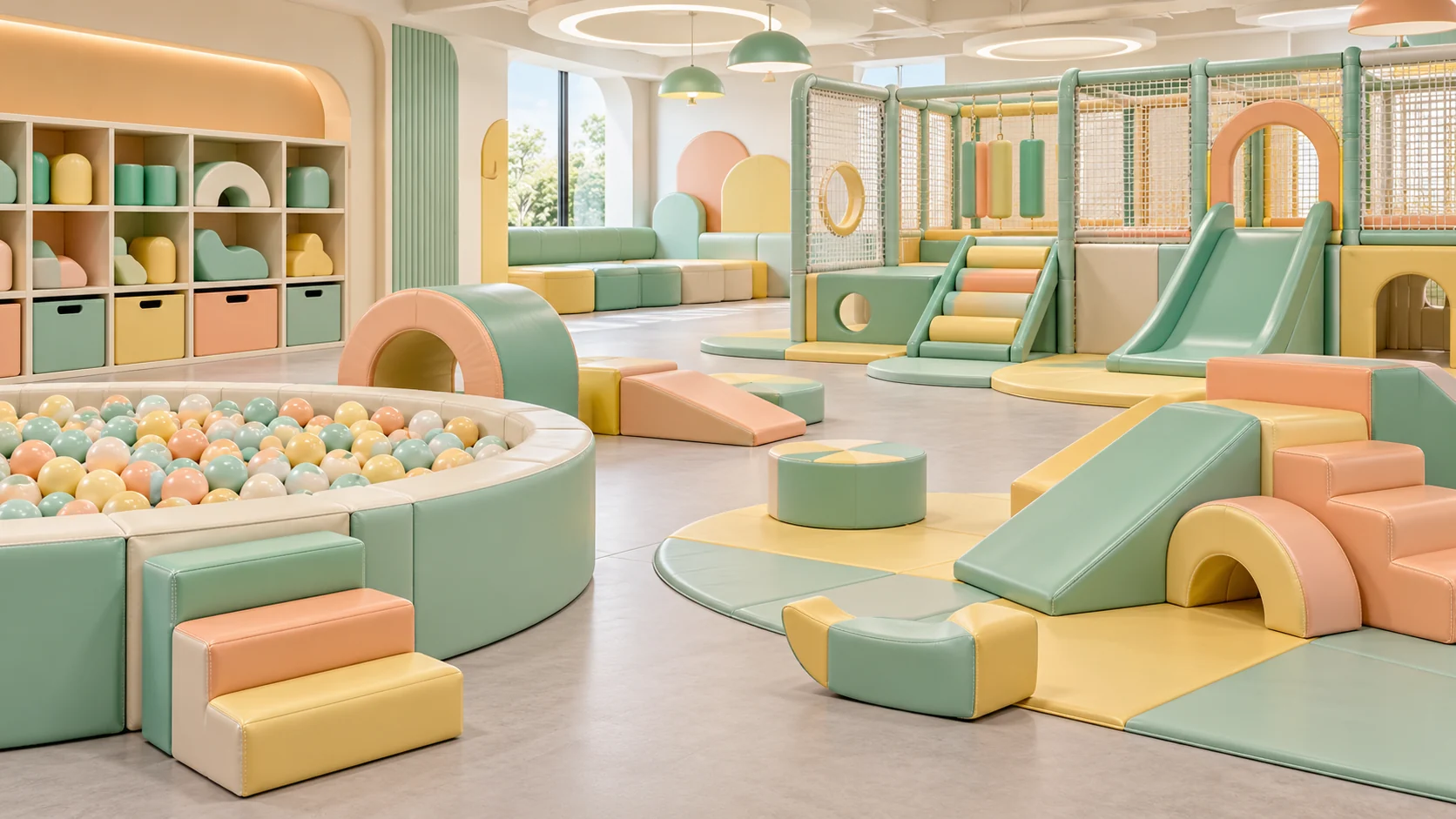
Soft Play Equipment Maintenance: What Should Buyers Confirm About Cleaning and Replacement Parts?
Quick Answer Before ordering soft play equipment, confirm the cleaning instructions for the supplied materials, access to areas that need

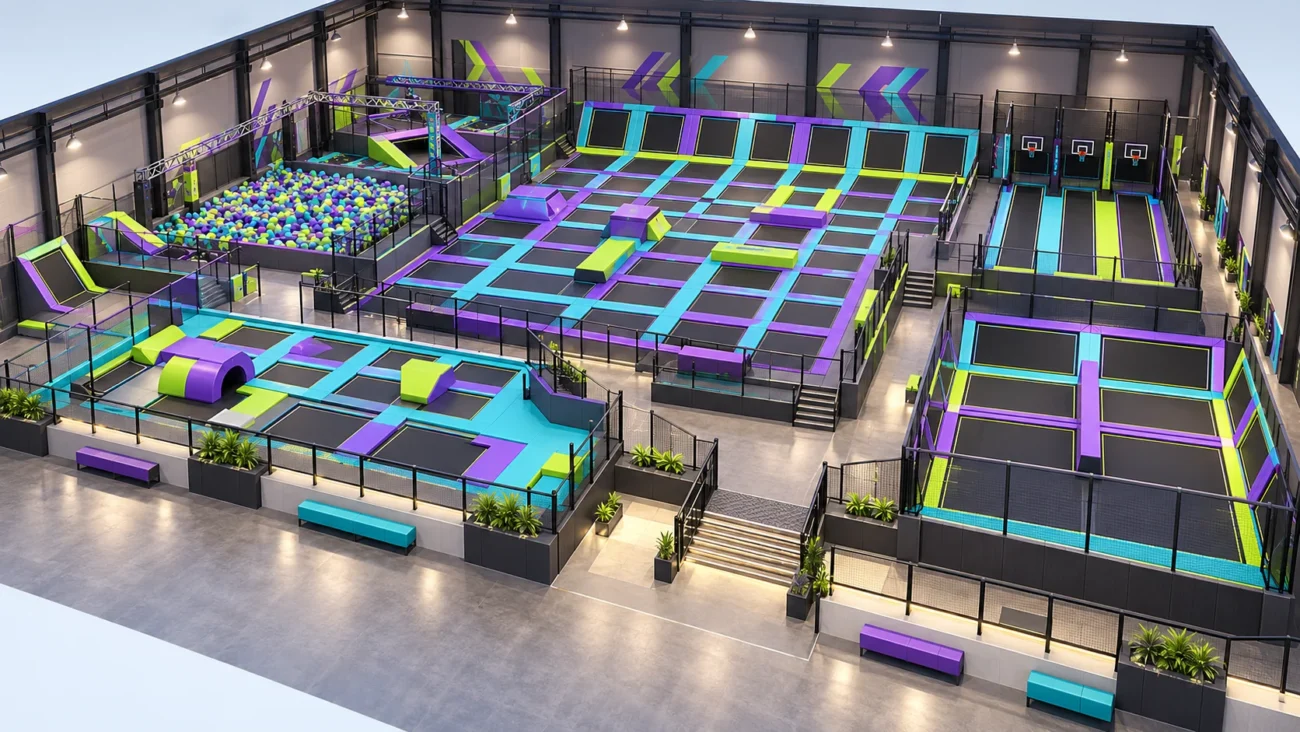
Choose indoor trampoline park equipment around the usable building envelope, intended users and operating plan. Start with measured dimensions, clear height, columns and access constraints, then compare activity combinations with the required circulation, waiting and support areas included.
The strongest layout is not necessarily the one showing the most attractions. Each activity needs a defined role in the venue and equipment-specific space requirements. KanbeiPlay offers trampoline park equipment and custom design discussions; buyers should ask for a proposal that explains how the selected mix fits the actual site rather than relying on total floor area alone.
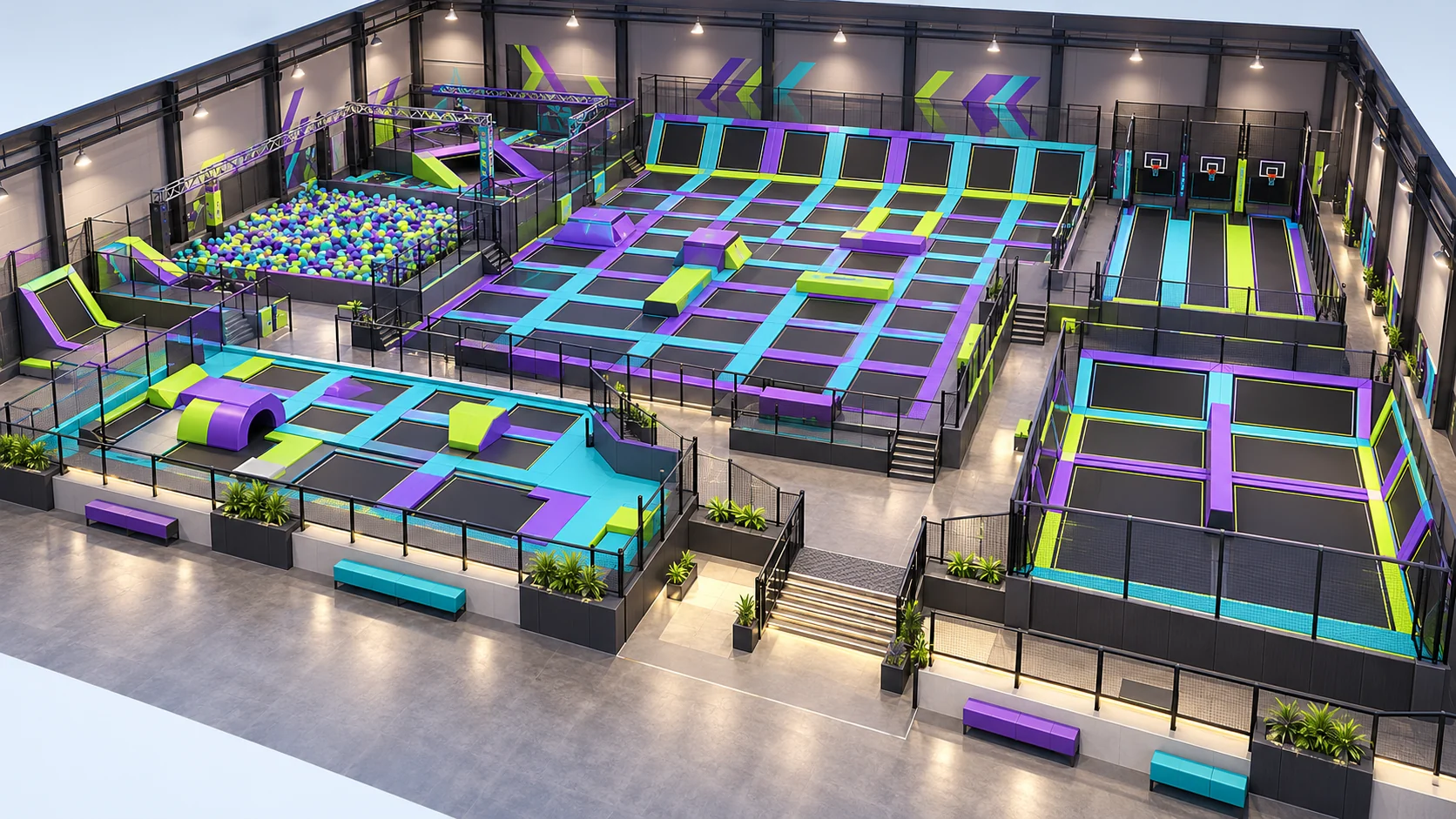
Separate the leased area from the space available for equipment. Reception, circulation, storage, seating and other functions may occupy part of the building, depending on the operating model.
Provide a measured plan showing columns, fixed services and access points. Ask for overhead obstructions to be considered where relevant. A single ceiling-height figure may conceal differences across the room.
Keep the original building information alongside the proposed layout. This allows buyers to see which parts of the plan come from confirmed measurements and which depend on unresolved assumptions. Confirm important site details before final equipment approval.
Define the intended audience before choosing attractions. A family venue serving different age groups has different planning questions from a venue centered on older participants or organized group visits.
Ask how the proposed layout distinguishes activities with different user requirements. Review the selected equipment’s intended users and operating limits, rather than assuming all attractions suit everyone admitted to the venue.
Consider accompanying visitors as well. Waiting, observation and movement between activities affect how the venue functions. The equipment footprint should not be the only area visible in the planning discussion.
Create a short activity brief: what should the core experience be, which attractions are essential and which are optional? This helps suppliers explain trade-offs when space or budget is limited.
Use KanbeiPlay’s indoor trampoline park equipment category to begin an activity discussion. Request confirmation of the options suitable for the selected venue, including their dimensions and relevant supporting requirements.
Avoid adding attractions only because they appear in a reference image. A useful mix gives each activity a purpose, such as a different participation style or a clearly defined user group. The supplier should explain what changes when an option is removed or replaced.
Ask for alternatives based on the same site information. This makes it possible to compare the consequences of prioritizing a particular attraction, retaining more circulation or simplifying the equipment mix.
| Layout decision | What to compare |
|---|---|
| Main attraction | Its footprint and relationship with other zones |
| User groups | How different requirements are accommodated |
| Circulation | Routes between entrance, activities and support areas |
| Waiting areas | Where people gather before participation |
| Visibility | What the operating team needs to observe |
| Future changes | How a different activity would affect the arrangement |
For example, one concept might emphasize a central jumping area while another allocates more space to distinct attractions. Evaluate the complete arrangements, not just the attraction count. Do not assign a capacity figure unless it has a defined, project-specific basis.
Discuss how visitors enter activities, wait, leave and move to the next zone. Where instructions, equipment preparation or controlled entry are needed, include those functions in the layout discussion.
Ask what supervision and operating information is associated with each proposed attraction. The staffing plan belongs to the venue’s operating preparation and should not be inferred from a rendering alone.
Maintenance access matters too. Buyers should understand how relevant components can be reached and whether work on one attraction affects nearby areas. These questions may influence the equipment combination even when the initial layout appears visually complete.
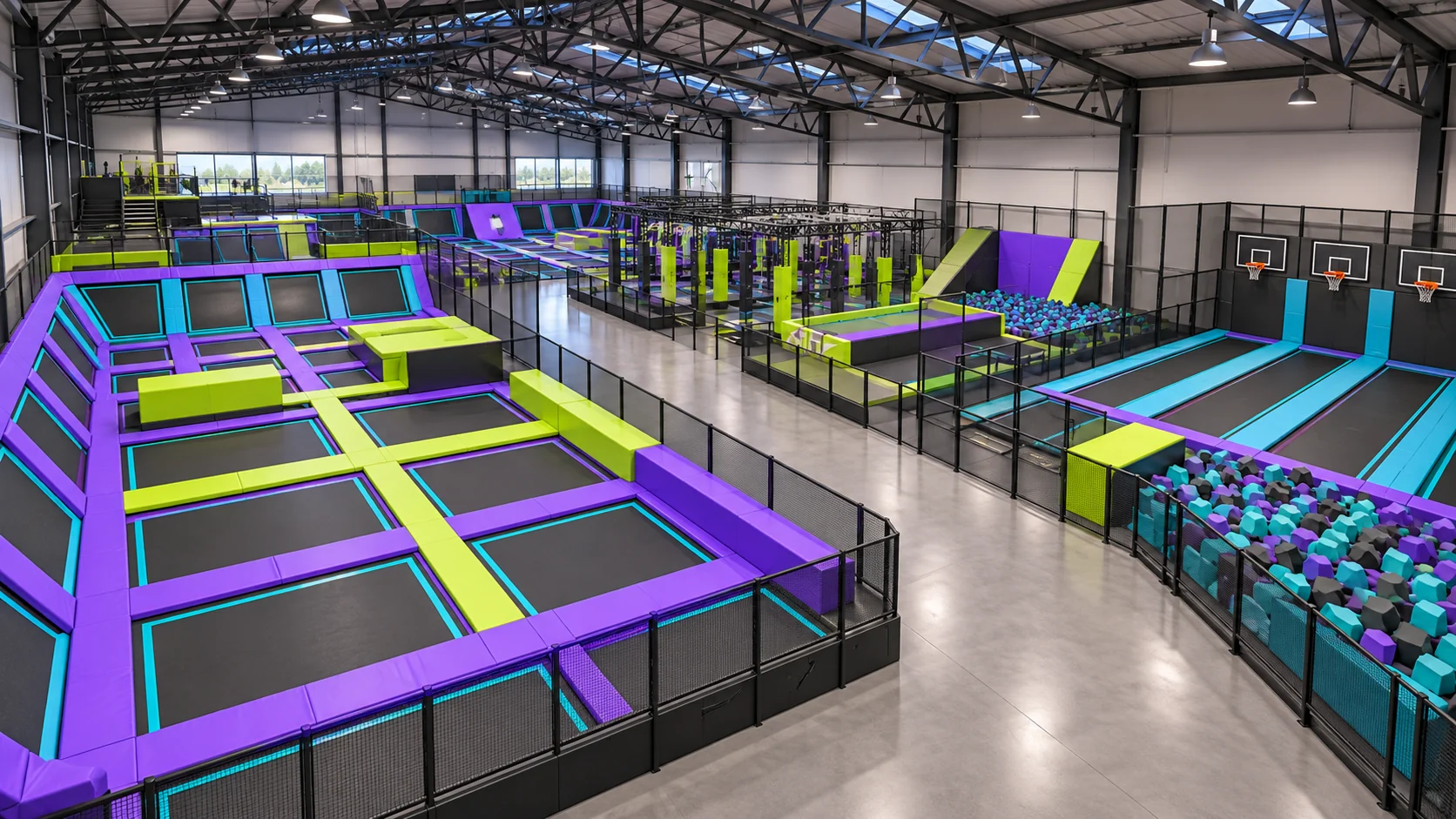
Separate essential activities from optional additions before requesting revisions. A supplier can then explain how a smaller or different package changes the equipment list and associated services.
Compare alternatives using the same cost boundaries: equipment, design, packing, transport, installation support and relevant local work. A lower equipment total does not automatically produce a lower overall project cost.
If future expansion is important, ask which assumptions need to be considered now. Do not assume that every attraction can be added later without changing the existing layout or support arrangements. Record the selected option and outstanding decisions before approving production.
Provide a dimensioned floor plan, clear heights, columns, overhead obstructions, entrances and fixed building features. Describe the target users, expected visit format, essential attractions, supporting facilities and budget range. Include the project country, intended opening period and installation expectations. Add reference images as inspiration, while identifying which features are priorities rather than confirmed specifications.
When reviewing the proposed activity mix, the ASTM F2970 trampoline court standard provides a reference for discussions about trampoline courts. Ask the responsible project parties which requirements apply to the selected equipment and venue.
It needs a site-specific review. Share the dimensions, obstructions and clear heights so the supplier can explain feasible equipment arrangements and limitations.
Compare practical alternatives rather than applying a universal rule. The selected equipment requirements and supporting spaces determine what fits the venue.
Confirm the intended users and operating limits of each selected attraction. The admission policy alone does not establish equipment suitability.
Request equipment-specific requirements and review them against measured site conditions. Do not apply one height figure to every trampoline attraction.
Yes, subject to agreement. Update the layout, equipment schedule and price together, and confirm any consequences before approval.
An indoor trampoline park equipment mix should explain how the venue will work, not simply how many attractions can be drawn inside it. Site conditions, intended users and operating needs should guide the final choice.
For a KanbeiPlay layout discussion, send your floor plan and activity priorities. Include clear heights, user groups, budget and the support spaces you need so the proposed equipment mix reflects the whole venue.
Quick Answer Before ordering soft play equipment, confirm the cleaning instructions for the supplied materials, access to areas that need
Quick Answer Compare commercial indoor playground equipment proposals in two connected parts: how the layout serves the venue, and what