
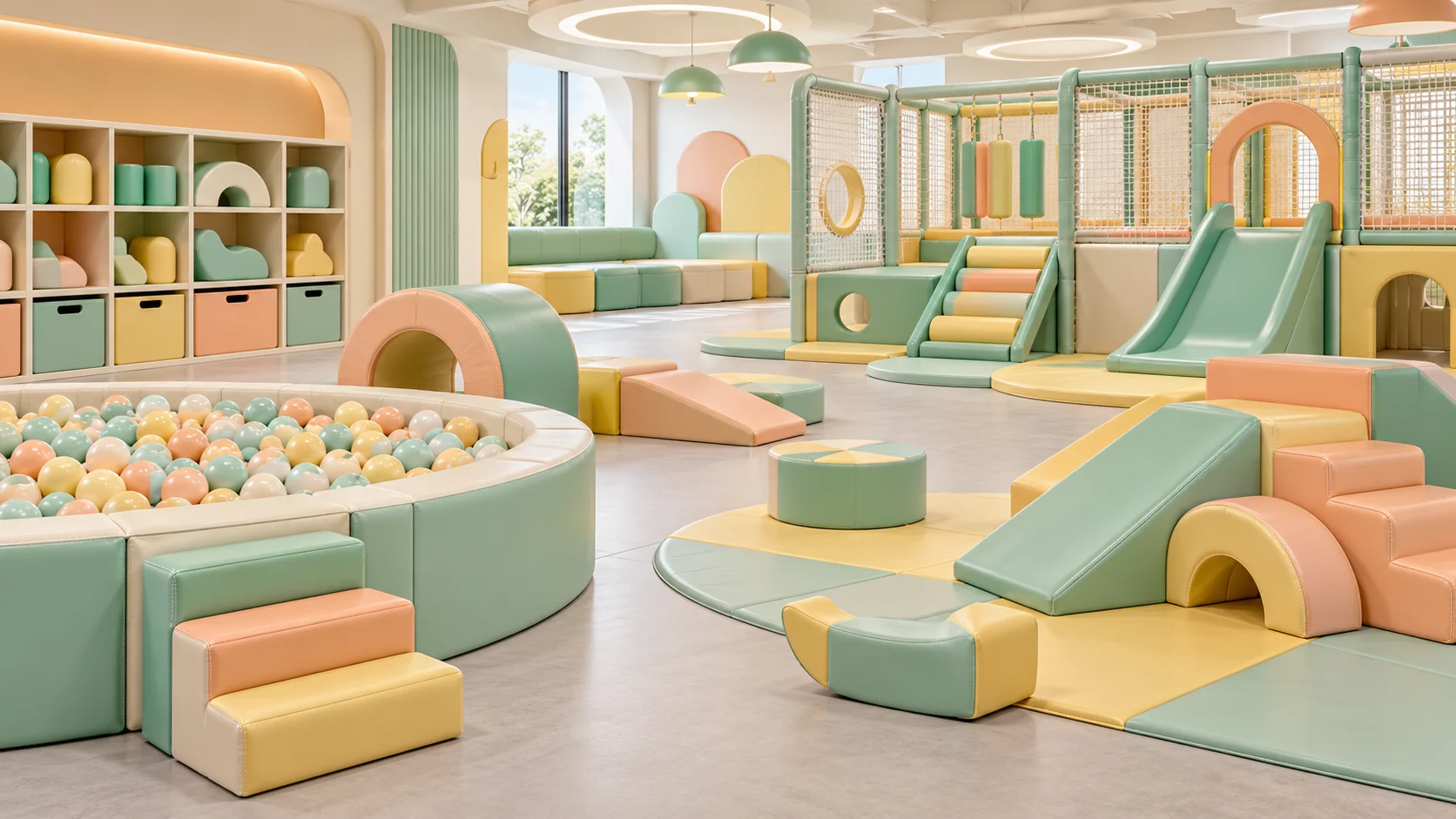
Soft Play Equipment Maintenance: What Should Buyers Confirm About Cleaning and Replacement Parts?
Quick Answer Before ordering soft play equipment, confirm the cleaning instructions for the supplied materials, access to areas that need

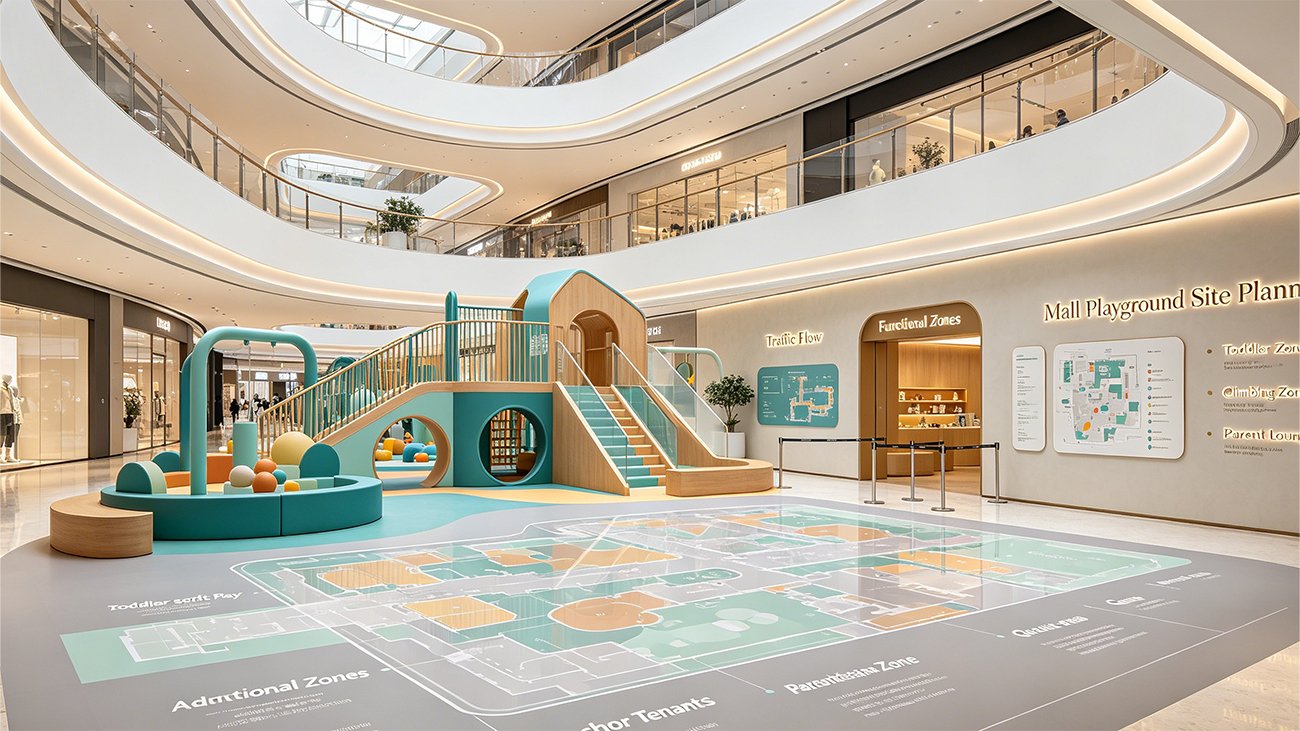
Table of Contents
ToggleIn 2026, the experience economy will become mainstream, and the competitiveness of the simple retail business will be insufficient. Commercial Indoor Playground is a key support for shopping malls to retain family customers, and it is also a rigid demand project to optimize the business structure.
Shopping Mall Playground belongs to the core plate of Family Entertainment Center (FEC), which can continuously attract parent-child customers, radiate on-site catering and retail stores, and drive the popularity and consumption of the whole store.
At present, consumers are no longer just shopping in the mall, but also value immersive leisure experiences. The market's demand for mature and complete Indoor Playground Design continues to rise.
The transformation of physical shopping malls into an experience has become a trend, and Family Entertainment Center(FEC)has become the standard section of shopping malls. As the core carrier of FEC, Commercial Indoor Playground has expanded its market scale year by year, becoming a plus for the competition of shopping malls.
Shopping Mall Playground is safe and fully equipped, not limited by rain, snow, or hot weather. Parents can complete shopping and walking their children at the same time. The one-stop demand perfectly fits the family's travel habits.
The perfect Indoor Playground Design can retain family customers and greatly extend the stay time of customers. Visiting stores for a long time will drive catering, mother and baby retail, and other joint consumption, which will effectively increase the overall turnover of the mall.
There are obvious differences in the play needs of children of different ages, and it is necessary to accurately divide the customer group for differentiated design in the early stage.
Classification of customer groups | Age group | Design focus |
Toddlers | 0–3 years old | All-soft low facilities, no dangerous edges, focus on sensory appeasement |
Kids | 3–12 years old | Climbing and breakthrough interactive equipment, focusing on the fun of sports exploration |
Family users | All ages | Add a rest and punching area to accompany parents to experience |
The location directly determines the passenger flow of the amusement park, and priority is given to the active area of the mall. Close to cinemas, food courts, and other main tenants, the high-visual + high-compass area can continue to accommodate the overflow of people.
Commercial Indoor Playground investment is divided into two core costs: equipment and design and construction. Split various expenses in advance, calculate the income in combination with the site's estimate of passenger flow, and formulate clear and reasonable ROI expectations.

Professional Playground Layout Design adheres to static and dynamic zoning to avoid children of different ages from interfering with each other. It is divided into four independent plates: children's soft play area, adventure climbing area, LED interactive area, and parents' relaxation area, taking into account the needs of play and accompanying.
The site adopts a completely separate mode of access and exit channels to eliminate crowd congestion. Set up a special waiting area to control the number of people in the venue in real time to ensure smooth traffic during peak holidays.
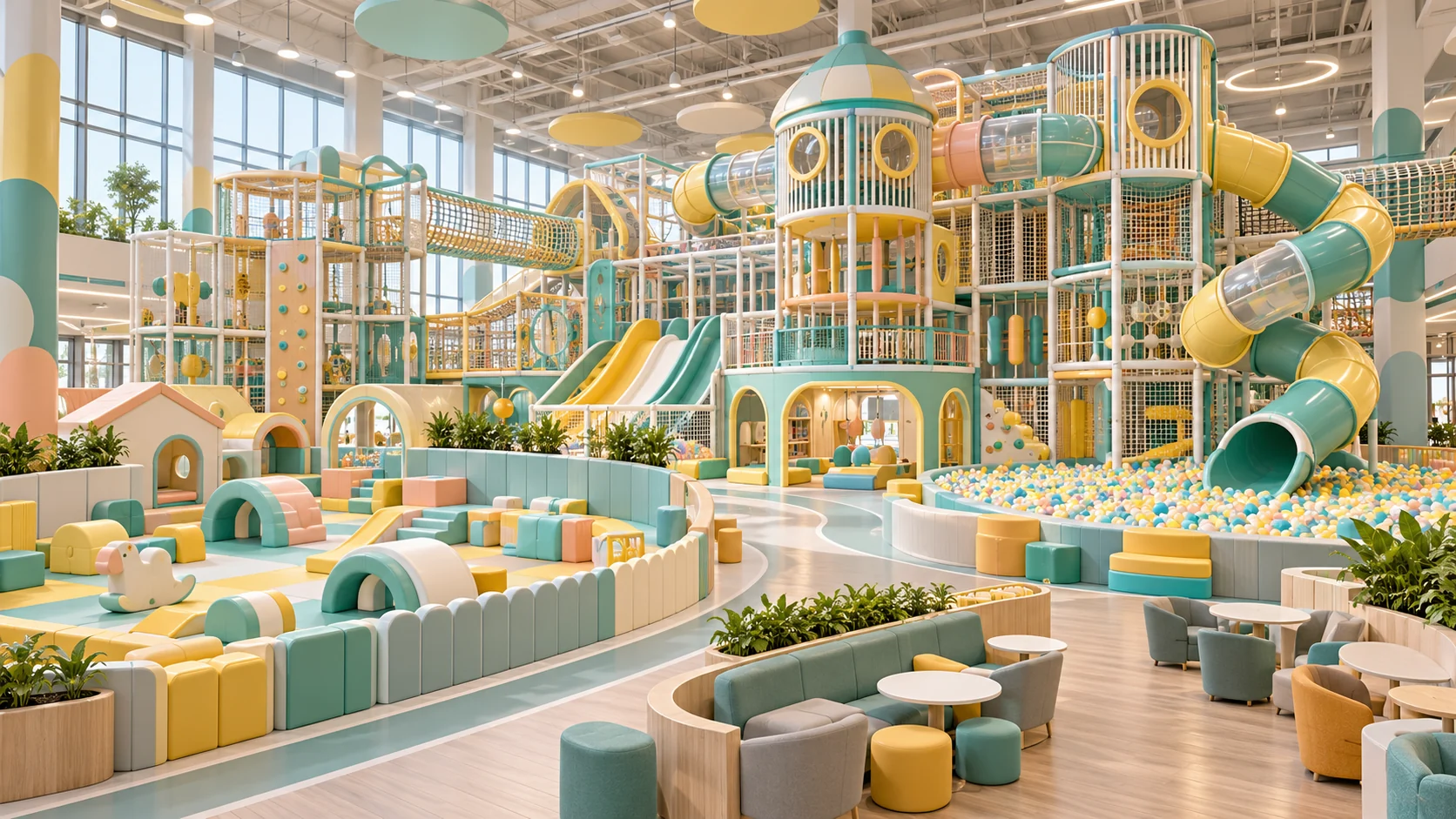
The rental cost of the shopping mall is relatively high, and it is necessary to maximize the three-dimensional space of the site. Multi-layer amusement structure + modular equipment combination, and the layout can be adjusted as needed in the later stage to adapt to the changes in passenger flow in the off-peak season.
The natural theme has a wide audience, and the visuals are fresh and soft, suitable for children of all ages. Jungle and ocean scenes have a strong sense of atmosphere. Taking photos can stimulate customers to spontaneously socialize and share, and divert traffic to the mall for free.
The theme of adventure is more interesting, and the setting of breaking through the level can improve children's willingness to repurchase. The style of the castle, space, and pirate is highly recognizable, which is suitable for the middle and high-end shopping mall playground, which focuses on parent-child check-in.
The theme of edutainment is both fun and educational, which meets the educational needs of modern parents. With STEM puzzle play equipment, it differentiates the gap from ordinary playgrounds.
The digital LED interactive theme is a popular and trendy design at present, which is full of technological sense. Light touch and ground interactive devices can attract teenagers and children, and adapt to the youthful commercial complex.
A light luxury boutique small playground is suitable for high-end boutique shopping malls, taking exquisite niche routes. Reduce the scale of the venue, improve the texture of soft decoration, and combine it with exclusive rest services, focusing on high-net-worth family customers.
The soft package facility is the basic configuration of the site, with the highest safety factor and suitable for young children. Thickened high-density soft materials are selected, which are wear-resistant and resistant to meet the daily high-frequency use needs of shopping malls.
The trampoline area is a popular piece of equipment that can effectively improve the richness of the venue. It is necessary to divide the closed area separately and equip it with a protective net to avoid safety conflicts with the children's area.
LED interactive equipment enhances the scientific and technological characteristics of the venue and creates an immersive play experience. Touch walls, luminous floor mats, and other devices have their own transmission attributes, which make it easy for tourists to take photos and share them.
The climbing adventure facility is designed for older children to exercise physical coordination. With cushioning cushions, strictly control the height of the facility and meet the safety standards of commercial sites.
Inclusive sensory equipment takes into account children with special needs and improves the humanistic temperature of the venue. Rich touch, sound, and light equipment cover a variety of play needs and expand the coverage of the venue.
The full set of Indoor Playground Design must strictly comply with the two international amusement equipment standards of EN1176 and ASTM. All equipment needs to be equipped with compliance inspection reports from the factory to avoid safety disputes in later operation.
Shopping malls are crowded places, and fire protection design is a rigid audit threshold. Reserve a sufficient width emergency passage, and the evacuation sign is clearly visible to ensure the rapid evacuation of people in emergency situations.
The floor, columns, and corners of the whole venue are uniformly laid with an environmentally friendly soft package buffer layer. Use odorless and low-formaldehyde raw materials to eliminate harmful substances from harming children's health.
Set an upper limit on the venue and arrange a special person to patrol and control the passenger flow in real time. Formulate an emergency response process for bumps and falls to reduce the safety hazards of daily operations in a comprehensive way.
Single retail tickets are the basic source of income. Differentiated ticket prices are set on weekdays and holidays to balance the passenger flow gap between deserted weekdays and crowded holidays.
The birthday party package is a high-profit value-added project, with supporting arrangements, small gifts, and exclusive play periods, which greatly increases the consumption amount of a single customer.
The membership system of monthly card, secondary card, and annual card locks in a long-term stable customer source. Combine points to exchange benefits to improve customer stickiness and reduce passenger loss.
Link shopping mall, catering, and mother and baby stores to launch co-branded coupons to realize a dual-directional flow. Small snacks and toy sales areas will be added in the field to expand additional revenue channels.
Limited-time preferential activities will be launched during the winter, summer vacations, and festivals to stimulate the explosion of short-term passenger flow. Update the supporting activities in combination with the theme, and continue to maintain the freshness of the venue.
Family Entertainment Center (FEC)has its own diversion attribute, which can stably attract the usual scarce family customers. It conveys a continuous stream of basic passenger flow for other business forms in the shopping mall.
Parent-child play will lengthen the stay time of customers and break the short stay situation of leaving after shopping. The longer you stay, the higher the probability of additional consumption for customers.
Parents who accompany and wait have enough time to visit the surrounding shops, which can effectively improve the turnover rate of retail and catering. Indirectly increase the overall ping effect of the shopping mall and the rental income of the store.
The mature Commercial Indoor Playground can improve the competitiveness of the shopping mall. It is easier to attract high-quality main merchants to settle in and strengthen the long-term commercial value of the mall.
The well-operated Shopping Mall Playground has a stable cash flow, and the return on the cost of membership and party business is accelerated. Compared with ordinary retail stores, the project recovery cycle is shorter.
The blind stacking of equipment compresses the traffic space, and it is very easy to be crowded during peak hours. Ignoring the dynamic line planning in the early stage will directly reduce the play experience and lose repeat customers.
There is no exclusive theme for copying general equipment, and it is highly homogeneous with the surrounding playgrounds. Lack of memory points, unable to form characteristics, and difficult to attract customers to come, especially.
Only pay attention to the children's play area, ignoring the needs of parents to rest, recharge, and view the scenery. Parents' poor waiting experience will directly reduce the overall family's willingness to repurchase.
Simplify soft packages, reduce fire channels, and choose non-standard, cheap equipment. In the later stage, it faces multiple business risks such as fire rectification, safety accidents, and fines.
The design stage only considers the play function, and does not reserve space for parties, retail, and members to operate. The site function is single, the income channel is narrow, and the return cycle is lengthened.
The first step is to survey the floor height, column spacing, and fire protection conditions of the site on the spot, and count the daily passenger flow of the shopping mall. Judge the scale and positioning of the playground adapted to the venue according to the passenger flow data.
Select the exclusive theme in combination with the overall style of the mall and draw a complete conceptual rendering. Confirm the style compliance with the mall operator in advance to avoid the rework of the later plan.
Complete the playground layout design, divide each functional subdivision, and plan the flow of people. Simultaneously reserve party rooms, parents' rest areas, sales areas, and other profitable supporting spaces.
Choose suitable amusement equipment according to the size of the venue, and give priority to wear-resistant and compliant commercial models. The planned installation period is phased to reduce the loss of passenger flow caused by the closure of the mall.
Formulate a complete profit plan before admission, covering the whole system of ticket price, membership, party, and cross-border linkage. Launch promotional activities synchronously to quickly open up the local parent-child market.
Amune no longer exists independently, and deeply integrates shopping mall catering, cultural creation, and retail to form a one-stop family experience. Create a complete closed loop of family consumption and improve the comprehensive competitiveness of shopping malls.
The intelligent system has become the standard configuration, with online appointments, real-time monitoring of the number of people in the field, and interactive game equipment being fully popularized. Digital management reduces the cost of manual operation.
AI records children's play preferences and pushes adaptive interactive games and activities. Personalized play content enhances the fun and greatly improves the frequency of customers' repurchases.
Physical rides are combined with digital projection and AR interaction, and virtual and real combine to create novel play scenes. Different from the traditional pure software playground, it forms a unique competitive advantage.
Environmentally friendly and recyclable amusement materials and energy-saving LED lights are gradually popularized. The lightweight modular design is convenient for disassembly and transformation, reducing resource waste, and is in line with the development trend of green business.
High-visibility areas by food courts and cinemas suit any Shopping Mall Playground, a key rule of Playground Layout Design.
Well-designed Commercial Indoor Playground as a Family Entertainment Center (FEC) gains stable income and fast ROI.
100–300㎡ for small venues; over 500㎡ for large Shopping Mall Playgrounds during Indoor Playground Design.
Modular soft play, LED interactive, and climbing gear fit commercial use in any Commercial Indoor Playground.
20–40 days for standard projects with full Playground Layout Design; bigger FECs take more time.
The excellent Shopping Mall Playground is not only a children's play area, but also the core business model of the shopping mall's long-term diversion, improving the length of passenger flow, and pulling comprehensive revenue.
Only by doing a complete Playground Layout Design, taking into account theme differentiation, whole-regional security compliance, and a diversified profit model, can we achieve the ideal ROI of the project.
Follow the standardized process of site survey, theme planning, zoning layout, equipment selection, and profit optimization, and gradually build a Commercial Indoor Playground that adapts to the positioning of the mall.

Quick Answer Before ordering soft play equipment, confirm the cleaning instructions for the supplied materials, access to areas that need
Quick Answer Compare commercial indoor playground equipment proposals in two connected parts: how the layout serves the venue, and what
Thank you very much for your inquiry! Your trust is our greatest motivation. We are committed to offering playgrounds that combine high quality with affordable pricing. Let us bring vitality to your venue!