
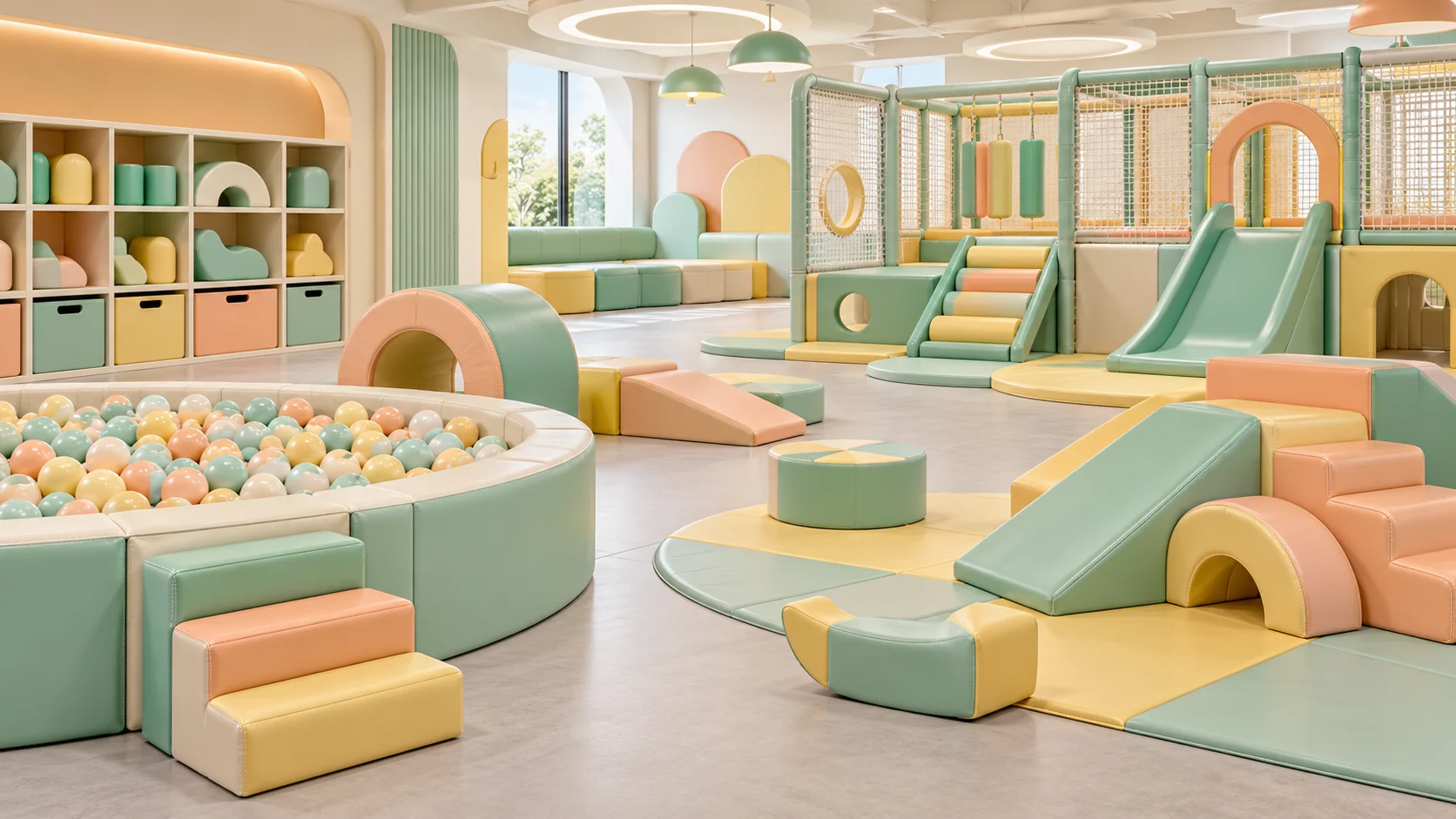
Soft Play Equipment Maintenance: What Should Buyers Confirm About Cleaning and Replacement Parts?
Quick Answer Before ordering soft play equipment, confirm the cleaning instructions for the supplied materials, access to areas that need

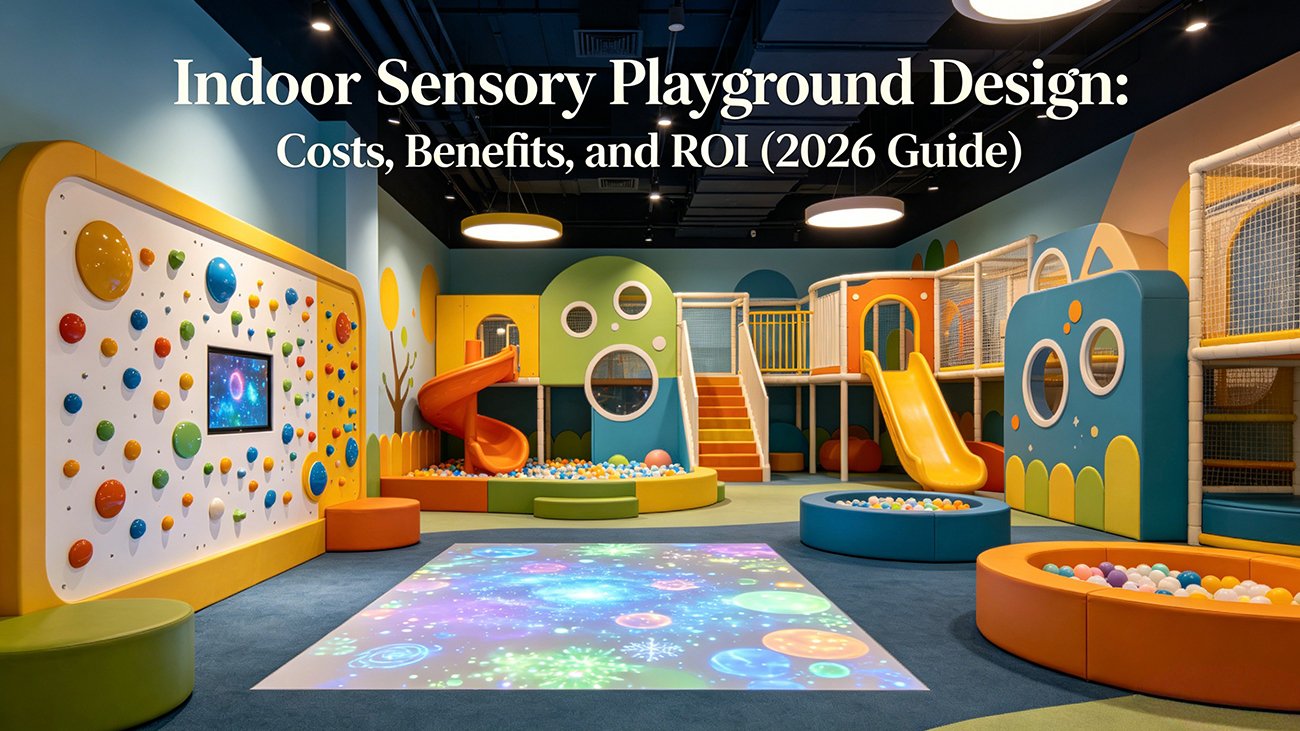
Table of Contents
ToggleThe global demand for professional Indoor Sensory Playground Design is booming in 2026. Valued at $7.3 billion, the indoor play industry sees sensory play spaces growing at a 9.2% CAGR, 50% faster than conventional soft play markets. The core growth drivers lie in the rising awareness of neurodiverse child development, stricter public inclusive facility standards, and operators’ demand for venue differentiation. Driven by growing parental focus on Child Development Play, the market for professional Inclusive Playground Design and functional Sensory Playground Equipment continues to expand rapidly across North America, Europe, and East Asia, building safer and more immersive Sensory Play Environment for educational, therapeutic, and commercial scenarios.
Indoor Sensory Playground Design has become a top-tier facility upgrade for schools, therapy clinics, malls, and family entertainment centers in 2026. Unlike ordinary soft play areas that only focus on physical fun, professional sensory playgrounds are developed based on sensory integration therapy. Equipped with premium Sensory Playground Equipment, they deliver balanced, controllable multi-sensory stimulation covering tactile, visual, auditory, vestibular, and proprioceptive senses. These inclusive spaces suit children of all abilities, including neurodiverse kids with autism, ADHD, and sensory processing disorders, supporting scientific Child Development Play for every child.
Sensory interaction is foundational to early childhood growth, shaping kids’ motor skills, cognition, emotional regulation, and social competence. Traditional playgrounds often provide disordered, unregulated stimulation that either overwhelms sensitive children or fails to engage under-responsive kids. In contrast, well-structured Indoor Sensory Playground Design creates an adjustable, therapist-verified Sensory Play Environment tailored to individual sensory needs. It effectively improves children’s sensory processing ability, fixes sensory dysregulation, and fosters essential life and learning skills through targeted Child Development Play.

Many operators confuse sensory playgrounds with standard indoor play areas, but the two serve entirely different purposes. Traditional playgrounds focus purely on physical entertainment with slides, ball pits, and climbing structures, with no consideration for sensory sensitivity, accessibility, or developmental therapy. They lack professional Sensory Playground Equipment and scientific zoning for Child Development Play.
Indoor Sensory Playground Design is built for developmental growth and inclusive play. It features graded sensory stimulation, age-based zoning, barrier-free access, dimmable lighting, adjustable sound levels, and professional therapeutic Sensory Playground Equipment. Strictly compliant with ASTM and EN1176 safety standards, professional Inclusive Playground Design accommodates neurodiverse and physically disabled children, creating a supportive Sensory Play Environment that is far more versatile and valuable for long-term operation and educational use than traditional play spaces.
Education & Preschools
Sensory play zones and full sensory rooms are widely adopted in early education and special education settings. Integrated into daily curriculum activities, well-designed Indoor Sensory Playground Design and matched Sensory Playground Equipment improve children’s focus, fine motor skills, and classroom behavior, reducing behavioral disruptions by up to 40% in educational environments and supporting systematic Child Development Play.
Pediatric Therapy Centers
Therapy clinics rely on customized Indoor Sensory Playground Design and professional Sensory Playground Equipment as core rehabilitation tools. Professionally zoned sensory stations built with Inclusive Playground Design standards support targeted intervention for autism, sensory processing disorders, developmental delays, and emotional dysregulation, creating structured, billable therapy programs centered on therapeutic Child Development Play and regulated Sensory Play Environment.
Malls & Family Entertainment Centers
For commercial venues, sensory playgrounds act as premium, high-margin attractions that stand out from generic soft play zones. Customized Indoor Sensory Playground Design and themed Sensory Playground Equipment create a unique Sensory Play Environment, allowing operators to generate diversified revenue through daily tickets, monthly memberships, birthday party packages, and parent lounge services, attracting high-income family audiences and improving repeat visitation rates.
Community & Public Facilities
Libraries, community centers, and municipal public spaces install modular sensory play zones with standardized Inclusive Playground Design and cost-effective Sensory Playground Equipment as inclusive public welfare amenities. Most public projects qualify for government accessibility grants, lowering construction costs while building a professional public Sensory Play Environment for local children’s Child Development Play.
Well-structured Indoor Sensory Playground Design delivers controlled multi-sensory stimulation that strengthens neural development, improving children’s memory, logical thinking, spatial awareness, and sustained attention. Tactile exploration and interactive audio-visual play from professional Sensory Playground Equipment refine fine motor skills, supporting academic learning and daily self-care ability development. For neurodiverse children, the structured Sensory Play Environment eliminates brain fog caused by overstimulation, greatly improving learning efficiency and focus duration in Child Development Play.
Professional-grade Sensory Playground Equipment configured in scientific Indoor Sensory Playground Design exercises both gross and fine motor skills. Vestibular gear improves balance, core strength, and spatial coordination; proprioceptive equipment enhances body awareness and muscle control; tactile panels and interactive toys boost finger flexibility. All equipment adopts low-impact, adaptive Inclusive Playground Design suitable for children of all mobility levels, ensuring safe and effective physical exercise through targeted Child Development Play in a regulated Sensory Play Environment.
A core advantage of professional Indoor Sensory Playground Design is the dedicated calm zones with dim lighting, quiet tactile tools, and weighted accessories. These zones enable children to self-soothe anxiety, sensory overload, and frustration within a gentle Sensory Play Environment. Consistent sensory regulation training via therapeutic Sensory Playground Equipment builds emotional coping skills, reducing tantrums and aggressive behavior while supporting mental health and trauma-informed care during daily Child Development Play.
Advanced Inclusive Playground Design in modern Indoor Sensory Playground Design creates mixed-ability play environments that encourage turn-taking, communication, and teamwork. Low-stimulation zones remove sensory barriers for socially anxious and autistic children, enabling stable peer interaction. The barrier-free Sensory Play Environment fosters empathy and inclusive social awareness from an early age, helping children adapt to group communication through interactive Child Development Play with full-access Sensory Playground Equipment.

Tactile Sensory Playground Equipment delivers diverse touch stimulation through varied textures, softness, and shapes, including textured wall panels, sand and water play tables, bead mazes, and soft texture blocks. These core devices in Indoor Sensory Playground Design boost children’s tactile perception and fine motor skills, enriching Child Development Play and maintaining continuous play engagement in a balanced Sensory Play Environment.
Visual Sensory Playground Equipment includes dimmable LED lights, fiber optic curtains, bubble tubes, and color-changing floor panels. All visual devices support adjustable brightness and color modes in professional Indoor Sensory Playground Design, providing gentle, customizable visual input without harsh glare, protecting children’s senses and building a comfortable Sensory Play Environment for daily Child Development Play.
Volume-controlled music panels, sounding walls, and soundproof quiet pods form complete auditory Sensory Playground Equipment systems. Professional acoustic Indoor Sensory Playground Design avoids loud noise, echo, and sudden sound bursts, ensuring safe, adjustable auditory experiences to protect children’s sensitive hearing and create a stable Sensory Play Environment for focused Child Development Play.
Vestibular Sensory Playground Equipment, such as adaptive swings, balance beams, wobble discs, and scooter boards, focuses on inner ear balance training. As key components of scientific Indoor Sensory Playground Design, it effectively improves children’s spatial perception, body coordination, and core balance ability, solving clumsy movement problems during Child Development Play and optimizing the overall Sensory Play Environment.
Compression tunnels, crash pits, squeeze hug pods, and weighted play gear are essential proprioceptive Sensory Playground Equipment. As the core of regulatory Indoor Sensory Playground Design, this gear provides deep pressure stimulation, helping children stabilize emotions, relieve restlessness, and improve body awareness in a soothing Sensory Play Environment for orderly Child Development Play.
AR projection systems and AI interactive walls are modern, upgraded smart Sensory Playground Equipment. Integrated into premium 2026 Indoor Sensory Playground Design, they combine dynamic digital interaction with physical play, creating a vivid, changing Sensory Play Environment. It enhances children’s participation while keeping Child Development Play educational and developmental, becoming a major highlight of high-end inclusive playgrounds.
High-quality Indoor Sensory Playground Design avoids a single-sense isolated layout. Professional schemes organically integrate touch, sight, sound, and movement via matched Sensory Playground Equipment, delivering balanced multi-sensory input. This comprehensive stimulation trains children’s brains to process diverse information simultaneously, realizing all-around Child Development Play and building a fully functional Sensory Play Environment.
Reasonable zone division is a core principle of professional Indoor Sensory Playground Design. High-energy activity zones release children’s physical strength and vitality for dynamic Child Development Play, while independent quiet calm zones are specially designed for sensory soothing and emotional adjustment. Sound insulation and visual barriers prevent cross-stimulation interference, maintaining a stable dual-purpose Sensory Play Environment and implementing practical Inclusive Playground Design.
Sensory needs vary greatly by age, making age-based zoning indispensable for scientific Indoor Sensory Playground Design. Toddler zones adopt gentle, low-intensity Sensory Playground Equipment and safe layouts; zones for older children are equipped with moderately challenging gear to match developmental abilities. This precise zoning ensures age-appropriate Child Development Play and a tailored Sensory Play Environment, embodying humanized Inclusive Playground Design.
Safety runs through the entire Indoor Sensory Playground Design process. All supporting materials and Sensory Playground Equipment are non-toxic, eco-friendly, fire-retardant, and hypoallergenic. All equipment has rounded edges, a standardized fall-protection structure, and compliant shock-absorbing flooring. Reserved safe evacuation channels and anti-entrapment design eliminate potential safety hazards, securing a safe Sensory Play Environment for all Child Development Play activities.
Universal Inclusive Playground Design is the core value of modern Indoor Sensory Playground Design. Barrier-free ramps, zero-step entrances, and adjustable-height Sensory Playground Equipment meet the play needs of physically disabled children. Meanwhile, adjustable sensory intensity adapts to neurodiverse children, realizing equal Child Development Play opportunities and a fully inclusive Sensory Play Environment for every kid.

Standard Indoor Sensory Playground Design layouts follow a scientific play flow: entrance, calming buffer zone → age-separated active play areas → quiet rest zones → parent observation lounges. Functional auxiliary areas, such as equipment storage rooms and party rooms, are placed away from core play zones to avoid noise interference, ensuring the core Sensory Play Environment remains stable for uninterrupted Child Development Play with well-arranged Sensory Playground Equipment.
Wide and smooth passageways are reserved in professional Indoor Sensory Playground Design to avoid crowd bottlenecks. The overall traffic line is clear and unobstructed, adapting to stroller and wheelchair passage to comply with Inclusive Playground Design standards. Calm zones are arranged far from the entrance and exit flow to avoid continuous sensory disturbance, ensuring a stable, soothing Sensory Play Environment for focused Child Development Play.
Harsh fluorescent lights are completely replaced with dimmable warm LED lighting in premium Indoor Sensory Playground Design, supporting full low-sensory dimming mode. The whole venue is paved with sound-absorbing wall and floor materials, with volume limiters for all auditory Sensory Playground Equipment to control peak decibels, creating a soft and comfortable Sensory Play Environment suitable for long-term Child Development Play.
Half-height partition walls and scientific mirror layout in professional Indoor Sensory Playground Design eliminate supervision blind spots. Central observation areas provide parents and staff with full-view monitoring of all play zones, ensuring real-time safety control while maintaining the independence of each sensory zone and protecting the immersive Sensory Play Environment for children’s Child Development Play.
Sensory Playground Equipment cost is the main part of the total Indoor Sensory Playground Design investment, with clear tiered pricing in 2026 based on configuration and Inclusive Playground Design standards:
- Basic modular sensory corners: $95 – $160/sqm, ideal for small-scale Child Development Play scenarios
- Mid-tier commercial sensory play zones: $160 – $280/sqm, with complete Sensory Playground Equipment for balanced Sensory Play Environment
- Premium AI-integrated sensory playgrounds: $280 – $400/sqm, featuring smart interactive gear and high-standard Inclusive Playground Design
Standard standardized Indoor Sensory Playground Design layout ranges from $3,000 to $8,000. Professional therapeutic Inclusive Playground Design and high-end themed customization cost $8,000 to $40,000, depending on project scale, Sensory Playground Equipment configuration, and Sensory Play Environment customization difficulty.
Installation fees vary by project size: small zones below 100sqm cost $5,000 – $12,000; medium 100–500sqm projects cost $12,000 – $35,000; large commercial projects above 500sqm cost $35,000 – $80,000, including flooring, wiring, Sensory Playground Equipment installation, and Indoor Sensory Playground Design compliance debugging.
Domestic regional transportation accounts for 5%–10% of the total Sensory Playground Equipment cost. Intercontinental ocean freight accounts for 12%–20% of equipment cost. Custom oversized structures for themed Indoor Sensory Playground Design will produce additional crating and lifting fees.
- Small therapy/school sensory rooms (20–80sqm): $15,000 – $75,000, perfect for educational Child Development Play
- Mid-sized community/preschool zones (80–300sqm): $75,000 – $280,000, with full Inclusive Playground Design and standard Sensory Play Environment
- Large mall/FEC playgrounds (300–1000sqm): $280,000 – $1.2M+, equipped with premium Sensory Playground Equipment and customized Indoor Sensory Playground Design
Venues with professional Indoor Sensory Playground Design have diversified multi-layered income sources: daily admission tickets, recurring monthly/annual memberships, private birthday party bookings, professional therapy sessions, peripheral retail sales, parent catering services, and school group tour reservations. The unique value of therapeutic Child Development Play and exclusive Sensory Play Environment supported by high-quality Sensory Playground Equipment forms stable profit systems.
Venues with certified Indoor Sensory Playground Design and Inclusive Playground Design standards support 30–50% higher ticket pricing than ordinary playgrounds, thanks to therapeutic value and exclusive Sensory Play Environment. Stable membership renewal of special-needs families fills off-peak weekday vacancies. Low market competition for professional Sensory Playground Equipment solutions and government grant support further reduce operating risks and improves profit margins.
Industry 2026 benchmark data shows: small therapy/school Indoor Sensory Playground Design projects achieve payback in 6–12 months; medium community venues in 10–18 months; large commercial mall/FEC projects in 16–24 months. Projects combining membership services, party packages, and professional Child Development Play courses recover costs faster with premium Sensory Play Environment advantages.
Professional customized Sensory Playground Equipment has a 10–20 year service life, far longer than ordinary soft play equipment, greatly reducing long-term maintenance and replacement costs for Indoor Sensory Playground Design projects. Mature operating venues can maintain a stable 30%+ EBITDA margin, relying on sustainable demand for inclusive Child Development Play and a unique Sensory Play Environment that cannot be replicated by traditional playgrounds.
The first stage of Indoor Sensory Playground Design includes on-site measurement, structural load testing, space dimension confirmation, target user group analysis, competitor investigation, and local safety standard verification. Therapy projects will add an occupational therapist demand evaluation to clarify functional positioning for professional Child Development Play and therapeutic Sensory Play Environment construction.
Design teams formulate functional zoning schemes, sensory intensity matching plans, and age segmentation layouts for Indoor Sensory Playground Design and produce multiple sets of renderings. Adjust and optimize schemes according to customer needs, complete Inclusive Playground Design verification, and confirm matching Sensory Playground Equipment to meet targeted Child Development Play needs.
Match certified safe Sensory Playground Equipment according to Indoor Sensory Playground Design positioning and budget, balance therapeutic, practicality, and interactive entertainment, select modular standard equipment + customized special equipment combination, and reserve space for subsequent Sensory Play Environment upgrading and Child Development Play function expansion.
Complete fall protection design, anti-collision layout, emergency exit planning, and safety flooring matching for Indoor Sensory Playground Design. Conduct a third-party safety review to ensure full compliance with ASTM, EN1176, and local venue operation standards, guaranteeing a safe Sensory Play Environment and risk-free Child Development Play with qualified Sensory Playground Equipment.
Carry out phased on-site construction, including flooring paving, structural installation, electrical debugging, and Sensory Playground Equipment placement based on finalized Indoor Sensory Playground Design. Complete post-construction compliance inspection, staff professional training, trial operation adjustment, and official opening guidance to ensure stable operation of the inclusive Sensory Play Environment and standardized Child Development Play services.
Commercial Indoor Sensory Playground Design and matched Sensory Playground Equipment must meet two core international standards: ASTM F1487 (North American standard) governs structural safety and entrapment prevention; EN1176 (European universal standard) regulates equipment structural integrity and accessibility. Supporting ASTM F1292 and EN1177 flooring standards ensures fall protection safety, laying a solid foundation for a reliable Sensory Play Environment and safe Child Development Play.
All foam, plastic, fabric, paint, and tactile materials used in Indoor Sensory Playground Design and Sensory Playground Equipment adopt low-VOC, BPA-free, lead-free, and hypoallergenic raw materials. All decorative and equipment materials are fire-retardant and mildew-proof, ensuring long-term safe contact play and healthy Child Development Play in a non-toxic Sensory Play Environment.
Professional Indoor Sensory Playground Design matches layered shock-absorbing safety flooring according to Sensory Playground Equipment fall height. All hard structural corners are wrapped with thick anti-collision foam. Crash pits and activity areas adopt high-density buffer foam to minimize fall and collision injury risks, protecting children during all Child Development Play activities in the Sensory Play Environment.
Form standardized maintenance mechanisms for Indoor Sensory Playground Design projects: daily visual inspection of loose Sensory Playground Equipment and damaged materials; monthly full sanitization; quarterly third-party safety assessment; annual overall structural testing to ensure long-term stable and safe operation of the Sensory Play Environment and uninterrupted Child Development Play services.
Preschools, kindergartens, and special education schools deploy customized Indoor Sensory Playground Design and professional Sensory Playground Equipment as curriculum supporting facilities, assisting daily teaching and special intervention training. Most educational projects can apply for government inclusive education grants to build a professional Sensory Play Environment for systematic Child Development Play.
Family entertainment centers take themed Indoor Sensory Playground Design and exclusive Sensory Playground Equipment as premium differentiated attractions, breaking the homogenization of traditional soft play. Relying on unique Sensory Play Environment and educational Child Development Play value, venues create high-margin profit points and improve customer stickiness.
Malls deploy tailored Indoor Sensory Playground Design zones as core family supporting amenities to extend customer stay time and drive surrounding consumption. Custom themed Sensory Playground Equipment and immersive Sensory Play Environment attract high-value family traffic, making mall Inclusive Playground Design a core passenger flow driver.
Professional rehabilitation and occupational therapy centers take therapeutic Indoor Sensory Playground Design and medical-grade Sensory Playground Equipment as core treatment facilities, forming a dual profit model of professional therapy appointments + public leisure Child Development Play, with stable demand for standardized Sensory Play Environment intervention.
Libraries, street community centers, and public activity rooms build modular Indoor Sensory Playground Design zones as public welfare facilities, meeting urban Inclusive Playground Design standards and providing free high-quality Sensory Play Environment and Child Development Play opportunities for local children.
AI intelligent adaptation is the core 2026 trend of Indoor Sensory Playground Design. Smart Sensory Playground Equipment can automatically identify children’s play state and emotional changes, intelligently adjust light, sound, and movement intensity, realizing personalized Child Development Play and precise dynamic Sensory Play Environment adjustment.
Fully synchronized LED light and shadow integration is widely adopted in premium Indoor Sensory Playground Design. Interactive Sensory Playground Equipment realizes motion-triggered visual effects, creating an immersive Sensory Play Environment for engaging Child Development Play, while low-energy LED materials reduce long-term operation costs.
Biophilic nature-inspired layout has become a popular Indoor Sensory Playground Design trend. Simulated plants, natural wood texture, and landscape scenes create a relaxing Sensory Play Environment that relieves children’s anxiety. This aesthetic Inclusive Playground Design also has strong social media communication attributes, boosting venue traffic while supporting natural Child Development Play.
IoT intelligent management platforms empower modern Indoor Sensory Playground Design, integrating Sensory Playground Equipment monitoring, environmental adjustment, member management, and maintenance reminder. Remote refined management greatly reduces manual operation costs while maintaining a stable Sensory Play Environment and high-quality Child Development Play experiences.
2026 Inclusive Playground Design logic has shifted from passive accessibility transformation to therapy-first Indoor Sensory Playground Design. All customized Sensory Playground Equipment adapts to neurodiverse and physically disabled children, realizing real zero-barrier Child Development Play and a fully inclusive Sensory Play Environment for every child.

An indoor sensory playground is a professionally designed enclosed play space based on sensory integration therapy. With scientific Indoor Sensory Playground Design, diversified Sensory Playground Equipment, and standardized Inclusive Playground Design, it divides active and calm zones to provide an adjustable, safe, and inclusive Sensory Play Environment for all-age, all-ability Child Development Play.
Sensory play built by professional Indoor Sensory Playground Design helps children build complete sensory processing mechanisms via targeted Sensory Playground Equipment. It improves concentration, motor coordination, and logical thinking, relieves sensory overload and anxiety of neurodiverse children, reduces behavioral problems, and cultivates social skills through guided Child Development Play in a balanced Sensory Play Environment.
Costs vary by Indoor Sensory Playground Design scale, Sensory Playground Equipment configuration, and Inclusive Playground Design standards: small sensory rooms start at $15,000; medium community zones range from $75,000 to $280,000; large commercial venues cost $280,000 to over $1.2 million, covering full design, equipment, installation, and logistics for a complete Sensory Play Environment.
Yes. Venues with professional Indoor Sensory Playground Design and certified Sensory Playground Equipment have higher ticket pricing, diversified revenue streams, and longer service life than traditional playgrounds. The unique Child Development Play and inclusive Sensory Play Environment create strong market competitiveness, with a 6–24 month payback period and 30%+ long-term profit margin.
A complete Indoor Sensory Playground Design project requires six core types of Sensory Playground Equipment: tactile texture equipment, visual light equipment, auditory sound equipment, vestibular balance equipment, proprioceptive deep-pressure equipment, and intelligent interactive digital equipment, matched with safety flooring and calm zone facilities to build a fully functional Sensory Play Environment for comprehensive Child Development Play.
Core Benefits & Value: Professional Indoor Sensory Playground Design combines therapy, inclusive entertainment, and educational Child Development Play. Supported by standardized Inclusive Playground Design and graded Sensory Playground Equipment, it comprehensively boosts children’s cognitive, physical, emotional, and social abilities. It fixes the limitations of traditional playgrounds and creates a safe, growth-focused Sensory Play Environment for kids of all abilities.
ROI Advantage: Though customized Indoor Sensory Playground Design and premium Sensory Playground Equipment require higher upfront investment, sensory venues enjoy stronger market competitiveness. Supported by inclusive therapeutic value, diversified revenue streams, low long-term maintenance costs, and policy grants, these projects deliver stable, sustainable profits amid growing demand for professional Child Development Play and inclusive Sensory Play Environment.
Future Trend: Intelligent, nature-friendly, and therapy-based Inclusive Playground Design will dominate the industry. Customized Indoor Sensory Playground Design and professional Sensory Playground Equipment will be widely applied in education, therapy, commercial, and public scenarios, becoming the mainstream upgrade for global children’s Child Development Play systems and standardized Sensory Play Environment construction.
For cost-effective, high-standard 2026 Indoor Sensory Playground Design projects, choose professional turnkey solutions for reliable safety and long-term ROI. As a qualified manufacturer with full international certifications (ASTM, EN1176, TÜV, ISO9001) and rich global project experience, KanbeiPlay offers customized design, professional Sensory Playground Equipment production, standardized installation, and complete after-sales service. Get professional solutions and accurate quotes via the official website: https://www.kanbeiplay.com/
Quick Answer Before ordering soft play equipment, confirm the cleaning instructions for the supplied materials, access to areas that need
Quick Answer Compare commercial indoor playground equipment proposals in two connected parts: how the layout serves the venue, and what
Thank you very much for your inquiry! Your trust is our greatest motivation. We are committed to offering playgrounds that combine high quality with affordable pricing. Let us bring vitality to your venue!